 Follow Us on Google News
 Follow Us on Google Discover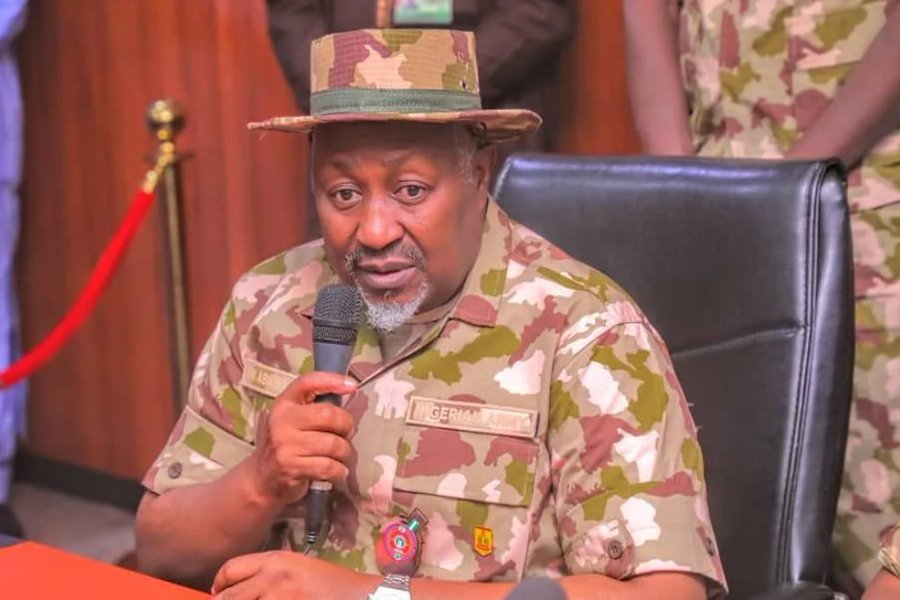
The Minister of Defence, Mohammed Badaru Abubakar, has resigned his position with immediate effect, citing health-related concerns in a letter addressed to President Bola Ahmed Tinubu on 1 December.
The President’s Special Adviser on Information and Strategy, Bayo Onanuga, in a statement he shared on X, confirmed that Tinubu accepted the resignation and expressed appreciation for Badaru’s service.
Badaru, 63, served as Governor of Jigawa State from 2015 to 2023 before his appointment as Minister on 21 August 2023.
The resignation comes as President Tinubu declares a national security emergency, with further details expected to be released by the Presidency.
According to the Presidency, Tinubu is expected to notify the Senate of a nominee to succeed Badaru later this week.
Resignation Unexpected

The Guardian reports that Badaru’s resignation may have been unexpected by the presidency. Over the weekend, the former defence minister while speaking at the North-West Security Summit in Kaduna, Badaru said President Tinubu had directed him to reaffirm that “security, unity and community resilience remain at the centre of national progress.”
He further noted that the Federal Government is recording improvements in security across the North-West, even as criminal networks continue to adapt their methods.
He stressed that several routes previously unsafe due to bandit activity had reopened, including the Kaduna–Kachia, Kaduna–Birnin Gwari, Jibia–Gurbin Baure and parts of the Sokoto–Illela corridors.
He said markets in Kaura Namoda, Shinkafi, Batsari, Giwa and Kajuru had also seen increased activity, while displaced communities were returning.
Badaru added that schools shut due to insecurity “have resumed academic activity under strengthened protection,” and that farmers had returned to their fields with improved security support.
While acknowledging progress, he said the region still faced “lingering threats from bandits, terror cells and organised criminal networks.” He cited recent abductions in Kebbi, Niger and Kwara as evidence of shifting criminal tactics, adding that all victims from Kebbi and Kwara had been released, and some abducted in Niger had escaped.
He attributed recent gains to enhanced coordination among security agencies, describing current efforts as “unified action.”
He cited Operation FANSAN YAMMA, new deployments such as the National Mission Force Brigade in Samaru Kataf, and the activation of the 18 Brigade Tactical Headquarters in Tegina as examples of strengthened structures.
Badaru praised state governments for logistical support and said local security outfits were acting as force multipliers.
He also commended traditional rulers, civil society groups, and women and youth organisations for helping to build community resilience.
On youth vulnerability, he said criminal groups were deliberately targeting young people, noting that the government was responding through initiatives such as the Nigeria Youth Investment Fund and the 3 Million Technical Talent Programme.
Badaru said the President had instructed the armed forces to sustain momentum by improving intelligence sharing and strengthening the protection of schools and rural communities.
Kaduna State Governor, Uba Sani, speaking at the event, said security challenges in the North-West required joint efforts, describing the region as “the ultimate test of our nation’s ability to safeguard its people.”
He said the security landscape had evolved into “a sophisticated ecosystem of organised crime,” listing banditry, terrorism, mass abduction, illegal mining, gun-running, and trafficking as overlapping threats.
Sani added that porous borders with the Niger Republic continued to facilitate the movement of armed groups, smugglers and traffickers, allowing them to evade pressure by crossing into neighbouring territories.

