 Follow Us on Google News
 Follow Us on Google Discover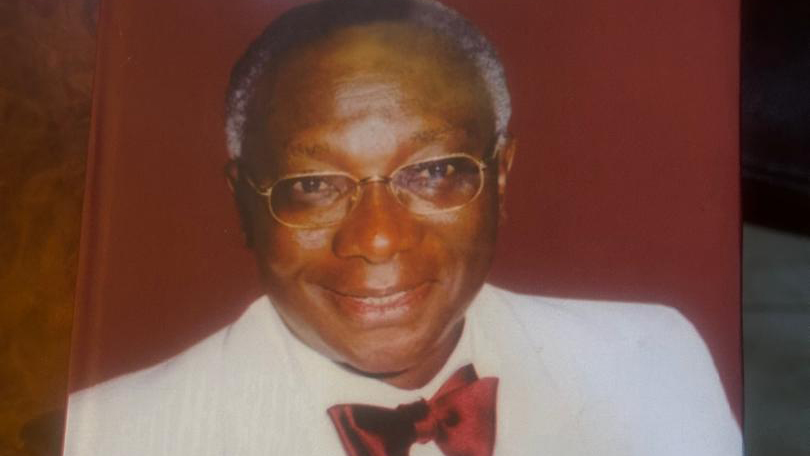
A remarkable book presentation in honour of one of the most significant public servants Nigeria has ever produced, Izoma, Philip Chikwuedo Asiodu, 91, took place at the Metropolitan Club, Victoria Island, Lagos on Wednesday this week, (December 3, 2025). The presentation of Hallmarks of Labour Special Edition Series featuring the iconic Philip Asiodu was well attended by many senior citizens who would make us relive Nigeria as it used to be before the rains began to beat us.
Sadly, the event by the author, Chief Patricia Otuedon- Arawore was poorly reported by the news media operatives who were apparently unaware. You could spot only publisher of Vanguard, Prince Sam, Amuka Pemu 90+, and former Managing Director and Chairman of the organic Daily Times, Akogun Tola Adeniyi, 80+, Chairman of the Editorial Board of The Nation, Sam Omatseye, and yours sincerely. The landmark event was also attended by even great captains of industry including Fola Adeola of GT, Bank, Atedo Peterside of Stanbic, IBTC, great scholars including Professor Suleiman, Elias Bogoro, former Executive Secretary, TertFund, many retired federal permanent secretaries, former Head of the Civil Service of the Federation, Professor Oladapo Afolabi, representative of the current Head of the Civil Service of the Federation, and representative of Governor of Delta State; Senator Ede Dafinone, representing Delta State Central Senatorial District, and many other icons including former President of Court of Appeal, Justice Ayo Salami.

One of the most respectable last men still standing, General Yakubu Gowon, Ph.D who has some remarkable stories to tell about the good old days of public and civil service in Nigeria, was the Chairman of the book launch. Besides, one of the most significant in the rank of retired permanent secretaries, Goke Adegoroye, Ph.D, reviewed the book so constructively that the work began to raise diverse curiosities including how a country that once produced some of the most brilliant public officers, in their thirties under the same Yakubu Gowon, is today generally believed to be unable to raise a competent civil service. The review raises thorny questions and contrasts about the years the locusts ate our democratic infrastructure that would have supported a strong superstructure of a capable nation. The book review and talking points again remind us of the late General Murtala’s deadly blows on sanctity of civil service. It deconstructs the very short but consequential six months of the impetuous soldier and leader, Murtala who dreamed of and proclaimed today’s capital of the federation, Abuja 49 years ago. You will relive in the book through the epic review, how the wind of Murtala’s change within a few days blew away all the Asiodus, whose foundation of efficiency, accountability, integrity would have built Africa’s foremost civil service.
In the main, the book on Asiodu reopens our eyes to how leaders after Gowon even in a democracy, threw away the principle and discipline of National Development Plans, which no one remembers anymore in our new dispensation of leadership. There are therefore so many deliverables from the book as revealed by the reviewer who has written three books on the same public service and its leadership. Let’s open some interesting excerpts from the reviewer:
…The thesis of PC Asiodu at all the gatherings where he has discussed these topics have centred on 4-5 critical issues and propositions, namely:
The 1975 Purge of the Federal Civil Service
The Tragedy of Abandoning the 3rd National Plan 1975-1980
A Language Policy to Foster National Integration
The National Vision Imperative
A Great Role Waiting For A Player
The 1975 Purge of the Federal Civil Service
The 1975 Purge is a recurring decimal throughout the book, because of its impact on the federal civil service ever since. However, I want to quote from pages 113 and 114, which provide the best description of what took place.
“The traumatic massive purge of about 10,000 officials over a period of two months, without due process, involving officials from the rank of Permanent Secretary to the class of messengers being retired or dismissed, including some obvious leaders and role models, some without any terminal benefits or pensions destroyed the professional, non-partisan, fearless, prestigious, merit-driven Civil Service and Public Service inherited from the British Colonial Administration. In the process, the nation lost a great deal of institutional memory and international connections.
The more senior ones, who inspired the ideals of the Pre-Independence movement and the patriotic commitments of the leaders of the First Republic, were still energetic in suggesting and developing policies, programmes and projects and who also imbued, as they were, with the old core values would be able to provide some checks and balances were swept away. The suffering, including premature death of scores of officials affected by the purge fuelled the resort to “make hay while the sun shines”, an obvious euphemism for corruption which now threatens the future of the country.
The Tragedy of Abandoning the 3rd National Plan 1975-1980
“How did Nigeria find itself in the situation of stagnated economic development and failure to create jobs during the rapid global economic expansion of the last four decades” was the question he asked on page 134. The answer, which he recalls every time “with great pain and regret” was that the 3rd National Development Plan 1975-1980, which was launched in April 1975 was abandoned. Stressing the point further he says:
“The great tragedy is that the Murtala/Obasanjo Administration which replaced the overthrown Gowon Administration in July 1975 effectively abandoned the 1975-1980 Plan with its great promise of creating the basis for economic diversification and industrialization, and also abandoned indeed, the principle and discipline of Planning”. “We may recall the impressive average annual growth rate of 6% achieved under the 1st Plan 1962-1966, later extended to 1968; and after the Civil War, the average annual growth rate of 11.75% from 1970-1975. Ten more years of growth at that rate and Nigeria would have exited from underdevelopment and poverty” (p. 134-135; also p. 52, 68, 120, 140, 144-145, 196). According to him, “abandoning the Planning and the Discipline of Planning in 1975 resulted in over four decades of floundering” (p.140).
As he said on page 114 “The Pre-Purge independent, prestigious, fearless, Civil Service might have been able to succeed in advising against such anti-plan policies and Nigeria’s economic history in the last two decades of the 20th century would have been very different”.
A Language Policy to Foster National Integration
Asiodu sees language as a unifier, a vehicle for national integration. His advocacy in this regard can be found on pages 93 -94 and on page 178. On page 93 he states: “I had hoped following on the early success of the National Youth Service Scheme that we would be able to persuade the Government to introduce a Language Policy to foster national integration. That was before the termination of the Gowon Administration by the Coup of July 1975.
Such a policy would require each child to learn to read and write in the local language where he or she begins schooling, even in private schools. By the age of 10, the child begins to receive instructions in English as is the practice now. The new policy would be that by the age of 12 or 13 when he or she enters a secondary school, he/she has to make a choice. If he is in the North, he must choose one Southern Language, which he will be taught to speak, read or write. The chances are that the child will choose either Igbo or Yoruba. In the South, the child will likely choose Hausa as the Northern Language. All secondary schools will have the necessary language departments. …For the avoidance of doubt, English will still remain the official language of the Federal Government.
The National Vision Imperative
His distaste for the way succeeding administrations after that of Gowon have discarded the 1975-1980 Plan and while not being able to develop an alternative have either displayed a lack of interest in the Vision 2010 which they met or simply enjoyed what he terms the “flirtations of Vision 2020” explains why he started advocating for a National Vision and Agenda 2040. This, readers will find on pages 54, 64, 83, 84, 138, 139. The essential elements of the National Vision 2040 and how it will be broken into 4-5 years National Economic Perspective Plans are on pages 55 and 56
The Search For A Leader, arising from his defined hypothesis of: “A Great Role Waiting For A Player” PC Asiodu, a great planner and man of vision himself has always been conscious that a good national vision needs a committed leader. Like someone on a treetop or on the pulpit he declares, in the manner of John the Baptist’s “Voice of one crying in the wilderness” (Isaiah 40:3), in his paper titled “Re-Positioning Education In Nigeria For Peace and Development” at the Hallmarks of Labour Re-Union Lecture on 14 September 2017 and I am quoting from page 83 of this book :
“There is a great role waiting for a player in Nigeria. There is a need for a great patriotic and visionary leader to articulate a National Vision and Agenda of where Nigeria should be by 2040, to be at least a top middle income nation of over 300 million people and to quote from Vision 2010: “A united, industrious, caring, God-fearing democratic society committed to making the basic needs of life affordable for everyone and creating Africa’s leading economy”. Such a leader he says “will need to lead a revolutionary change of attitude, beyond party, tribal and religious divides, amongst leaders of all sectors of government and society to embrace all aspects of good governance and re-launch Nigeria irreversibly on the path to unity and greatness. He must be ready to commit his life to this great cause”.
He noted on page 123 that Chief Olusegun Obasanjo who came in in 1999 as President “unfortunately completely set aside Vision 2010”. We can only imagine, as only God knows, the amount of pressures he must have placed on the President to implement that Vision, given that he was his Chief Economic Adviser. Having failed in convincing President Obasanjo, he nonetheless relaxed to see how the Vision 2020 that Obasanjo instituted was going to be implemented. He witnessed during 2009 and 2010 that Government at the Federal and State levels, with the active participation of a broad spectrum of Nigerians, including public and private sector experts and representatives of NGOs elaborated the Vision 2020. However, he soon discovered that it was, in his words, all “flirtation”.
His persistent advocacy for a new leadership that will drive Vision 2040 led him to speak to audience across generations. Whether he was speaking to the very mature audience in top positions or to secondary school pupils, as he did to the Chrisland Schools Limited Class of 2016 at their Prize Giving Day in 2016, the message is the same: Things must change. … Things will only change when, through the right type of education, Nigeria produces the leadership to develop and inspire us with vision to greatness (p. 272). His advocacy also drove him to tailor his presentations to speak to the sitting presidents to heed his call to a National Vision.
To be continued…

