 Follow Us on Google News


 Follow Us on Google Discover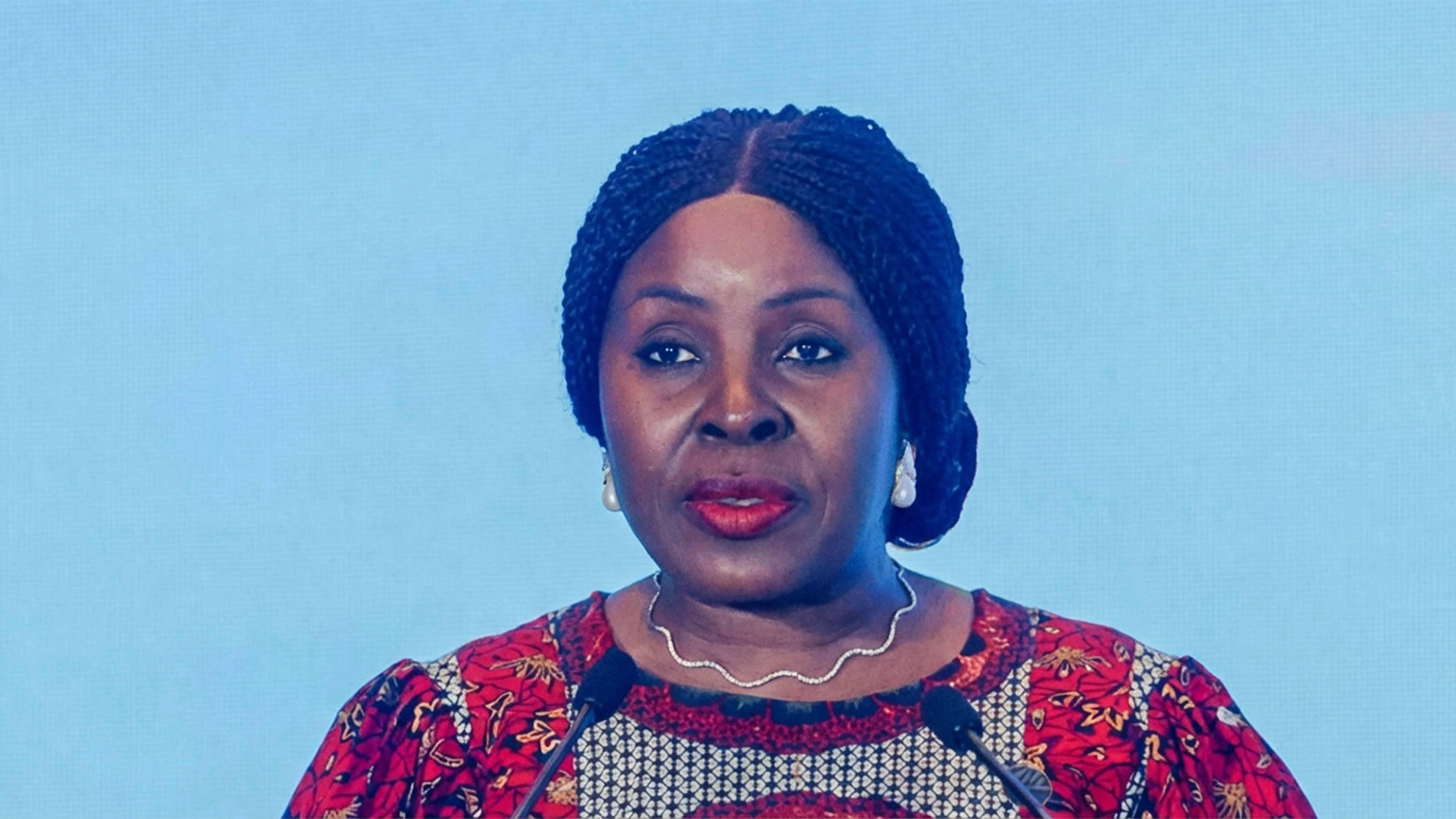
The Lagos Chamber of Commerce and Industry (LCCI) has raised concerns about the Federal Government’s decision to allocate N15.52 trillion to debt servicing in the 2026 Appropriation Bill.
The Chamber views the allocation as a growing fiscal burden that poses a threat to the country’s economic stability. Director-General of the Chamber, Chinyere Almona, made the observation yesterday.
She emphasised the scale of debt-related expenditure and highlighted the urgent need for stricter borrowing discipline, stronger revenue mobilisation, and deeper public-private partnerships to protect growth-enhancing investments.
While welcoming the early presentation of the budget before the end of 2025, Almona acknowledged that the National Assembly may not be able to complete the debate and passage of the budget this year.
This could lead to the 2026 budget potentially missing the established January-December budget cycle. Almona described the proposal as a strategic shift from macroeconomic stabilisation to growth acceleration. She attributed this shift to improving confidence in the economy, moderated inflation, strengthened external reserves and a rebound in investor sentiment.
According to her, the budget also signals the government’s intention to consolidate ongoing reforms and translate recent stability into higher output and job creation.

Almona expressed optimism about the budget’s production-oriented structure. She noted that the N26.08 trillion capital expenditure, which constitutes approximately 45 per cent of total spending, significantly surpasses the non-debt recurrent expenditure of N15.25 trillion.
Almona believes this aligns with the country’s need for large-scale infrastructure renewal, industrial expansion, and productivity enhancements.
However, she cautioned that several macroeconomic assumptions underlying the fiscal plan appear optimistic and may expose the budget to potential downside risks.
She cited the projected oil benchmark price of $64.85 per barrel, which is below the $75 benchmark used in the 2025 budget but higher than the current prices, hovering around $60.
It is also marginally lower than the 2025 average of $69.6. With oil receipts expected to contribute 35.6 per cent of total revenue, she warned that weaker prices could exacerbate fiscal pressures.
Regarding oil production, she described the benchmark of 1.84 million barrels per day as ambitious, considering the current output of roughly 1.49 million barrels per day. Without significant improvements in security, pipeline integrity and sector investment, she cautioned that issues like oil theft and underinvestment could derail revenue projections.
The Chamber also raised concerns about the foreign-exchange assumption of N1,512/$, which implies a mild depreciation from the current level of about N1,446/$.
While this could boost naira-denominated revenue, it would simultaneously increase the cost of imports, debt servicing, and inflation management, with broader macroeconomic implications.
She further added that the inflation target of 16.5 per cent for 2026 – slightly higher than the 15.8 per cent target in the 2025 budget – may be overly optimistic for a pre-election year when increased government and political spending typically lead to a higher money supply and intensified inflationary pressures.
Beyond these assumptions, Almona expressed deep concern over Nigeria’s historically weak budget implementation capacity. She warned that it could be further strained by the simultaneous operation of multiple budget cycles in 2026—the 2024 budget, supplementary appropriations, and the 2025 and 2026 budgets. According to her, this overlap poses risks to fiscal coordination, transparency, and project execution.
Looking ahead, she identified agriculture, agro-processing, manufacturing, infrastructure, energy, and human capital development as the key drivers of growth in 2026. To unlock these sectors, she emphasised the need for decisive policy execution.
She also highlighted several critical issues that Nigeria must monitor as it aims to grow its economy to $1 trillion by 2030. These include declining oil prices due to geopolitical tensions, the implementation of new tax laws in 2026, insecurity affecting food systems, the rising cost of doing business, and policy inconsistencies.
Almona stressed the importance of resolving the “naira-for-crude” policy concerns, boosting crude supply to local refineries, and improving regulatory oversight in the oil and gas sector. These measures would be essential for conserving foreign exchange and strengthening the macroeconomic environment.
While acknowledging that the 2026 budget presents an opportunity for Nigeria to transition from recovery to expansion, she emphasised that its success would depend less on the size of allocations and more on execution discipline, capital efficiency, and sustained support for productive sectors.

