 Follow Us on Google News
 Follow Us on Google Discover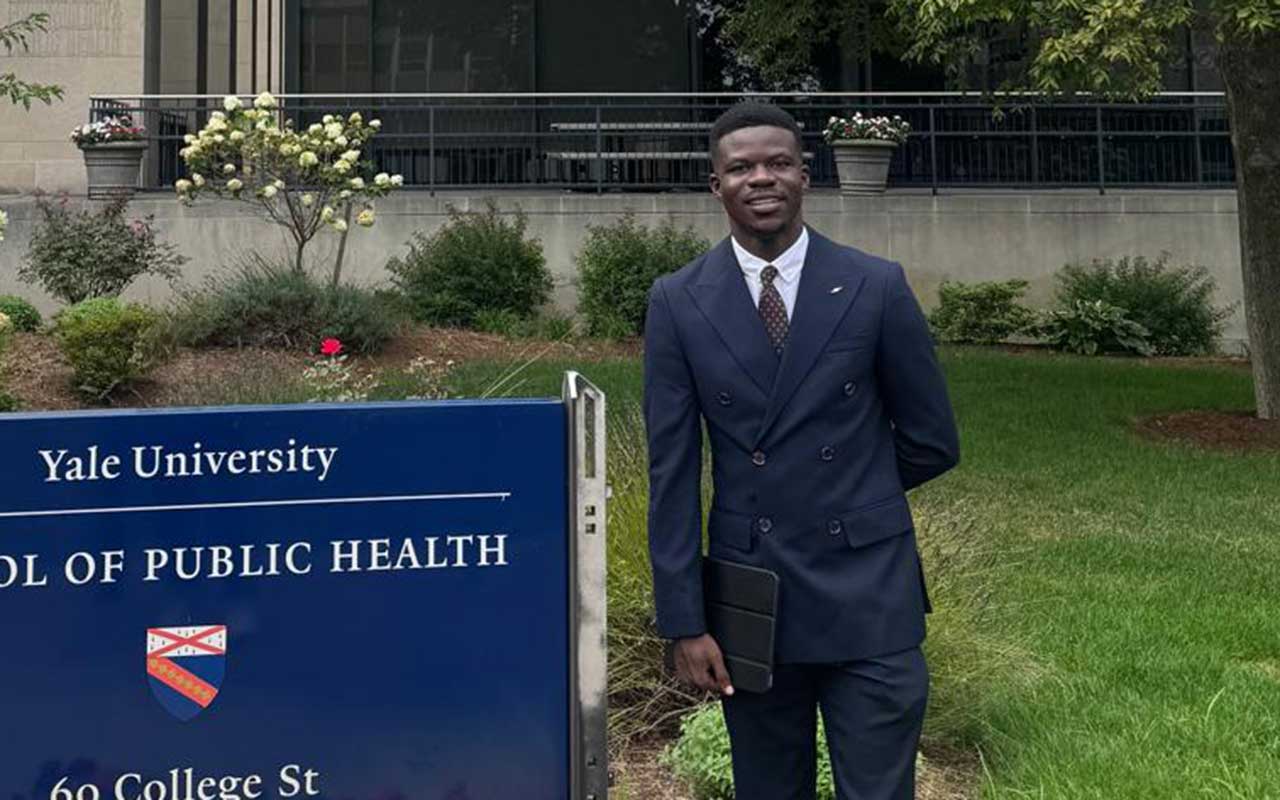
Determined to return benefits of his education to underserved communities in the country, Nigerian-born clinician, Ayo-ige Ayodele, has disclosed his training abroad is a means to an end — not the end itself, as he assured of strengthening infectious disease networks.
With his advanced studies in Epidemiology at the Yale School of Public Health, he told The Guardian that through evidence-based interventions, community-driven programmes, and improved surveillance, his long-term focus is to strengthen disease-control systems across the country

“I hope to strengthen infectious disease networks across Nigeria,” he said, adding that Nigeria’s rural communities remain central to his mission. “That’s where health gaps are widest.”
Ayodele, who trained as a medical doctor at Obafemi Awolowo University (OAU), Ile-Ife, is part of a new generation of African clinicians working to bridge the gap between bedside medicine and population-level research.
His work spans HIV/AIDS, neglected tropical diseases (NTDs), vaccine confidence, and maternal-child health, with plans to collaborate on interdisciplinary research addressing HIV, NTDs, sepsis, and emerging infectious threats both in Africa and globally.
Ayodele recalled how his journey began during clinical rotations in Nigeria, where he routinely treated patients suffering from onchocerciasis, lymphatic filariasis, schistosomiasis, and advanced HIV/AIDS. To him, “I encountered firsthand the burden of infectious diseases affecting underserved communities,” he said. according to him, treating such patients revealed how poverty, stigma, and weak health systems drive preventable illness. “I realized that while medicine saved individual lives, public health had the power to prevent disease at a population level.”
That realisation led him to epidemiology, which he described as “the scientific backbone of Internal Medicine.” “Epidemiology bridges diagnosis with discovery — it helps us understand why diseases occur, how they spread, and what interventions can interrupt them,” he explained.
His admission into the Yale MPH Epidemiology programme marked what he called “a major turning point,” combining his medical training with advanced competencies in infectious disease modeling, research ethics, and global health systems. At Yale, he has contributed to studies on early mortality reduction in advanced HIV/AIDS, including research examining the potential of azithromycin prophylaxis before ART initiation. He has also worked on NTD distribution in low-resource settings and investigations into vaccine acceptance and RSV immunoprophylaxis. “These findings reinforce that health policy must prioritize equitable access, affordability, community education, and surveillance,” he said.
Ayodele identified limited funding, workforce shortages, inequitable access, and weak primary care structures as persistent obstacles in Nigeria’s health sector. According to him, meaningful progress requires strengthening disease surveillance, investing in community health workers, improving research capacity, and expanding data-driven decision-making across health institutions.
He said Yale’s emphasis on interdisciplinary collaboration has significantly influenced his perspective on global health. “Yale has exposed me to cutting-edge epidemiologic methods, infectious disease modeling, research ethics, and systems thinking,” he noted.
“The culture of mentorship here has shaped how I view health innovation.” He expressed eagerness to apply these skills to problems facing vulnerable populations. “I want to design interventions that reflect the realities of communities in low-resource settings.”
To aspiring health professionals, Ayodele urged a commitment to curiosity and collaboration. “Your clinical training is valuable, but pairing it with research, advocacy, or health systems thinking amplifies your impact. Be curious, collaborate widely, seek mentorship, and commit to equity.”
His long-term vision is to become an infectious disease physician-epidemiologist leading research that informs policy and strengthens Nigeria’s capacity to respond to health threats. “I want to build stronger infectious disease networks across Nigeria, create prevention-oriented programmes, and mentor the next generation of clinician-scientists,” he said.
As he pursues advanced study in the United States, Ayodele maintains that his eyes remain firmly on home. For him, global expertise is most meaningful when it results in locally driven solutions — especially for the communities that need them most.

