 Follow Us on Google News


 Follow Us on Google Discover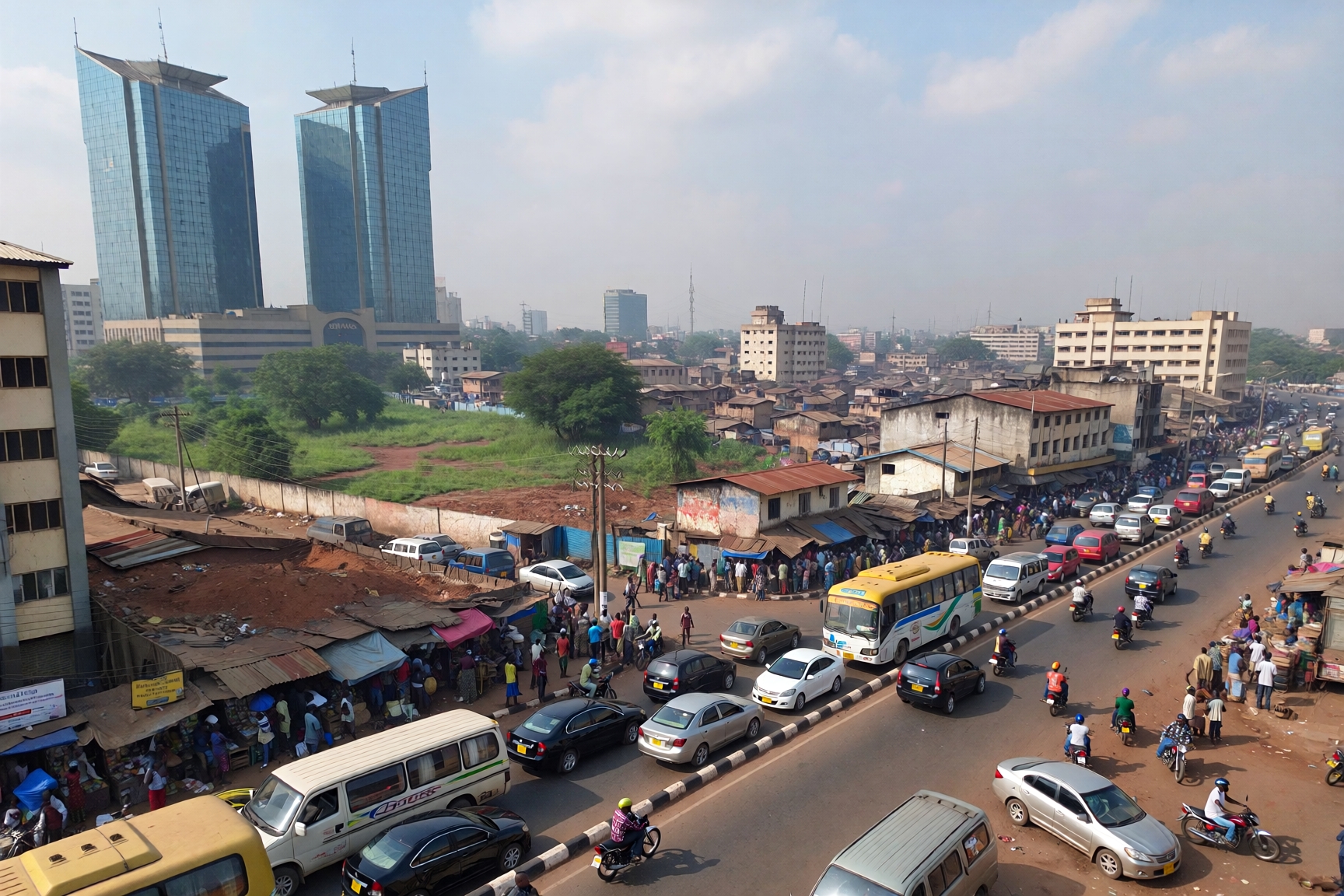
Welcome, and thank you for taking the time to explore this important question about life in Africa’s most populous nation. After months of research into Nigeria’s living standards and years of observing how ordinary Nigerians navigate daily existence, I’ve compiled this comprehensive analysis of quality of life across the country. Whether you’re considering relocating to Nigeria, investing in the nation, or simply curious about how 200 million people experience their everyday lives, you’ll find the honest truth here.
Nigeria’s quality of life is characterised by stark contrasts between wealth and poverty, with approximately 54% of the population living below the poverty line whilst an affluent minority enjoys world-class amenities in gated communities. Infrastructure deficits in electricity, healthcare, water supply, and transportation force most Nigerians to create parallel private systems costing enormous sums, whilst inflation above 30% and declining real wages have eroded purchasing power by 50-60% since 2023, making basic necessities increasingly unaffordable for families across all income brackets.
I remember my first conversation with a Lagos software developer who earned ₦350,000 monthly, a salary that sounds substantial until you realise he spends ₦80,000 on generators alone. That’s the Nigerian reality in a nutshell.
What is the Quality of Life Like in Nigeria?
The quality of life in Nigeria varies dramatically depending on your socioeconomic status, geographic location, and access to resources. For the upper class (perhaps 5-10% of the population), Nigeria offers a comfortable existence in secure estates with reliable private infrastructure. For the emerging middle class (15-20%), life is an exhausting hustle between multiple jobs whilst managing infrastructure failures. For the remaining majority living in poverty or near-poverty, Nigeria presents relentless daily challenges where families must choose between medicine and food, school fees and rent.
The National Bureau of Statistics documented that 133 million Nigerians experience multidimensional poverty, facing simultaneous deprivations in health, education, living standards, employment, and security. This isn’t merely about low income. It’s about lacking access to clean water (32.6% of Nigerians), adequate sanitation (45.1%), electricity (39.4%), and completed primary education (17.6% of adults).
Yet somehow the Nigerian spirit endures. Markets overflow with goods despite infrastructure failures. Entrepreneurs find gaps and fill them. Extended families function as social safety nets when government systems collapse.

The reality is that most Nigerians have developed sophisticated coping mechanisms rather than experiencing genuine quality of life improvements. A family might spend ₦50,000 monthly on generators, ₦30,000 on water tankers, ₦20,000 on private security, and ₦100,000 on private healthcare, essentially paying twice for services governments should provide. These workarounds function but reinforce inequality rather than solving underlying problems.
Regional differences matter enormously. A civil servant in Abuja earning ₦180,000 monthly experiences very different challenges compared to a farmer in Zamfara facing banditry, or a trader in Lagos navigating traffic congestion costing three hours daily. The North-South divide remains profound, with poverty rates in northern geopolitical zones at 46.5% compared to 13.5% in southern regions according to the 2018-19 Living Standards Survey.
Healthcare access illustrates the broader quality of life crisis perfectly. Nigeria ranks 163 of 191 countries in the WHO health system ranking. Life expectancy stands at approximately 60 years (59 for men, 63 for women), among Africa’s lowest. Maternal mortality remains unconscionably high at 512 deaths per 100,000 live births. Only 5% of Nigeria’s 200 million people have any health insurance coverage, forcing families into catastrophic out-of-pocket expenditures when illness strikes.
I’ve spoken with teachers who haven’t received salaries for six months, nurses working without essential supplies, and parents pulling children from school because ₦50,000 term fees exceeded what they could afford after food prices tripled. These aren’t isolated stories. They’re the common experience shaping Nigerian quality of life today.
Security concerns genuinely constrain movement and economic activity. Kidnapping affects market traders, students, and religious leaders, not just the wealthy. Insurgency has displaced millions in the Northeast. Banditry has made farming impossible across swathes of the Northwest. This insecurity doesn’t merely threaten safety, it fundamentally limits possibilities for ordinary Nigerians seeking better lives.
Understanding Nigeria’s Quality of Life: A Seven-Step Assessment Framework
After years observing how development indices translate into lived experience, I’ve developed this practical framework for understanding quality of life across Nigeria’s diverse regions.
1. Evaluate Infrastructure Access and Reliability
Begin by assessing access to basic services: electricity availability (hours per day), water source quality, road conditions, and healthcare facility proximity. In urban Lagos, you might have grid power 10 hours daily requiring generator backup. In rural Taraba, you might have no grid connection whatsoever. These infrastructure realities fundamentally shape daily life quality more than income alone.
Most Nigerian families experience infrastructure as something they must provide privately rather than expect from government. Calculate the “infrastructure tax” families pay monthly for generators, water tankers, inverter batteries, and private boreholes. In middle-class homes, this easily exceeds ₦100,000 monthly, money that could otherwise fund education, healthcare, or savings.
2. Measure Economic Purchasing Power and Inflation Impact
Quality of life depends not on nominal income but purchasing power after inflation. With current inflation above 30% annually, a family earning ₦400,000 monthly in 2023 needs approximately ₦520,000 today just to maintain the same living standard. Track staple food prices carefully: a 50kg bag of rice now costs ₦90,000-₦110,000 compared to ₦25,000 two years ago.
Calculate household consumption patterns. According to recent data, 83% of Nigerian households now prioritise food over education, healthcare, and savings because funds barely cover quality meals. If your household consumption has declined whilst nominal income remained stable, your quality of life has genuinely deteriorated even if statistics don’t capture this reality.
3. Assess Healthcare Accessibility and Quality
Examine both geographic access and financial accessibility to healthcare. Can your family reach a functional primary healthcare centre within 5km? Can you afford consultation fees (₦3,000-₦10,000), diagnostic tests (₦15,000-₦50,000), and medications when illness strikes? Only 5% of Nigerians have health insurance, meaning most families face potential financial catastrophe from serious illness.
Quality matters as much as access. Many public facilities lack essential drugs, equipment, and qualified staff. Private facilities offer better service but at costs beyond most families’ reach. A caesarean section in a decent private hospital runs ₦500,000-₦800,000, three to four months’ salary for many middle-class earners. This creates quality of life anxiety even for the relatively affluent.
4. Examine Educational Access and Quality
Education access varies wildly by region and socioeconomic status. Nigeria has 14.8 million out-of-school children, concentrated in northern states. Even where schools exist, quality remains questionable with overcrowded classrooms, poorly trained teachers, and inadequate materials. Private schools offer better quality but charge ₦30,000-₦150,000 per term depending on location and reputation.
The quality of life implications extend beyond school attendance. Parents spending 30-40% of household income on school fees experience genuine financial strain. Children in public schools often receive education inadequate for university entrance or modern employment. This creates intergenerational poverty traps that quality of life indices struggle to capture fully.
5. Evaluate Security and Freedom of Movement
Security profoundly affects quality of life across Nigeria’s six geopolitical zones. In some areas, insurgency, banditry, or kidnapping make travel dangerous or impossible. Farmers in northwestern states abandoned farmland due to bandit attacks. Businesspeople in southeastern states avoid travel on certain roads. These security constraints limit economic opportunities and daily freedom in ways GDP statistics cannot measure.
Calculate security’s indirect costs. Many families now avoid evening activities, hire private security, install elaborate home protection systems, and restrict children’s movements. These adaptations reduce quality of life even when direct violence is avoided. The psychological burden of constant risk assessment genuinely diminishes well-being.
6. Measure Social Support Systems and Community Strength
Nigerian quality of life often depends more on family and community networks than government services. Extended family systems function as unemployment insurance, healthcare financing, and retirement plans simultaneously. Evaluate your access to these networks carefully. Families with strong community ties navigate hardship more successfully than isolated nuclear families with similar incomes.
However, these traditional support systems face increasing strain. Urban migration, economic pressure, and changing social norms weaken extended family obligations. Young professionals supporting elderly parents, unemployed siblings, and their own children simultaneously experience crushing financial burden. This “family tax” can consume 20-30% of income, constraining individual quality of life whilst providing crucial social safety nets.
7. Consider Regional and Ethnic Context
Quality of life experiences vary significantly across Nigeria’s 371 ethnic groups and six geopolitical zones. A Hausa farmer in Katsina State faces very different challenges from an Igbo trader in Anambra or a Yoruba tech worker in Lagos. Northern states generally experience higher poverty rates, lower educational attainment, and higher child mortality. Southern states face different challenges including traffic congestion, higher living costs, and environmental degradation in the Niger Delta.
Ethnic identity can affect access to opportunities, political patronage, and economic networks in ways that profoundly shape individual quality of life. Understanding these contextual factors helps explain why national averages often misrepresent lived experiences across Nigeria’s extraordinarily diverse population.
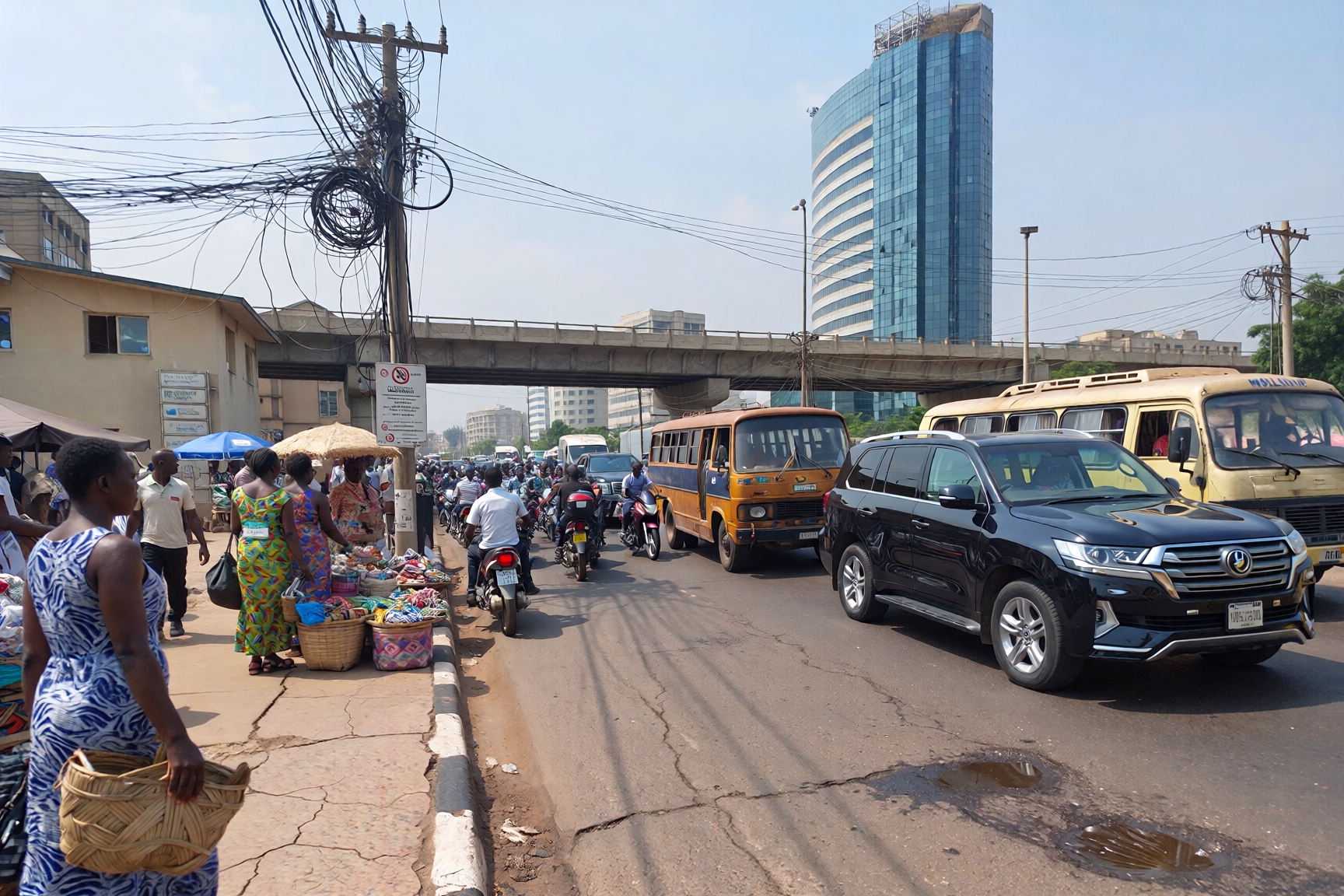
Regional Quality of Life Comparison Across Nigeria
After analysing data from the National Bureau of Statistics and field research across Nigeria’s six geopolitical zones, this table compares key quality of life indicators showing dramatic regional variations that national averages obscure.
| Geopolitical Zone | Poverty Rate (%) | Access to Electricity (%) | Access to Safe Water (%) | Under-5 Mortality (per 1,000) | Average Monthly Household Income (₦) | Life Expectancy (Years) |
|---|---|---|---|---|---|---|
| North West | 71.2 | 35 | 42 | 98.2 | 95,000 | 56 |
| North East | 68.5 | 28 | 38 | 85.7 | 88,000 | 55 |
| North Central | 48.3 | 58 | 61 | 68.4 | 145,000 | 61 |
| South West | 13.5 | 87 | 82 | 42.1 | 285,000 | 65 |
| South East | 18.2 | 76 | 74 | 48.3 | 235,000 | 64 |
| South South | 22.7 | 68 | 69 | 51.6 | 198,000 | 62 |
This data reveals that a child born in Jigawa State faces nearly 2.5 times higher mortality risk compared to a Lagos-born child, whilst northern families earn roughly one-third the income of southern counterparts. These disparities reflect decades of unequal development, security challenges, educational access gaps, and infrastructure investment patterns that compound across generations. Quality of life in Nigeria cannot be understood without acknowledging these profound regional inequalities that make the country function almost as six different nations sharing borders.
What is the Quality of Life Index in Nigeria?
Nigeria doesn’t have a single universally accepted Quality of Life Index, but various international organisations measure comparable indicators. Numbeo’s Quality of Life Index typically ranks Nigeria quite low (around 190th of 200+ countries surveyed), reflecting poor healthcare systems, high crime rates, limited purchasing power, inadequate infrastructure, and pollution concerns.
The Human Development Index (HDI) offers another measure. Nigeria ranks 163 of 191 countries with an HDI score of approximately 0.535, placing it in the “low human development” category. This index combines life expectancy, education levels, and gross national income per capita into a composite measure showing Nigeria lagging significantly behind global standards and even African averages.
More useful for understanding actual Nigerian conditions is the Multidimensional Poverty Index which shows 133 million Nigerians (roughly 65% of the population) experiencing deprivations across health, education, living standards, work, and security simultaneously. This captures quality of life more accurately than income alone because it acknowledges the interconnected challenges Nigerians face daily.
What these indices miss, however, are the unofficial systems Nigerians create. The thriving informal economy, community support networks, cultural richness, and entrepreneurial resilience don’t appear in quality of life calculations but profoundly shape lived experience. A family might score poorly on official indices yet maintain dignity, community connection, and genuine happiness through traditional systems these metrics ignore.
I’ve met families in rural Benue living without electricity or piped water who expressed more life satisfaction than struggling Lagos professionals earning ten times their income but drowning in stress and insecurity. Quality of life indices capture material conditions but often miss the psychological, social, and cultural dimensions that make life meaningful.
That said, material deprivation genuinely matters. You cannot simply celebrate resilience whilst ignoring that Nigerian children die from preventable diseases, talented students drop out for lack of school fees, and productive adults waste hours daily navigating infrastructure failures. The quality of life indices tell an uncomfortable truth: by global standards, most Nigerians endure genuine hardship that shouldn’t be romanticised or accepted as inevitable.
How Has Quality of Life in Nigeria Improved?
Quality of life improvements in Nigeria have been modest and unevenly distributed across the population. Telecommunications infrastructure represents perhaps the clearest success story. Mobile phone penetration now exceeds 80%, connecting previously isolated communities to information, financial services (via mobile money), and economic opportunities. This genuinely transformed quality of life for millions, particularly in rural areas previously disconnected from markets and services.
Healthcare has seen targeted improvements in specific areas. Maternal mortality declined from approximately 800 deaths per 100,000 live births in 2013 to 512 per 100,000 by 2020, still unacceptably high but representing genuine progress. Polio eradication campaigns succeeded, removing Nigeria from the list of polio-endemic countries. Immunisation coverage increased, protecting more children from preventable diseases.
The Federal Ministry of Health has strengthened community health worker programmes in some states, bringing basic healthcare services closer to rural populations. These improvements are real but remain insufficient given Nigeria’s population growth and expanding needs.
Educational access expanded with Universal Basic Education policies and school feeding programmes that increased enrolment, particularly for girls in northern states. Literacy rates improved gradually, though Nigeria still has 14.8 million out-of-school children and educational quality remains questionable across much of the system.
Banking sector reforms brought financial services to previously unbanked populations through mobile banking and agency banking networks. Millions of Nigerians now access formal financial services for the first time, improving their economic resilience and access to credit, savings, and insurance products.
Infrastructure improvements occurred in specific sectors and locations. The Second Niger Bridge’s completion eased traffic congestion in the Southeast. Lagos’ Bus Rapid Transit system improved urban transport for millions. New airports and highway rehabilitation projects enhanced connectivity in certain regions.
However, these improvements must be weighed against significant quality of life deteriorations. Real wages declined 50-60% since 2023 due to inflation, making food and basic necessities increasingly unaffordable. Household consumption fell dramatically even as nominal disposable income increased, indicating genuine impoverishment across the population. The recent economic analysis documents this troubling trend clearly.
Security deteriorated in multiple regions. Insurgency, banditry, kidnapping, and armed robbery expanded geographically, constraining movement and economic activity. Millions remain internally displaced, living in camps without adequate services. This represents a genuine quality of life regression that statistics struggle to quantify fully.
Infrastructure deficits worsened in practice despite some targeted improvements. Grid electricity reliability declined in many areas. Road quality deteriorated faster than rehabilitation efforts. Public healthcare facilities lost staff to emigration whilst facing budget cuts. These failures forced more Nigerians into expensive private alternatives they could ill afford.
The honest assessment is that for most Nigerians, quality of life has deteriorated over the past five years despite some targeted improvements in telecommunications, healthcare access, and financial inclusion. Economic pressure, inflation, security challenges, and infrastructure failures overwhelmed the modest gains achieved. The deteriorating living standards now threaten national stability according to economic analysts.
I remember speaking with a primary school teacher in Ekiti State who perfectly captured this paradox. She now owns a smartphone and can send mobile money to relatives, genuine quality of life improvements. But her salary’s purchasing power halved, her children’s school fees doubled, and she now sleeps at school three nights weekly because transport costs became prohibitive. The question isn’t whether any improvements occurred but whether the gains outweighed the losses. For most Nigerians, sadly, they did not.
Why is Nigeria’s Quality of Life So Low?
Nigeria’s low quality of life stems from decades of governance failures, corruption, resource mismanagement, and underinvestment in human capital despite enormous natural resource wealth. The fundamental paradox is that Africa’s largest oil producer cannot provide reliable electricity for its citizens. This failure isn’t accidental but reflects systemic dysfunction across institutions.
Corruption represents perhaps the single greatest obstacle to quality of life improvements. Government revenue disappears into private pockets rather than funding infrastructure, healthcare, and education. The petroleum subsidy regime, before recent reforms, hemorrhaged billions annually whilst ordinary Nigerians queued for fuel. Infrastructure contracts get awarded to political cronies who deliver shoddy work or abandon projects entirely. Civil servants demand bribes for basic services that should be free.
This corruption creates a “leakage” where money meant for public goods enriches individuals instead. A hospital budget might specify ₦50 million for equipment, but ₦30 million disappears through inflated procurement costs and kickbacks whilst ₦20 million worth of inferior equipment arrives. This pattern repeats across every sector, every level of government, every year. The cumulative effect is that Nigerians receive perhaps 30-40% of the value their tax payments and oil revenue should provide.
Infrastructure underinvestment compounds over decades into crisis. The national power grid frequently collapses, delivering perhaps 4,000 megawatts for 200 million people compared to South Africa’s 40,000 megawatts for 60 million. Roads deteriorate faster than rehabilitation efforts. Water supply systems fail. Hospitals lack basic equipment. Schools operate without libraries, laboratories, or qualified teachers. This infrastructure deficit forces every Nigerian to essentially maintain private alternatives, consuming resources that could otherwise improve living standards.
Security challenges expanded dramatically from localised issues to national threats. Boko Haram insurgency displaced millions in the Northeast. Banditry across the Northwest makes farming impossible in many areas. Kidnapping became a thriving industry affecting every region. Oil theft in the South South costs billions annually. These security failures reflect state weakness, corruption within security forces, poverty creating recruits for armed groups, and political manipulation of ethnic and religious divisions.
The quality of life implications are enormous. A farmer abandoning land due to banditry loses livelihood and food security. A kidnapped breadwinner leaves families impoverished. Displaced persons in camps exist in desperate conditions. Military checkpoints slow commerce and create opportunities for extortion. Security costs constrain businesses and individuals. The economic activity that could generate prosperity simply doesn’t occur in insecure environments.
Population growth outstrips service provision consistently. Nigeria adds approximately 5 million people annually but doesn’t build equivalent hospitals, schools, housing, or infrastructure. The healthcare system designed for perhaps 100 million people now serves 220 million. Schools built for 50 students now hold 150. This creates quality of life deterioration even maintaining current spending levels because resources get divided across more people.
Economic policy failures exacerbate these challenges. Currency controls and multiple exchange rates created arbitrage opportunities for the connected whilst harming ordinary businesses. Petroleum subsidy consumption absorbed funds desperately needed for infrastructure. Trade protectionism raised consumer prices without creating competitive domestic industries. These policies benefited political elites whilst harming quality of life for ordinary Nigerians.
Perhaps most fundamentally, Nigeria failed to invest adequately in human capital through education and healthcare. Countries that achieved rapid quality of life improvements (South Korea, Singapore, even Ghana and Rwanda) prioritised education spending, healthcare accessibility, and skills development. Nigeria spent decades with healthcare budgets below 5% of federal spending (WHO recommends 15% minimum) whilst education budgets remained inadequate for population needs.
The result is a workforce inadequately educated for modern employment, a population facing preventable disease burdens, and young people emigrating in massive numbers seeking opportunities elsewhere. This “brain drain” removes the very human capital that could drive improvements whilst the remaining population struggles with inadequate services.
I’ve observed this dynamic across multiple visits to various Nigerian states. The potential is obvious: energetic young people, entrepreneurial drive, natural resources, strategic geographic position. But the systems meant to convert that potential into shared prosperity fail consistently. Until governance improves, corruption decreases, and human capital investment increases substantially, Nigeria’s quality of life will remain low despite enormous wealth and potential.
Related Insights on Nigerian Life and Society
Understanding quality of life in Nigeria connects deeply with broader patterns of how Nigerians navigate daily challenges, create informal solutions to systemic failures, and maintain social cohesion despite economic pressure. My previous research into what life is like in Nigeria today explores these daily realities in greater depth, examining how ordinary families manage infrastructure failures, economic pressure, and security concerns whilst maintaining hope and entrepreneurial drive.
Similarly, my analysis of how the average person makes a living in Nigeria reveals the economic strategies families employ to survive and occasionally thrive despite systemic obstacles. These coping mechanisms fundamentally shape quality of life experiences in ways official statistics often miss, showing both remarkable resilience and tragic waste of human potential.
Improving Nigeria’s Quality of Life: Paths Forward and Practical Steps
Nigeria’s quality of life challenges aren’t inevitable or unsolvable. Countries with similar starting points (Rwanda, Ethiopia, even Bangladesh) achieved remarkable improvements through focused efforts on governance, human capital investment, and infrastructure development. Nigeria possesses resources and human talent these countries lacked. What’s missing is political will and consistent implementation of proven policies.
The path forward requires fundamental governance reform including transparency in public spending, consequences for corruption, meritocratic civil service appointments, and genuine accountability to citizens. Without addressing the leakage where public funds disappear into private pockets, no amount of oil revenue or foreign investment will improve quality of life for ordinary Nigerians.
Infrastructure investment must become priority one. Reliable electricity enables businesses, reduces household expenses, improves education (children studying at night), and enhances healthcare delivery. Water supply systems prevent disease and reduce household labour burden. Road networks enable commerce and social connection. These aren’t luxuries but prerequisites for decent quality of life.
Healthcare system strengthening through increased budget allocation (reaching WHO’s 15% recommendation), community health worker programmes, and universal health coverage schemes could dramatically reduce maternal mortality, child deaths, and disease burden. The health system challenges are well-documented but solvable with sufficient political commitment and resources.
Education quality improvements matter more than mere access expansion. Teacher training, updated curricula, adequate materials, and school feeding programmes cost money but generate returns over decades through improved productivity and earnings. Nigeria’s future quality of life depends absolutely on educating today’s children adequately.
Security sector reform including professional training, adequate equipment, better pay to reduce corruption, and accountability for human rights violations could rebuild state capacity to protect citizens. Economic opportunities for young people reduce recruitment into armed groups whilst functioning justice systems deter criminality.
For individual families seeking to improve quality of life within current constraints, practical steps include: diversifying income sources to reduce vulnerability, investing in education and skills despite costs because returns remain highest for tertiary-educated workers, building community networks that provide mutual support, relocating to areas with better infrastructure and security if possible, and participating in self-help community projects when government fails.
The honest truth is that systemic improvements require political change that ordinary Nigerians cannot individually control. But within existing constraints, families can make choices that meaningfully improve their quality of life. The resilience and entrepreneurship I’ve observed across Nigeria suggests that given even modestly better governance and security, Nigerians would rapidly improve their own circumstances.
Three Key Takeaways
- Nigeria’s quality of life varies dramatically by region and class, with northern states experiencing poverty rates above 70% whilst southern urban centres offer better infrastructure and economic opportunities, though inflation above 30% has eroded purchasing power for families across all income levels.
- Infrastructure deficits force Nigerians to create expensive private alternatives to services governments should provide, with middle-class families spending ₦100,000-₦150,000 monthly on generators, water tankers, and security, resources that could otherwise fund education, healthcare, or savings.
- Security concerns, healthcare inadequacy, and educational quality gaps constrain quality of life as profoundly as income levels, with only 5% of Nigerians having health insurance, 14.8 million children out of school, and kidnapping and banditry limiting movement and economic activity across multiple regions.
Frequently Asked Questions About Nigeria’s Quality of Life
What is Nigeria’s quality of life?
Nigeria’s quality of life is characterised by significant challenges including high poverty rates (54% living below the poverty line), inadequate infrastructure forcing expensive private alternatives, healthcare systems ranking 163 of 191 countries, and security concerns constraining movement and economic activity across multiple regions. However, strong family networks, entrepreneurial resilience, and cultural richness provide social capital that quality of life indices often fail to capture adequately.
Is quality of life in Nigeria good or bad?
Quality of life in Nigeria is objectively poor by global standards, with most citizens lacking reliable electricity, safe water, accessible healthcare, and quality education, whilst facing inflation above 30% that halves real wages. However, subjective quality of life varies dramatically: affluent Nigerians in gated estates experience comfortable lives whilst the majority in poverty face relentless daily hardship choosing between food and medicine, school fees and rent.
What is the Quality of Life Index score for Nigeria?
Nigeria scores approximately 0.535 on the Human Development Index, ranking 163 of 191 countries in the “low human development” category. Numbeo’s Quality of Life Index typically ranks Nigeria around 190th of 200+ countries surveyed, reflecting poor healthcare, high crime, limited purchasing power, inadequate infrastructure, and environmental concerns that make Nigeria one of the lowest-ranked nations globally.
How has Nigeria’s quality of life changed over time?
Nigeria’s quality of life has experienced mixed changes with modest improvements in telecommunications access (80%+ mobile penetration), maternal mortality reduction (from 800 to 512 per 100,000 births), and financial inclusion through mobile banking. However, these gains were overwhelmed by deteriorating economic conditions with real wages declining 50-60% since 2023, expanding security threats displacing millions, and infrastructure deficits worsening despite targeted improvements in specific sectors and locations.
Why is Nigeria’s quality of life so low despite oil wealth?
Nigeria’s quality of life remains low despite enormous oil revenue because corruption diverts public funds into private pockets rather than infrastructure and services, governance failures create systemic dysfunction across institutions, security challenges constrain economic activity, and chronic underinvestment in healthcare and education leaves human capital underdeveloped. Population growth also outstrips service provision, diluting resources across more people annually whilst economic policies often benefit political elites over ordinary citizens.
What are the main factors affecting quality of life in Nigeria?
The main factors include infrastructure deficits (only 60% electricity access), healthcare inadequacy (163rd of 191 countries in WHO ranking, 5% insurance coverage), security concerns (insurgency, banditry, kidnapping), economic pressure (30%+ inflation, declining real wages), educational access gaps (14.8 million out-of-school children), and regional inequalities with northern poverty rates at 71% versus 13% in the South West affecting opportunities and outcomes dramatically.
How does quality of life vary across Nigeria’s regions?
Quality of life varies dramatically with northern states experiencing poverty rates above 70%, electricity access below 40%, and under-five mortality above 90 per 1,000 births compared to southern states with 13-18% poverty rates, 75-87% electricity access, and child mortality below 50 per 1,000. Average household income in the South West (₦285,000) triples North West incomes (₦95,000), whilst life expectancy differs by nearly a decade between regions.
What percentage of Nigerians live in poverty?
Approximately 54% of Nigerians (roughly 110-120 million people) live in poverty based on World Bank projections for 2024, with 42 million people falling into poverty since 2018-19. Rural poverty affects 75.5% of residents compared to lower urban rates, though urban poverty is increasing rapidly as inflation erodes purchasing power faster than wages grow, pushing even previously stable middle-class families into hardship.
How does Nigeria’s quality of life compare to other African countries?
Nigeria’s quality of life ranks below African averages on most indicators, with lower life expectancy (60 years versus continental average of 64), higher poverty rates (54% versus African average near 40%), and poorer infrastructure access than regional peers. Countries like Ghana, Kenya, Rwanda, and South Africa achieve better healthcare outcomes, educational access, and infrastructure provision despite some having lower GDP per capita than Nigeria’s oil-rich economy.
What is the life expectancy in Nigeria?
Life expectancy in Nigeria stands at approximately 60 years overall, with men averaging 59 years and women 63 years. This ranks among Africa’s lowest life expectancies, reflecting high maternal mortality (512 deaths per 100,000 births), child mortality (75 deaths per 1,000 under-five children), infectious disease burden (malaria, tuberculosis, HIV), and inadequate healthcare access with only 27 physicians per 100,000 people versus WHO’s recommended ratio.
How much does the average Nigerian spend on healthcare?
Healthcare expenditure per capita in Nigeria averaged ₦6,326 ($3.86) in 2024, among the world’s lowest, forcing families into catastrophic out-of-pocket payments when serious illness strikes. Middle-class families might spend ₦50,000-₦100,000 annually on routine care, whilst a serious medical emergency (surgery, hospitalisation) easily costs ₦300,000-₦800,000, financially devastating for the 95% without health insurance coverage.
What is causing Nigeria’s low quality of life?
Low quality of life stems from decades of governance failures allowing corruption to divert public funds (perhaps 30-40% leakage), chronic underinvestment in infrastructure, healthcare, and education despite oil wealth, security challenges (insurgency, banditry, kidnapping) constraining economic activity, population growth (5 million annually) outstripping service provision, and economic policies benefiting elites over ordinary citizens whilst human capital investment remained inadequate for modern development needs.

