 Follow Us on Google News


 Follow Us on Google Discover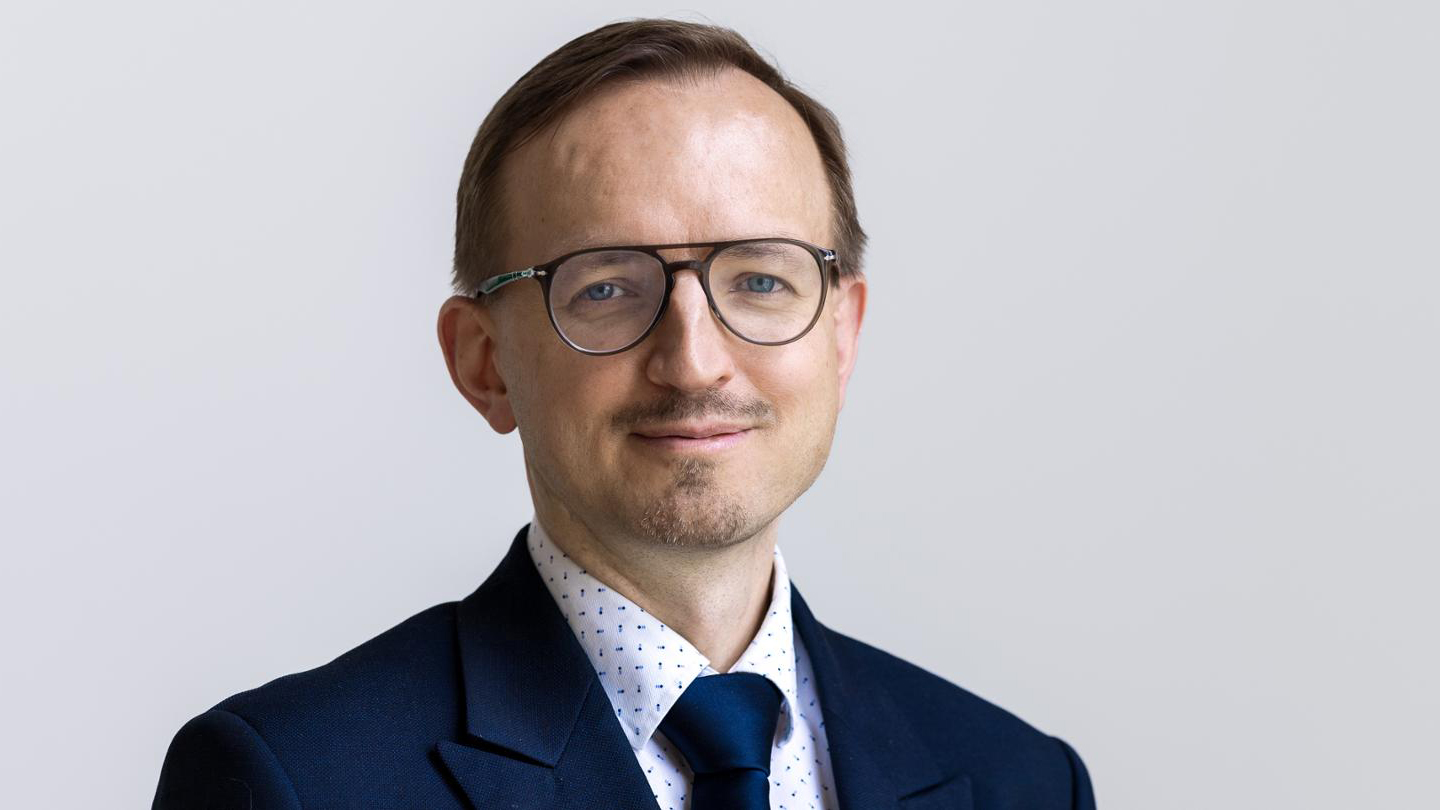
The Polish Ambassador to Nigeria, Michał Cygan, is not only excited about his posting; his enthusiasm to deepen Polish-Nigerian relations has earned him commendations within a short period. In an interview with BRIDGET CHIEDU ONOCHIE, he identified business, education and agriculture as major areas of interest and assured of his embassy’s commitment to facilitate trades between two countries.
As a new ambassador of your country to Nigeria, what are your immediate and long-term goals?
It is a privilege to be in Nigeria as the Ambassador of Poland. One of my goals and priorities is to develop people-to-people relations. I have already met some wonderful people and institutions, and I am very happy to be here. I have also met Polish-Nigerian families, who are excellent examples to follow but there are equally new paths to open and what I have seen already is very promising. I see great opportunities to build and develop new partnerships. And when we are thinking about Polish-Nigerian relations, I am thinking of both business-oriented activities as well as academic and scholarship cooperation. These are the two main areas I see a meaningful Polish-Nigerian cooperation.
How would you describe the current trade relations between Nigeria and Poland?
I would say we are at the average level of business indicators between Nigeria and the European Union as a whole, or most of the EU countries, which in my view is too little. I don’t want to be average. I think we can go much higher than that and I see a great unexplored potential. First, Poland and Nigeria are growing. Poland has just become the number 20 economy in the world. By economic indicators, we are a G20 economy in all but the name. Next year, we would be invited to participate in G20 meetings in the United States. We also became a one trillion-dollar economy in 2025, which is also the ambition of President Bola Ahmed Tinubu for Nigeria – a goal that he has set and we are cheering for Nigeria to reach this level. That is the broad framework showing how much Poland and Nigeria can benefit from increasing cooperation, which shouldn’t be too hard because until now, we have been very kind and friendly partners.
Our companies were happily growing in the domestic market because this big economy offers domestic opportunities and also because the European single market has great benefits. So, until very recently, Polish businesses were happy to explore what the economic ecosystem has to offer, and business by nature is opportunistic, going for low hanging fruits before the more pioneering markets. At this time, many Polish businesses have already outgrown the opportunities, the size of the domestic or European market and are looking with interest outside. My job and ambition is to bring them to Nigeria. I have already started working on that. We held a successful Polish-Nigerian Economic Forum last September 2025 in Lagos; a lot of contacts were made, some of which were continuation of what we had before, while others are new and very promising avenues facilitated by our trade office in Lagos.
We have excellent staff and they are the first contact point for Nigerian businessmen that are interested in establishing economic relations with Poland. So, the embassy and the trade office are working hand in hand to facilitate and increase our exchanges.
Specifically, what are the available business opportunities to explore?
Poland is such a big economy, importing oil and gas from Nigeria. That is, traditionally, a good trade. Poland is also supporting Nigeria in its negotiations with the European Union to enter with agricultural products. We know that sesame is important. We have also heard that the Nigerian government is promoting cocoa and hibiscus and it is negotiating with the EU. So, we are very much in favour of helping Nigeria to meet the conditions of the agro market. What we can offer is not just technical expertise; we know how hard it is to meet the very elevated standards. It is a lengthy process and we have the technical expertise to share. We also have a huge agro business in Poland with 2025 exports exceeding €50 billion. So, we can practically feed half of Europe but our idea is not so much to export food to Nigeria or Africa but to export machinery, knowledge and technical expertise to help prevent post-harvest loss and make African agriculture more efficient and more productive.

So, agriculture is one of the areas we can offer value added. We are also a very robust economy when it comes to Information Technology (IT) and Nigeria is developing and diversifying its economy in that sector. Some Polish companies that come to West Africa are employing very skilled people in the IT sector, including cyber defence, where Poland is a very strong player, having been exposed to a lot of hostile activities mostly from Russia. This is not a surprise to anybody and I am not revealing any secrets. Russia in its campaign and aggression against Ukraine is also saying that they see Poland and Europe as hostile countries and we see this in the number of cyber attacks against Poland. I believe we are the number three target after Ukraine and the UK. So, we have developed great cyber defence skills and the benefit is that we have well-tested skills that can be shared with good partners.
Another sector we have our presence in Nigeria is engineering. Part of the Lagos Port was built by Polish companies and we are willing to come back at full scale. We have great engineering companies with lots of expertise and potential for partnership. Then, we have the whole pharmaceutical industry. There is also a whole wide energy sector – renewables and traditional energy, equipment, machinery and the intelligent systems to help use energy efficiently. Many companies and consumers are off-grid or just developing, using generators. So, the energy efficiency for the future is very important, which would also include gas conversion. Nigeria is more and more using gas for a greener or safer and more environmentally friendly source of energy and Poland has a great expertise in the use of gas as alternative to fuel. It is a huge industry and a lot of Polish companies are already here in Nigeria in that sector.
In defence and security, Poland is a very strong provider of security, not just cyber defence but also very much a traditional defence partner. So, basically, for the size of our economies, we can go on and on because every industry practically has its place in Poland. We are also a strong part of the international value chains that produce machinery. Many people don’t even realise that when they buy a European product, very often, most of the content is made in Poland. If someone buys a Volkswagen car, it is a German brand of course but it can be made in Poland actually. Poland is second only to China globally in producing electrical batteries. A lot of products that reach Africa have a very strong Polish content even if the name is not a Polish brand.
Considering that several countries compete for the Nigerian market, what edge has your country above others?
Poland as an open market economy leaves a lot to individual initiative. That is, perhaps, a big difference between countries known for the use of subsidies to strengthen their exports. In a way, that creates some market distortions because the products are sometimes so cheap that they do not reflect the real value; part of the cost is hidden somewhere and can be taken by the government, but then it does not allow local production to grow. Our support is subtle and more in the background. We have a trade office in Lagos through which we facilitate participation in trade fairs, create contacts between chambers of commerce, facilitate information exchange for interested businessmen to come and present their offer. We try to reduce the risks for them, provide them with information on the legal frameworks and link them with good partners. So, we reduce the barriers for new entrance into the markets without targeting specific sectors with subsidies or any sort of allowances because we don’t believe it is in the long-term benefit of the relation between the countries. We believe in strengthening and creating conditions for the market-driven forces to work. So, if something is in demand and if Poland has good products or technical solutions, we believe that its value speaks for itself. We try to support businesses but not to overplay it or create artificial incentives that are not sustained and can put the value of the product or service to question.
So, we are a bit in the background along the liberal philosophy that we let the people and the market play its role. We try to get feedback information about where we are strong and where it is better to import something. We are not trying to be best in everything because no one can be best in everything; we rather try to identify what is a natural environment, an area of cooperation and strengthen where the partnership has the best chances to grow.
Many Nigerians have indicated interest in studying in your country. How flexible are your policies in this area?
Here, it is the area of win-win cooperation. Currently, there are about 4,000 Nigerian students in Poland beyond those who already graduated. So, this is a very important area. Cooperation is ongoing and growing and I believe that Nigeria has all that is needed to succeed because the most important part of the education system is a student. Nigeria does not lack ambitious and talented young people, who are looking for the best opportunities. Of course, it is always a challenge to meet all criteria for studying abroad. Sometimes, the competition is tough. I know this personally having been an exchange student in a foreign country as a teenager. So, I know how much of adaptation it also takes. It is not just enough to have a dream; you have to help the dream by preparing to work hard to meet the criteria, to be qualified, to further develop the talent, the potential and acquire skills in Europe, including in Poland. What I see on a daily basis is that many people meet these criteria. So, it is just about making sure that there is a match-making.
There is a little challenge in distinguishing between candidates, who actually intend to study, and those who would rather seek a pretext just to go abroad. Sometimes, the documents they present or their level of skills do not match what is on paper. So, that is the task but we are managing and as I told you, there are thousands of very qualified, brilliant Nigerian students. I also know some people who have received good education in Poland and have either returned to contribute to the development of Nigeria or stayed back and established themselves in Poland. We are only trying to ensure that those who go to Poland are ready to adapt to different study or work culture just like people who come from Poland adapt to work in Nigeria.
There have been several programmes sponsored by European countries on misinformation. Why is the topic attracting so much attention lately?
I believe this is one of the areas that are growing in importance. It is very important for every society or country, including Nigeria and Poland, because we are democratic countries. We believe in individual freedoms but as much as it is a value, it comes with vulnerabilities. If we believe that it is a value, that we don’t have censorship or an authority that controls information coming from abroad, impose one interpretation or punish one for speaking out, then we are also accepting that there will be possibilities for hostile actors.
Sometimes, government-controlled actors try to infiltrate and shape our information space, and shape the minds of our population, not according to our best interests but according to the interests of those foreign or hostile actors. And this danger comes from two sides – political and commercial. The first one, a political one, would be the non-democratic governments that spend huge budgets for misinformation and propaganda. In contrast, a democratic government cannot have a policy of lying. You cannot put it in a budget; you cannot vote it in the parliament that you have an institution tasked with spreading false information, because that would be illegal. This danger comes only from non-democratic countries that want to present themselves better than they really are, or want to discredit their competition. There are countries, for instance, that lead very much neo-imperial, colonial policies, that are very active in Africa, the most flagrant example being Russia that provides mercenaries to several regimes, taking in exchange their and other resources. But ironically, they are spending a lot of money to present the false image of a country that helps to liberate from colonial influence. So, that is one danger that we have to shield our societies from – from those who are paid to misinform.
But there is another source of danger that is more related to the economic, and not a political dimension, which is big modern media enterprises that are not much interested in what is true but what is profitable. They will not necessarily be providing the society with relevant and useful information but rather focus on what sells best and generates audience’s attention. Any government that has a long-term sustainable development and a healthy development of its people and society in mind should have policies that take this dangerous phenomenon into account.
And that leads us to the same conclusions – that we should strengthen good journalism and solid fact checking. We should develop the capacity of the education systems to teach young people to be smart and check different sources of information. They should not accept something for granted; they should not accept something for a fact just because it is popular. They should be aware of the quality of information because information is nowadays a currency; it is power and a driver of the modern dynamics of any society. So, we need to make sure that an information is of quality, that it is like real food that nourishes, and not junk food.

