 Follow Us on Google News
 Follow Us on Google Discover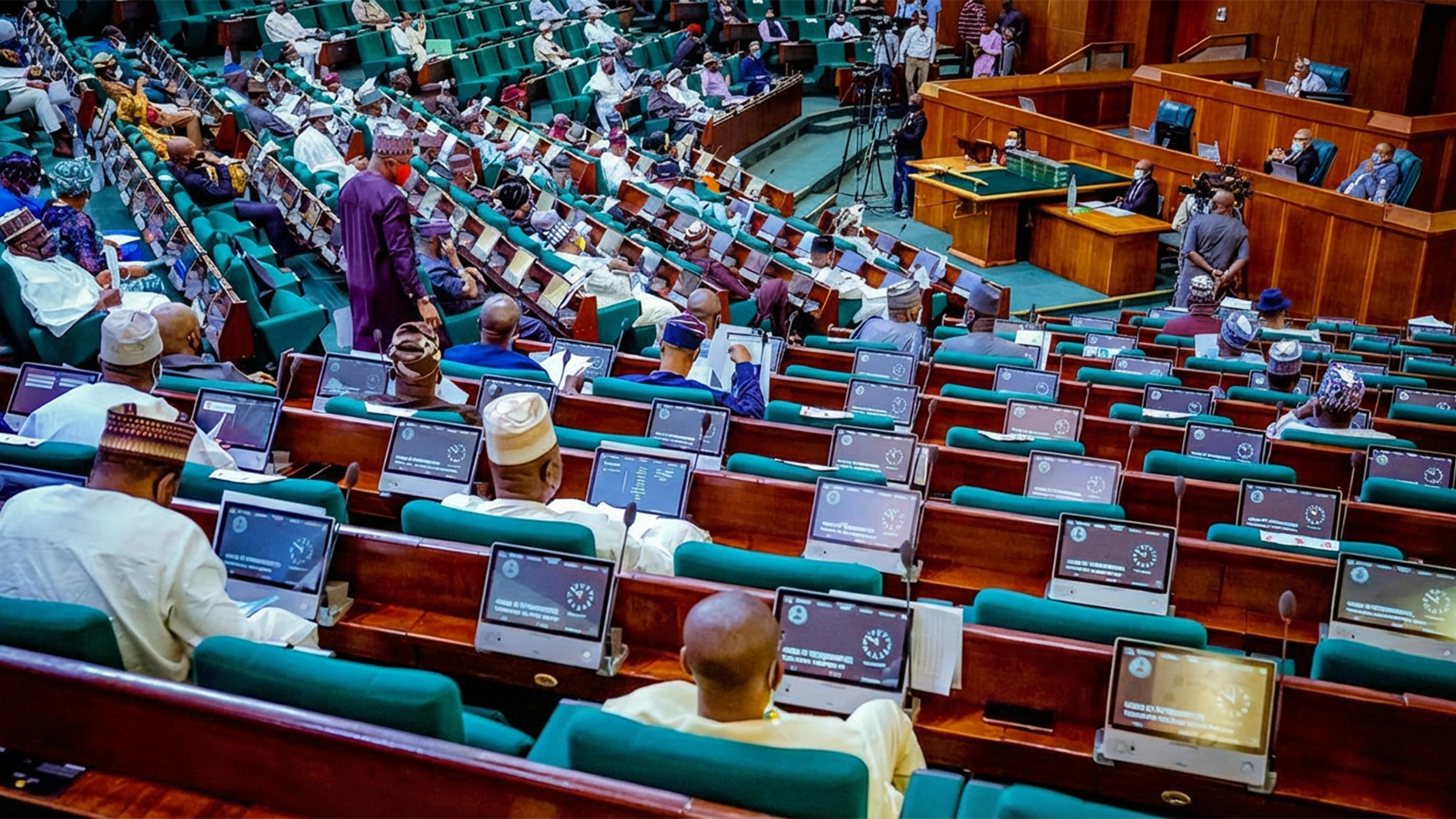
• House leadership distances chamber from caucus’ interim report
• Minority bloc warns against attempt to downplay alleged alterations
• NTPIC begins stakeholder consultations on implementation of new tax Acts
• Lagos says new tax law allows recovery of unpaid taxes from third-party accounts
Allegations that Nigeria’s tax reform laws were altered after passage by the National Assembly have triggered fresh tensions within the House of Representatives ahead of tomorrow’s resumption of plenary, with the leadership and minority caucus locked in a public dispute over legislative authority, due process and the integrity of the lawmaking process.
The controversy, which erupted shortly before the lawmakers went on recess, has deepened in recent days following a series of statements and counter-statements by key actors in the lower chamber.
This suggests that the dispute may dominate proceedings when plenary resumes, having pitched the House Minority Caucus against the House leadership over legislative authority and due process.
A member of the House, Abdulsamad Dasuki, had alerted lawmakers during a plenary session last year to discrepancies between the versions of the tax laws passed by the National Assembly and those subsequently circulated to the public.
In response, the Speaker of the House of Representatives, Abbas Tajudeen, ordered the release of the Certified True Copies (CTCs) of the four tax reform Acts signed into law by President Bola Tinubu and directed an internal verification process to restore public confidence in the legislative process.

However, the release of the Certified True Copies did not end the controversy.
An Ad-hoc Committee on Tax Laws, set up by the minority caucus led by Afam Ogene, on Friday released an interim report confirming that discrepancies indeed existed between the versions of the tax reform Acts passed by the National Assembly and those subsequently gazetted and circulated to the public.
The caucus described the alterations as a serious violation of legislative authority and a threat to democratic governance, insisting that provisions not approved by lawmakers were inserted into the laws after passage.
According to Ogene, who represents Ogbaru Federal Constituency, the most significant discrepancies were found in the Nigeria Tax Administration Act, 2025, where reporting thresholds were allegedly lowered, mandatory deposits were introduced as conditions for tax appeals, and enforcement powers were expanded to include arrest and the disposal of seized assets without court orders.
The caucus also raised concerns about alleged changes to the National Revenue Service (Establishment) Act, including the removal of provisions that guarantee the National Assembly’s oversight powers.
The interim report by the minority caucus, however, appears not to have gone down well with the House leadership, who questioned both the timing and the procedural legitimacy of the caucus-led fact-finding exercise.
The Deputy Spokesman of the House, Philip Agbese, during an interview with journalists on Saturday, dismissed the minority caucus report as belated, saying that the issues raised had already been overtaken by events following the publication of the authentic versions of the laws.
According to him, the leadership of the National Assembly, in collaboration with the Senate, had taken decisive steps to resolve the matter, insisting that clarity had now been restored as to what was passed by the legislature and assented to by the President.
The House leadership backed Agbese’s position in a statement yesterday and distanced the lower chamber from the minority caucus’ ad-hoc committee.
A statement signed by the House Spokesman, Akin Rotimi, stressed that political caucuses lack the procedural authority to constitute committees with parliamentary standing.
He stated that only committees constituted by the House in plenary or by the Speaker under the Standing Orders possess investigative and oversight powers.
He said: “Political caucuses remain important platforms for consultation and coordination among members. However, they do not possess institutional authority within the House and do not possess investigative authority, oversight jurisdiction, or the power to summon persons or demand official documents.
“Any action taken by a caucus in this regard is therefore non-binding, informal, and without legal or institutional consequence. Any committee constituted outside the processes prescribed by the Standing Orders lacks institutional recognition.
“Accordingly, any interim or final report emanating from such a caucus-led body cannot be laid before the House, cannot be received as a parliamentary document, and does not form part of the official legislative or oversight record of the National Assembly.”
He said the House considers the action attributed to the minority caucus to be procedurally improper, inconsistent with parliamentary norms, liable to set an unwholesome precedent, and to create unnecessary public confusion, particularly since the matter has already been addressed through established parliamentary mechanisms.
“In this context, the establishment of a parallel caucus-led committee and the circulation of purported interim findings serve only to compound public misunderstanding on an issue that has been institutionally resolved and overtaken by events.
“For the avoidance of doubt, only committees constituted by the House in plenary or by the Speaker have parliamentary authority. Members of the public are therefore advised that any committee or report not constituted or authorised by the House or the Speaker should be regarded strictly as a political initiative and not as an official action of the House of Representatives”, he stated.
Responding yesterday, Ogene accused the House leadership of trivialising a serious institutional breach and warned that dismissing the caucus report would only encourage impunity within government bureaucracy.
He maintained that the minority caucus’ findings did not indict the National Assembly but rather exposed what he described as external interference that compromised the integrity of laws duly passed by lawmakers.
Ogene also questioned why the Betara-led committee constituted by the House leadership was still sitting if, as claimed, the controversy had been fully resolved, insisting that the release of Certified True Copies did not address how unauthorised alterations allegedly found their way into official legislative documents.
The lawmaker said: “It should be noted that while the minority caucus of the House of Representatives established a committee for an independent fact-finding exercise, consistent with parliamentary best practices, the House leadership had earlier constituted another committee, chaired by Muktar Aliyu Betara, with a similar mandate to review the Tax Acts as passed by the House and the purported gazetted version, with the aim to identify discrepancies and verify the accuracy of the gazetted version.
“This raises the question: if, as Agbese claims, the alleged alterations in the Tax Reforms Acts have been overtaken by events following the release of the Certified True Copies (CTCs), why is the Betara Committee still sitting and has not been dissolved by the House?
“It is striking that Agbese’s statement asserts that ‘the concerns raised regarding discrepancies in the tax laws have already been comprehensively addressed by the House leadership. With the release of the Certified True Copies of the Acts, there is now clarity…’
“However, the only clarity, I must say, is that the irrefutable findings of the Minority Caucus Ad-hoc Committee’s interim report reveal that external actors within government bureaucracy have flagrantly undermined the National Assembly’s constitutional authority to legislate, compromising the integrity of key legislative documents and causing embarrassment to the institution and the nation.
“Speaking in the manner that Agbese has spoken will only continue to enable such unacceptable behaviour that ought to attract the collective upbraid of all lawmakers irrespective of partisan divide.
“I trust, however, that the National Assembly’s leadership, with a nationalist Speaker Abbas Tajudeen on the driving seat, will continue to uphold the legislature’s independence and protect the public interest.”
NTPIC begins stakeholder consultations on implementation of new tax Acts
THIS came as the National Tax Policy Implementation Committee (NTPIC), chaired by Joseph Tegbe, has begun structured stakeholder engagements to ensure a humane, inclusive, and well-coordinated rollout of Nigeria’s new tax Acts as the country embarks on major fiscal reforms.
The committee said the consultations are designed to bridge the gap between policy intent and execution by promoting clarity, managing expectations and aligning implementation with the realities of businesses, citizens and all tiers of government. NTPIC is working closely with the Nigeria Revenue Service (NRS) and the Presidential Fiscal Policy Reform Committee (PFPRC).
As part of its initial engagements, the committee’s leadership met with the Presidential Fiscal Policy Reform Committee, led by Taiwo Oyedele, to align reform objectives with practical implementation.
Oyedele drew attention to challenges linked to misinformation around some provisions of the new laws, noting that certain sections had been misinterpreted in public discourse. He said targeted and accessible communication initiatives were being developed to address the gaps, adding that stakeholder feedback would play a key role in shaping the reform process.
In a separate meeting with the Executive Chairman of the Nigeria Revenue Service, Zacch Adedeji, NTPIC focused on harmonising implementation priorities and strengthening institutional coordination. The committee also outlined its ongoing activities and implementation roadmap.
Adedeji praised NTPIC’s proactive approach, describing the new tax laws as a significant development in Nigeria’s fiscal framework. He said that while new policies often take time to gain full public acceptance, a transparent, well-sequenced and education-driven implementation process would help build confidence and trust over time.
In closing, NTPIC stressed that successful tax reform depends not only on legal and technical design but also on effective communication and sustained stakeholder engagement.
Tegbe said structured consultations and consistent communication would remain central to the reform process. He added that engagements would continue with the National Economic Council, the Nigerian Governors’ Forum, local government leaders, as well as traditional, religious and community leaders.
He reiterated that the new tax Acts are intended to create a simpler, fairer and more predictable tax system that encourages voluntary compliance, boosts investor confidence and supports sustainable economic growth.
Lagos says new tax law allows recovery of unpaid taxes from third-party accounts
MEANWHILE, the Lagos State Internal Revenue Service (LIRS) has said the new tax law empowers state revenue agencies to recover unpaid taxes by seizing funds from the bank accounts of employers, friends, business partners, tenants and other third parties linked to tax defaulters.
The service told Lagos residents and business owners that the Nigeria Tax Administration Act (NTAA) 2025 authorises it to deduct outstanding taxes from rent payments and from accounts belonging to business partners, family members, and friends who hold money on behalf of a defaulting taxpayer.
According to LIRS, the law permits direct recovery where a taxpayer fails to remit an established tax liability when due, extending enforcement beyond the defaulter’s personal accounts to include those of individuals or entities financially connected to them.
LIRS explained that under Section 60 of the NTAA 2025, the state may issue substitution notices to banks, employers, tenants and any person holding or owing money to a tax defaulter, directing them to remit such funds to the service in settlement of the debt.
“Where a taxpayer fails, neglects or refuses to settle any established outstanding tax liability when due, LIRS may exercise its power under Section 60 to direct any of the following persons to pay the amount owed by the taxpayer: banks and other financial institutions, employers, tenants, debtors, or customers of the taxpayer, agents, business partners, and any person holding money on behalf of the taxpayer and any person owing money to the taxpayer, whether presently due or accruing,” the service said in a statement.
It added that in such cases, a substitution notice would be issued to the defaulter’s bank or to those of third parties holding funds on the taxpayer’s behalf.
Financial institutions are mandated by law to notify LIRS of the account balances of the defaulter and those of their friends and family, and to remit the outstanding taxes “without delay”.
A receipt confirming payment of outstanding taxes is then sent to the LIRS e-Tax platform at www.stax.lirs.net.
The service warned that under the newly implemented law, failure to comply with a substitution directive constitutes an offence, noting that friends, business associates and other third parties connected to tax defaulters may bear financial responsibility where they are found to be holding funds belonging to the taxpayer.
The NTAA 2025, which took effect on January 1, has generated controversy among lawmakers, who accused President Bola Tinubu’s administration of making unapproved alterations to the gazetted versions of the law.

