 Follow Us on Google News
 Follow Us on Google Discover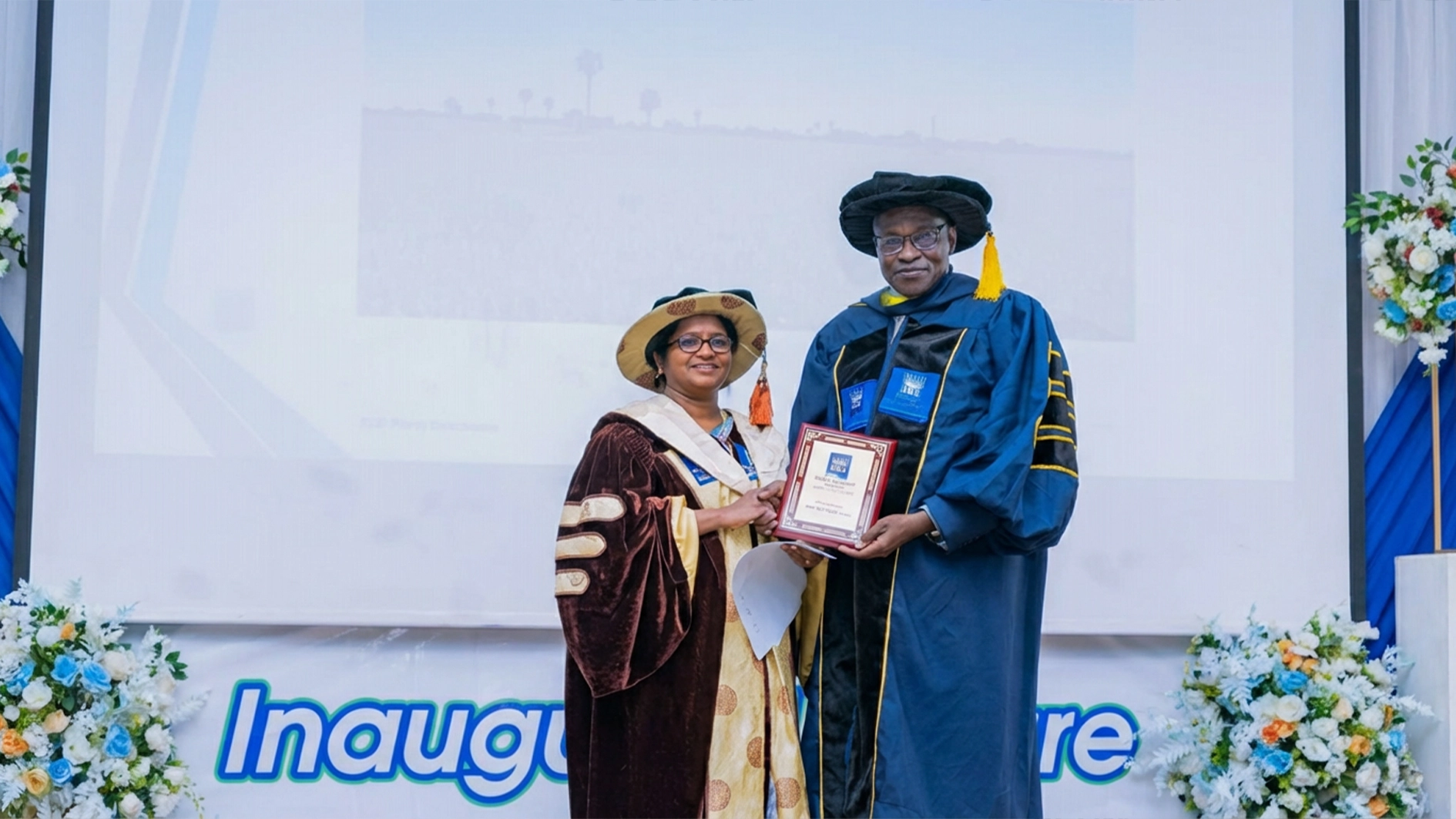
The Vice-Chancellor, Nile University of Nigeria, Prof. Dilli Dogo, has disclosed that the institution has formally embedded Artificial Intelligence (AI) into its academic framework through the introduction of a compulsory AI Literacy course for both students and members of staff.
The Vice-Chancellor said the initiative is designed to ensure that everyone within the university community acquires a foundational understanding of AI, regardless of discipline or professional role.
Speaking at the 6th inaugural lecture of the institution in Abuja, Prof. Dogo explained that the course goes beyond technical knowledge, focusing on practical applications, ethical considerations, and responsible use of AI tools in learning, research, and administration.
According to him, by making the programme mandatory, the university aims to bridge the digital skills gap and prepare its graduates for a rapidly evolving global workforce increasingly driven by data and intelligent technologies.
The Don further noted that the integration of AI into the curriculum aligns with Nile University’s broader vision of innovation-driven education and global competitiveness. He stated that the move positions the institution as a forward-looking centre of learning, capable of producing graduates who are not only technologically aware but also adaptable to emerging trends across various sectors.
In her inaugural lecture themed, ‘Navigating the future of AI in research: Innovations, ethics and global impact’, the Deputy Vice-Chancellor (Central Administration), Nile University of Nigeria, Prof. Prema Kirubakaran advocated for the establishment of global ethical guidelines to guide the development and use of AI.

The Professor of AI and Quantum Computing, also called for the incorporation of ethics education on AI into academic and professional programmes as well as incorporating AI education into all academic levels from primary to advanced levels.
Prof. Kirubakaran said the world was gradually moving beyond conventional Artificial Intelligence toward what she described as “Organoid Intelligence.”
“Technology does not replace humans; it improves us.Just as we moved from button phones to smartphones, we are evolving into a more intelligent and skilled society. The key is upskilling. Those who fail to adapt are left behind, not because of technology, but because of resistance to learning,” she said.
According to her, by 2030, Artificial Intelligence would be replaced by Organoid Intelligence (OI).
Her words: “Organoid Intelligence will not work alone. It will be driven by collective human expertise. Doctors, engineers and computing scientists will work together to reduce death rates, improve diagnostics and enhance quality of life”.
Also speaking, the Pro-Chancellor of Nile University, John Vermaaten, expressed optimism about the future of Artificial Intelligence, particularly in healthcare, business automation and drug research.
“These technologies tend to be additive. They create more opportunities, make people more productive and open new frontiers for research,” he said.
“I am very hopeful, and I believe Nile University can be a leader in AI research in Nigeria and globally.”
He acknowledged that while AI remains transformative and full of unknowns, the university’s academic and management team was well positioned to set the pace for responsible innovation.

