 Follow Us on Google News
 Follow Us on Google Discover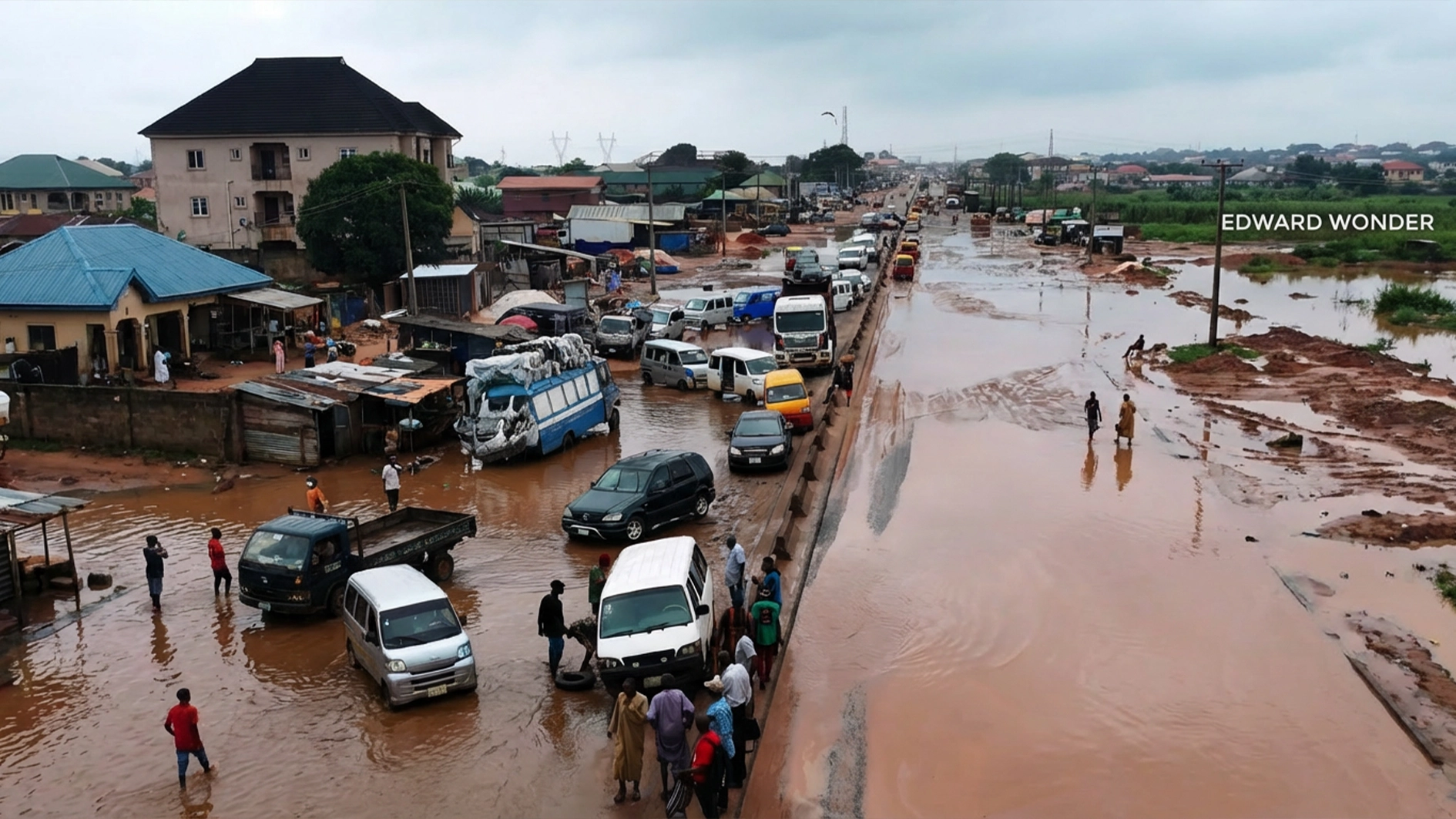
Forty five-year-old Ifeanyi Kezie is a seasoned haulage operator with over 20 years experience, and has seen the business ‘transformed’ from a predictable enterprise into what another haulage operator called ‘gamble’.
To many Nigerian entrepreneurs, the anxiety that accompanies receiving goods is all too familiar: sleepless nights.
Kezie is not the only person that has expressed concern about the haulage sector but he is more pained that despite growth and investments in the country, the sector still faces voidable challenges. “This sector has been a crucial driver of economies, but unfortunately, in Nigeria, it finds itself among the most negatively affected and least resilient industries, especially in the face of economic challenges. This has led to rising operating costs, shrinking profits, increased insecurity, infrastructure decay, and an overall sense of uncertainty about the sector’s future,” he lamented.
Really, Nigeria is currently facing significant logistical hurdles owing to its inadequate transportation network. Bad roads, congested ports, and limited rail and air transport options can lead to delays and damage to goods. The high fees associated with transportation, coupled with additional charges for fuel, tolls, and taxes, can erode profits and increase operating costs.
On a recent delivery from Lagos to Ilorin, the Kwara State capital, Kezie discovered that the journey which should not have lasted more than two days stretched into four days. When he tried to know the reason, he was told poor road infrastructure, chaotic truck queues and security check points were responsible. His delivery of raw materials to a client missed the production window, which triggered penalty and tarnished trust.
Last December, Ephraim Joseph, a livestock dealer based in Ojodu, Lagos State, was very optimistic of making good returns from his goat business. As usual, he ordered for 15 goats from Mupun Village in Pankshin Council of Plateau State. Immediately the bargaining was concluded and payment made on December 15, 2025, he settled the waybill at the Pankshin Bus Terminal, through his link, for onward movement of the livestock to Lagos.
Usually, it takes one and a half day or 36 hours for the truck to reach Lagos and maximum of 48 hours, in the case of unforeseen circumstances. But contrary to all expectations, it took the truck five days (December 20) to reach the Bonny Way Park, Berger, Lagos, where Joseph was expected to receive the livestock.

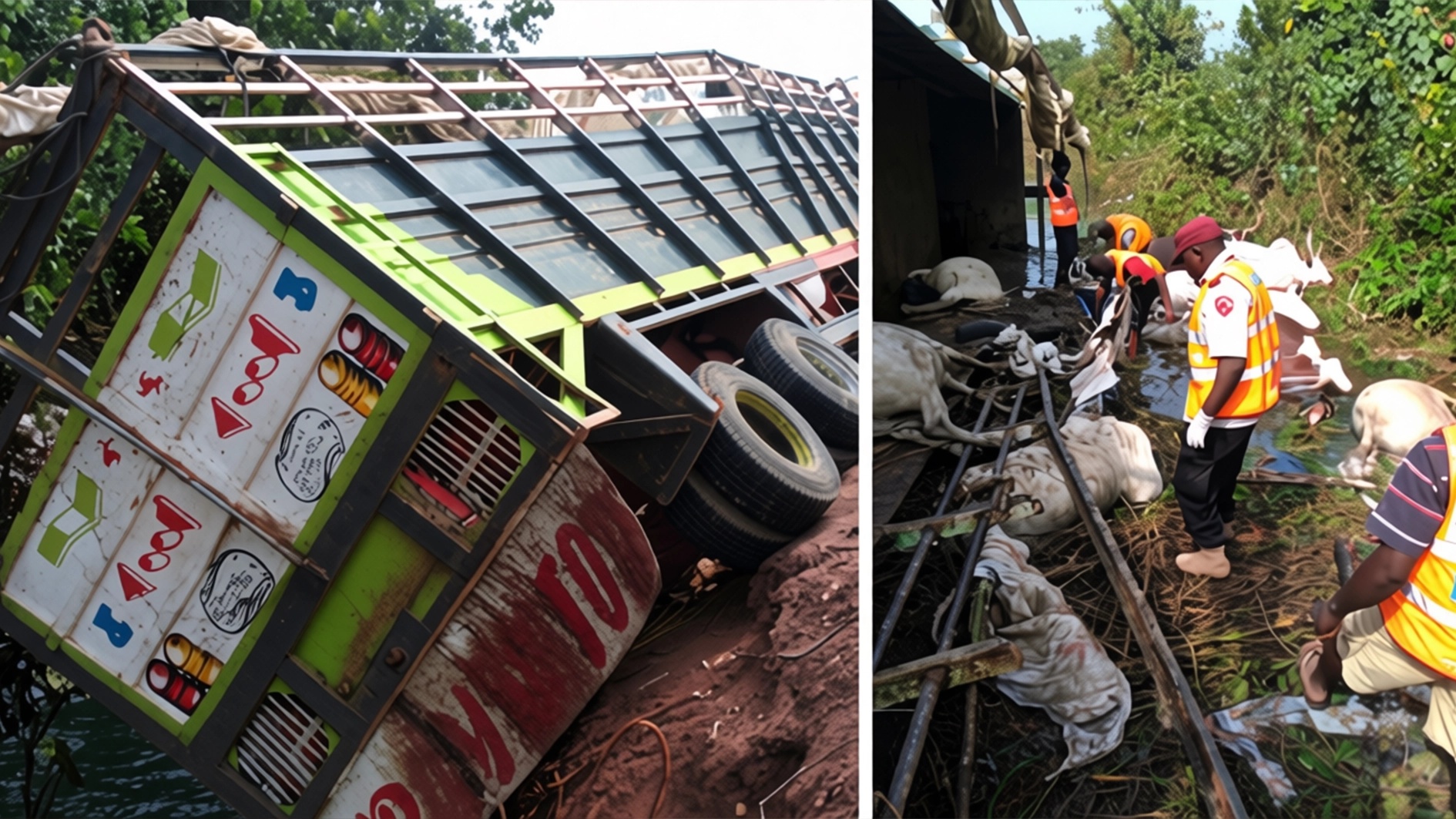
Sadly, by the time the truck arrived, five of the goats had already died from exhaustion. And between the period when the truck arrived on December 20 evening and December 21 morning when he got to the park, another three died resulting in the loss of eight goats.
Anger, pain and frustration was visibly written over him as he lost hope of making any profit from the deal as a result of the huge losses already incurred with the death of the eight goats. This was attributed to the bad state of the inter-state roads across the country, which has worsened commuting of people and movement of goods and services from one region to another.
Investigations showed that in the last few months, the state of roads in the country has worsened, leading to economic woes, loss of lives and high cost of goods, especially food commodities.
Just like Joseph, on July 19, 2025, some Benue State yam farmers lost their entire harvest when a truck loaded with yams from Zaki Biam lost control and crashed into a ditch along the Makurdi–Lafia road. Though no lives were lost, according to reports, the entire truckload of freshly harvested yams was destroyed. The accident was caused by a combination of craters, potholes, poor drainage, and lack of road signs along the stretch. The driver reportedly swerved to avoid a gaping pothole but lost balance, leading to the tragic loss of both the produce and the truck’s front axle.
For the farmers who had pooled resources to transport their harvest to the Southern markets, this crash was more than a roadside mishap, it was a complete loss of weeks of labour and financial hope. It was learnt that the incident was the third in the year.
Investigation revealed that the Makurdi-Lafia highway, which has been a notorious deathtrap for years has become the nemesis of these yam farmers who, especially in states like Benue, Nasarawa, and Taraba, contribute significantly to local economies. Now they are being forced to risk not just their goods but their lives on roads that deteriorate faster than they are repaired.
According to reports, around 90 per cent of goods and people in Nigeria are moved by road, making road transport the backbone of the nation’s haulage economy. This also implies that roads are essential in the facilitation of movement and trade across the country. Ironically, most of these roads are in deplorable state as they are dotted with varied sizes of potholes and gullies.
Travelling through Nigerian roads, especially, during the rainy season is hellish. Vehicles break down; heavy-duty trucks overturn and get stuck in the mud. Motorists disembark at such horrible spots to push crippled vehicles. The result is traffic gridlock on both sides of what seems like a jungle, and loss of many lives.
According to haulage operators who spoke with The Guardian, these challenges not only increase vehicle maintenance cost but also result in extended travel times, impacting overall operational efficiency.
Tony Akunna of Ekene Dili Chukwu Haulage revealed that aside from the challenge of Mondays being taken as a no-movement- day (sit-at-home) in the east, the highways in the region are in a state of disrepair with unmotorable inner roads, especially for articulated vehicles.
And to overcome this, most haulage vehicles plying the region have to travel at night because they would not struggle with the smaller vehicles for space on the road. By this time, he said most of the cars and buses would have been off the road. Akunna also noted that with the exception of the police, Customs officers and soldiers, other traffic agencies in the various states would have as well been off the road.
For David Nkuma of Efex Haulage, unlike other parts of the country, police checkpoints are too many on the eastern routes and this slows down mobility, as a good number of them take time to check the vehicles for the particulars and the goods that are being transported.
“These government security operatives check and cross-check our documents as if their lives depend on them not minding the long distance we still have to cover to get to our final destination. The story is the same at every checkpoint, irrespective of the long queue of articulated vehicles waiting for them to check. This is a sheer waste of time. Some drivers have to park to sleep and continue their journey the next day,” he noted.
Though haulage vehicles do not always have difficulties at the usual check points and with concerned authorities, he revealed, they still have to be on the queue, behind those before them because they cannot continue their journey if the vehicles in front do not give way. ‘Such waiting could last for hours and we have to be there burning fuel and wasting man-hour’.
Shedding more light on the issue, Nkuma noted that heavy rainfall could as well be a setback to long distance delivery.
According to him, if the rain is heavy and accompanied with storm and poor visibility, the road would be slippery and drivers would not be able to see afar.
“For heavy duty vehicles, we either stop or move at snail speed to avoid accident. And in some situations where it comes with flooding as it is often the case in the east, driving against such natural happening would mean taking a great risk, as the flooded road could mislead drivers into a gully, which is dangerous. Any experienced driver would at this time park at a safe location for the situation to abate and then continue.”
Stating that it is better to deliver one’s consignment safely than to be involved in an accident that could be prevented, Nkuma added that summing up, all these challenges make haulage delivery to the east to take a bit longer time and also for freighting cost to be on the high side.
Growing insecurity in Nigeria also poses risks to drivers, who may fall victim of attack by armed robbers and bandits who could either steal or damage the goods being transported and lead to significant loss of revenue. Most vulnerable are companies that lack specialised services for handling fragile or special items. Damage to goods under such circumstances could lead to friction between the haulage companies and the owners of the goods.
Government policies and Customs regulations can also be daunting for business owners. Corruption and bribery further exacerbate these challenges. Those who spoke with The Guardian emphasised the necessity for stakeholders in the haulage and logistics industry to foster increased collaboration to navigate the complexities of the employer/contractor relationship in the face of a challenging operating environment.
According to Alade Adejumobi, an independent carrier, the type of haulage service a driver is engaged in will determine the length of time he could take to deliver his consignments.
Recounting how he spent a week to deliver a consignment from Lagos to Kankuri town in Kaduna State that would take at most two days, the Lagos driver revealed that he never knew that there were different charges for vehicles that were registered in each of the states he entered and those that were not.
According to him, each of the states he passed through had different rules and regulations for independent carriers and he had to pay huge sums of money to free himself from being detained and his vehicle from being held too. He recalled how the traffic officials in one of the states deflated his vehicle tyres and he became aggrieved and called the owner of the consignment for some money to settle the local council traffic agency.
He said: “Each of the states’ traffic officials were intermittently stopping me, asking for different papers and document that I had never heard of, all because I was an independent carrier. The registered carriers were not disturbed or delayed, they moved on freely. This made the journey so uninteresting, as I spent more days on the road and the money I made from the deal was drastically reduced because I had to part way with the better part of it to free myself and my vehicle.
“It must be noted that unknown multiple taxes, high rates, unexpected dues and other extortion, which when you refuse to pay may lead to vehicle seizure and manhandling of the driver and his conductors, make things difficult for independent haulage service providers. This is not limited to a particular region; it cuts across the states and different local councils. The result is high freight rate and unnecessary delays experienced.”
For Ibrahim Bala, the reasons consignments are delayed are many and varied. Some of them, however, depend on the nature of goods on transit, the type of haulage service one is into and the vehicle in use.
He explained: “If the consignment is a highly inflammable one, then one has to wait at a safe area where there is no fire, when conveying it. We should know that one thing that is common with the northern route is that a large part of it is grassland and when the people want to prepare the bush for farming, they indiscriminately set fire on the shrub before sowing. This fire travels fast, far and wide. Before you know it, a large area has been covered. Plying this route, drivers carrying highly inflammable consignment, including fuel, look out for these dangers and also try to identify safe locations to park as they move on.”
He added that avoiding these dangers could make a trip from Lagos to Kano and other states in the north to take between 16 to 18 hours, depending on the vehicle. It may even take a week or two if the road is terribly bad.
Recalling a case when fire engulfed one articulated vehicle, making the consignment to explode and caused different degree of harm, Bala said, it is best to ply the route during wet season when there will be no bush fire. He stressed that indiscriminate bush burning is bad and causes different havoc, calling on the government to put a check, especially in bushes along major roads and highways.
A corporate haulage driver who undertakes delivery of some federal agencies’ consignment to their destination, Derick Kuteyi highlighted how he does the job on time, revealing that his organization engages the services of the police, soldiers or ex-service military officers, as escorts.
‘These security operatives are sometimes armed, especially when the carrier has to go to volatile areas of the country. They are hired to clear the bottlenecks on the road such as the various state and local council touts that extort lorry drivers with carriage and articulated vehicles, as well as facilitate clearance at the various checkpoints on the road.
“There are times, we stop half-way into our destination and call the company whose goods we are carrying to come with another vehicle to take their consignment. This usually happens when the road leading to our final destination is not motorable. To avoid taking the risk of losing or damaging the goods we call the owners. At least they will be in a better situation to then handle the consignment. Through this means, we deliver safely and on time too,” he noted.
Kuteyi noted that with the dearth of infrastructure, poor maintenance of our major roads and highways and security challenges, among other terrible encounters on the routes, it will be difficult for any company conveying goods across the country to get to their destination on time.
It was learnt that the deplorable condition of the inter-state roads is also denying many a smooth pleasurable ride. The Guardian investigations showed that around the country, it’s the same sad story, as the inter-state roads have become death traps, dotted with potholes and craters.
Aside from the loss of man-hour and accelerated wear and tear on vehicles, bad roads across the country are also one of the factors responsible for the high cost of food commodities, as consumers are always made to bear the brunt of losses incurred by farmers and farm produce sellers.
A cattle dealer at the popular Oko-Oba Abattoir, Agege, Lagos, Alhaji Jubri Darkin lamented how two of his cows died in transit a few weeks ago. Agonising the loss, he said: “The current state of these roads has become nightmare to us. For instance, when you get to Niger State, the road from Jebba-Bida-Agaie-Lapai-Lambata to Dikko junction is bad. The Mokwa-Makera-Tegina-Birnin Gwari -Kaduna, Minna-Zungeru-Tegina, Bida-Zungeru, and Suleja-Minna roads are also in bad shape. At times, we spend two to three days on these axes, while coming to Lagos. On the fateful day when these cows died, we never envisaged there would be any downpour. The rain worsened the bad condition of the road, leading to heavy gridlock during which I lost two cows’.
On the consequences, he said: “The high cost of cow and beef meat, aside the high cost of fuel, is largely caused by state of our roads. This does not only affect livestock, it affects all other food commodities. For instance, a medium size cow sold around N400, 000 around this time last year has increased in price to between N550, 000 and N600, 000. The reasons for these include the unforeseen circumstances on the road. If we lose any animal in transit, we need to add the cost to the surviving animals, to avoid incurring losses. It’s the consumers or the buyers that always bear the consequences. This is part of the major reasons the cost of foods is rising.”
The Guardian learnt that a medium size tuber of yam from either Benue, Jos, Abuja or other parts of the yam-producing states, which sells between N4,500 and N5,000 in markets across Lagos and Ogun states, are sold as low as between N1,000 and N1,500 across these producing states, but because of the bad roads, coupled with the high cost of fuel, the prices are jerked up.
At the popular Oja-Oba market, Abule-Egba in Lagos, The Guardian gathered that it costs between N1, 000 and N2, 000 to transport a tuber of yam from Jos, Plateau State to the Lagos parks. In addition, moving the goods from the parks to the market also adds to the cost of logistics, jerking up the price.
The same goes for onions, tomato, potato, ginger and many more that are transported to the southern parts of the country.
It was observed that major highways such as the Ogbomoso-Oyo and Benin-Ore, among others, which link key commercial cities in Nigeria, including Lagos, have deteriorated to such an extent that travelers now spend days navigating the craters and potholes that dot the roads.
In Delta State, the Dennis Osadebay Road, stretching from Abraka to the Ogbeogonogo Market, in Asaba, has been described as nearly impassable — riddled with gullies and stagnant pools that force motorists to drive against traffic or abandon the route altogether.
Sadly, the situation extends far beyond Asaba. Across Aniocha North Council, several critical roads have reportedly collapsed or been abandoned for years.
Among them are the Ezi–Ogodo Road – described as impassable and long abandoned; and Issele-Uku–Onicha-Ugbo–Idumuje-Uboko/Idumuje-Unor axis that is completely dilapidated. Also, the Ugbodu–Idumuje-Unor Road is “gone off.” Issele-Azagba–Otulu Road is “terrible and difficult to describe.” Obomkpa–Ubulubu Road is nearly impossible to use. Obior–Ubulu-Uku Road is critically deteriorated. Issele-Uku–Onicha-Uku Road is totally gone while Idumogo–Okwu Nzu Road is in urgent need of reconstruction.
In many of these communities, residents say they have been cut off from neighbouring towns, making transportation of farm produce and goods very difficult. Some roads that used to support inter-community trade now lie abandoned, overgrown with weeds.
In Ondo State, the Ikare-Ogbagi-Akoko/Ado-Ekiti road, a vital link route between Ondo and Ekiti states, it is similar narrative. The route which should make it easier for people to move along the agrarian communities on the highway has now become nearly impassable. Some farmers in the axis have complined that their agricultural produce often gets spoilt owing to the refusal of commercial vehicles to ply the route. Consequently, the farmers cannot move their goods to markets in Ekiti State.
Femi Akinwumi, a local farmer, questioned: “How can we feed the nation when we cannot even get our yams and cassava out of our villages? We feel totally isolated from the rest of the nation.”
Even the dual-carriage Akure/Ado-Ekiti highway’s ongoing reconstruction has become a major source of concern for some residents along the corridor because of the slow pace of the project. The journey between the two state capitals can take up to three hours, and travelers are often stuck for hours at a spot.
The Chief Executive Officer, Produce Export Development Alliance (PEDA), formerly Agricultural Fresh Produce Growers and Exporters Association of Nigeria (AFGEAN), Aiyeola Adetiloye, who decried the development, said it was really driving the cost of foodstuff and agro commodities high.
“The first thing is to stabilise the cost of getting food from the farm to fork or to market. We need to be able to get a lot of volumes out so that the landing cost is a lot lower.
“We also need to look at post-harvest losses. This has to do with the private sector because we are trying to invest in cold storage, drying infrastructure and warehousing. So, if we can do more warehousing, we can do all of that. We would have more products in circulation because we would lose less.
“We need to establish and stabilise transportation. We need to be able to protect farmers during production and harvest. We need to make, storage and reserves almost an automatic thing. We need to time imports strategically and with rules, cut losses with storage and try to improve quality of inputs, as much as possible….” he advised.
With this, the services of haulage companies become essential, as they serve as the major means of transporting goods in different quantities from the warehouse or a particular location to the point of usage or need, making trade and commerce seamlessly easy for both the producers, middlemen and the final consumers. They serve as a very important agent in trade distributive channel.
The efficiency and effectiveness of this agent also play a very import role in checking scarcity and, sometimes, inflation. This is so when such distribution is done within its targeted time and days.
However, with the current security challenges in the country, taking goods from Lagos to Aba or Port Harcourt or other interior parts of the eastern region may take days, even weeks, instead of the normal one day or two it ought to be to get there.

