 Follow Us on Google News


 Follow Us on Google Discover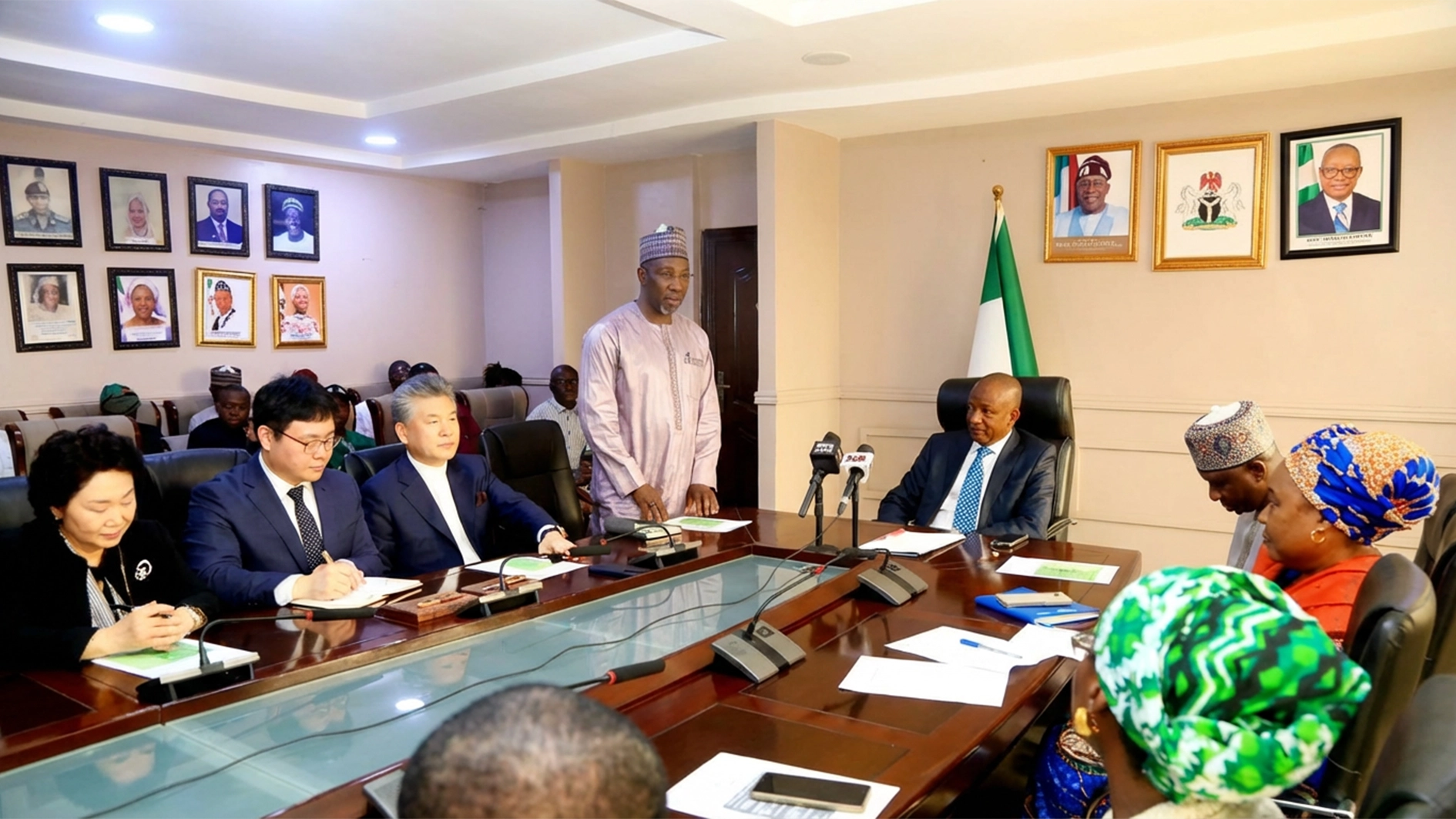
Nigeria is set to commence electric vehicle (EV) manufacturing following the signing of a memorandum of understanding (MoU) between the Federal Government and South Korea’s Asia Economic Development Committee (AEDC).
The agreement, signed on January 30, 2026, by the Minister of State for Industry, Trade and Investment, John Enoh, on behalf of the Federal Government, covers the establishment of an EV manufacturing plant and the rollout of charging infrastructure nationwide.
Announcing the development on Thursday, the National Automotive Design and Development Council (NADDC) said the initiative positions Nigeria to become Africa’s first country to manufacture electric vehicles under a structured national framework.
The council said the project would be implemented in phases, beginning with vehicle assembly and later transitioning to full-scale local production. At full capacity, the plant is expected to produce up to 300,000 vehicles annually and generate about 10,000 direct jobs.
“This landmark collaboration aligns with Nigeria’s National Energy Transition Plan and the National Automotive Industry Development Plan,” NADDC said in a statement.
Represented at the signing by its Director-General, Otunba Oluwemimo Joseph Osanipin, through the Head of Policy, Planning and Statistics, Nura Sidi, NADDC said the project would accelerate technology transfer, attract investment and deepen human capital development in the automotive sector.

Osanipin noted that the initiative would strengthen research, design and innovation, while supporting the emergence of a sustainable automotive ecosystem driven by local manufacturing, clean energy adoption and global competitiveness.
Nigeria has stepped up efforts in recent years to revive its automotive industry, which has long depended on imported vehicles. Under the National Automotive Industry Development Plan, the government has promoted local assembly plants and introduced incentives to strengthen domestic value chains.
The EV manufacturing project also aligns with Nigeria’s Energy Transition Plan, which targets net-zero emissions by 2060. Transport remains a major contributor to urban air pollution, and policymakers view electric mobility as critical to reducing emissions and fuel dependence.
Beyond policy commitments, Nigeria has begun piloting cleaner transport solutions. Lagos State has deployed electric buses on select routes, while the federal government has encouraged the use of compressed natural gas as a transition fuel for public transport.
Officials said the partnership with South Korea would provide vital technical expertise, particularly in battery technology and charging systems—areas where Nigeria currently has limited capacity.
Although several African countries, including Kenya, Rwanda and South Africa, have introduced electric mobility policies or small-scale assembly projects, Nigeria’s initiative is designed for mass production and full integration into national industrial and energy strategies.
The government said details on the plant’s location, financing structure and implementation timeline would be announced as the project progresses.

