 Follow Us on Google News
 Follow Us on Google Discover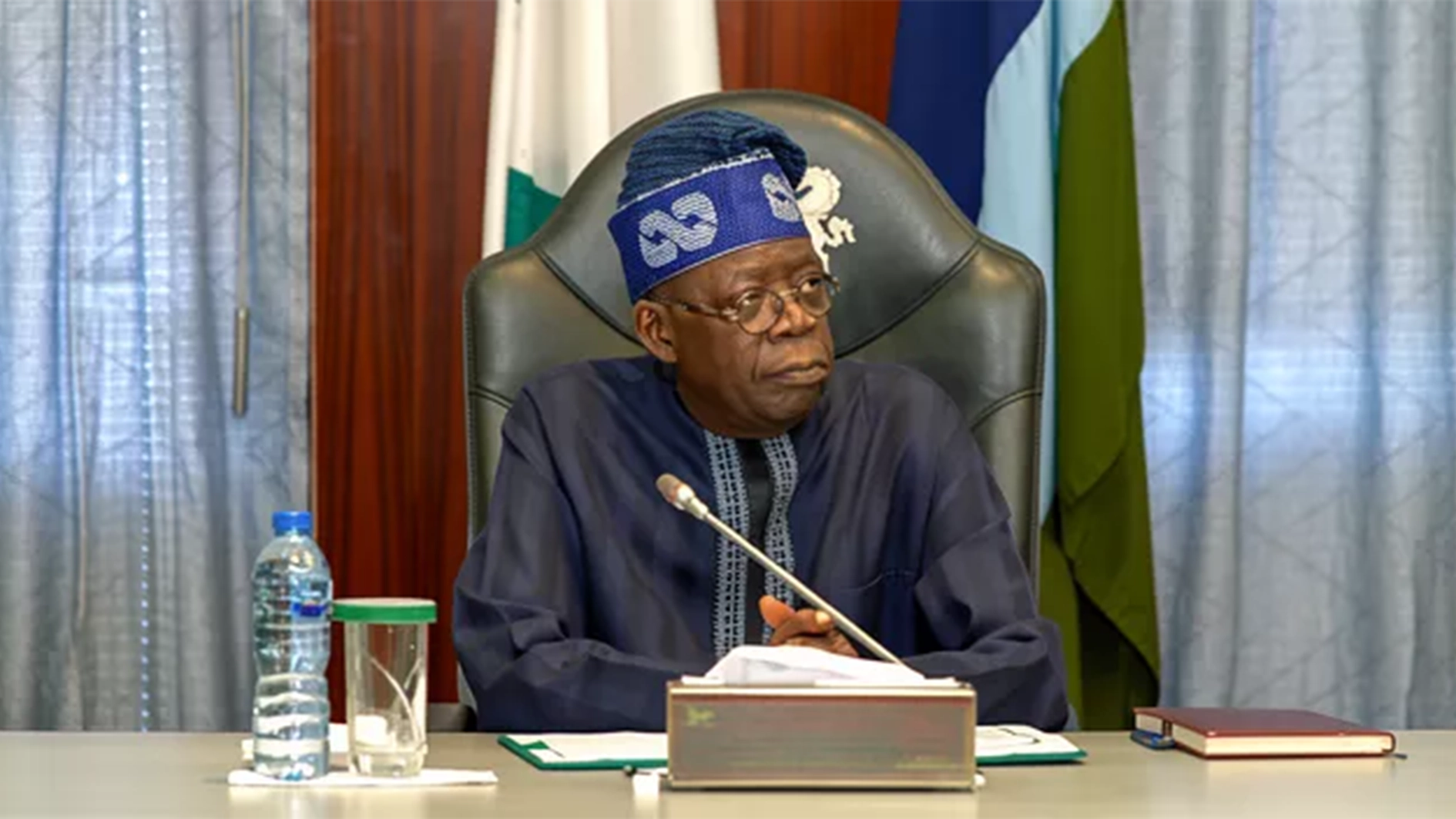
Long before the 2027 election season formally begins, the South-East emerged as an early battleground of political contradiction. While leaders of the All Progressives Congress (APC) in the region have endorsed President Bola Tinubu for re-election, a large section of the electorate remains firmly behind Peter Obi. This divergence raises questions about whether the political elite can truly deliver the zone for the President, LAWRENCE NJOKU reports.
AS Nigeria edges towards another general election cycle, the Southeast, comprising Enugu, Ebonyi, Abia, Imo and Anambra states, is once again confronted with a familiar but intensifying political dilemma: a widening gap between elite calculations and popular sentiment.
While sections of the region’s political class, driven by access to power, federal patronage and strategic survival, are quietly warming up to the re-election project of President Bola Tinubu and the All Progressives Congress (APC), the mass electorate remains largely anchored to the emotional and political legacy of the 2023 elections and the anticipated return of the former Labour Party’s presidential flagbearer, Peter Obi, to the national stage.
This unfolding tension is set to define the Southeast’s electoral behaviour and bargaining power as 2027 approaches.
For nearly three decades of Nigeria’s Fourth Republic, the Igbo-speaking states voted largely as a bloc, overwhelmingly backing the then-dominant Peoples Democratic Party (PDP) in successive presidential elections.
That pattern held until 2023, when the region dramatically broke ranks to deliver near-total support to Obi, the former Anambra State governor, driven by a mix of identity politics, protest voting and long-standing grievances over exclusion from federal power.
At the heart of the Southeast’s political consciousness remains a deep sense of marginalisation, anchored on the fact that it is the only geopolitical zone in the South yet to produce a president since 1999. Many voters argue that, following the North’s eight-year hold on power under Muhammadu Buhari, the presidency should have rotated to the Southeast rather than the Southwest in 2023.

However, a growing strand of the region’s political elite is taking a more pragmatic view. They argue that emotional attachment to the Obi movement may not translate into power at the centre and that the more realistic pathway to the long-sought Igbo presidency lies in strategic accommodation, backing Tinubu’s re-election in 2027 to secure future zoning concessions within the APC.
This divergence between grassroots conviction and elite bargaining is now redefining Southeast politics as the next election cycle approaches.
Since the return to civil rule in 1999, voting behaviour in Nigeria’s Igbo-speaking South-East has followed a largely predictable and bloc-like pattern, shaped more by party alignment and regional sentiment than by shifting national trends.
INEC-declared results and credible aggregates show that from 1999 to 2019, the Southeast region consistently voted overwhelmingly for the PDP. In 1999, former President Olusegun Obasanjo won between roughly 65–80 per cent of votes in most South-East states. The pattern was held in 2003 and 2007 under Obasanjo and the late President Umaru Yar’Adua.
In 2011, the bloc vote peaked, with erstwhile President Goodluck Jonathan polling well above 90 per cent in several Igbo states. Even in 2015 and 2019, when the PDP lost nationally, Jonathan and, later, former Vice President Atiku Abubakar still secured between 85 and 95 per cent of South-East votes, while the APC remained electorally marginal in the zone.
The 2023 election marked a sharp rupture. INEC results show Obi sweeping the region with margins often above 80–90 per cent, displacing the PDP for the first time since 1999.
Overall, the data reveal a region that votes as a political monolith, historically anchored to the PDP and only shifting decisively when presented with a candidate perceived as embodying regional aspiration, as seen in 2023.
But few political elites, including those in the ruling APC and the governors of Abia, Alex Otti of the LP, and Charles Soludo of Anambra, All Progressives Grand Alliance (APGA), are not thinking that way. Even Otti and Soludo, who are not members of the ruling APC, share similar beliefs that supporting President Tinubu and his party is the surest way for the Ndigbo to realise their ambition of producing Nigeria’s president.
While the masses are looking up to a fast-track approach through Obi’s 2027 calculation, the political elite say strategic long-term planning and alliances are the surest approach. This was echoed in the recent endorsement of President Tinubu for a second term by sections of the political elite at a summit held in the region.
But in recent times politics of the region is transforming, especially since the conclusion of the 2023 general elections. From the clutches of the now infamous PDP, the zone is currently in the firm grip of three political parties, with the federal government-controlled APC dominating. The others are APGA and the Labour Party (LP).
While the APC controls three states of Imo, Ebonyi and Enugu, the LP and APGA hold sway in Abia and Anambra states, respectively.
However, it may be that what has been at the centre of discussion is the platform that could give the region the place it desires in the country’s affairs. This follows the inability of the PDP to accord the zone that opportunity for the various years of tacit support it received from the region.
It was in the desire to achieve this that the region massively voted for one of its own, Obi, despite coming from the lowly rated LP; a development that paved the path for the destruction of the PDP in the zone.
But where the PDP failed, the APC is now struggling to fill the gap and position itself as the best alternative. It has continued to assure the region it remained the platform that could assuage her taste.
While APC won the governorship election in Ebonyi State for the first time in 2023, in Imo State, where it had done so twice, it faced strong opposition. That of Enugu was a mandate that benefited from the crisis that trailed the PDP, which gave the governor the mandate in 2023.
Many, therefore, believe that to entrench the party fully, especially with the several movements into it, there was the need for a deliberate strategic plan that would not only endear it to the people, but make them own the party.
But, at a recent meeting in Enugu, in concert with the three governors it produced in the region, leaders and stakeholders of the APC decided to endorse President Tinubu as their sole candidate for the 2027 presidential election.
Chairman of the Progressive Governors Forum and Southeast APC leader, Governor Hope Uzodimma, stressed that supporting President Bola Tinubu’s 2027 bid was a priority because “President Tinubu has, against all odds, entrusted his political fate in 2027 in the hands of APC Southeast.” He argued it was a necessary step to bring the region back into national politics.
Uzodimma lamented what he described as “provincial politics played in the zone,” which he said had long divided votes and limited the Southeast’s influence. Citing the 2023 elections, he noted: “As leaders, our first duty is to the truth, however uncomfortable that may be. As Socrates put it, an unexamined life is not worth living.
“We must look at the mirror of the 2023 elections and be honest about what we see. And what we see by way of data is quite sobering. While other zones were busy with national bridge-building, the Southeast chose a rather strange path. The Southwest gave APC’s presidential candidate, 54 per cent; the Northwest and Northcentral, 39 per cent each; even the Northeast, home of the main opposition candidate, gave APC 34 per cent. The Southeast gave only six per cent.”
He warned that the region had become “politically predictable” and easy to ignore, stressing that change was urgent. Uzodimma cited recent gains: executive leadership grew by 50 per cent, from two to three governors; Senate representation rose from six to eight; and House of Representatives representation rose from eight to 23.
“We’re seeing similar movements in our houses of assembly and local councils across the zone. This gives us both hope and a challenge. Each leader who joins APC brings thousands of supporters, swelling our grassroots strength,” he added.
Toeing Uzodimma’s line, Enugu Governor, Peter Mbah, underscored the importance of Tinubu’s second term, saying it represented “shaping history.” He noted: “The region will no longer stand at the crossroads of history. I am thrilled that this meeting aims to stamp a seal of endorsement on the President’s bold reforms and candidacy for 2027. This is no whimsical decision; it is rooted in facts. The success of a region comes from clear vision, disciplined action, grounded strategy, and relentless delivery.”
Mbah emphasised partnership as central to politics: “The ambitions we hold for our people, our economy, and our future are best served when vision at the centre aligns with delivery at the states.” He highlighted why Tinubu should be the Southeast’s choice: “National progress cannot be achieved with any region standing at the margins. This recognition translates into action, as our aspirations connect with national opportunities.
For a region teeming with entrepreneurial zest, energy development and gas prospecting have long seemed distant prospects, but these are now active priorities, laying the groundwork for industrial growth and jobs. The Eastern Rail Line, connecting Port Harcourt through Aba, Umuahia, Enugu and beyond, is back on the national map, restoring arteries of trade and mobility that once defined this region.”
Ebonyi State Governor, Francis Nwifuru, agreed, adding that for the party’s plans to succeed, “leaders need to forgive one another and make sacrifices so that new entrants have a place in our party.” He stressed that the current challenge was managing the party rather than building it.
Representing public opinion, former APGA National Chairman, Chief Chekwas Okorie, described the endorsement as familiar but questioned its value: “Many Southeasterners have queried whether anything new will come from this. Similar endorsements have happened since 1999, but what has the region benefitted? PDP endorsed Obasanjo and those who succeeded him without negotiations. In the end, what did the Igbo get? Are we not the most marginalised, with the least federal presence?”
Okorie was sceptical of Tinubu’s reception of the endorsement.
I know Tinubu too well. He cannot take the APC leaders of the Southeast endorsing him with seriousness. They cannot deliver a ballot box of votes.” He cited ongoing marginalisation: the federal government’s refusal to release IPOB leader Nnamdi Kanu, denial of additional ministerial positions, and continued weak federal presence.
An Anambra State lawyer, James Ugwuonwe, dismissed the elite gathering as “continuing enslavement of Igbo people,” highlighting widespread distrust of the APC-led federal government. He noted that individual politics among governors had hindered collective action: “Most of those in the meeting don’t relate with one another. I am not saying Tinubu does not like the Igbo, but we are yet to be convinced about his program for the region.”

