 Follow Us on Google News
 Follow Us on Google Discover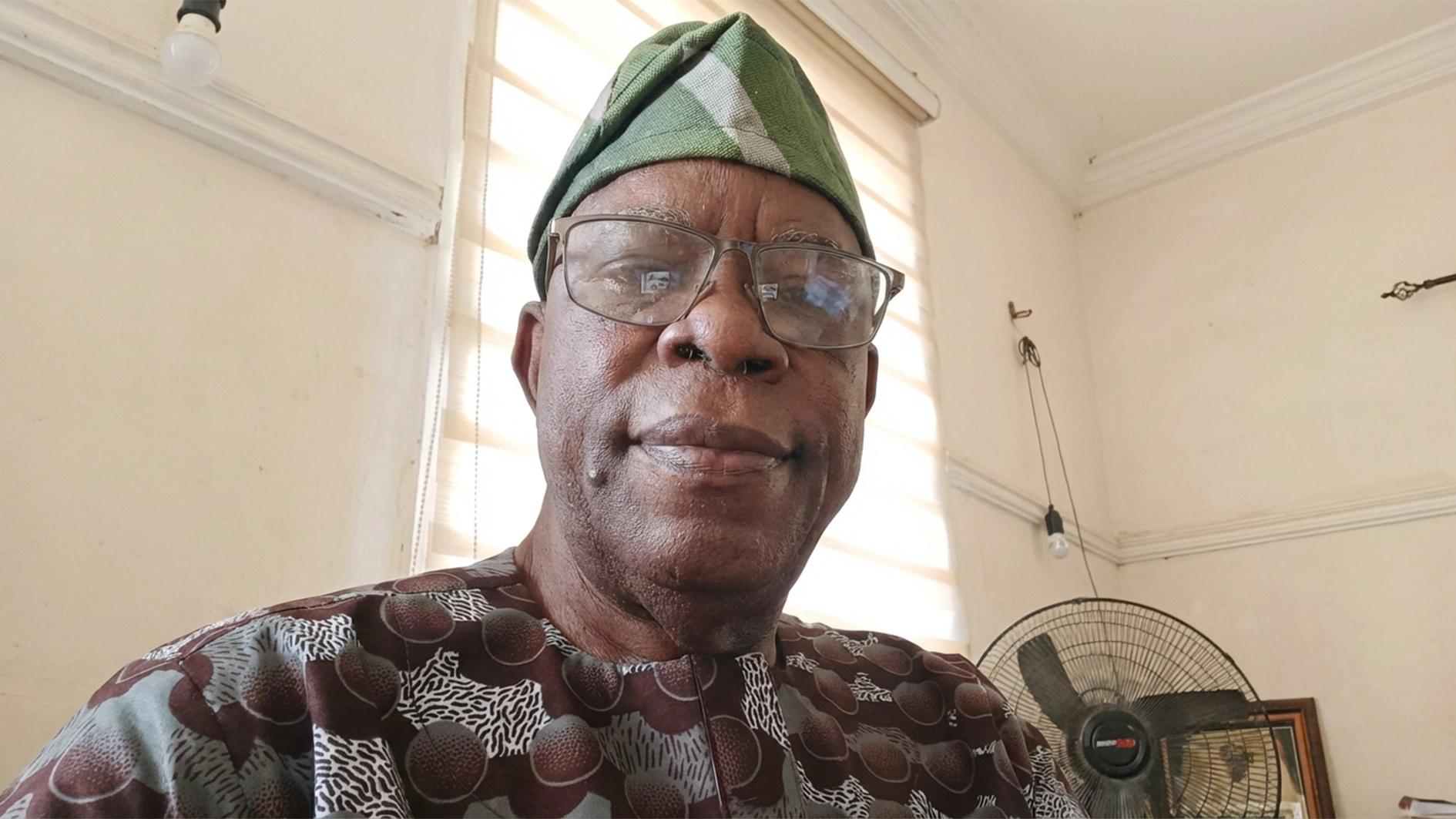
The level of insecurity in Nigeria is currently at an alarming rate, following the recent killings in different parts of the country.
States such as Benue, Kwara and Plateau have been the worst-hit with hundreds of people losing their lives in devastating attacks.
Different governments have promised to stop the killings but all these turned out to be efforts in futility, with a lot of people already losing their lives in various terrorist attacks this year alone.
On ways to tackle the problem, the Guardian reached out to a few security personnel in the Nigerian Navy and a security expert, Lt-Colonel Foluso Sunday Saka (rtd) who spoke about what led to the killings and banditry in Nigeria and how they can be stopped.
“Climate change is one of the causes of killings and banditry in Nigeria. This is because the Fulanis’ methods of rearing animals in the modern world have changed,” said Colonel Saka.
“The way politics is being practiced in Nigeria is another reason. Corruption is another factor. We also have injustice, this is a situation where people that commit crimes are not being punished.

“The lack of strength of the police to secure the whole country is a factor too. There is also no control with the way they handle the affairs of the country, especially as regards gathering and working on key security information.”
According to Colonel Saka, the killings will continue to occur in Nigeria because the government has not gotten the willpower to do the needful by putting to bed all the factors that cause them.
“The government should know that in this modern age, we don’t move cattle from point A to point B. For you to have cattle, you must prepare for the field,” he said.
“There is a lot of investment and development on feed planting abroad and all over the world, whereby, you can order food and do zero grazing. If zero grazing could be introduced to Nigeria, the clashes between the herders and residents will be a bit reduced.”
Colonel Saka explained that corruption should be looked into by way of enacting policies that will checkmate the illegal system in the society.
“For example, what is meant to be spent on agriculture should be released directly to the people affected, the masses, the real farmers and not the suitcase farmers who do not know anything about farming,” he said.
“Another point is the religious aspect. People should know that it is only the government’s policies that are superior. We know that there is God and we must obey him but you cannot take laws into your hands because you practice different religions. The government should look into the issue of people committing an offence only to back it up with religion. Judgement should be passed accordingly.
“As regards the issue of tribes, the government should be neutral in dealing with the citizens because it is in the constitution that we can live in any state of the country and the constitution should be upheld and carried out up to the letter.”
Colonel Saka added that police officers across the country should undergo proper training and the rate of corruption in the force should be reduced to it’s barest minimum.
He said that any police officer who commits an offence should be dealt with, according to the constitution and taken to the court for judgement.
“The organisation of the Nigeria Police Force should be repaired to meet all the reforms recommended by the various committees set up by the Federal Government. This is very important for the police to become the leading force in fighting insecurity in Nigeria,” he said.
“Also there is a lot of unguarded spaces in the country like all the parks e.gOyo Park (which was recently attacked by bandits) should be released to the state to governments.
“Then, poverty should be addressed and road infrastructure should be improved because that will allow for quick response by the security agencies.”
The security expert said that the delay of the courts in passing judgement is another problem. “If somebody commits an offence, the court should be able to reach a decision on his or judgement within a reasonable time, whether to send the person to prison or release him or her,” he said.
He also said that the security system in Nigeria should be overhauled so that it can start performing effectively, according to the constitution.
To stop the killings, he opined that the government should increase the strength of the Nigerian Police Force (NPF) in such a way that will cover the nook and cranny of the country and they should also retrain the officers.
He advised the government to use the local vigilantes to gather information and pass such to the security operatives such as the police.
“Each local government should have a command where information can be passed across while the police and the military should train as stand-by forces to handle emergencies in terms of insecurity,” the colonel said.
With several procurements of weaponry including the Tucano, we should have expected that insurgents in the North and our border with the Sahel would have reduced to a non-significant level, but this hasn’t happened. Colonel Saka gave reasons why the situation remains the same.
“The procurements of weaponry such as the Tucano without improving the welfare of the people to reduce the high rate of poverty among the citizens will not stop the killings and banditry,” he said.
“The government should also improve on how to handle the information system from the grassroots up to the state level. Each local government must be allowed to function effectively, all these will reduce the killings and banditry in Nigeria.
“This is because the local government will be able to identify those people perpetrating the evil acts with the information garnered and could deal with them and even arrest them before they carry out their attacks.”
According to him, technology has to play a major role such that the government can see what is going on in the society and also monitor our borders so as to know the type of people coming into the country, in order to intercept and arrest the bandits and evil doers.
With technology, the retired colonel explained that the government can monitor the supply and logistics roots of the bandits, such that the security authorities can seize their weapons, ammunition and arrest them.
“If these weapons are seized regularly and the bandits cannot get supplies from other areas, you will see that this will reduce the alarming rate of killings and banditry in Nigeria,” Colonel Saka said.
The Guardian also reached out to two naval officers who spoke on how the high rate of killings and insecurity can be stopped across the country.
“The complex and multifaceted insecurity crisis has had significant impacts on the daily lives of Nigerians and the country’s overall development, as we have various types of insecurity issues,” said a naval officer who preferred to remain anonymous.
“We have the Boko Haram and the Islamic State’s West Africa Province (ISWAP) insurgency, which is primarily found in the Northeast, these jihadist groups continue to carry out attacks on military and civilians, leading to widespread displacement and a humanitarian crisis. Despite the efforts to contain them, ISWAP is still a huge threat.”
On the issue of banditry and kidnapping, she said: “Banditry and kidnapping have become rampant issues, particularly in the Northwest and North Central regions. Armed groups engage in mass abductions for ransom, targeting communities, travelers, and even schoolchildren. This has instilled widespread fear and uncertainty in that region.”
She also spoke about the farmer-herder clashes, saying that: “Violence between herding and farming communities, often caused by environmental changes and competition for resources, is a persistent problem, especially in the North Central zone, especially as these clashes often lead to several deaths, injuries and displacements.”
According to the naval officer, there exists the separatist agitations, explaining that “In the Southeast, groups like the Indigenous People of Biafra (IPOB) and their armed wing, Eastern Security Network (ESN), are involved in violence and attacks, leading to further instability within that area of Nigeria.”
She added that armed robbery and cultism are forms of criminality and they are rampant across the country, contributing to a general sense of insecurity even as she spoke about pipeline vandalism which is common in the Niger Delta region.
According to her, militancy and pipeline vandalism will always continue to impact the oil sector and overall economy of the nation in a negative way.
The killings have continued despite the Nigerian government, under successive administrations, undertaking various efforts to address insecurity, including: military operations, whereby they have deployed security forces to combat insurgent and criminal groups.
The government has also embarked on intelligence gathering, in an effort to establish efficient intelligence networks to coordinate synergy between agencies, engage communities, and use technology for surveillance.
Another initiative is the community policing, which has seen the promotion of partnerships between law enforcement and local communities to gather information and prevent crime.
Various governments have also recognised the need to address underlying factors such as poverty, unemployment, and social inequality through sustainable development initiatives, while there has been international co-operation, whereby they have partnered with regional and international partners to tackle cross-border security threats.
The government has also made concerted efforts to strengthening legal and judicial actions, which has seen them improve the capacity of law enforcement agencies, enhance investigative techniques, and work with judicial authorities to ensure perpetrators are apprehended and prosecuted.
Despite these efforts, the insecurity situation has persisted and, in some cases, worsened, as can be seen in recent times in Benue and Plateau States where a lot of people were murdered.
On what can be done to stop the killings, another naval officer who also spoke under anonymity said: “Insecurity in Nigeria is a complex issue with deep roots in socio-economic, political, and environmental factors. While the government is taking steps to address it, a more holistic, coordinated, and sustained approach, addressing both immediate threats and underlying causes, is crucial to achieving lasting peace and stability.
“You know that Nigeria is a very big country with a large population and diverse ethnic groups, and as such, addressing insecurity in the country would require a comprehensive and sustained approach that goes beyond military interventions to tackle the underlying socio-economic and governance issues.
“This is because what will work in tackling insecurity in some states will not work in others, but then, the government at all levels in Nigeria will really need to addressing the root causes of insecurity.”
On some of the root causes of insecurity in the country, he mentioned poverty and unemployment as number one. “These are identified as major drivers of insecurity, especially among the youth,” he said.
He added that the government, whether federal or state should make job creation their priority, explaining that they can achieve this through agricultural ventures, skill acquisition programs, and attracting labor-intensive industries.
“There is also the aspect of youth empowerment. Empowering youth with vocational training, free education, and non-interest loans for artisans will play a huge role in reducing the high rate of insecurity in Nigeria.
He also spoke about illiteracy and lack of quality education, explaining that providing free education at all levels can significantly reduce insecurity, as integrating security studies into the national curriculum can also foster civic responsibility.
The naval officer also said that strengthening the security architecture and operations will help a lot in reducing the killings and insecurity in general.
On how this can be carried out, he said: “Security agency reform is very important. This will lead to the government investing in training, modern equipment, and improving the welfare of security personnel.”
He also mentioned technological advancement as a major way of tackling insurgency in Nigeria, saying: “The deployment of advanced technologies like satellites, drones, GIS, and Artificial Intelligence (AI) for security purposes will certainly go a long way in combating insecurity as well as reducing the high rate of killings.”

