 Follow Us on Google News
 Follow Us on Google Discover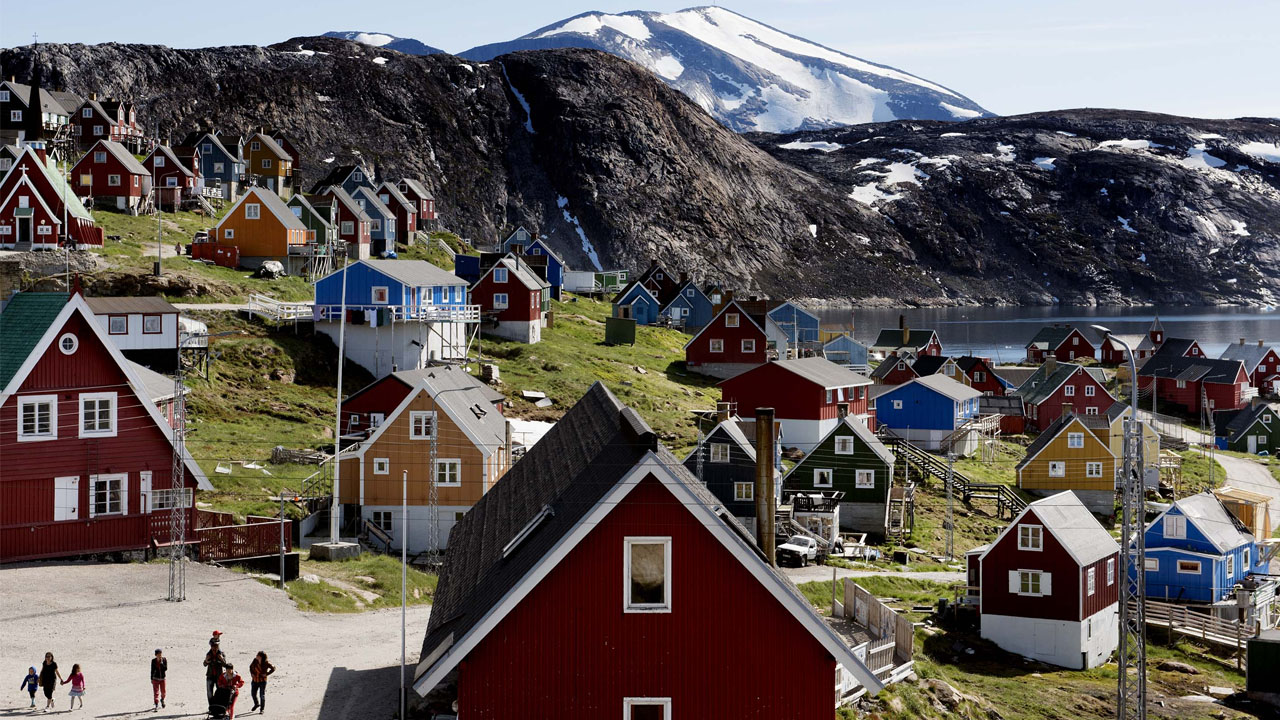
What is striking, however, is that the same reliance on force abroad is now mirrored at home. In Minnesota, following the fatal shooting of a civilian by Immigration and Customs Enforcement officers, mass protests erupted. Rather than pursue de-escalation, President Trump deployed security forces and threatened to invoke the 1807 Insurrection Act—an extraordinary step that would permit the use of the military against American citizens.
This suggests that President Trump is not discriminatory in his pursuit of change from the old order to a new one both internationally and domestically.
Put succinctly, Trump’s internal disruption of long-standing norms parallels his new and as some of his critics suggest confrontational approach internationally, including threats to invade Iran over its treatment of protesters and earlier U.S. strikes on Iranian nuclear facilities. Together, they signal a decisive break from the restraint imposed by the old world order as a governing principle.
The confrontation with the Federal Reserve Bank chairman further underscores this shift. Trump’s threat to investigate Fed Chairman Jerome Powell over alleged financial misconduct—after Powell allegedly resisted political pressure to cut interest rates—has alarmed critics who see it as an attempt to subdue an independent institution. Powell has publicly described the move as a politically motivated effort to force his resignation, but Trump clarifies that an accountability-driven initiative.
Taken together—the seizure of Venezuela’s president and his wife, plans to acquire Greenland, threats of military action abroad, pressure on domestic institutions, and the possible deployment of troops at home—these actions form a coherent pattern. To critics, it resembles the tactic of “giving a dog a bad name to hang it”, but to Trump and his team, it reflects his quest for change in furtherance of his MAGA doctrine.
Also, Trump’s defenders argue that none of this is surprising. The president never concealed his intentions. His America First doctrine was the centerpiece of his successful 2024 campaign, endorsed by millions of voters (over 77 million) who preferred dominance over diplomacy and choosehim over democraticParty candidate-ex vice president Kamala Harris. Even U.S. military actions abroad, including strikes in Nigeria carried out in cooperation with local forces on Christmas Day in Sokoto, align with this worldview.
Trump’s symbolic renaming of the Department of Defense as the Department of War was perhaps the clearest signal of all. The question now is not whether he will use power to reshape the global order, but whether that order—once anchored on rules rather than force—can survive the transformation. The jury is still out on that.
Not many people recall the security report warning that ISIS was collaborating with ISWAP to seize control of the West African coastline—particularly Nigeria’s waterfronts—which could potentially serve as a launch pad for attacks on the United States, given the shared Atlantic coastline with states such as Florida. That may be one of the reasons the U.S. was motivated to launch the costly Tomahawk missiles against terrorist camps in Nigeria’s Sokoto state.
Setting aside morality and emotion and adopting a strictly scholarly lens, President Donald Trump’s “Make America Great Again” (MAGA) mantra—reinforced by his America First doctrine—emerges as the driving force behind his disruptive policies unsettling to those who are dogmatic about the old world order.
These actions are not only reshaping the long-established political order in the United States, which Trump vowed to upend by “draining the Washington swamp,” but are also altering the global order in ways unseen since the creation of the League of Nations, which later evolved into the United Nations (UN) some eighty years ago.
Trump’s symbolic renaming of the Department of Defense as the Department of War should have signaled to discerning observers that military force would play a central role in advancing his America First agenda. His actions—particularly the attempt to acquire Greenland, a territory linked to Denmark and by extension NATO—risk fracturing the alliance and evoke echoes of America’s historic conflicts with its former colonial overseer, the United Kingdom famously referred to as the war of Independence in 1776.
Beyond withdrawing the United States from 66 international organisations deemed by Trump to be a waste of American resources, his tariff wars have shaken the foundations of global cooperation—commonly referred to as globalisation—to its core. The result is an increasingly fragmented world order reminiscent of the biblical lament: “To your tents, O Israel.”
At a recent roundtable convened by the Nigerian Institute of International Affairs (NIIA) under the leadership of its Director-General, Professor Eghosa Osaghae—where I had the privilege of serving on a panel alongside leading scholars in international relations, with former Foreign Affairs Minister Professor Bolaji Akinyemi presiding—we argued that the world may be sliding back into an era of “might is right,” an era thought to have ended with the establishment of the League of Nations.
With two of the five permanent members of the UN Security Council—Russia and, more recently, the United States—violating the very rules they helped create, the UN is rapidly losing its relevance as the arbiter of global affairs. Russia’s invasion of Ukraine and the U.S. arrest of Venezuela’s president and his wife underscore this decline. However uncomfortable this reality may be for defenders of multilateralism, it is the United States—not the UN or even the World Trade Organisation—that is now setting the global trade agenda through unilateral tariff wars.
Furthermore, I drew parallels between Rwanda’s alleged sponsorship of the M23 militia in the Democratic Republic of Congo, aimed at securing access to the country’s vast rare-earth mineral deposits, and the U.S. move against Venezuela’s leadership. In both cases, neighbouring states with greater institutional capacity are drawn to resource-rich but poorly governed neighbours—whether by persuasion or coercion.
The same logic of enlightened self-interest arguably underpins America’s pursuit of Greenland, fair or foul. Rich in strategic resources and geopolitically vital, Greenland has become another theatre in the reassertion of power politics.
So, Trump’s revolution is driven by both economic and national security interests.
Where does Africa fit into this global turbulence?
While nearly half of the continent’s 54 countries face varying U.S. visa restrictions, Africa may yet avoid the worst effects of the emerging trade wars. Indeed, the continent could benefit as rival global powers seek new allies amid the breakdown of old partnerships.
Ultimately, one hopes that this unfolding crisis will not culminate in mutual global destruction, but rather in a managed transition—where an old world order gives way to a new one without catastrophe, President Trump has been known to back down from his tough stance.
Hopefully, that would be the case this time around as both the European Union and the U.S., erstwhile partners find a common ground in avoiding the looming danger.
Concluded.
Onyibe, an entrepreneur, public policy analyst, author, democracy advocate, development strategist and a former commissioner in the Delta State government, sent this piece from Lagos.

