 Follow Us on Google News
 Follow Us on Google Discover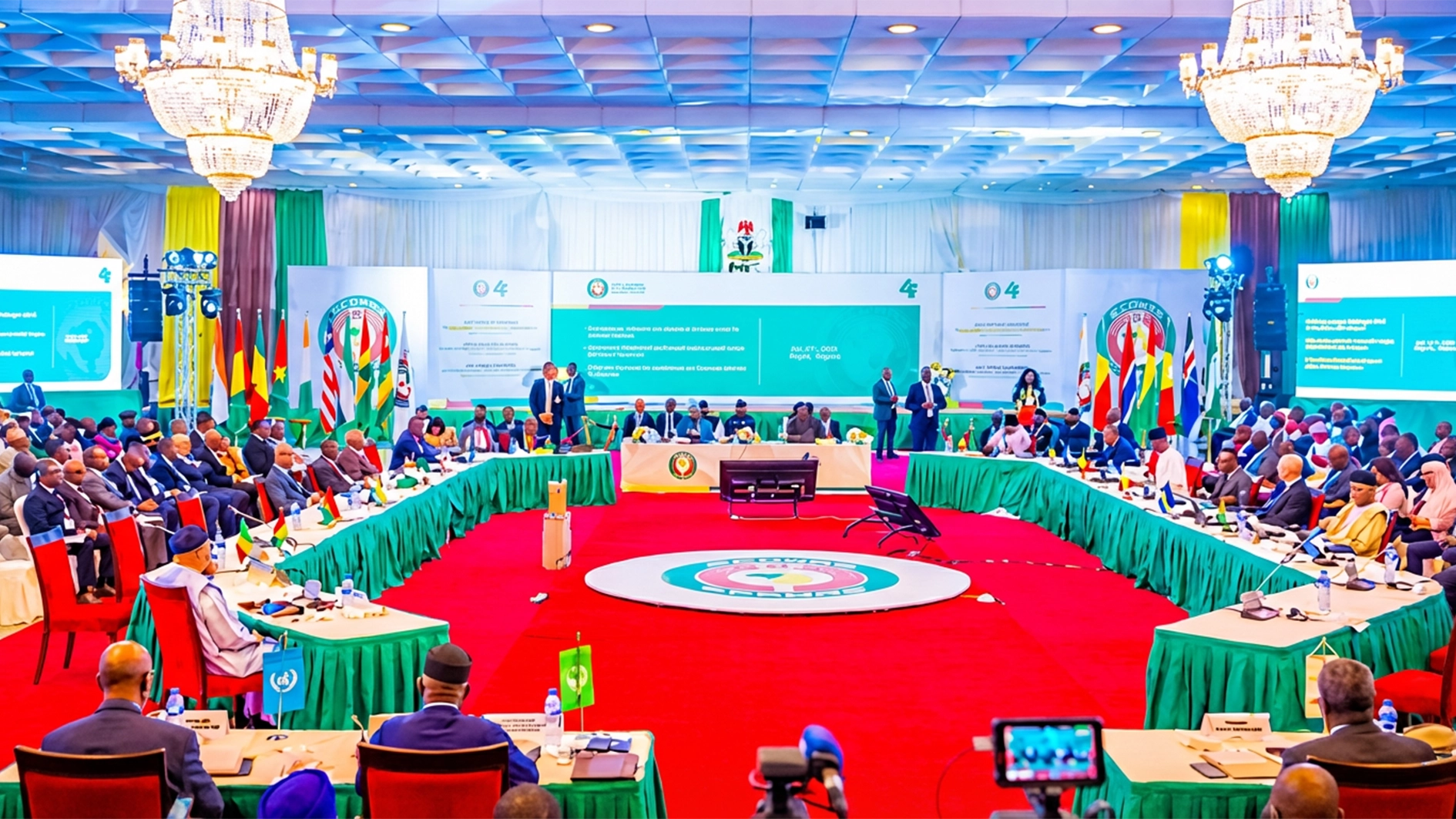
The Economic Community of West African States (ECOWAS) is connecting electricity grids across the region, expanding roads and rail network and creating fibre optic infrastructure under an attempt to integrate and create shared opportunities. While these plans have been slower than expected, insecurity and political instability remain the major test for the projects. KINGSLEY JEREMIAH writes.
IMAGINE a truly connected West Africa. An Economic Community of West African States (ECOWAS) region where integrated infrastructure supports affordable and reliable electricity; where gas flows seamlessly across borders to power homes and industrial clusters; where uniform regulatory compliance and distribution infrastructure supports downstream and midstream petroleum sector and where transport corridors connect markets from the Atlantic coast to the Sahel.
With a population of more than 424 million people spread across 5,114,162 square kilometres, ECOWAS has long struggled with fragmented politics, economy and infrastructure. Yet, five decades after its establishment in 1975, the regional bloc appears to be forcing itself to turn dreams to tangible systems that are capable of redefining its economic trajectory.
In November last year, when Nigeria’s Minister of Power, Adebayo Adelabu, announced that the country had synchronised its electricity grid with the West African Power Pool (WAPP), a specialised agency of ECOWAS, many did not know that the plan had been in place since 1999. WAPP, which covers 14 of the 15 member states, was created to establish a common electricity market and strengthen cross-border transmission networks.
The announcement signalled progress on Decision A/DEC.5/12/99, adopted at the 22nd summit of the ECOWAS Authority of Heads of State and Government 26 years ago. For years, the power pool remained more of a policy framework than operational system. Grid collapses, weak national utilities and underinvestment slowed momentum. However, synchronisation marks a structural step towards regional energy trading, a move that could reduce generation redundancy, stabilise supply and improve cost efficiency across interconnected systems.
Complementing this is the Nigeria-Niger-Benin-Burkina Faso Power Interconnection Project, supported by the African Development Bank. The project aims to strengthen transmission infrastructure and enable electricity trade among participating countries, thereby reducing the vulnerability of isolated national grids.

The Desert to Power West Africa Regional Energy Programme, supported by development partners, seeks to harness the Sahel’s vast solar potential. In a region where energy poverty constrains industrial growth, renewable pooling could enhance security of supply while aligning with global decarbonisation trends.
Energy interconnection is not merely about megawatts. It is about competitiveness. Industrial clusters require predictable power. Manufacturing and agro-processing depend on reliable supply. Without integrated systems, West African economies remain constrained by high production costs and limited scale.
Transport connectivity forms the second pillar of this planned integration. The Abidjan–Lagos Corridor Highway, a 1,028-kilometre six-lane road linking Côte d’Ivoire, Ghana, Togo, Benin and Nigeria is projected for phased advancement this year. The corridor accounts for a significant share of regional economic activity, linking ports, commercial hubs and densely populated cities.
If delivered efficiently, the highway could substantially reduce transit times, lower logistics costs and strengthen regional value chains. For a region where border delays and poor road conditions inflate trade costs, corridor modernisation is potentially transformative.
Similarly, the Trans-Gambia Transport Corridor improves connectivity between Senegal’s northern and southern territories while facilitating regional mobility. Joint Border Posts at Seme/Krake (Nigeria/Benin) and Noepe (Ghana/Togo) are already reducing duplication in customs procedures, shortening clearance times and encouraging trade formalisation.
Beyond West Africa, the Dakar–Ndjamena–Djibouti Road/Rail Project aims to extend integration across the continent, connecting West Africa to East Africa. Though ambitious and capital-intensive, such a corridor shows a strategic shift from nationally fragmented infrastructure planning towards continental networks.
Chairman of the Board of Trustees of the Community Development Committees of Niger Delta Oil and Gas Producing Areas, Joseph Ambakederimo, argues that infrastructure integration must move beyond symbolism.
He notes that air travel within West Africa remains cumbersome and expensive, while rail connectivity is minimal. Drawing comparisons with China’s Belt and Road Initiative, he contends that integrated rail and road systems could unlock significant trade potential if political will aligns with execution.
The third dimension of ECOWAS’ integration strategy lies in digital infrastructure. Fibre-optic networks connecting Algeria and Nigeria via Niger, alongside broader broadband expansion efforts, are positioning digital connectivity as a growth catalyst.
In today’s global economy, fibre infrastructure is as critical as highways and power stations. Reduced data costs stimulate digital entrepreneurship, fintech expansion and service innovation. Schools and hospitals benefit from connectivity. Governments enhance transparency through digital public services.
Principal Facilitator at FUPRE Energy Business School, Prof. Wumi Iledare, describes the infrastructure drive as the most credible integration step ECOWAS has taken since its creation.
A region of U.S.-scale geography and population, he argues, cannot achieve productivity growth with fragmented power systems, weak transport links and digital isolation.
“These projects reduce transaction costs, expand market size and improve factor mobility, which are the core ingredients of regional competitiveness,” he said.
In economic terms, they convert ECOWAS from a cluster of small demand centres into a scalable economic platform capable of attracting investment and accelerating youth employment.
However, infrastructure ambition alone does not guarantee integration. Financing remains a central challenge. Large-scale transport and energy projects require substantial capital, often sourced through concessional loans, multilateral financing and sovereign borrowing.
A partner at Lagos-based Kreston Pedabo, Idowu Olufemi, views the integration agenda as both opportunity and responsibility. While the projects can unlock trade, energy and digital growth, he cautions that financial discipline, transparent reporting and sustainable debt management are essential.
“Without strong governance frameworks, infrastructure investments risk underperformance or fiscal strain. Maintenance funding, regulatory harmonisation and institutional coordination will determine whether projects deliver intended outcomes,” he said.
Managing Director of Azura Power, Edu Okeke, adds that individual member states must create stable regulatory and investment climates. Regional interconnection can only succeed if national systems are credible and commercially viable.
The integration push unfolds against a backdrop of political instability and security challenges. Five ECOWAS member states have experienced military takeovers in recent years, complicating regional cohesion. Political instability affects investor confidence, disrupts construction timelines and increases project risk premiums. For infrastructure to catalyse integration, stability must underpin execution.
Last year, as ECOWAS marked its 50th anniversary, its achievements included free movement protocols enabling 90-day visa-free travel, trade liberalisation frameworks and peacekeeping interventions through ECOMOG in Liberia, Sierra Leone and The Gambia. Yet rising insecurity, corruption concerns and fragile democratic institutions have tested public confidence.
Speaking in Abuja, WAPP Secretary-General, Siengui Apollinaire, acknowledged progress under the ECOWAS Master Plan for the Development of Regional Power Generation and Transmission Infrastructure, now expected to reach key milestones by 2026. However, he emphasised the need for decisive stakeholder mobilisation, particularly to address security risks along project corridors.
Sustainability and energy professional, Feyisayo Ogunyemi, describes the current phase as a strategic inflection point, noting that for decades, intra-regional trade has remained below 15 per cent of total trade, constrained by physical fragmentation and weak connectivity. Infrastructure, he argues, is the missing link between policy ambition and economic convergence.
He points out that if effectively governed, a connected ECOWAS could drive higher intra-regional trade and GDP growth through reduced transport and transaction costs.
“Energy pooling would enhance industrial reliability. Integrated corridors could stimulate agro-processing and manufacturing. Digital networks would expand participation in the global economy.
“Moreover, economic interdependence often lowers incentives for conflict. Shared infrastructure can foster political cooperation, while a larger integrated market enhances global bargaining power under frameworks such as the African Continental Free Trade Area.”
Yet the window of opportunity is narrow. Execution discipline, regulatory coordination and sustained political commitment will determine whether ECOWAS’ 50-year milestone marks transformation or stagnation.

