 Follow Us on Google News
 Follow Us on Google Discover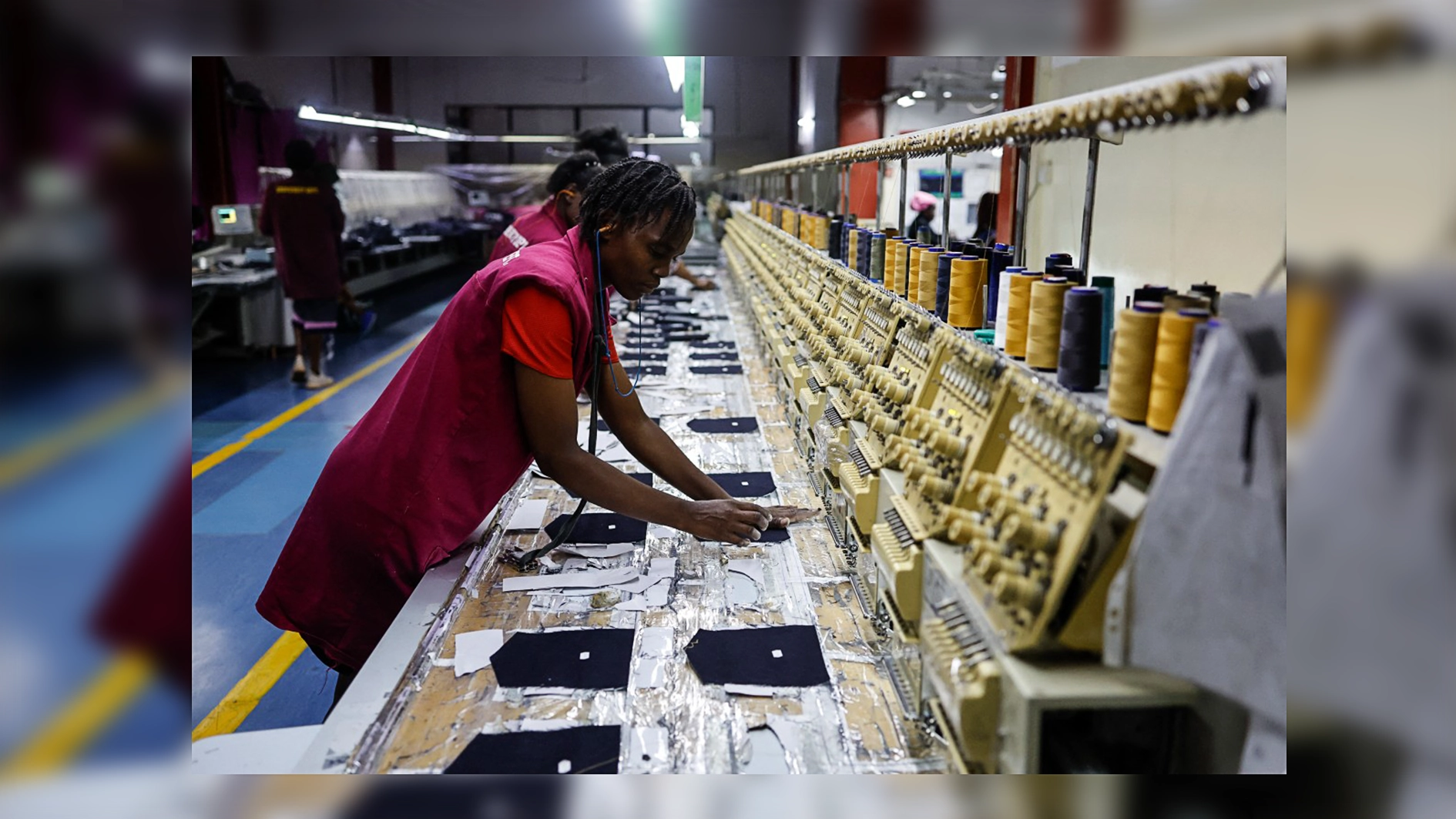
As Nigeria struggles with deepening poverty, fragile livelihoods and widening inequality, the organised labour is calling for the formalisation of the vast informal economy through deliberate integration into national social protection programmes and policies, GLORIA NWAFOR writes.
Over 90 per cent of the working-age population in the informal sector lack access to basic social protection services, including old age income security and care, disability assistance and maternal care.
Basic occupational health and safety measures are almost absent in the informal sector. According to a 2025 World Bank report, the government’s investment in social protection is approximately 0.14 per cent of gross domestic product (GDP).
However, this is significantly below the global average of 1.5 per cent and the sub-Saharan African average of 1.1 per cent. This is just as existing systems are underfunded, with minimal reach and impact.
The sector comprises persons working in information enterprises as self-employed or own-account operators, street vendors, informal wage workers, farmers, food processors, apprentices, waste workers, tailors, informal transport workers, construction workers, electronic and technical repair workers, as well as unpaid family workers.
Already, women make up to 60 per cent of total informal employment in Nigeria.
According to the International Labour Organisation (ILO), while most women work in low-productivity and lower-skilled jobs, they receive less money for doing the same work or work of equal value as men.

Meanwhile, a 2017 National Social Protection Policy, a key official policy for the sector, does not explicitly address the specific needs of the informal economy.
Workers in the sector are largely to remain self-organised and social in nature through Rotary Savings and Credit Associations (ROSCAs), Cooperative Societies, Faith-based support groups, and community associations, among others.
Workers in the sector said they want their data captured in exercises linked to specific social protection interventions.
They argued that formalisation of the sector into social protection programmes was the way to go. The Federation of Informal Workers’ Organisation of Nigeria (FIWON) and Women in Informal Employment: Globalising and Organising (WIEGO) called for a government-supplemented contributory pension scheme for informal workers.
They called for a review of the current Micro Pension Plan (MPP), arguing that the grounded realities of self-employed workers in the reform were an effort that could transform millions of lives and inspire countries across the region.
International Coordinator, WIEGO, Laura Alfers, recommended that universal health insurance coverage for pregnant women, children under age five, and older persons above 65 years was crucial.
She called for a review of the Employee Compensation Act (ECA) to extend workplace accident, disability and survivors’ benefits programmes to workers in the informal sector.
She added that attention should be shifted to workers in the sector on occupational health and safety issues.
Notwithstanding that the nation’s informal economy plays a pivotal role in the national economy, contributing over 58 per cent to the GDP and employing more than 75 per cent of the workforce, pension coverage for the vast segment of the population remains extremely low.
In 2019, the National Pension Commission (PenCom) introduced the MPP to extend pension benefits to workers in informal employment.
Six years down the line, enrolment figures remain alarmingly low.
Figures obtained by The Guardian showed that only 152,749 workers have enrolled as of October 2024, reflecting a participation rate of just 0.2 per cent of the 77 million workers in informal employment.
A joint study by FIWON, WIEGO, the International Labour Organisation (ILO), Africa Regional Organisation of the International Trade Union Confederation (ITUC-Africa), and the Africa Labour Research and Education Institute (ALREI), last year, identified barriers to enrolment and regular contributions and proposed evidence-based policy options for expanding coverage and improving the plan’s performance.
While they commended the establishment of the MPP, they urged that the Nigerian government take the issue of pensions seriously, stating that its current design and implementation fall short of what was needed to effectively serve the majority of the country’s workers in informal employment.
According to them, the sheer size of Nigeria’s informal economy and the number of self-employed individuals who are willing to save for retirement, given the proper support, represent an immense potential.
They warned that if reforms are not implemented quickly, the MPP risks continued underperformance and eventually, irrelevance.
In evaluating and improving the adequacy of the country’s MPP scheme, the study recommended that the government contribute to self-employed workers’ MPP savings.
The report argued that a co-contribution from the government would be an important signal that the government is committed to safeguarding the savings in the MPP and ensuring its adequacy.
Secretary General of FIWON, Gbenga Komolafe, hinted at how the organisation had for years emphasised the importance of shared government contribution to ensuring long-term sustainability, effectiveness, and trustworthiness of the MPP.
“In 2015, PenCom met with us to seek input into what was later rolled out as MPP. Right from its inception, we made it clear that the scheme would work if the government could co-contribute as they do for public sector workers. We said this would encourage the uptake and the onboarding of members. There is a need for public participation and a co-contribution from the government, so that workers who are sceptical about the product will believe that the government will safeguard the pension and will not be responsible for losses. With this government contribution, the people would be confident in the scheme,” he said.
Komolafe noted that government co-contribution could be flexibly defined to balance cost and effectiveness.
According to him, a generous co-contribution would cost less than half of one per cent of Federal Credit spending and less than three per cent of all social protection spending.
Similarly, a key informant at a pension fund administrator (PFA) also suggested a partnership with the state and federal governments, where part of the tax generated from the sectors is paid back as social security.
When implemented, he said all the tax incentives would make their return on investment adequate.
It is recommended that pension fund administrators should be empowered to collaborate with unions, organisations of workers in informal employment, cooperatives, religious bodies, and local governments.
It also recommended that the processes should be simplified for checking balances and making withdrawals, as well as allowing for periodic review of benefits, among others.
With strategic interventions grounded in evidence, they argued that the MPP could make an important contribution towards a more inclusive pension system.

