 Follow Us on Google News


 Follow Us on Google Discover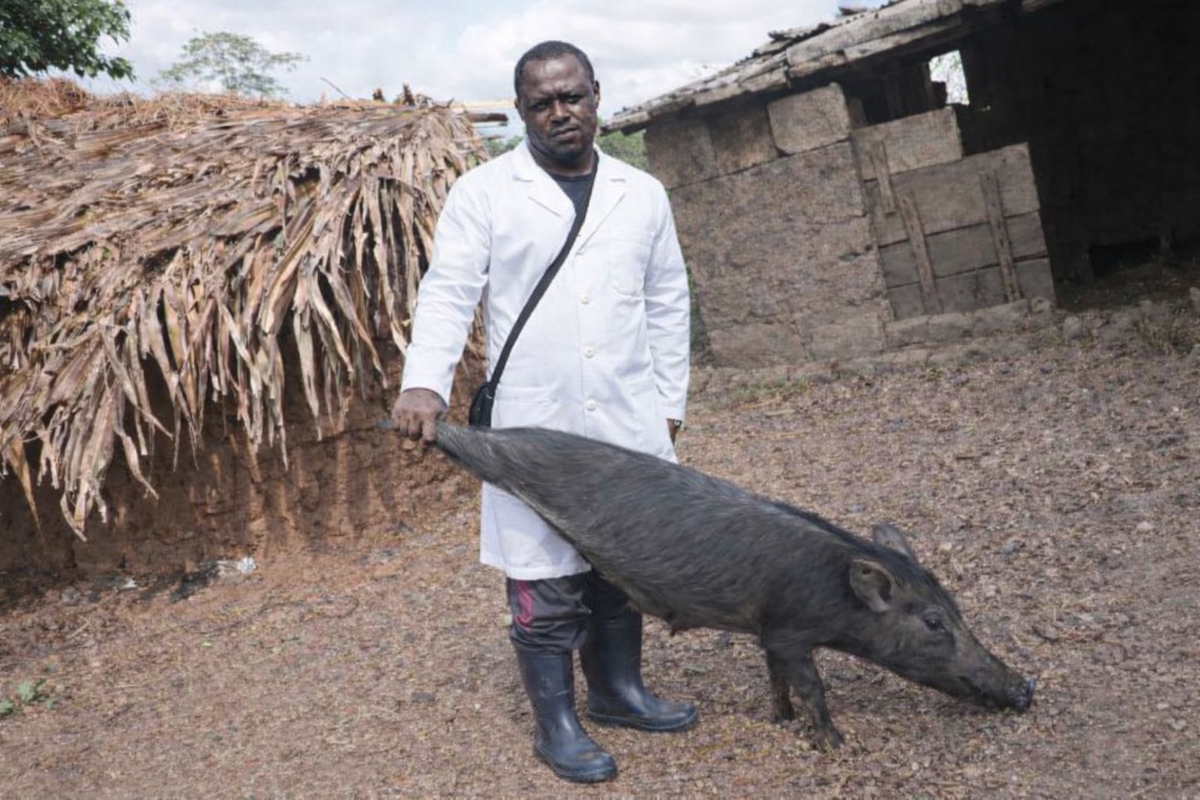
As the world continues to explore the hidden stories encoded in DNA, a Nigerian scientist has unraveled a genetic mystery that redefines the origins of Africa’s livestock. Dr. Adeniyi Charles Adeola, an evolutionary and conservation geneticist with appointments at the Kunming Institute of Zoology in China and Bayero University in Nigeria, has traced the ancestry of Africa’s indigenous pigs to an unexpected European origin.
In a paper made available to newsmen, the study titled “Integrated mitogenome and Y chromosome analysis untangles the complex origin of African pigs” published in the journal iScience, Dr. Adeola revealed that Africa’s native pigs are descendants of animals first introduced from the Iberian Peninsula around 5,250 years ago. “We’re not just tracing pigs,” Dr. Adeola explained. “We’re tracing people. Their journey is our journey, written in the genome. It’s a powerful reminder of how deeply our histories are intertwined with the animals we live alongside.”
For centuries, the origins of Africa’s indigenous pigs remained a mystery. North African wild boars offered no clues, and the clear genetic divide between West and East African pigs suggested a complex history. This puzzle, Dr. Adeola said, demanded the precision of genomic analysis. “We turned to the mitogenome and Y chromosome data—essentially reading the maternal and paternal histories of these animals,” he said.
The research uncovered a three-act story of migration and adaptation. Act I, which occurred approximately 5,250 years ago, involved the introduction of Iberian domestic pigs into West Africa. Ancient maritime traders or migrants are believed to have deliberately brought these pigs to the continent, transforming local agriculture and establishing the foundation for Africa’s earliest pig lineages.
Act II, Dr. Adeola described, was “the Great Eastern Trek,” which began nearly 2,000 years ago. Pigs from West Africa moved eastward overland, giving rise to the distinct genetic populations now found in East Africa. This expansion, he noted, mirrors broader patterns of human movement and settlement across the continent.
The final chapter, Act III, unfolded over the last 500 years. Separate introductions of pigs from Asia, combined with limited interbreeding with local wild boars, created the highly adaptable and disease-resistant populations celebrated today as Africa’s “super pigs.” “These animals are resilience incarnate,” Dr. Adeola said. “They survive extreme climates, resist local diseases, and thrive on minimal forage—qualities that reflect thousands of years of human and environmental interaction.”
The significance of the discovery goes beyond pigs. According to Dr. Adeola, it reshapes how historians and archaeologists understand Africa’s ancient trade networks. “Our study shows that Africa was linked to global networks far earlier than many assume,” he said. “The pigs are a living archive of human innovation and exchange.”
Africa’s indigenous pigs, numbering 49 recognized breeds, are under increasing threat. Dr. Adeola emphasized that identifying and conserving their unique genetic lineages is crucial for maintaining agricultural biodiversity. “Modernization and climate change pose real risks,” he warned. “By mapping these genomes, we can prioritize conservation efforts and ensure these breeds survive for future generations.”

Dr. Adeola’s work is also closely tied to food security. His research program focuses on decoding genetic resilience to African Swine Fever Virus and other pathogens, offering insights that could safeguard livestock across the continent. “Understanding the genetic makeup of these pigs helps us develop strategies for disease prevention and sustainable farming,” he explained.
The study’s implications extend to evolutionary biology and conservation. By documenting the movement and adaptation of pigs over millennia, researchers can better understand the genetic basis of resilience in tropical livestock. “These genomes are a window into the past, showing us how species adapt and survive,” Dr. Adeola said.
Dr. Adeola, who holds a PhD and multiple international appointments, is a recognized leader in large-scale genomic projects. He has applied his expertise to everything from pathogen surveillance to biodiversity assessment. “My work bridges genomics, conservation, and agriculture,” he said. “It’s about using science to protect both animals and the communities that depend on them.”
The paper has already attracted attention from conservationists and agricultural policymakers. By highlighting Africa’s unique pig lineages, it provides a roadmap for maintaining genetic diversity while strengthening rural livelihoods. “These animals are part of our heritage,” Dr. Adeola said. “Preserving them preserves a part of ourselves.”

