 Follow Us on Google News


 Follow Us on Google Discover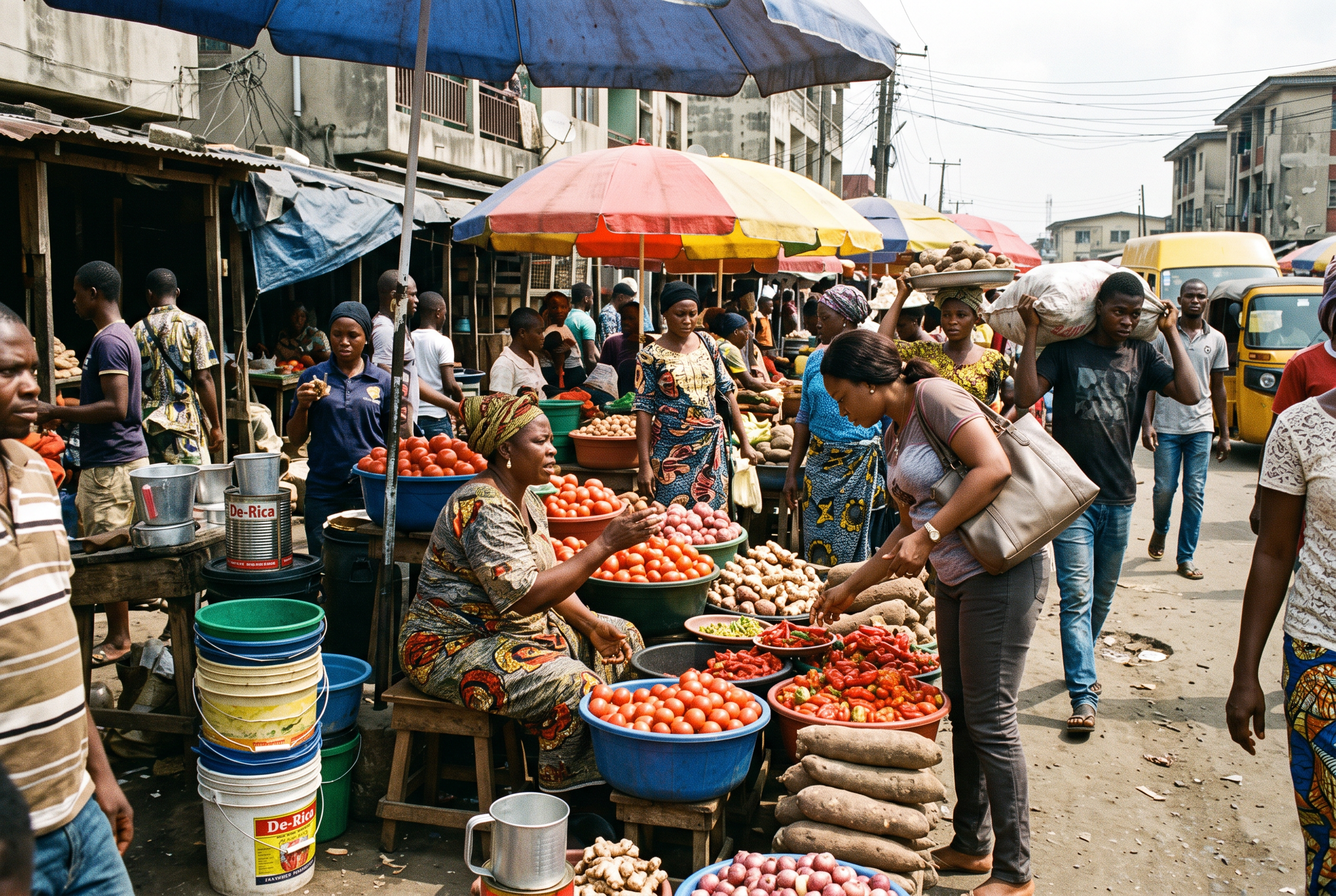
Welcome, and thank you for stopping by. Why is the cost of living so high in Nigeria? I hear that question at bus stops in Ojota, in family WhatsApp groups and, most recently, from my younger sister, who rang me from Ibadan to ask how a bag of rice could now cost more than her entire first salary. This article is the conclusion of months of research and years of experience writing about money in this country, and it leans on the basket of goods that statisticians price every month as much as on the receipts I keep stuffed in my kitchen drawer.
Here is the strange part, and it is the reason so many people feel gaslit by the news.
The official numbers say things are getting better. This very morning, the National Bureau of Statistics reported that headline inflation fell to 14.63 per cent in September 2026, down from 15.39 per cent in August and a long way below the 20.98 per cent recorded a year earlier. Food prices actually dropped month on month. And yet, if you walk into Mile 12 market this afternoon and announce that life has become cheaper, I would advise you to run quickly afterwards.
Why the gap? Because falling inflation only means prices are rising more slowly. It does not mean they are going back down.
Most Nigerians can date the start of this squeeze to a single afternoon. On 29 May 2023, the new president told the crowd at Eagle Square that the era of paying for petrol subsidy had ended, and within hours pump prices in Abuja jumped from about ₦195 to as much as ₦450 a litre. Weeks later the central bank began unifying the exchange rate. The naira, which had traded at roughly ₦460 to the dollar in the official window, slid well past ₦1,500 at its weakest before recovering to around ₦1,332 this month. Petrol now sells for about ₦1,360 a litre at NNPC stations in Lagos. Every single thing that moves by road, which in Nigeria is almost everything, carries that cost on its back.
So no, you are not imagining it.

Over the next few sections I will walk you through where life is most expensive, how much money it genuinely takes to live comfortably, the plain answer to why prices are so punishing, what ₦50,000 actually buys today, and whether ₦20 million can still put a roof over your head. I will use real figures, I will tell you when a number is my own estimate, and I will try very hard not to depress you.
Which City in Nigeria Is the Most Expensive to Live In Right Now?
Lagos. It is not close, and it has not been close for some time.
Abuja runs a respectable second, and in a handful of districts (Maitama and Asokoro, mostly) it can even outdo Lagos on rent. But measured across food, housing, transport and the sheer daily friction of getting anywhere, Lagos takes the crown, and the latest official data makes the case uncomfortably clear.
The statistics bureau publishes state-level figures alongside its headline number, and its monthly price reports are worth reading if you want to see how wildly the country varies. In September 2026, Lagos recorded the highest annual food inflation of any state at 34.40 per cent, followed by Imo at 33.79 per cent and Ondo at 31.49 per cent. The national food inflation rate was 19.59 per cent. So a Lagos household watched its food bill rise roughly fifteen percentage points faster than the national average. Meanwhile, Taraba recorded food prices 7.47 per cent lower than a year earlier, and Yobe edged slightly negative too.
Read that again. The same country, the same month, and food prices fell in Jalingo while they climbed by a third in Lagos.
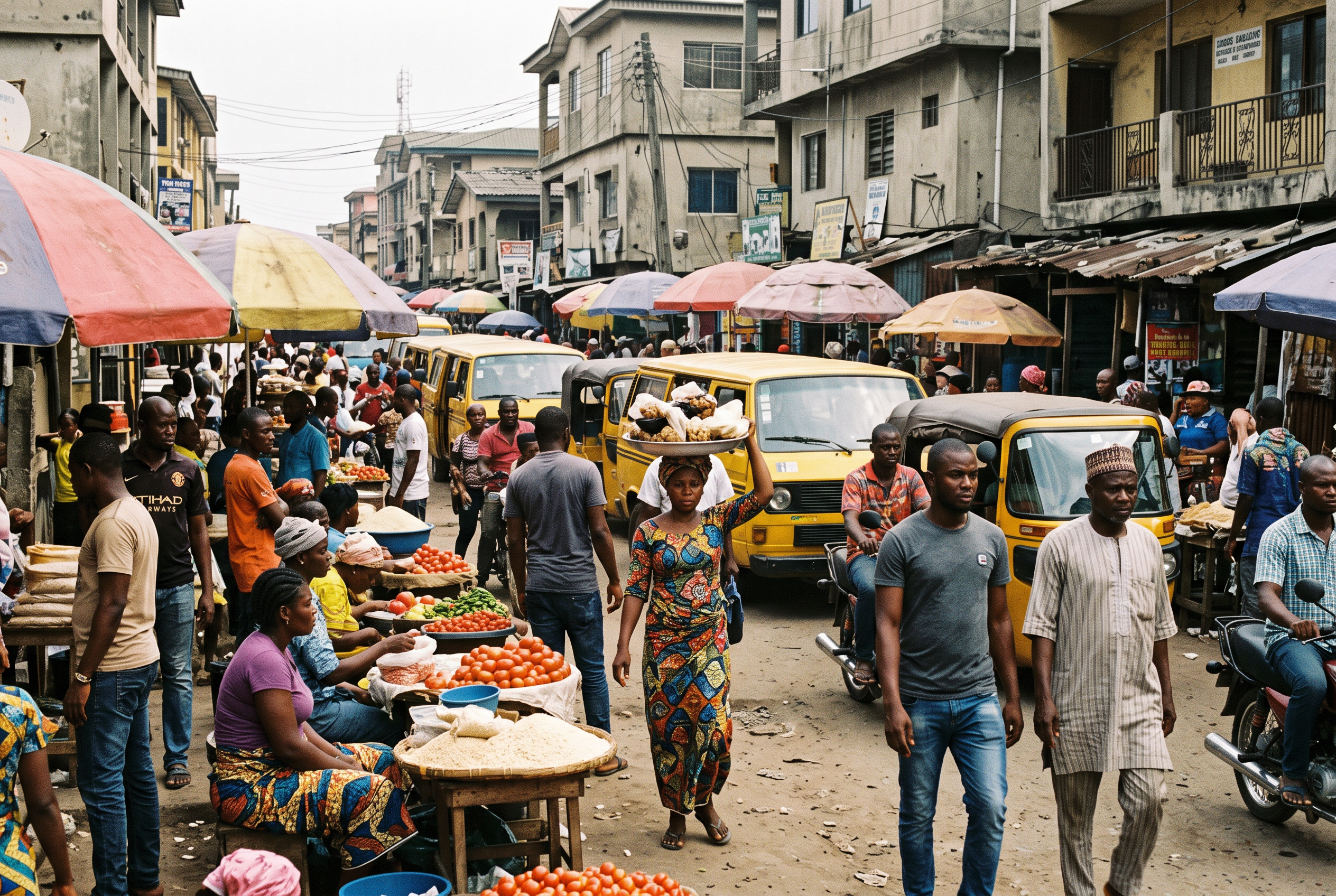
Why does Lagos suffer so badly? Rather like the last house at the end of a long water pipe, it receives everything after every other stop has taken its cut. Tomatoes come from Kano and Kaduna, yams from Benue, onions from Sokoto, and each lorry pays for diesel, for checkpoints, for loading and offloading, and for the risk of the journey itself. By the time a basket of tomatoes reaches Mile 12, it has been taxed formally and informally several times over. Lagos is also the import gateway, so anything priced in dollars lands there first.
International comparisons tell the same story from a different angle. In Xpatulator’s African cost of living ranking dated 1 July 2026, Lagos was the fourth most expensive African city for expatriates, with Abuja fifth, and both Kano and Ibadan also made the continental top ten. That is a striking turnaround from 2024, when the naira’s collapse briefly made Nigerian cities look cheap to anyone paid in dollars.
Then there is rent, which is where Lagos truly separates itself.
A Lagos Island residential market report for 2026 put the average annual rent for a two-bedroom flat at ₦17.25 million in Ikoyi, ₦15 million in Victoria Island, ₦10 million in Lekki Phase 1 and ₦8.5 million in Ikate. One-bedroom flats on the Island averaged ₦2.5 million a year in 2022 and around ₦7.5 million by 2026. Tripled, in four years. On the mainland the numbers are smaller but the direction is identical. My colleague Victor Gbonegun documented how two-bedroom rents in many Lagos neighbourhoods jumped from somewhere between ₦350,000 and ₦550,000 a year to between ₦1.5 million and ₦2 million, while the tenancy law that limits advance rent goes largely unenforced.
The structural reason is simple arithmetic. Lagos has a housing deficit estimated at about 3.4 million units, only around 31 per cent of residents own their homes, and some tenants now hand over 60 to 70 per cent of their income in rent. When that many people chase that few flats, the landlord sets the terms, demands the year upfront, adds agency and legal fees, and often a caution deposit you will never see again.
I learnt this lesson through a friend I will call Tobi (he would never forgive me for using his real name). Tobi earned what sounded like a handsome salary in Yaba, around ₦650,000 a month, and still spent every January borrowing to renew his rent. Last year he moved his family to Abeokuta and now commutes into Lagos three days a week. His rent fell by roughly two thirds, his children’s school fees fell by nearly half, and he says the Lagos to Abeokuta road costs him patience rather than money. (His wife says it costs him rather a lot of patience.)
Abuja deserves its own word. Food is a little gentler there, and transport inside the city is calmer, but the capital’s markets are unusually exposed to insecurity on the supply routes from the north and middle belt. When a highway is blocked or a farming community is attacked, Nyanya and Wuse markets feel it within days. Port Harcourt, third on most local lists, is expensive chiefly because of housing in the GRA and oil-sector demand, not because its food is extraordinary.
If you want the cheapest cities with real amenities, the answer is the same one I have given for years: Ibadan, Enugu, Ilorin, Abeokuta and Kano, all with universities, hospitals and markets, and all at a fraction of Lagos prices. Urban inflation nationally sat at 15.64 per cent in September against 12.46 per cent in rural areas, which tells you that distance from the city is still the most reliable discount in Nigeria.
How Much Money Do You Need to Live Comfortably in Nigeria Today?
First, a definition, because people use the word comfortable in very different ways.
I do not mean rich. I mean a household that can pay its rent without borrowing, eat three meals a day with some protein in at least two of them, keep the lights on through a power cut, pay school fees on time, and still put aside roughly a tenth of its income for emergencies. That is the line between living and managing. Surviving is something else entirely, and far too many Nigerians are there.
Now set that against the floor. The national minimum wage is ₦70,000 a month, signed into law in July 2024, which is roughly $53 at today’s official rate. When it was signed, petrol cost about ₦668 a litre. It now costs roughly double. No wonder public sector unions have floated ₦500,000 as their benchmark for a new wage, and no wonder the Labour Congress wants talks to begin before the end of this month.
Credit does not offer much of an escape either. The central bank cut its benchmark rate by 350 basis points at the Monetary Policy Committee’s September meeting, bringing it down from 26.5 per cent to 23 per cent. That is welcome news for businesses, but it still means a personal loan or a salary advance to cover the rent lump sum costs you well over 30 per cent a year at most lenders. Borrowing to stay comfortable is a trap, not a plan.
So what does comfortable actually cost? The table below is my best estimate, built from current rent listings, market surveys and the household budgets I have sat through with readers and relatives over the past year.
Monthly Budget to Live Comfortably in Nigeria by City and Household Size (October 2026)
| City | Single adult (₦ per month) | Couple, no children (₦ per month) | Family of four (₦ per month) | Typical two-bedroom rent (₦ per year) | Family budget in minimum wages |
|---|---|---|---|---|---|
| Lagos Island (Lekki, VI, Ikoyi) | 1.2m to 1.8m | 2m to 3m | 3.5m to 5m | 8.5m to 17m | 50 to 71 |
| Lagos Mainland (Yaba, Ikeja, Surulere) | 500,000 to 800,000 | 850,000 to 1.3m | 1.8m to 3m | 2m to 4m | 26 to 43 |
| Abuja (Gwarinpa, Kubwa, Lugbe) | 450,000 to 750,000 | 800,000 to 1.2m | 1.6m to 2.8m | 2.5m to 6m | 23 to 40 |
| Port Harcourt | 400,000 to 650,000 | 700,000 to 1m | 1.4m to 2.3m | 1.5m to 3.5m | 20 to 33 |
| Ibadan | 300,000 to 450,000 | 500,000 to 750,000 | 900,000 to 1.5m | 600,000 to 1.5m | 13 to 21 |
| Enugu | 300,000 to 450,000 | 500,000 to 750,000 | 900,000 to 1.4m | 700,000 to 1.5m | 13 to 20 |
| Kano | 250,000 to 400,000 | 450,000 to 650,000 | 800,000 to 1.3m | 500,000 to 1.2m | 11 to 19 |
The table makes one thing painfully obvious: a comfortable family life costs somewhere between eleven and seventy minimum wages a month depending on the city, and rent is the single biggest reason Lagos sits so far above everywhere else. These are working estimates rather than official averages, and your own numbers will shift with your neighbourhood, your children’s schools and whether you drive.
Let me break down one row, because averages hide the detail that matters.
Take a family of four on the Lagos mainland, renting a two-bedroom flat in Gbagada for ₦3 million a year. That is ₦250,000 a month before anything else. Food for four, cooked mostly at home with fish or chicken a few times a week, runs ₦450,000 to ₦600,000. A car owner commuting regularly can spend ₦180,000 to ₦240,000 a month on fuel, maintenance and tolls. Electricity, generator fuel or inverter top-ups, water and internet add perhaps ₦100,000 to ₦180,000. School fees at a decent private primary, spread across the year, easily add ₦200,000 to ₦400,000 a month for two children. Then come healthcare, family obligations (the uncle’s hospital bill, the cousin’s wedding aso-ebi), phone data and a savings line. You arrive at ₦1.8 million to ₦3 million very quickly.
Is that achievable on one salary? For most families, no. That is why the typical comfortable Lagos household I meet has two earners and at least one side income, often a small business, rental room or online work paid in foreign currency.
There is a gentler truth hidden in the table, too. A single professional in Ibadan or Enugu earning ₦450,000 a month lives better, in practical terms, than many people earning ₦800,000 in Lekki. I have seen it again and again. The headline salary impresses at a job interview. The postcode decides the life.
So, Why Is the Cost of Living So High in Nigeria?
Here is the direct answer, in one paragraph, for anyone who skipped straight to this section (no judgement, I do it too).
The cost of living is so high in Nigeria because several shocks landed on households at once and wages have not caught up with any of them: the removal of the petrol subsidy in May 2023 pushed pump prices from roughly ₦195 to around ₦1,360 a litre today, and fuel sets the price of transport, food distribution and the generator power most homes rely on; the unification and float of the naira cut its value from about ₦460 to around ₦1,332 to the dollar, making every imported good, ingredient and spare part far dearer in a country that imports much of what it consumes; insecurity in farming areas of the North West and North Central has cut harvests and raised the cost of moving food south; a national housing deficit of roughly 15 million units, worsened by cement prices that hit ₦15,000 a bag in some markets this year, keeps rents climbing; and high interest rates, with the central bank’s benchmark rate only recently cut to 23 per cent, make credit expensive for businesses that then pass costs on to customers. Against all of that, the ₦70,000 minimum wage, set when petrol was about ₦668 a litre, has lost much of its purchasing power, so even as inflation slows to 14.63 per cent, prices remain far above what most incomes can comfortably carry.
That is the answer. Prices rose in steps, wages rose in a single jump, and the gap between them is what Nigerians call the cost of living crisis.
If you prefer it as a list, these are the closely related forces behind it:
- Petrol prices after subsidy removal, which feed straight into transport fares, food prices and generator costs
- The naira exchange rate, which raised the local price of imports, fertiliser, medicine and machinery
- Food inflation, still 19.59 per cent nationally and 34.40 per cent in Lagos in September 2026
- Insecurity on farms and highways, which reduces supply and adds a risk premium to every lorry
- Housing shortages and building material costs, including cement and iron rods
- Interest rates, which keep business borrowing expensive and limit new investment
- Electricity tariffs and unreliable supply, which force households to pay twice for power
- Wages and the informal economy, where most workers have no minimum wage protection at all
Notice something about that list? Almost every item hits food, transport and housing, the three things a poor household cannot cut.
That is why a falling headline rate brings so little relief. A Guardian investigation by Helen Oji and her colleagues explained why easing inflation can mask continuing pressure on households, quoting economist Muda Yusuf’s point that food, transport, housing, energy, education and health together make up about 84 per cent of the inflation basket. When those categories stay expensive, it hardly matters what happens to the price of televisions.
Even the International Monetary Fund said as much this week. While raising its 2026 growth forecast for Nigeria to 4.2 per cent, its economists acknowledged that living costs remain very high and that households are suffering, and they recommended targeted cash support for the poorest families. Growth is real. It simply has not reached most kitchens yet.
Let me add one thing the statistics rarely capture, which is the cost of self-provision. A Nigerian household does not just buy food and rent. It buys its own electricity (generator or solar), its own water (borehole or sachets), its own security (a gateman, an estate levy) and, increasingly, its own healthcare through private clinics. In most countries the state covers a share of those. Here, they are line items. Rather like paying for a restaurant meal and then being handed the washing up, the bill keeps going after you think you have settled it.
Is 50,000 Naira a Lot of Money in Nigeria in 2026?
For most households, no. For some situations, yes. Let me show you why both are true.
At today’s official rate of about ₦1,332 to the dollar, ₦50,000 is roughly $37.50. It is about 71 per cent of the national minimum wage. In May 2023, before subsidy removal, the same ₦50,000 would have bought about 256 litres of petrol at ₦195 a litre. Today, at around ₦1,360 a litre in Lagos, it buys about 37 litres, which is barely a full tank for a family saloon car. (That comparison is my own arithmetic, and I found it genuinely shocking when I first worked it out.)
What else does it buy in October 2026?
It may not buy a whole 50kg bag of foreign rice, which has sold for anywhere between roughly ₦60,000 and over ₦100,000 this year depending on the brand and the market. It buys between three and five bags of cement, depending on where you shop. It covers a month of transport for a single worker in a smaller city, but perhaps two weeks in Lagos. At a neighbourhood buka in Surulere, it feeds one person lunch for roughly a fortnight if they are disciplined about the meat.
Organised labour has been making this point loudly. When the Labour Congress issued its two-week ultimatum on 9 October, Gloria Nwafor reported a bankers’ union leader arguing that the minimum wage can no longer buy a bag of rice or feed a family of four for two weeks. If ₦70,000 cannot do it, ₦50,000 certainly cannot.
So when is ₦50,000 a lot?
It is a meaningful gift to an elderly parent in a village where rent is negligible and food comes from the family farm. It is a solid monthly allowance for a secondary school pupil. It is starting capital for a small roadside business, such as a puff-puff or akara stand, where the trader buys flour, beans and oil in bulk and turns the stock over daily. And for a diaspora relative sending money home, it is a reliable top-up, just not a month’s living.
Here is how I explain it to my nieces. Fifty thousand naira is a lot of money to receive and very little money to live on.
There is a cultural layer here as well. Nigerians are generous with each other, and much of the country’s cost of living is absorbed through family networks rather than salaries. The ₦50,000 your aunt sends at the end of the month, the school fees your brother quietly covers, the bag of garri that arrives from the village by bus: these transfers keep millions of households afloat. They are also, frankly, exhausting for the people expected to send them, which is one reason so many young earners in Lagos feel poor on salaries that look decent on paper.
Can 20 Million Naira Buy a House in Nigeria Today?
It depends on what you mean by a house, and where you mean to put it.
Can ₦20 million buy a finished house in Lagos or central Abuja? No. Entry-level bungalows on the fringes, in places such as Ibeju-Lekki or Mowe, now typically start around ₦25 million to ₦45 million, and a modest home in the city proper costs several times that.
Can ₦20 million buy land and build a modest two or three-bedroom bungalow? In many states, yes, with discipline and a little luck.
Building costs are the obstacle. The Federal Competition and Consumer Protection Commission said in August that a 50kg bag of cement rose from between ₦9,300 and ₦9,700 in January 2026 to as much as ₦15,000 in some locations by July, nearly double the retail price in Kenya and Tanzania, and it has opened an investigation into possible price manipulation. One industry estimate puts 100 bags at about ₦380,000 in May 2023 and around ₦1.25 million by August 2026. Iron rods now run roughly ₦920,000 to ₦1.4 million per tonne, and one quantity surveying firm estimated that Nigerian construction costs rose about 20 per cent between December 2025 and May 2026 alone.
Here is the arithmetic that makes ₦20 million work outside the two big cities. A compact three-bedroom bungalow of about 100 square metres, built to a sensible standard at ₦120,000 to ₦170,000 per square metre, costs roughly ₦12 million to ₦17 million. Add a plot in a developing area for ₦1.5 million to ₦4 million, and you land close to ₦20 million. In Lagos, where building rates often run 20 to 40 per cent higher and land is far dearer, the same sum rarely stretches beyond the foundation and a partial structure.
I watched a cousin do exactly this in Ilorin over eighteen months. He bought a half plot on the edge of town, built in three stages as his salary allowed, and moved in with the floors tiled and the ceilings still bare. Two years later it is finished, and his annual rent bill has disappeared. Not glamorous. Entirely worth it.
If you are planning to do the same, here is the sequence I would follow:
- Split your budget before you spend a kobo, allocating roughly 15 to 25 per cent to land, 60 to 70 per cent to construction and finishing, and at least 10 per cent to a contingency fund for price rises and surprises.
- Buy land only with verifiable title, such as a Certificate of Occupancy or Governor’s Consent, conduct a search at the state land registry, and set aside 8 to 15 per cent of the land price for survey, legal and agency fees.
- Choose a plot size that matches your plan, because a half plot of roughly 50 by 100 feet (about 460 square metres) comfortably holds a bungalow with parking, while a full 60 by 120 foot plot (about 670 square metres) leaves room to extend later.
- Commission an architect for a compact design of 90 to 110 square metres, get the drawings approved by the state planning authority, and pay for a soil test so your foundation suits the ground beneath it.
- Buy cement, rods and blocks in bulk when prices dip, store cement off the ground under cover for no more than a few weeks, and insist on 9-inch sandcrete blocks for external walls and 6-inch blocks for internal partitions.
- Build in clear stages, finishing the foundation and damp-proof course first, then walls to lintel level, then the roof, and never leave walls exposed without a roof through a full rainy season.
- Finish in phases once you can live in it, tiling and painting the rooms you use daily first, and leaving ceilings, wardrobes and the boys’ quarters for later instalments.
That sequence will not make a house cheap. It will stop a house from becoming a ruin, which is the fate of thousands of half-finished buildings you can see along any Nigerian highway.
Design matters more than people expect, because good design saves money every month after you move in.
Keep the roof overhang generous, around 600mm to 900mm, so walls stay dry and rooms stay cooler. Place windows on opposite walls for cross ventilation, which does more for comfort through March and April than any air conditioner you can afford to run. Paint exterior walls in light, warm shades such as off-white, sand or pale terracotta, which reflect heat and hide red dust better than brilliant white. Inside, 60 by 60cm porcelain or ceramic floor tiles in a mid-grey or beige tone wear well and forgive the occasional muddy footprint. Wire the house for a solar inverter from the start, even if the panels come later, because retrofitting costs far more than planning. And spend on doors, windows and roofing before decorative POP ceilings. You can add character cheaply later with adire cushions, locally woven raffia blinds and a carpenter-made iroko dining table that will outlive the mortgage you were lucky enough not to need.
What about mortgages? They exist, through commercial banks and the National Housing Fund scheme, but rates and eligibility rules shut out most informal workers, and the paperwork alone defeats many applicants. For most Nigerians, building in stages remains the realistic path to owning a home.
Final Thoughts on Why the Cost of Living Is So High in Nigeria
If you take one idea from all of this, let it be that Nigeria’s cost of living crisis is a gap, not a single price. Petrol, the naira, food, rent and building materials all jumped in steps after 2023, while wages moved once and then stood still. Inflation is now slowing, at 14.63 per cent in September, and food prices even fell slightly last month. But slowing inflation leaves prices at their new, higher level, which is why the relief feels so thin.
Lagos is the most expensive place to live by a wide margin, driven by rent and food inflation above 34 per cent. Living comfortably costs anything from about ₦800,000 a month for a family in Kano to ₦5 million on Lagos Island. Fifty thousand naira is a useful gift and a poor month’s budget. And ₦20 million will not buy a finished house in Lagos, though it can still build one in many other states.
I will not pretend the solutions are entirely in your hands. Wage talks, fuel policy, food security and housing supply are political questions, and they deserve loud and persistent public pressure. But your location, your second income and your spending choices are within your reach, and they matter more than any headline.
Here is where I would start:
- Work out your own comfortable number using the city table above, then close the gap by changing your postcode or adding an income stream before you chase a pay rise.
- Protect yourself from the shocks you can see coming by holding part of your savings in assets that keep value and keeping fuel and exchange rate exposure in mind before every big purchase.
- Treat home ownership as a staged project measured in years, starting with titled land now rather than waiting for a lump sum that inflation will keep moving out of reach.
Related Articles
If this piece has left you wondering how Nigeria compares with the rest of the world on price, rather than against local wages, my earlier guide asking whether it is expensive to live in Nigeria sets out modest monthly budgets city by city and explains why the same market feels cheap to a dollar earner and crushing to a naira earner standing at the same stall.
And if the comfortable budgets in the table above made you wonder where your own household actually sits, my analysis of what share of Nigerians count as upper class works through income per head, the middle class bands and the simple self-test that tells you whether your salary is as secure as it looks.
Key Takeaways
- Prices in Nigeria rose in steps after the 2023 subsidy removal and naira float while the ₦70,000 minimum wage moved only once, and that gap, not any single price, is the real cost of living crisis.
- Lagos is the country’s most expensive city, with 34.40 per cent food inflation in September 2026 and two-bedroom rents of ₦10 million or more on the Island, so a move to Ibadan, Enugu or Abeokuta can cut a family budget by half.
- Twenty million naira cannot buy a finished house in Lagos or central Abuja, but in many other states it can still fund titled land and a compact three-bedroom bungalow built in stages.
Frequently Asked Questions: Why Is the Cost of Living So High in Nigeria?
Why is the cost of living so high in Nigeria?
The cost of living is so high in Nigeria because petrol subsidy removal, the fall of the naira, food inflation, insecurity in farming areas and a severe housing shortage all pushed prices up sharply after 2023. Wages have not kept pace, with the ₦70,000 minimum wage now worth far less than when it was set in 2024.
Which city in Nigeria is the most expensive to live in?
Lagos is the most expensive city in Nigeria, with the highest food inflation of any state at 34.40 per cent in September 2026 and Island rents of ₦10 million or more a year for a two-bedroom flat. Abuja ranks second, and its Maitama and Asokoro districts can match Lagos on rent.
How much money do you need to live comfortably in Nigeria?
A single adult needs roughly ₦300,000 to ₦450,000 a month to live comfortably in Ibadan or Enugu, rising to ₦500,000 to ₦800,000 on the Lagos mainland. A family of four generally needs ₦900,000 to ₦1.5 million in a mid-sized city and ₦1.8 million to ₦3 million in mainland Lagos.
Is 50,000 naira a lot of money in Nigeria?
For most households ₦50,000 is not a lot, since it equals about $37.50 and roughly 71 per cent of the national minimum wage. It buys around 37 litres of petrol in Lagos today, compared with about 256 litres before subsidy removal in May 2023.
Can 20 million naira buy a house in Nigeria?
Twenty million naira cannot buy a finished house in Lagos or central Abuja, where entry-level bungalows on the fringes start around ₦25 million. In many other states it can fund a titled plot and a compact two or three-bedroom bungalow built in stages.
Did fuel subsidy removal cause the high cost of living in Nigeria?
Fuel subsidy removal in May 2023 was the single biggest trigger, pushing petrol from about ₦195 a litre to around ₦1,360 today. It worked alongside the naira’s devaluation, insecurity and housing shortages rather than acting alone.
Why are food prices still high when inflation is falling?
Falling inflation means prices are rising more slowly, not that they are returning to earlier levels. Food inflation also remains high at 19.59 per cent nationally, well above the 14.63 per cent headline rate recorded in September 2026.
What is the current minimum wage in Nigeria?
The national minimum wage is ₦70,000 a month, signed into law in July 2024, though states such as Lagos and Imo pay more. Labour unions are demanding talks on a new wage before the end of October 2026.
Why is rent so expensive in Lagos?
Rent in Lagos is expensive because the state has a housing deficit of about 3.4 million units and a population that keeps growing faster than new homes are built. Landlords also demand a year or more upfront plus agency and legal fees, and tenancy rules on advance rent are weakly enforced.
Why is cement so expensive in Nigeria?
Cement prices rose from about ₦9,300 a bag in January 2026 to as much as ₦15,000 in some locations by July, driven by energy, transport and production costs. The competition regulator has opened an investigation into possible price manipulation because Nigerian prices are nearly double those in Kenya and Tanzania.
Will the cost of living in Nigeria come down?
Inflation is easing and the central bank cut its benchmark rate to 23 per cent in September 2026, which should slowly reduce price pressure. Prices are unlikely to fall back to 2023 levels, so real relief depends mainly on wages and incomes catching up.
What is the most effective way to reduce living costs in Nigeria?
Moving from Lagos to a cheaper city such as Ibadan, Enugu or Abeokuta is the most effective single change, because rent and school fees fall sharply. Buying staples in bulk, investing in solar power and adding a second income stream make the next biggest difference.

