 Follow Us on Google News
 Follow Us on Google Discover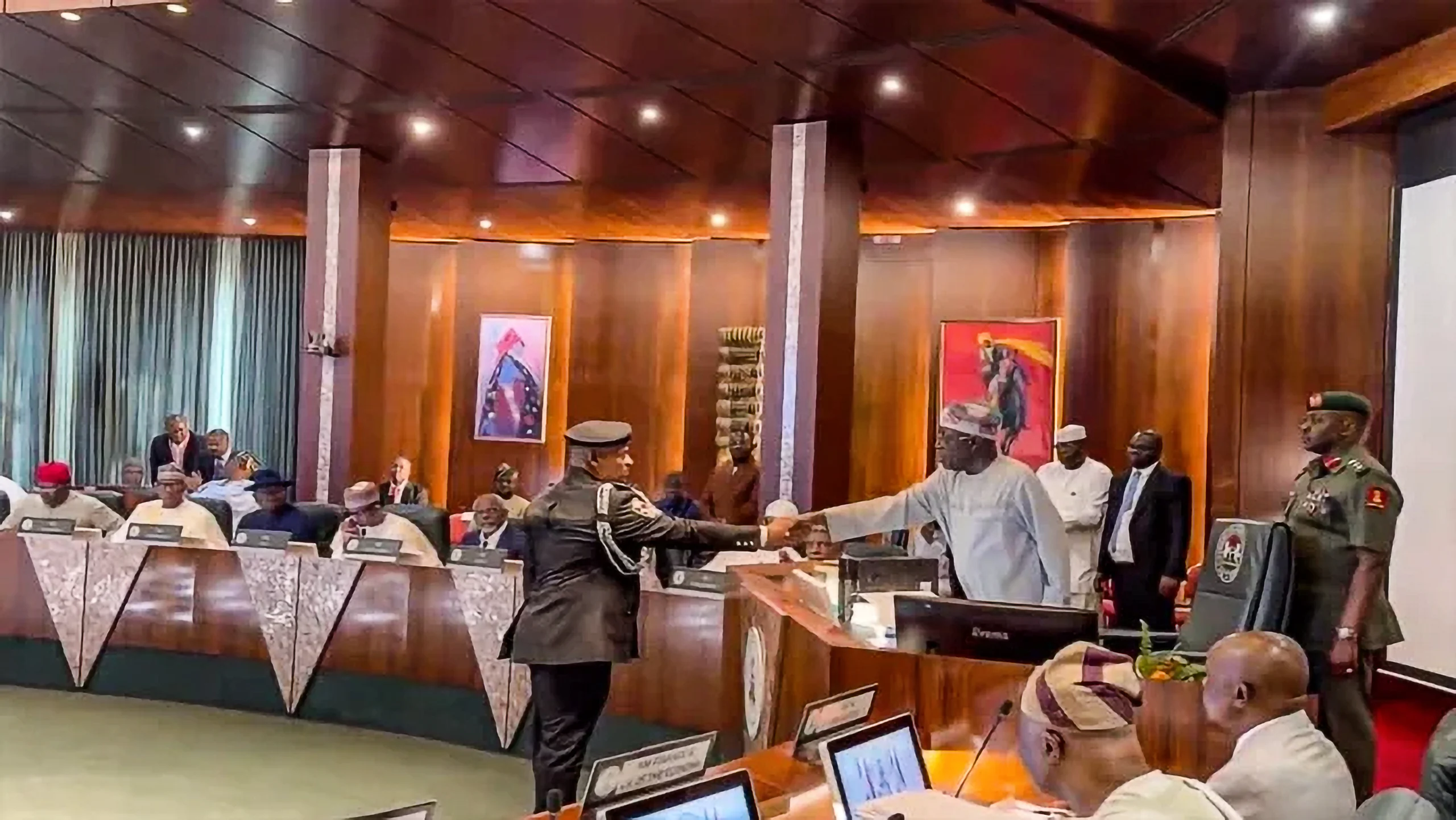
• Disu: State police here to stay, personnel jobs not under threat
• Afenifere fears renewed push could be 2027 election strategy
• Bode George urges safeguards against abuse of power
• NUJ backs police participation in state police reform debate
• Gani Adams questions federal police role in state police panel
• Committee can only produce position paper, expert clarifies
Amid worsening insecurity and growing elite consensus, Inspector-General of Police Olatunji Disu yesterday inaugurated a committee to examine the framework for state police, injecting fresh momentum into Nigeria’s long-delayed policing reform debate.
Despite mounting calls for decentralised policing, the push for state police has remained stalled for years, constrained by constitutional provisions that place policing exclusively under the Federal Government and by lingering fears that governors could abuse such powers for political ends.
However, Disu’s move has reopened the debate within the security establishment itself, even as stakeholders differ on whether the police should help shape the framework or leave the process entirely to constitutional amendment by the National Assembly and the states.
Speaking at the inauguration of the committee, Disu said Nigeria’s evolving security challenges require innovative thinking, strategic collaboration, and bold reforms to make policing more responsive to local realities while upholding the rule of law.
“It is my greatest privilege to formally inaugurate this Committee on State Policing. The task before this committee is both significant and timely, as it speaks directly to the demand to strengthen Nigeria’s internal security and ensure that policing remains responsive to the realities of our communities,” Disu said.

He stressed that the country’s security challenges require meaningful reforms to enhance operational capacity.
“Your work will help shape the framework through which state policing may operate in Nigeria in a manner that strengthens, rather than fragments, our national security system,” he added.
The IGP highlighted the potential benefits of decentralised policing if carefully designed and effectively implemented.
“By bringing law enforcement closer to the communities, state police institutions can deepen local knowledge of security dynamics and enable quicker and more targeted responses to emerging threats,” he said.
He noted that decentralising the police would enable state governments and local authorities to respond more efficiently to security challenges within their jurisdictions, while the Federal Government focuses on broader national security priorities.
Disu also reassured police personnel that the constitutional role of the Nigeria Police Force as the country’s primary national law enforcement institution would remain intact.
He said the federal police would increasingly focus on complex and transnational crimes such as terrorism, organised crime, cybercrime and trafficking networks that require national coordination and specialised capacity once state police structures become operational.
“The vision we seek is one of synergy, not competition; partnership, not duplication,” he said.
The IGP told the committee that Nigerians have high expectations regarding its assignment to develop a roadmap for the establishment of state police. He urged members to study how state policing operates in other countries in order to align the proposed framework with global best practices.
He also asked the committee to examine key issues such as funding sources for the proposed structure, as well as the professionalism, discipline and integrity required of the force.
Disu urged the members to approach their assignment with diligence, intellectual rigour and patriotism, noting that Nigerians are watching closely.
Also, speaking to State House correspondents after taking the oath of office as the 23rd IGP, Disu reaffirmed his support for the creation of state police, saying the policy “has come to stay”.
“We want to ensure that the best thing is done. State police has come to stay, and the police should be able to do their own part in making it succeed. The police are not afraid. Our jobs are not being taken. It’s just an issue of partnership,” he said.
Members of the committee include Commissioner of Police Bode Ojajuni (Secretary), Deputy Commissioner of Police Okebechi Agora, Deputy Commissioner of Police Suleiman Gulma, Assistant Commissioner of Police Ikechukwu Okafor, Chief Superintendent of Police Tolulope Ipinmisho, and retired Commissioner of Police Emmanuel Ojukwu, Provost of the Police Public Relations School.
THE clamour for state police had been caught between constitutional rigidity, political mistrust and fiscal concerns.
Under Section 214 of the 1999 Constitution, policing remains the exclusive preserve of the Federal Government through the Nigeria Police Force. The provision recognises only one police force for the federation, meaning any attempt to establish state-controlled police structures would require a constitutional amendment.
Such an amendment must secure two-thirds support in the National Assembly and approval from at least 24 state Houses of Assembly — a politically delicate threshold in a country sharply divided along regional and partisan lines.
Beyond the constitutional hurdles lies a deeper trust deficit. Opponents fear governors may weaponise state police against political rivals, particularly in states where democratic culture remains fragile. The experience of regional police formations during the First Republic, widely accused of partisanship, is frequently cited as a cautionary tale.
Funding is another sticking point. Several states are already burdened by salary arrears and pension liabilities. Critics question whether they can sustainably finance recruitment, training, equipment, forensic capacity and oversight frameworks without creating poorly resourced forces vulnerable to abuse.
However, the worsening security situation has strengthened the case for reform. Proponents argue that Nigeria’s centralised policing architecture is overstretched and too distant from local communities to gather actionable intelligence. They insist decentralisation would improve response times, strengthen community trust and enhance coordination with local vigilante groups.
OBSERVERS say the latest move by the IGP signals an institutional willingness within the policing hierarchy to engage with reform discussions rather than resist them outright.
However, the Yoruba socio-political group, Afenifere, expressed concern over whether the renewed push could be a ploy to gain cheap popularity and appeal to Nigerians desperate for reform.
Speaking with The Guardian yesterday, spokesman of Afenifere (the faction loyal to late Pa Ayo Adebanjo), Justice Faloye, said: “Let’s not be in a haste to dismiss the IGP’s committee, but at the same time, we hope it is not an election strategy.”
Faloye added that while Nigerians are yearning for state police, “let’s wait and see the draft the committee will come up with and pass through the IGP to Mr President for onward transmission to the National Assembly. I doubt if it is something that can be done in a hurry between now and 2027, considering the constitutional processes.”
While commending the IGP’s initiative, former Deputy National Chairman of the Peoples Democratic Party (PDP), Bode George, said: “For state police to materialise, the process must follow a structured path: constitutional amendment; clear delineation of federal and state policing powers; establishment of independent oversight commissions; guaranteed funding mechanisms insulated from political interference; and enforceable safeguards against abuse of power.
“President Bola Tinubu has indicated openness to restructuring discussions, but consensus across regions remains uneven, particularly among stakeholders wary of security fragmentation.
“Until constitutional amendments align with political trust, fiscal capacity and accountability safeguards, state police may remain more aspirational than operational. The newly inaugurated committee could mark a turning point, but only if it translates debate into actionable reform rather than another prolonged national conversation.”
The Nigeria Union of Journalists (NUJ) said the process is appropriate since state police would directly affect the existing police structure.
The National Secretary of the union, Achike Chude, said: “The IGP’s move is a natural response to public demand, and the existing police structure is required to make inputs if state police is to be achieved. I don’t see any politics in this.”
Questioning why the Federal Police is setting up a committee on state police, the Aare Ona Kakanfo of Yorubaland, Gani Adams, described the move as suspicious. He appealed to President Tinubu not to allow the central police to interfere in the creation of state police, warning that “else it will be counterproductive. I recall how, under the late General Sani Abacha’s military regime, attempts were made to bring the Federal Road Safety Corps (FRSC) under the central police, and that was what demystified the commission till today.”
He said the National Assembly should instead be allowed to perform its constitutional role of defining the responsibilities of federal and state police. Otherwise, if the central police assume that role, it could create confusion.
He, however, urged Nigerians to exercise patience and see what the committee will come up with.
Meanwhile, a lawyer and national security expert, Dr Charles Omole, said the confusion surrounding the eight-man committee set up by the IGP stemmed from the headline: “IGP Sets Up 8-Man Committee to Implement State Police.”
According to him, “No single police committee can implement state police in Nigeria. That is not possible.”
He explained that the IGP had merely constituted a committee to prepare a proposal on state police from the perspective of the Nigeria Police Force and submit it to him.
Omole recalled that several former IGPs, including the immediate past IGP, Kayode Egbetokun, had opposed the establishment of state police, arguing that Nigeria was not yet ready for it.
“To be frank, the eight-man committee cannot implement state police in Nigeria. However, whatever the committee comes up with will be a position paper, which the NPF will present during the all-inclusive government and stakeholders meeting to be led by the National Assembly,” he said.
He commended the IGP for taking a positive stance on state police, unlike his predecessors, who, according to him, did not consider it necessary.
For his part, Chief Jonathan Sunday Akuns, the Galadima of Daffo in Bokkos Local Council of Plateau State, argued that the issue of subnational security architecture is directly linked to provisions of the Constitution of the Federal Republic of Nigeria, which designate a state governor or council chairperson as the “chief security officer” (CSO) of a subnational jurisdiction.
He stated: “All that is required is to strengthen the constitutional provision by clearly defining the boundaries of what a CSO (Chief Security Officer) can do. It is up to the legislative branches of the subnational governments to enact jurisdiction-specific laws, not for any committee of the IGP to issue guidelines.
“Thus, the process should be a bottom-top approach that will trigger a reconciliation of criminal jurisdiction between the federal police service and those of the subnationals. While an amendment of the Constitution can be undertaken at any time, the current approach runs the risk of a soft abuse of parliamentary majority. The time frame for public submission of memoranda to the National Assembly for a review of the Constitution has elapsed. A central command approach to this matter is also a negation of true federalism.”

