GDN SIDEBAR
At just 20, Ayo Maff has emerged as one of street pop’s most compelling new voices. From the restless corners of Bariga to the fast-rising ranks of Afrobeats, the singer reflects on faith, fame, meeting Fireboy DML, and the hunger driving his rise.
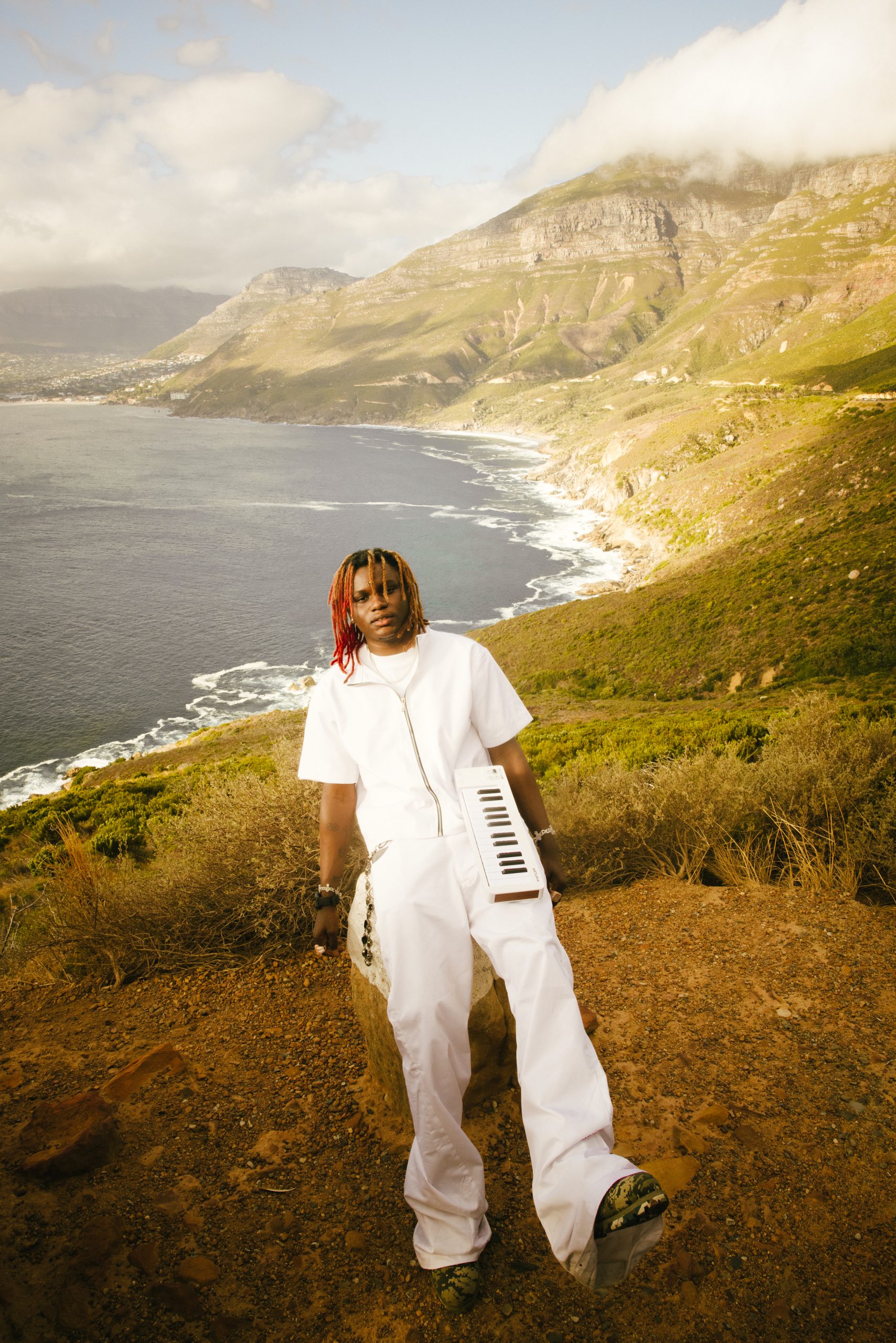
Ayo Maff, photographed by Jeremy visuals
Ever since Afrobeats’ mainstream soundscapes shifted towards a more inclusive palette in the last few years, street pop acts have begun to find their moments in the spotlight. One of such mavericks whose breakout shook the industry is Ayo Maff, born Ayorinde Ayodele, the Bariga-born bard whose soulful street pop tunes have surfaced as a ray of hope for the common man.
When Ayo Maff first gained significant buzz circa 2023 with his two-pack record, Jama Jama and Another Day, his smooth flows, emotive melodies, and vulnerable storytelling soared as his distinct markers. His music represented his experiences growing up in the gritty corners of Bariga, from rosy to restive. His momentum continued to rise, peaking in 2024 with the Fireboy DML-assisted smash hit, Dealer. Shortly after, he released his debut EP, MAFFIAN, a 7-tracker fusion-driven soundscape that reframed street pop as a therapeutic, cohesive and uber-exciting style in the Afrobeats mainstream soundscape. His odyssey continued with three nominations at the Headies that same year: Next Rated, Best Street Hop and Headies Viewers Choice award.
Last year, Ayo Maff returned with a statement-making debut LP titled Prince of The Street, featuring heavyweights like Seyi Vibez, Chike, BNXN, JAZZWRLD and Thukutela. The 13-tracker record shone with deeper vulnerability and soul, transforming street pop with his cathartic storytelling of life on Lagos’ streets. The 20-year-old singer didn’t just become a self-acclaimed street pop monarch; his brazenly audacious storytelling and delivery crowned him as an unmistakable gem.
From growing up in Bariga to finding fame across Afrobeats circles, Ayo Maff’s trajectory is nothing short of inspiring. In this week’s Guardian Music edition, we catch up with the young superstar, taking a front-row peek into his come-up journey; his creative muses; working with Fireboy DML; his experiences behind his latest song, God Is Working; and his vision to continue making evergreen music for the streets.
There is a South African backup on your latest song, God Is Working. Who sang it?
My producer figured it out. It was a free sample, and he played it the other day, for me, and I just fell in love with it. I also called a few of my female friends to add some extra vocals to make it sound perfect.

What inspired the song?
The song just makes me feel like something is about to happen, something nice, something good. So that’s why I just said, ‘God is working’. It is a song that tells you that everything is definitely going to align. And, with this Ramadan season, it just aligned. The day I made the song, it was just me being grateful and at the same time hoping for the best.
Do you have a typical creative process?
Sometimes I get to write. Sometimes I don’t; I just get into the studio and do whatever comes to my head. So I don’t really have one particular creative process. I just do music the way it comes.
Let’s peel back a bit to your come-up. How did you discover your musical talent?
Music has always been something I love. It has always been my thing. I’ve always loved to do music, right from my primary school days, way back. We would rap and disturb classes, then in school. But professionally, I started in 2023 when I dropped my first two-pack single, Jama Jama and Another Day. Music has always been in my blood; back then, in school, all my friends knew me as that music head.
How were you able to fund the dream initially?
Growing up in Bariga was fun; living and making music with my guys. To be honest, I would just use the word fun at the same time, although there were challenges. But the best part was the fun in it. You know, when your friends hype you up, when it was just vibes and Inshallah. It’s just you and your guys playing around. Sometimes we have to contribute money to go record at the studio. Sometimes, we use our savings. We would make the music and record freestyle videos for social media. We were just doing our thing.
When was that full-circle moment for you when you realised you had become famous?
I don’t know if I have blown up yet, but I’m really grateful to God for the growth. But there was a day when I realised that the attention is here. It was a particular day I was on stage, and I performed, and the whole crowd sang back to me. I felt so grateful. I just had to call my mom immediately. That was the moment I knew something was up.
Did you ever think of quitting music?
There was no moment in my life when I ever thought of quitting music. I would rather just take a break, calm myself down, take a deep breath and go again.
What is the core message behind your artistry?
I just wanted to let all my people know that I’m here to stay, and also let them know that the streets would always win.
Do you also feel optimistic about street pop’s ascent in Afrobeats mainstream?
First of all, I’m grateful to God and to Jesus who paved the way for us. Because without them, we wouldn’t be here.
Any specific influences in your journey?
Growing up, we didn’t really get to listen to a lot of music; we just listened to the ones they played around us, which were the likes of Olamide. Growing up in Bariga, that’s one person you would have heard being blasted on the street. So, we used to listen to Olamide a lot in Bariga.
You made a song for him called Baddo’s Song. How did you both first connect?
He is my big daddy, a mentor. I can’t really remember the first time I met him, but I can remember the feeling. It was like, ‘Damn, I meant the OG finally!’
Are we expecting new music this year?
I think I’m going to be dropping a new project, and I’m going to do more shows, more tours, more nice videos.
Do you still visit Bariga now?
Sure, that’s my home forever. I still go in the middle of the night. I just go to see my day ones.
So apart from making music, what else are your pastimes?
I don’t think there’s anything else I do. Man, I just do this music. Music is all I do. Trust me, I don’t think there’s anything else. I’m a full-time music guy. I don’t go out too much; the four corners of my room is my peace.
Tell us about one unforgettable creative session you had.
When I made Dealer. It just happened. I was just vibing. Also, for God is working, I was not even supposed to be in the studio that day. I just said, ‘Omo make we just go play for there’. And as soon as I heard the first instrument he played, I recorded my vocals, and God is working was the result. We didn’t even have plans to record that particular day. We just went to finish up some things.
Was Fireboy with you when you made Dealer?
I had recorded my part before. Then I went to him, and I played it for him. He liked it and jumped on it immediately. That was also the first time we met. That is my big bro for life.
Finally, what would you say is the vision for Ayo Maff?
The vision is huge. I don’t even know how to explain it. All I would just say is greatness.