 Follow Us on Google News
 Follow Us on Google Discover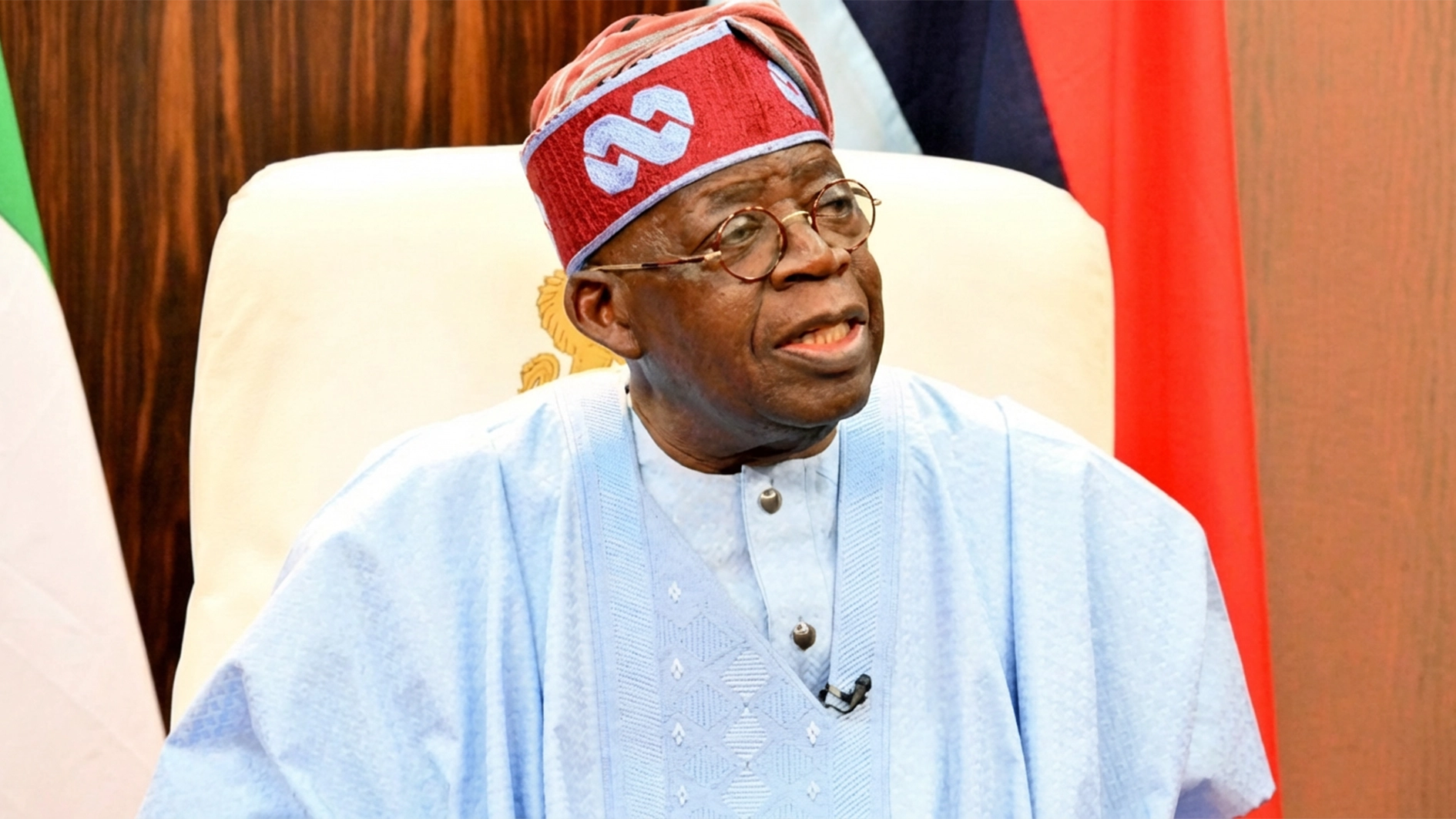
The Presidency of Bola Ahmed Tinubu, initiated in May 2023, represents a d’ Fourth Republic. For decades, petrol subsidies drained public finances, encouraged rent-seeking, and postponed hard but necessary choices. Its removal reduced fiscal leakage and created space for more productive public spending. By late 2025, inflationary pressures began to ease and government revenues, particularly non-oil receipts, showed improvement.
Yet, these gains come amid persistent public anxiety. The initial subsidy removal in 2023 triggered soaring living costs, exacerbating inequality and polarisation, as President Tinubu himself acknowledged in October 2025 when declaring that the “worst is over.” Economic woes have fueled criticism pointing to a disconnect between macroeconomic stabilisation and everyday hardships, echoing the structural adjustment programs of the 1980s that deepened social divides.
The governance model employed here is one of “aggressive correction.” The administration argues that the removal of the subsidy has halted the hemorrhaging of the national treasury, doubling the monthly distributable revenue shared by the three tiers of government. Yet, the utilisation of these improved revenues has become a point of intense scrutiny.
The economic outlook for 2026 is delicately poised. While the IMF maintains a positive stance based on fiscal reforms, local analysts like Veriv Africa and Agusto & Co. warn of “reform fatigue”. The sluggish growth in the agricultural sector, hindered by persistent insecurity and the high cost of inputs such as fertiliser, continues to drag down the broader recovery.
As the country approaches the 2027 cycle, the administration’s ability to convert macroeconomic stabilisation into improved daily life for the average Nigerian remains its greatest hurdle. Indeed, Nigeria’s reforms subsidy removal, currency adjustment, fiscal tightening—suggest a willingness to confront reality. The challenge now is to humanse reform: to protect the vulnerable, communicate honestly, and pace change in a way that sustains public consent.
These outcomes matter for the nation as a whole. Yet it is equally true that the transition imposed real pain. Transport costs rose, food prices climbed, and household budgets tightened. A nationalistic response does not deny this reality; it insists instead that shared sacrifice must be matched by shared purpose. Reform cannot be seen as something done to the people by the state, but as something undertaken with the people in the long-term interest of the republic.

The 2025 tax reform acts: a technical overhaul of state revenue
The 2025 tax reforms were designed to modernise Nigeria’s fiscal architecture, broaden the tax base, and reduce over‑reliance on oil. They simplified outdated rules, brought parts of the digital economy into the tax net, and shielded low‑income earners from personal income tax, while tightening corporate and capital gains taxation.
In a healthy polity, taxation is not merely extraction; it is contribution. However, contribution requires trust. Many Nigerians perceive the reforms as an added burden because the reciprocal benefits of quality public services, infrastructure, and social protection remain insufficiently visible. A nationalistic ethic demands honesty on both sides: citizens must recognise that a viable state requires domestic revenue, while the government must demonstrate, concretely and locally, that taxes paid are taxes working.
Monetary governance and the Cardoso reforms: Taming the naira
The Central Bank of Nigeria (CBN) has undergone a period of intense reform under Governor Olayemi Cardoso, aimed at restoring the bank’s “orthodox” mandate of price stability and monetary neutrality. The transition from the era of “monetary financing” of the fiscal deficit—which saw the CBN issue trillions in “Ways and Means” advances to the government—to a regime of strict inflation targeting has been the hallmark of this tenure.
Central to these reforms was the adoption of the “willing buyer–willing seller” foreign exchange framework. This move was intended to eliminate the arbitrage opportunities inherent in the previous multiple exchange rate system, which had facilitated massive rent-seeking and discouraged foreign direct investment.
The initial result was a volatile devaluation, with the naira fluctuating between N1,035 and N1,700 per dollar in late 2024, resulting in a 40 per cent loss of value. However, by September 2025, headline inflation fell for the sixth consecutive month to 18.02 percent, and the gap between official and parallel market rates narrowed to less than two per cent.
The strengthening of Nigeria’s global financial standing was further bolstered by the joint confirmation by the CBN and the Nigerian Financial Intelligence Unit (NFIU) of progress in the country’s anti-money laundering and counter-terrorist financing framework. This achievement is seen as a turning point for Nigeria’s reintegration into the global financial mainstream.
Furthermore, the operationalisation of the Dangote Refinery—at 650,000 barrels per day the world’s largest single-train refinery—has begun to alter the fundamental demand-supply dynamics of the foreign exchange market. By late 2025, the refinery projects a potential end to refined petroleum imports, a development that would significantly ease the pressure on the naira by reducing the demand for dollars by nearly 30 per cent.
Despite these technical successes, monetary tightening has come at a cost. The CBN maintained high interest rates throughout much of 2025 to curb money supply, which some analysts argue has contributed to the “sluggish” growth in the manufacturing and services sectors. As the country enters 2026, the bank is expected to begin a gradual interest rate cut—potentially 150-250 basis points—contingent on the sustained deceleration of inflation. This delicate balancing act between stabilising the currency and fostering credit for production will define the economic mood of the electorate as they look toward 2027.
Institutional erosion: The defection epidemic and the One-Party drift
Nigeria’s political culture remains dominated by zero‑sum competition where victory is total and defeat is existential. Recent waves of political defections and the concentration of power have intensified fears about weakened checks and balances.
The wave of political defections to the ruling All Progressives Congress (APC) in 2024-2025 signals deeper shifts in Nigeria’s democratic ecosystem. Research indicates an 1,100 per cent rise in defections, with reported incidents increasing from 15 in 2019 to 180 by September 2025. High-profile moves, including governors from opposition strongholds like Plateau State, have swelled APC control to 28 states by late 2025. Are these ideological realignments, survivalist bets on federal patronage, or symptoms of a weakening opposition? Evidence leans toward the latter: the Peoples Democratic Party (PDP) attributes defections to federal marginalisation, forcing politicians into the APC fold. President Tinubu has framed this as exposing opposition “cracks,” yet it risks diminishing democratic pluralism.
Historically, such consolidations—reminiscent of the National Party of Nigeria’s dominance in the Second Republic—have bred complacency and reduced accountability. For 2027, this trend could stifle competition, unless opposition forces coalesce, as suggested in merger talks. The administration must reflect on whether fostering a vibrant multiparty system, rather than hegemony by default, better serves long-term stability.
The consequence of this trend is the hollowing out of Nigeria’s multi-party system. Between July 2024 and July 2025, significant legislative majorities were redrawn, fueling public distrust in the democratic process. Opposition parties have been decimated by internal crises and leadership vacuums, leaving the legislature increasingly following the lead of the executive rather than serving as a robust check on authority.
This institutional hollowing is further facilitated by legal loopholes. Section 68(1)(g) of the 1999 Constitution mandates that a legislator must vacate their seat if they defect before the end of their term, unless the defection is due to a “division” or “merger” within the party. However, defectors have increasingly exploited these ambiguities, claiming internal crises without substantial evidence. Recent Supreme Court rulings (2024-2025) have inadvertently shielded defectors by elevating the evidentiary standards for declaring a seat vacant, requiring “cogent and verifiable” proof that is often beyond the reach of opposition litigants.
As the 2027 elections approach, the emergence of a de facto one-party state presents a significant risk to the democratic trajectory of the nation. When personal survival and patronage trump collective governance, the social contract is weakened, and voter turnout is likely to diminish as citizens perceive the electoral process as a mere theater for elite realignment.
To be continued tomorrow.
Prof. Azaiki, former secretary to the Bayelsa State Government, was a member of the House of Representatives from 2019-2023.

