 Follow Us on Google News
 Follow Us on Google Discover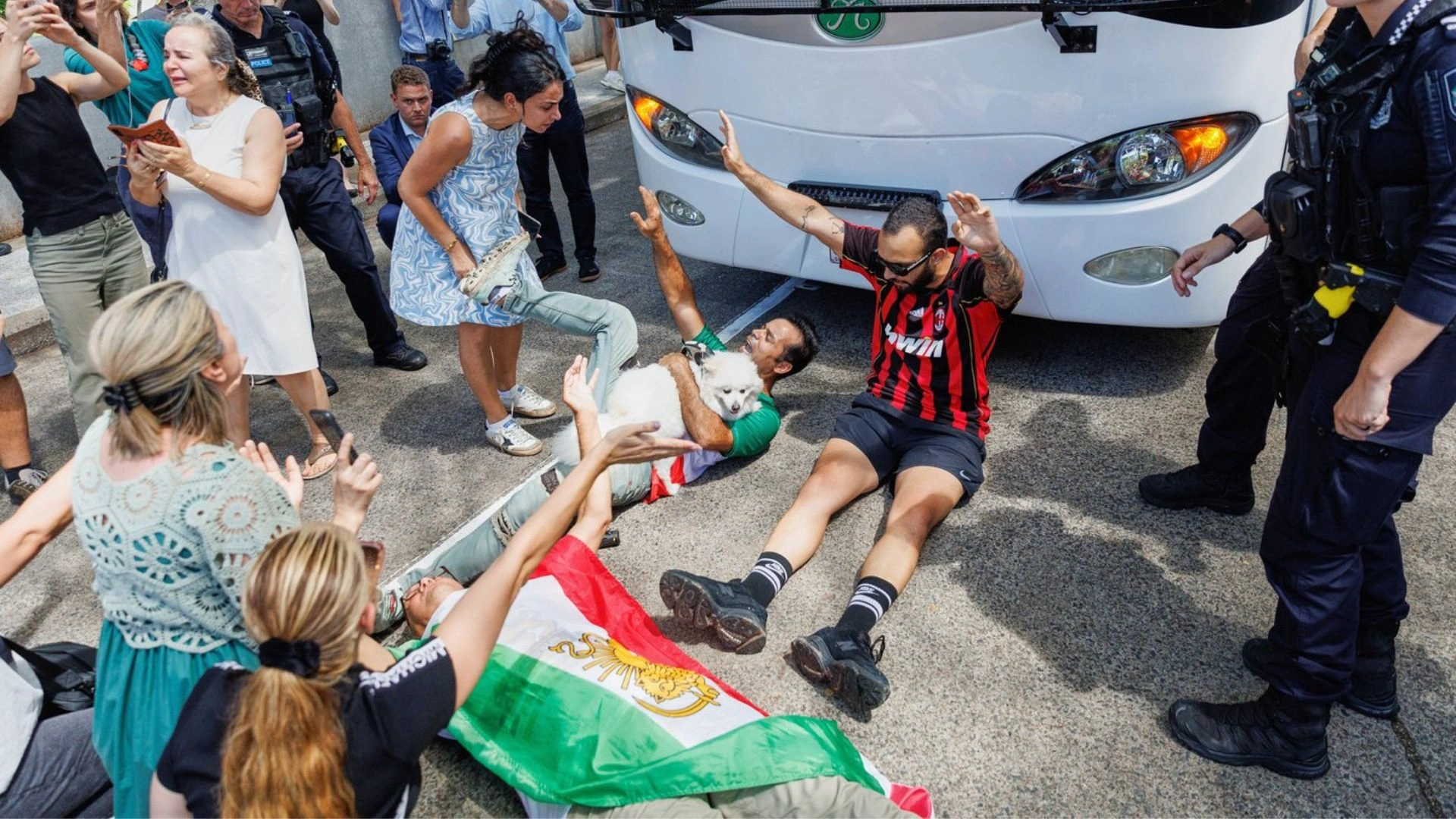
On a rainy night outside a stadium, crowds gathered near a national women’s football team travelling for an international competition. Supporters held signs reading, “Stay safe”, and “If your home is not safe, mine is.” Some players waved through the glass while others quietly closed the curtains. Their concern was not about the game but the uncertainty awaiting them at home. Several players have since sought refuge in safer locations.
Scenes like this illustrate the human anxieties that accompany geopolitical conflict. When tensions escalate between states, the consequences rarely remain confined to political leaders or military targets. Civilians, especially women and children, often bear the heaviest burdens.
In early 2026, escalating tensions in the Middle East resulted in military actions affecting civilian populations across the region. Thousands of civilians, including children, were displaced, and essential infrastructure such as schools and hospitals suffered disruption. International observers continue to emphasise the importance of protecting civilians and minimising humanitarian harm.
Recent conflicts worldwide have highlighted the human cost of war. Attacks on schools, hospitals, and residential areas claim lives, destroy infrastructure, and disrupt education and livelihoods. Beyond immediate casualties, the ripple effects of violence are profound: families lose access to healthcare, children are forced out of classrooms, and entire communities experience long-term social and economic disruption.
History demonstrates that periods of instability and armed conflict often exacerbate existing inequalities. Women, who frequently shoulder caregiving responsibilities, face heightened vulnerability. Yet women are also central actors in civic life, leading relief efforts, advocating for human rights, and sustaining communities during crises.
The consequences of conflict are evident across many regions. In Nigeria, insurgent violence intensified after leadership transitions within extremist groups, resulting in mass kidnappings and attacks on schools. In Afghanistan, political shifts have led to significant restrictions on women’s education and employment opportunities. Conflicts in Ukraine, Syria, Yemen, and other parts of the Middle East and Africa have shown how civilian populations, including children, are displaced, traumatised, and deprived of essential services. Across these contexts, the pattern is clear: conflict can rapidly erode social freedoms, disrupt institutions, and limit opportunities for entire generations.
The human impact of war is not limited to any single region or culture. Displacement, economic hardship, interrupted education, and increased risk of violence affect communities far beyond frontline battlefields. Women, in particular, often face added barriers to education, employment, and personal security, compounding the humanitarian toll.
At the same time, history shows that civilians are not passive victims. Across societies, women and community leaders have played essential roles in maintaining civic life, advocating for human rights, and providing humanitarian relief. Their leadership and resilience remind us that social progress is not only possible during relative stability but also essential for recovery when conflicts subside.
Religious, cultural, and civic leaders worldwide increasingly emphasise that education, civic engagement, and human rights are not luxuries to be postponed amid crisis. International coalitions and organisations assert that access to education for all genders remains a fundamental obligation and that conflict should not erase societal commitments to these principles.
Yet even the strongest civic institutions are vulnerable during war. National security priorities and military objectives often overshadow social programs, and the disruption of public life disproportionately affects women and children. Generations may experience lost educational opportunities, limited professional development, and long-term social marginalisation.

For this reason, peace can be understood not only as a moral aspiration but also as a form of social and economic capital. Stability allows societies to invest in education, public health, innovation, and economic development. The absence of peace imposes immense financial, institutional, and human costs. In this sense, peace functions like a currency: it generates tangible returns, including stronger economies, healthier populations, and more resilient institutions. Prolonged conflict, conversely, drains resources and diverts attention from the long-term investments necessary for prosperity.
Leaders debating geopolitical strategies and security concerns should recognise that the experiences of civilians, especially women and children, are critical indicators of whether societies are advancing toward stability or hardship. Protecting these foundations before they erode can be one of the most valuable investments a nation or coalition can make.
History suggests that rebuilding trust and restoring rights after conflict can take decades. Wars may be measured in military victories or territorial changes, but their true legacy is often written in the lives of ordinary people in the communities disrupted and in the opportunities lost or preserved for future generations.
In every context, from Europe to Asia, Africa to the Americas, war carries similar human costs: children out of school, families uprooted, communities traumatised, and opportunities for social progress stalled. Conversely, peace produces measurable gains: safer communities, stronger institutions, economic growth, and more equitable access to education and employment. Recognising peace as a tangible asset and an investment in human and societal capital reframes discussions about security policy and diplomacy.
Ultimately, ensuring the safety, rights, and opportunities of civilians should be central to how the international community approaches conflict. While military strategy and political calculations dominate headlines, the most lasting measure of success is whether ordinary people emerge safer, freer, and more prosperous.
While wars may be fought over ideology, territory, or power, their enduring effects are ultimately felt in human lives. Protecting civilians, upholding rights, and investing in peace are not abstract ideals; they are critical currencies for sustaining societies now and for generations to come.
About the author
Dr Yetunde Odugbesan-Omede, Ph.D. is a US Department of State Fulbright specialist scholar and currently serves as the Director of the Office of Community and Civic Engagement and Professor of Global Affairs and Politics. Her extensive experience includes roles at multinational, academic and government institutions, reflecting her commitment to human rights and gender equality. Yetunde is the Founder of Young Woman’s Guide, an organisation providing leadership development to young women worldwide.

