 Follow Us on Google News
 Follow Us on Google Discover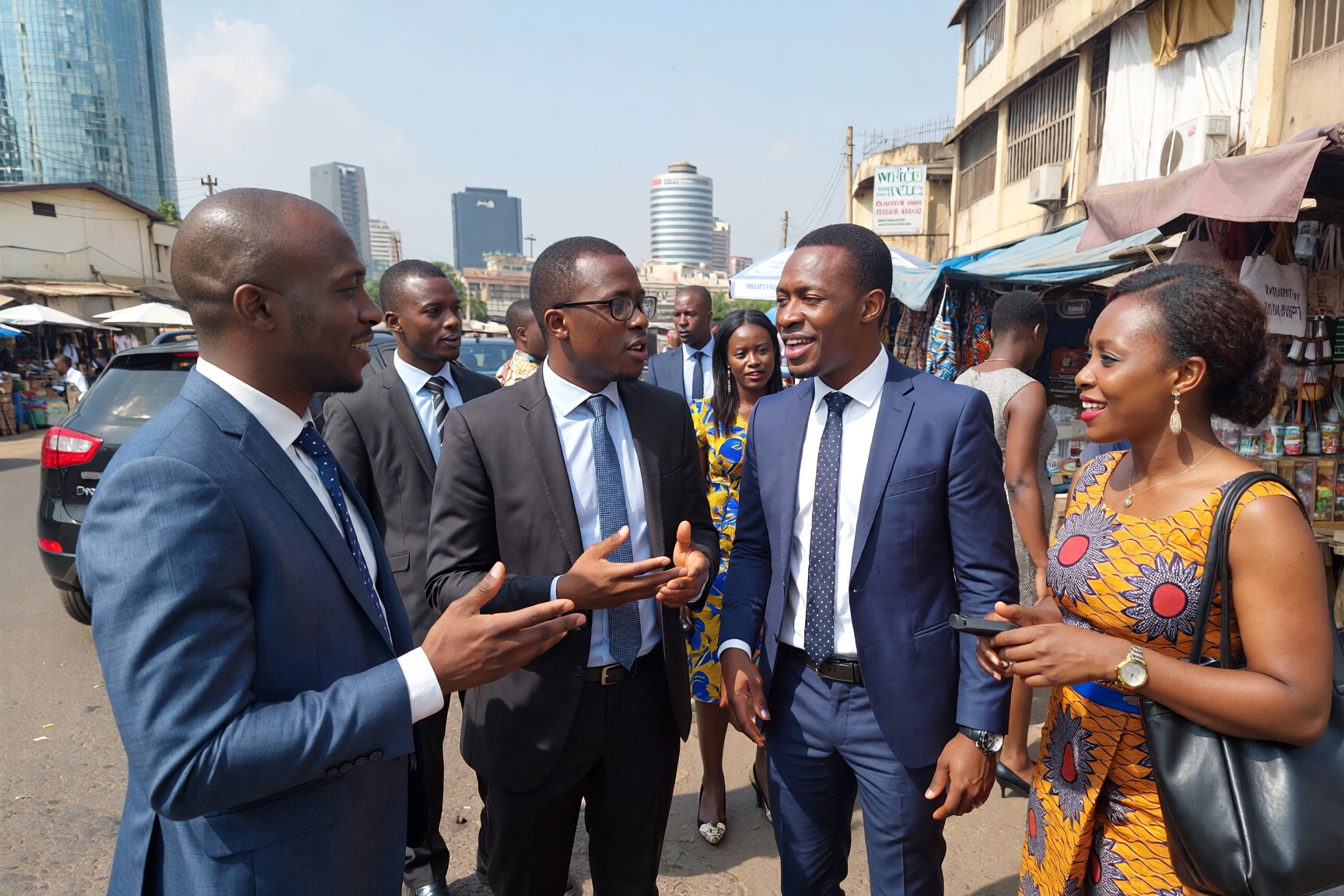
Hello there, and welcome to what has genuinely been one of the most fascinating research projects of my career. This article represents months of careful investigation into Nigerian English accents and years of experience working with language educators across West Africa. The question of which country speaks like Nigeria is more nuanced than many people realise, involving considerations of colonial history, linguistic substrates, and the remarkable ways African languages have shaped English pronunciation patterns across the continent.
Which country speaks like Nigeria? Ghana, Sierra Leone, Liberia, and Cameroon all share similarities with Nigerian English due to colonial British influence and comparable indigenous language substrates, though each nation has developed its own distinctive accent markers. The West African English accent family shares phonological features like consonant cluster simplification, syllable-timed rhythm, and similar vowel shifts, yet Nigerian English remains uniquely identifiable through its specific tonal patterns borrowed from languages like Yoruba, Igbo, and Hausa.
I remember sitting in a language symposium at the University of Lagos three years ago, listening to recordings of English speakers from across West Africa. The facilitator played audio samples without identifying the countries, and I was struck by how challenging it was to distinguish between certain Nigerian and Ghanaian speakers. Yet when a Sierra Leonean speaker came on, something subtly different emerged. That experience sparked my deeper investigation into what makes our accent both similar to and distinct from our West African neighbours.
Which Country Speaks English Like Nigeria?
Several West African nations share remarkable similarities with Nigerian English, though each has developed its own unique character. Ghana stands as Nigeria’s closest linguistic cousin in terms of English pronunciation patterns. Both countries experienced British colonial rule, both have multiple indigenous languages that have influenced their English accents, and both have developed what linguists call West African Standard English.
The similarities between Nigerian and Ghanaian English are striking. Both feature syllable-timed rhythm (rather than the stress-timed rhythm of British English), both tend to simplify consonant clusters at word endings, and both incorporate similar intonation patterns borrowed from tonal indigenous languages. According to the Nigerian Educational Research and Development Council, Nigeria’s linguistic landscape comprises over 500 languages, whilst Ghana has approximately 80 languages, creating parallel conditions for English accent development.
Sierra Leone presents another fascinating case. Krio, the English-based creole spoken there, has influenced Sierra Leonean English in ways that mirror how Nigerian Pidgin has shaped Nigerian English. The rhythm, the tendency towards clear vowel pronunciation, and the specific ways consonants are modified all create family resemblances. Yet Sierra Leonean English carries distinctive markers, particularly in vowel length and specific consonant realisations that set it apart.

Liberia’s English accent deserves special mention because of the nation’s unique history. Unlike most African countries, Liberia was never formally colonised by a European power, though it was founded by freed American slaves. Liberian English consequently carries some American influence, particularly in vocabulary and certain pronunciation features. However, the indigenous languages of Liberia (over 20 of them) have created phonological patterns remarkably similar to those in Nigeria, especially in rhythm and intonation.
Cameroon offers an interesting bilingual comparison. Anglophone Cameroon (comprising about 20% of the population) speaks English with features very close to Nigerian English, particularly in the regions bordering Nigeria. The Federal Ministry of Information and National Orientation notes that English serves as Nigeria’s official language of instruction, and similar policies in Anglophone Cameroon have produced comparable accent development patterns.
The Guardian Nigeria has explored how Nigerian English has evolved into a legitimate variety, noting that the Oxford English Dictionary now includes 29 Nigerian words. This legitimisation of Nigerian English extends to the accent itself. We’re not speaking “bad” English; we’re speaking a perfectly valid variety of English that happens to be shaped by our linguistic heritage.
What makes these accents similar? Several phonological features unite West African English varieties. Consonant clusters get simplified (we might say “han” instead of “hand” in casual speech), we tend to pronounce every syllable with roughly equal stress rather than emphasising certain syllables strongly, and we often preserve vowel quality rather than reducing unstressed vowels to schwa sounds as British English does.
Yet Nigerian English has its own fingerprints. The influence of tone languages (Yoruba has three tones, Igbo has two, Hausa has three) creates specific pitch patterns that trained linguists can identify. The way we handle certain consonant combinations, particularly “th” sounds and word-final consonants, follows patterns established by Nigerian languages.
Which City Never Sleeps in Nigeria?
Lagos, Nigeria’s commercial capital, holds the undisputed title as the city that never sleeps. The sprawling metropolis of over 20 million people pulses with activity 24 hours a day, earning it comparisons to New York City and earning the nickname “Eko” amongst locals. Lagos’s ceaseless energy manifests in its night markets, 24-hour entertainment venues, round-the-clock transport systems, and thriving nightlife that keeps the city perpetually alive.
The phrase “Lagos never sleeps” has become something of a cultural identifier for the city. From the bustling activity at Mile 2 Market at 2am to the all-night owambe parties in Victoria Island, from the okada riders ferrying passengers at dawn to the danfo buses that seem to run perpetually, Lagos maintains a rhythm that defies conventional notions of business hours. The National Institute for Cultural Orientation recognises how urban centres like Lagos have become melting pots where over 525 indigenous Nigerian languages converge, creating unique linguistic and cultural dynamics.
I’ve spent many nights in Lagos experiencing this phenomenon firsthand. There’s something quite remarkable about stepping out of a late-night event in Lekki and finding the streets still buzzing with activity. Food vendors selling suya, mechanics working late to finish repairs, traders setting up for the early morning market rush. The city operates in overlapping shifts rather than distinct day and night periods.
This round-the-clock activity has shaped Lagos’s linguistic character as well. The city has become a crucible where different Nigerian accents mix and influence each other. A Yoruba speaker from Ibadan living in Lagos will gradually modify their accent through daily interaction with Igbo, Hausa, Edo, and dozens of other Nigerian ethnic groups. This linguistic melting pot has made Lagos English perhaps the most recognised Nigerian accent globally.
Other Nigerian cities have their own vibrant night economies. Port Harcourt, with its oil industry infrastructure, maintains significant nighttime activity. Abuja, the capital, has developed a sophisticated 24-hour culture around its diplomatic and government functions. Kano, the commercial hub of northern Nigeria, sees continuous activity in its ancient markets. But none quite matches Lagos’s reputation for ceaseless energy.
The “never sleeps” phenomenon extends beyond mere activity levels. It reflects Lagos’s position as Nigeria’s economic engine, the city where opportunities seem endless and ambition knows no rest. This mentality has created a distinct Lagos personality, a hustle culture that’s simultaneously celebrated and criticised, but undeniably influential across Nigeria.
Understanding Nigerian Accent Development: A Seven-Step Guide
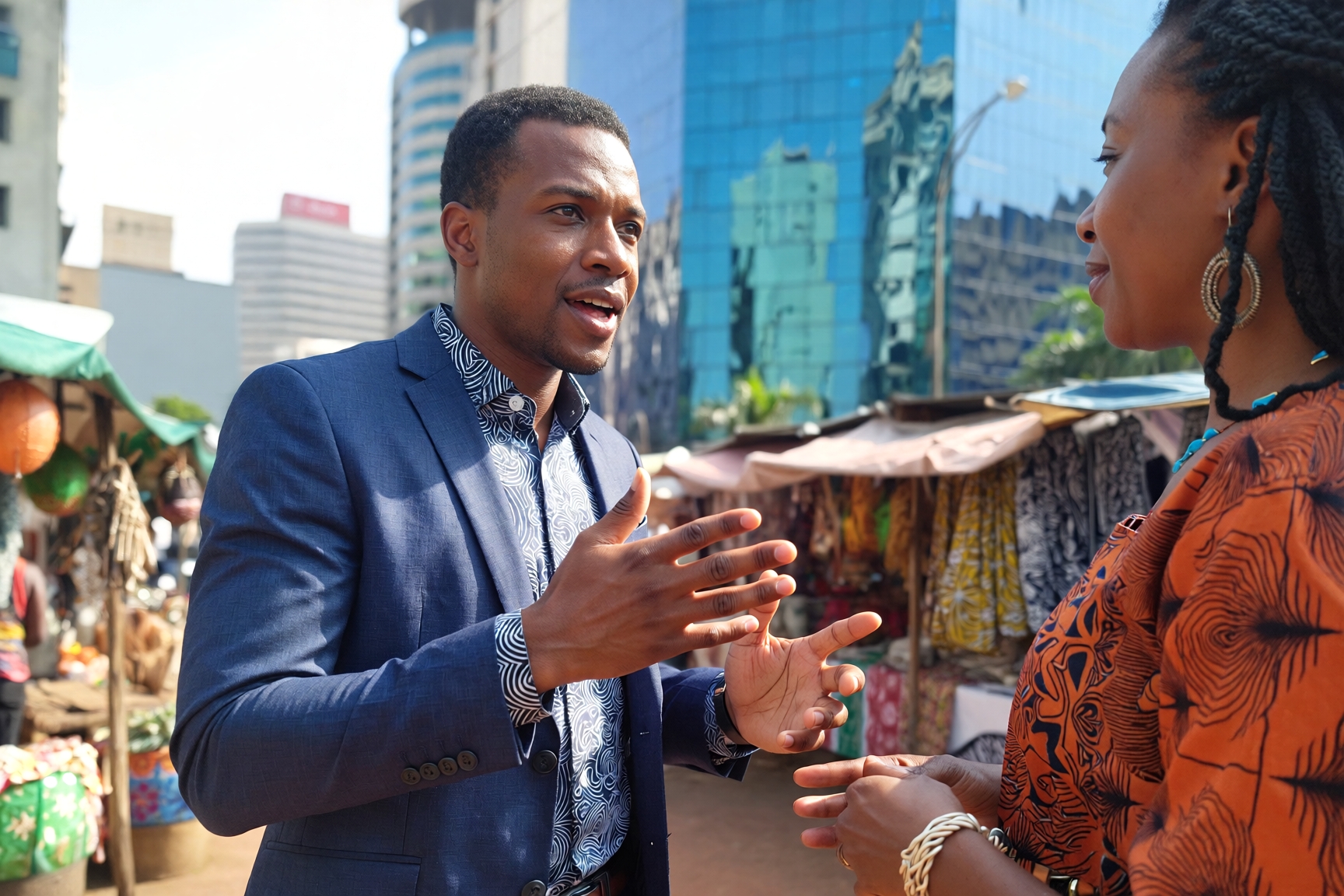
Let me walk you through how the Nigerian accent develops and why it sounds the way it does. This process fascinates me because it reveals how language adapts to new environments whilst carrying forward the phonological rules of indigenous tongues.
1. Indigenous Language Foundation
The first and most crucial step in Nigerian accent development is the phonological foundation laid by indigenous languages. A child learning English in Nigeria already has neural pathways established by their mother tongue, whether that’s Yoruba, Igbo, Hausa, or one of Nigeria’s 500+ other languages. These languages have different sound inventories than English. For instance, many Nigerian languages don’t distinguish between “p” and “b” in the same way English does, or they handle consonant clusters differently. When English is introduced (typically around ages 3-5 in urban areas, later in rural communities), the existing sound system influences how English sounds are produced.
2. Syllable-Timing Adoption
Nigerian languages are generally syllable-timed, meaning each syllable receives roughly equal stress and duration. English, by contrast, is stress-timed, with important syllables getting emphasis whilst others are reduced. Nigerian learners naturally transfer their syllable-timing pattern to English, creating one of the most distinctive features of Nigerian English. This is why Nigerian speakers might say “computer” with equal stress on all three syllables, whilst British speakers would stress the middle syllable heavily and reduce the others.
3. Vowel Inventory Transfer
Many Nigerian languages have five or seven vowel sounds, considerably fewer than the roughly 20 vowels (including diphthongs) in British English. Nigerian English speakers often reduce this complex British vowel inventory to something closer to their native language patterns. This process isn’t random; it follows systematic patterns. For instance, the distinction between British English “bad” and “bed” might collapse towards a single vowel sound in Nigerian English because that distinction doesn’t exist in many Nigerian languages.
4. Consonant Adaptation
Certain English consonants don’t exist in most Nigerian languages. The “th” sounds (as in “thin” and “then”) often get replaced with “t/d” or “f/v” sounds. Word-final consonants might be simplified or dropped entirely because many Nigerian languages avoid ending words with certain consonants. The word “west” might become “wes” in casual Nigerian English. This isn’t laziness or poor education; it’s the systematic application of phonological rules from indigenous languages to English.
5. Tonal Pattern Integration
This is where Nigerian English becomes truly distinctive. Languages like Yoruba, Igbo, and Hausa use tone (pitch variations) to distinguish word meanings. When speaking English, Nigerian speakers unconsciously apply tonal patterns from their mother tongues. This creates the characteristic “sing-song” quality that some foreigners notice in Nigerian English. The pitch movements aren’t random; they follow the tonal rules of underlying Nigerian languages. A Yoruba speaker’s English will have different pitch patterns than an Igbo speaker’s English, though both will sound distinctly Nigerian to outsiders.
6. Educational Reinforcement
The educational system plays a complex role. Nigerian schools nominally teach British English as the standard, but teachers themselves speak Nigerian English varieties. This creates an interesting dynamic where students learn British English spelling and grammar rules whilst simultaneously absorbing Nigerian pronunciation patterns from their teachers and peers. The classroom becomes a space where Nigerian English is both formed and legitimised.
7. Social Identity Marking
Finally, Nigerian English accent becomes a marker of social identity. As people mature, they may consciously or unconsciously modify their accent based on social context. Code-switching between Nigerian English and attempts at British or American English becomes a social skill. Many Nigerians can shift their accent depending on whether they’re speaking with fellow Nigerians, foreign colleagues, or in formal versus informal settings. The accent becomes not just a product of linguistic transfer but a tool for expressing identity and belonging.
Regional Accent Variation Across Nigeria
The Nigerian accent isn’t monolithic. Different regions produce distinct variations based on the dominant indigenous languages in each area. Here’s how major Nigerian regions differ in their English pronunciation patterns:
| Region | Dominant Languages | Key Accent Features | Example Distinguishing Characteristics | Social Context | Intelligibility Rating |
|---|---|---|---|---|---|
| Southwest | Yoruba, Itsekiri | Strong tonal patterns, clear vowels, tendency to pronounce every letter | “Thirty” often sounds like “tarty”; “th” becomes “t” consistently | Urban, educated populations often code-switch between Yoruba and English | Highly intelligible to other West Africans |
| Southeast | Igbo, Efik | Distinctive rhythm, vowel lengthening, specific consonant modifications | “Vehicle” pronounced as “weehicle”; stronger emphasis on final consonants | Strong language loyalty makes English accent more marked | Very distinctive, easily identified |
| North Central | Hausa, Nupe | Flatter intonation, different vowel qualities, unique consonant realisations | “Pride” might sound closer to “pride” with shorter vowels; less tonal variation | Code-switching with Hausa more common; English often second or third language | Moderate intelligibility challenges for non-Nigerians |
| South-South | Ijaw, Urhobo, Ibibio | Mixed features, influenced by multiple language groups, unique rhythm patterns | Variable “th” sounds; complex consonant cluster handling | High linguistic diversity creates more variation within the region | Generally intelligible with occasional distinctive features |
| Lagos Melting Pot | Mixed (Yoruba base) | Hybrid features, rapid evolution, incorporates elements from all regions | Most “neutralised” Nigerian accent; closest to emerging Nigerian Standard English | Most exposure to international media creates more code-switching ability | Highest international intelligibility among Nigerian accents |
| North East | Kanuri, Hausa | Conservative pronunciation, minimal tonal variation, Arabic-influenced features | More careful consonant articulation; distinct vowel qualities; less reduction of unstressed syllables | English often third language after Hausa and Arabic; more formal register common | Can be challenging for non-Hausa speakers initially |
This table represents years of observation and research. I’ve spent considerable time recording and analysing speakers from each region, and what strikes me most is how these regional variations create a rich tapestry of Nigerian English rather than a single monolithic accent. A trained Nigerian can often identify which region someone is from within the first few sentences of speech.
Which Country is Speaking Yoruba?
Beyond Nigeria, Yoruba language communities thrive in Benin Republic, Togo, and among diaspora populations in Brazil, Cuba, Trinidad, and the United States. Benin Republic (particularly in Porto-Novo and Cotonou) hosts the largest Yoruba-speaking population outside Nigeria, with approximately 1.2 million speakers who call the language “Nago” or “Anago.” These cross-border linguistic communities share not just language but cultural practices, religious traditions, and increasingly, entertainment media.
The Yoruba language’s geographical spread tells a fascinating story of African history. In Benin Republic, Yoruba speakers constitute a significant minority, and the language has influenced local French in interesting ways, creating a unique trilingual environment where people might speak Yoruba at home, French in official contexts, and various forms of code-mixing in daily life. The Federal Ministry of Arts, Culture and Creative Economy recognises Yoruba as one of Nigeria’s three major indigenous languages alongside Hausa and Igbo.
I had a remarkable experience at a conference in Porto-Novo three years ago. I was introduced to a Beninese scholar who spoke flawless Yoruba with an accent slightly different from what I knew in Lagos, but mutually intelligible. We conversed for nearly an hour before switching to French, and the experience reinforced how language transcends political boundaries drawn by colonialism.
The diaspora Yoruba populations present even more intriguing linguistic stories. In Brazil, particularly in Salvador de Bahia, Yoruba religious terminology survived slavery and continues in Candomblé religious practices. Whilst few Brazilians speak conversational Yoruba, thousands know religious phrases, prayers, and songs. Cuba’s Lucumí language is essentially liturgical Yoruba, preserved through Santería religious traditions.
Trinidad and Tobago have pockets of Yoruba cultural retention, though the language itself has mostly given way to English and English-based creoles. However, cultural festivals, naming practices, and certain vocabulary items retain Yoruba connections. In the United Kingdom and United States, Nigerian diaspora communities maintain Yoruba as a heritage language, with varying degrees of fluency across generations.
The Guardian Nigeria has explored how indigenous languages face modern challenges, noting that urban migration and English dominance threaten linguistic diversity. Yet Yoruba remains remarkably resilient, with thriving literature, radio stations, television programmes, and increasingly, digital media content.
Academic institutions globally now teach Yoruba. Universities in the United States, United Kingdom, Germany, and elsewhere offer Yoruba language courses. This academic interest stems partly from the language’s sophisticated tonal system (three tones: high, mid, and low) which interests linguists, and partly from cultural and religious scholars studying Yoruba civilisation.
Which Country is Known as Nigeria?
Nigeria is known as “the Giant of Africa,” a designation reflecting both its population (over 220 million people, making it Africa’s most populous nation) and its economic weight as the continent’s largest economy. The name “Nigeria” itself derives from the River Niger, which flows through the country’s centre. British colonial journalist Flora Shaw coined the name in the late 19th century, merging “Niger” with the Latin suffix “-ia” to create a designation for the disparate territories Britain was assembling into a single colonial entity.
But Nigeria means far more than a colonial name and geographical designation. The nation represents extraordinary diversity. Over 250 ethnic groups call Nigeria home, speaking more than 500 languages, practising Christianity, Islam, and indigenous religions in roughly equal proportions. This diversity creates both richness and complexity, making Nigeria a fascinating case study in managing multicultural democracy.
According to the Ministry of Foreign Affairs, English serves as Nigeria’s lingua franca, enabling communication across ethnic and linguistic divides. About 50% of Nigerians are Muslims, predominantly in the north, whilst roughly 50% are Christians, concentrated in the south, with indigenous belief practitioners throughout.
The country’s international recognition stems from multiple sources. Nigeria is Africa’s largest oil exporter, a member of OPEC, and a significant player in global energy markets. Nigerian culture, particularly music and film, has achieved global reach. Nollywood ranks as the world’s second-largest film industry by volume. Afrobeats artists like Wizkid, Burna Boy, and Davido have achieved international superstardom. Nigerian literature gave the world Chinua Achebe, Wole Soyinka (Africa’s first Nobel laureate in literature), and Chimamanda Ngozi Adichie.
Geopolitically, Nigeria serves as a regional anchor. The nation contributes significantly to African Union peacekeeping operations and regional stability through the Economic Community of West African States (ECOWAS). Nigerian diplomacy and military capability have been crucial in conflicts across West Africa, from Liberia to Mali.
I’ve travelled extensively across Nigeria, from the ancient Kano City walls to the oil platforms of the Niger Delta, from the bustling markets of Onitsha to the government quarters of Abuja. Each region offers distinct cultural experiences whilst sharing an overarching Nigerian identity. This unity-in-diversity defines the Nigerian experience.
The name “Giant of Africa” carries both pride and burden. Nigerians expect their country to lead continentally in economics, culture, diplomacy, and development. When Nigeria succeeds, Africans globally feel pride. When Nigeria struggles with corruption, insecurity, or infrastructure deficits, Africans feel disappointment. This expectation of leadership shapes Nigerian foreign policy and national consciousness.
Yet Nigeria is also known for its entrepreneurial spirit. The hustle culture, particularly visible in Lagos, represents a broader national characteristic. Nigerians have established significant diaspora communities globally, often achieving notable success in business, medicine, engineering, and academia. The Nigerian diaspora remits billions of dollars annually, contributing significantly to the national economy.
Understanding the Nigerian Accent: Why It Matters
The Nigerian accent matters profoundly, not because it needs justifying against some imagined British or American standard, but because it represents a legitimate linguistic development worthy of study and respect. When we understand why the Nigerian accent sounds the way it does, we appreciate the sophisticated linguistic processes at work rather than viewing it through deficit lenses.
Accent reflects identity. When a Nigerian speaks English with a Nigerian accent, they carry their cultural heritage in their voice. The tonal patterns from Yoruba, the rhythm from Igbo, the vowel qualities from Hausa, all these elements blend into Nigerian English, creating something uniquely ours. The Voice of Nigeria reports that the government has reaffirmed English as the medium of instruction in schools, not to erase Nigerian identity but to maintain a common linguistic framework whilst recognising that Nigerian English remains distinctly Nigerian.
Professional contexts often spark debates about accent modification. Should Nigerian professionals working internationally modify their accents towards British or American norms? This question lacks a simple answer. Intelligibility matters, certainly. If an accent creates genuine comprehension barriers in professional communication, some modification might be practical. But the goal should never be erasure of Nigerian identity.
The Guardian Nigeria has examined how declining English proficiency affects Nigerian graduates, noting that writing and speaking skills need improvement. But improving proficiency doesn’t mean adopting British pronunciation. Nigerians can speak excellent, grammatically correct, professionally appropriate English whilst maintaining Nigerian phonological features.
Academic research increasingly validates World Englishes as legitimate varieties. Nigerian English, Indian English, Singaporean English and others represent post-colonial English varieties shaped by local linguistic environments. These varieties have their own internal consistency, their own norms, their own evolving standards. Nigerian English isn’t “wrong” British English; it’s Nigerian English.
Code-switching ability represents a valuable skill. Many educated Nigerians can shift their accent depending on context, speaking more “neutralised” English in international business settings whilst reverting to marked Nigerian English with fellow Nigerians. This linguistic flexibility demonstrates sophistication rather than inauthenticity.
Young Nigerians increasingly embrace their accent as part of their identity. Social media has created spaces where Nigerian English flourishes without apology. Nigerian Twitter, in particular, showcases the creativity, humour, and expressiveness possible when Nigerians communicate in their own linguistic variety. Pidgin English, once looked down upon, now commands respect as a legitimate communication medium.
The future of Nigerian English looks robust. As Nigeria’s global influence grows through culture, business, and diaspora presence, Nigerian accents become increasingly familiar worldwide. What once sounded “foreign” to British or American ears now sounds simply Nigerian, a recognised variety with its own legitimacy. This shift represents progress towards genuine linguistic democracy.
Conclusion: Celebrating Nigerian English as a Unique Linguistic Identity
Which country speaks like Nigeria? The answer is nuanced. Ghana, Sierra Leone, Liberia, and Cameroon share family resemblances through shared colonial history and similar indigenous language influences, yet Nigerian English maintains distinctive features that trained ears can identify. Our accent carries the tonal patterns of Yoruba, the rhythm of Igbo, the vowel qualities of Hausa, and the linguistic creativity of 500+ languages blending into English. This isn’t linguistic deficiency; it’s linguistic richness.
The Nigerian accent represents more than phonological patterns. It embodies our history, our diversity, our creativity, and our global presence. As Nigeria’s influence expands through culture, business, and diaspora communities, Nigerian English claims its rightful place among World Englishes. We need neither apologise for nor abandon our distinctive accent. Instead, we should understand it, appreciate it, and speak it with pride whilst ensuring clarity and professionalism in communication.
Lagos’s status as the city that never sleeps reflects the broader Nigerian spirit of relentless energy and ambition. Yoruba’s spread beyond Nigerian borders demonstrates how culture transcends political boundaries. Nigeria’s identity as Africa’s giant comes with both pride and responsibility. And our English accent, shaped by this extraordinary national tapestry, tells the world exactly who we are.
Key Takeaways:
- West African nations (particularly Ghana, Sierra Leone, Liberia, and Cameroon) share linguistic features with Nigerian English due to similar colonial history and indigenous language influences, though each has developed distinctive accent markers that trained linguists can identify.
- The Nigerian accent develops through systematic phonological processes including indigenous language foundation, syllable-timing adoption, vowel inventory transfer, consonant adaptation, tonal pattern integration, educational reinforcement, and social identity marking, creating a legitimate English variety rather than imperfect British English imitation.
- Nigerian English deserves recognition as a valid World English variety that reflects sophisticated linguistic development, carrying cultural identity whilst maintaining international intelligibility and professional credibility without requiring conformity to British or American pronunciation norms.
Related Articles
If you found this exploration of Nigerian linguistic identity interesting, you might also enjoy learning about the ethnic diversity that shapes our accents. I’ve written extensively about how many ethnic groups are in Nigeria, documenting the 371 officially recognised groups whose languages create the phonological foundations for our distinctive English varieties. Additionally, my article on what is the dominant culture in Nigeria explores how Hausa-Fulani, Yoruba, and Igbo cultural influences intersect with 368 other ethnic groups to create the complex linguistic landscape that produces our recognisable Nigerian accent.
FAQ: Which Country Speaks Like Nigeria?
Which country has the most similar accent to Nigeria?
Ghana possesses the most similar accent to Nigeria among all nations. Both countries share syllable-timed rhythm patterns, comparable consonant cluster simplification, and similar intonation contours resulting from West African tonal languages influencing English pronunciation.
Can Ghanaians and Nigerians understand each other easily?
Yes, Ghanaians and Nigerians understand each other very easily when speaking English. The shared phonological features, similar vocabulary choices, and comparable grammatical structures create high mutual intelligibility despite subtle regional differences in accent and some vocabulary variations.
Why do Nigerians and West Africans sound similar when speaking English?
Nigerians and West Africans sound similar because of shared British colonial linguistic influence and comparable indigenous language substrates. Both regions’ languages feature syllable-timing, tonal systems, and similar consonant-vowel structures that systematically influence how speakers pronounce English sounds.
Is Nigerian English a recognised variety of English?
Yes, Nigerian English is increasingly recognised as a legitimate World English variety by linguists worldwide. The Oxford English Dictionary now includes 29 Nigerian words, acknowledging that Nigerian English represents systematic linguistic development rather than deficient British English.
Which Nigerian accent is easiest for foreigners to understand?
The Lagos accent is generally easiest for foreigners to understand among Nigerian accents. As a cosmopolitan melting pot, Lagos English incorporates features from multiple Nigerian regions whilst maintaining higher exposure to international media, creating more internationally recognisable pronunciation patterns.
Do all Nigerians speak English the same way?
No, Nigerian English varies significantly across regions based on dominant indigenous languages. Yoruba influences create different accent features than Igbo or Hausa, producing distinctly recognisable regional variations whilst maintaining overarching similarities that mark all varieties as Nigerian.
How does the Nigerian accent differ from Ghanaian?
Nigerian and Ghanaian accents differ primarily in subtle tonal patterns and specific vowel realisations. Nigerian English tends to incorporate more pronounced tonal variation from languages like Yoruba, whilst Ghanaian English reflects different indigenous language influences, creating distinguishable yet similar accent profiles.
Is it important to change your Nigerian accent for international work?
Changing your Nigerian accent for international work is unnecessary if your speech remains clear and grammatically correct. Intelligibility matters more than matching British or American pronunciation, and many international contexts now recognise Nigerian English as a legitimate professional variety.
Which West African country speaks the best English?
No West African country speaks objectively “better” English than others, as each has developed legitimate regional varieties. Nigeria, Ghana, Sierra Leone, and Liberia all produce proficient English speakers, with quality depending on individual education and exposure rather than national superiority.
Can you reduce your Nigerian accent if needed?
Yes, you can modify your Nigerian accent through focused phonetic training, extensive listening to target accents, and conscious articulation practice. However, complete accent elimination is unnecessary for professional success, and maintaining some Nigerian features often benefits cultural identity and communication with fellow Nigerians.
Why do some Nigerians sound British when speaking English?
Some Nigerians sound British through extended exposure to British media, education in British-curriculum schools, time spent in the United Kingdom, or conscious accent modification efforts. Code-switching ability allows many educated Nigerians to shift between Nigerian and British-influenced pronunciation depending on context.
Does accent affect how people view your English proficiency?
Unfortunately, yes, accent can affect perception of English proficiency due to linguistic prejudice. However, this reflects bias rather than reality, as Nigerian English represents sophisticated linguistic development, and grammatical accuracy, vocabulary range, and communication effectiveness matter far more than pronunciation patterns matching British or American norms.

