 Follow Us on Google News


 Follow Us on Google Discover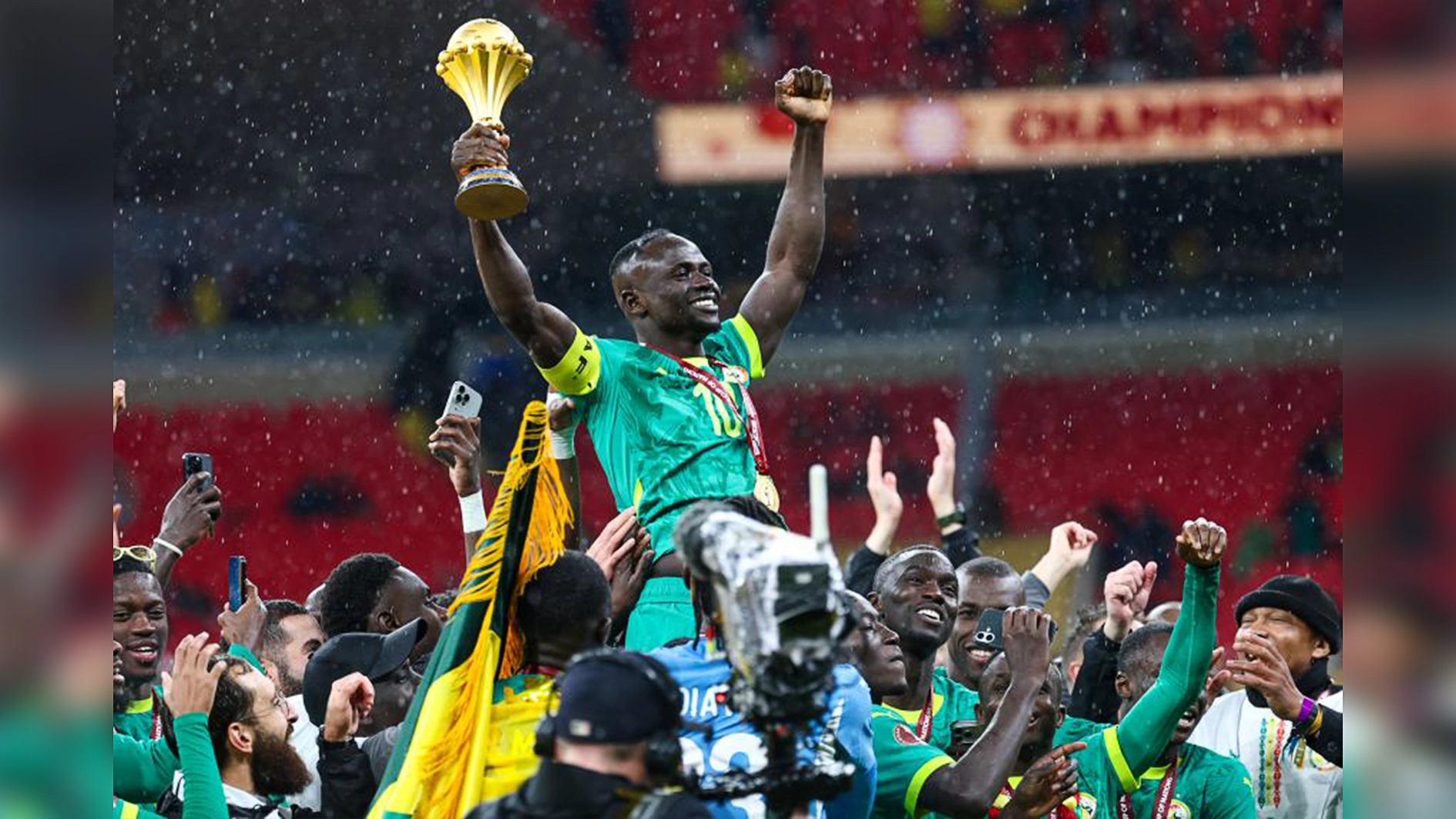
As football enthusiasts worldwide await patiently the ruling of the Court of Arbitration for Sports (CAS) on the controversial decision by the Confederation of African Football (CAF) to strip Senegal of the 2025 Africa Cup of Nations (AFCON) title it won early this year, the unprecedented nature of the decision will remain a sore point for a long time.
While debates on the issue showcase sharp disagreement by pundits, it is becoming increasingly presumptuous that CAF might have succumbed to undue pressure and made a hasty decision to reverse the referee’s decision, notwithstanding the fact that Senegal was due for disciplinary action for boycotting the match for 17 minutes and thus bringing disrepute into the game. That notion already has a deep impact on the respectability of football administration on the continent, but how the matter is finally resolved will have a stronger effect on African football vis-à-vis global soccer.
The football world was stunned on March 17 when the African football governing body, CAF, decided to strip Senegal of the AFCON title it won on the field of play and hand the crown to the defeated host Morocco. The CAF decision effectively overturned the final result (Senegal 1-0 Morocco), after the trophy was awarded on the pitch, and CAF, almost three months later, punished Senegal for a walk-off protest, awarding a 3-0 victory to hosts Morocco.
The court of arbitration, already looking at Senegal’s protest, has promised to rule “as swiftly as possible.” While that may be reassuring, the court’s navigation of the thorny issues surrounding the cancellation of the final match will no doubt be tricky. A major consideration is not only that a ruling like this has never happened in world football, but also its implications on the power of the referee, particularly the rule that the referee’s decision is final. While teams have been disqualified previously for tournament violations, overturning a final result months after the match is over seems to be handing the trophy to a team through the back door. Awarding the trophy to a defeated finalist may have belatedly served to sanction an unruly team, but it has certainly created a big dent on the AFCON and African football. How CAS resolves this unpleasant notion will determine the respect it commands subsequently.
Senegal’s behaviour during the game and after the final, played in Rabat on January 18, 2026, left much to be desired and created an unedifying image of African football. The team walked out of the final for 17 minutes, in protest of a penalty awarded to the hosts after the referee had denied them what they saw as a good goal. This created a problem for the referee, who, rather than ending the game and awarding it to Morocco after waiting for over 15 minutes, decided to restart the match.
By the rules, that decision to restart the game took the option of disqualifying Senegal out of the equation. In football, the referees’ decision is final and cannot be overruled after the game. Rather, the referee is punished if he is adjudged to have mishandled the game, just as coaches or players are sanctioned after the game if the governing body feels that their conduct merits further punishment. It is unheard of that a game is awarded to a side that lost on the pitch after the game had been concluded.

CAF based its decision to take the victory away from Senegal on article 82 of its rules, viz: “if, for any reason whatsoever, a team withdraws from the competition or does not report for a match, or refuses to play or leaves the ground before the regular end of the match without the authorisation of the referee, it shall be considered loser and shall be eliminated for good from the current competition.”
But does this apply in this situation as Senegal was allowed to return to the game even after staying out of it for more than the stipulated time? Rather than blame Senegal for coming back to conclude the game, the referee, Jean-Jacques Ndala, should take the blame for failing to apply the rule when he had the power to do so.
In football, the laws of the game are clear: the referee on the pitch is the final authority on decisions made during the match. Once play is allowed to continue and the match is completed, the result obtained on the field should stand.
As pointed out by former Liberian President, George Opong Weah, a former World Footballer of the Year, under CAF’s applicable rules, match officials have full authority during the game. Regulations of CAF are in line with the FIFA Laws of the Game, which provide that: “The referee has full authority to enforce the Laws of the Game in connection with the match to which he has been appointed, and his decisions on facts connected with play are final.” This Law 5 of the Game is applied by all confederations, including CAF competitions.
Additionally, in his post-match report, the referee noted a stoppage, not an abandonment, and recommended appropriate sanctions for the infractions. The contention is that the recommended sanctions ought not to have been stretched to taking the cup from Senegal and giving it to Morocco.
Many officials have explained that CAF did not want the game to end in a disastrous manner, hence they persuaded Senegal to return to the pitch. The CAF referee decided to allow the game to find its conclusion through football. The official, having allowed the return to play on, and moved on with the game – correctly or incorrectly – then overturning the result becomes highly debatable, without evidence of corruption or conflict on the part of the official.
Posers also arising include whether CAF would have still annulled the game if Diaz had scored the penalty for Morocco. While CAF did the right thing by punishing the individuals who brought the game to disrepute, including Senegal’s coach, Pape Thiaw, taking the trophy away from the Teranga Lions has made the situation clumsier, capable of turning African football to the butt of the world’s joke.
An organisation already saddled with corruption allegations, poor governance, and dancing to the tune of FIFA President Gianni Infantino can do better to avoid a controversy that has done its image no good with the decision on the AFCON 2025 final.
It is instructive that many Moroccan players have distanced themselves from the title, preferring to win it genuinely on the pitch rather than through the back door. The world awaits the Court of Arbitration for Sports’ (CAS) decision on Senegal’s appeal against CAF’s ruling, but this is a controversy African football could have done without.

