GDN SIDEBAR
Seyi Vibez is undoubtedly one of Afrobeats’ most interesting acts in recent years. His affinity towards indigenous Nigerian sonics including Fuji, Apala and Afrobeat have distinguished his artistry since his major breakout in 2020.
Across his career spanning five studio albums and four extended plays, the Yoruba Hip-Hop star has flipped his ghetto gospels into memorable mementos for the average Nigerian.
He’s told stories of love, ambition, strife and success, earning a place among the hearts of listeners. His musical talent has also spotlighted him both locally and globally, with a Headies award for Best New Street Hop Artiste, a BET nomination for Best New International act and several notable charting entries under his belt.
Hailed as a torchbearer for Fuji’s recent evolution in contemporary Nigerian pop music, Seyi Vibez’ latest album, Fuji Moto, arrived as a landmark moment for both his career and Fuji music’s ascent.
The 14-tracker album, which houses guest features from American stars Trippie Redd, NLE Choppa, French Montana, as well as Nigerian heavyweight Olamide, introduces his deepened Fuji-Hip Hop fusions to a wider fanbase.
In the record, the Ikorodu-bred act also melds Nigerian electronic dance music, Mara, as well as RnB, into his intimate, vulnerable and immersive soundscape.

In this chat with Guardian Music, the 25-year-old rapper-singer gives us a bird’s eye view into his distinct Fuji-fusions in Fuji Moto; detailing his muses; creative process; lores behind his ongoing progressive fusions across Afrobeats; as well as his mission to keep evolving his craft with evergreen sonics.
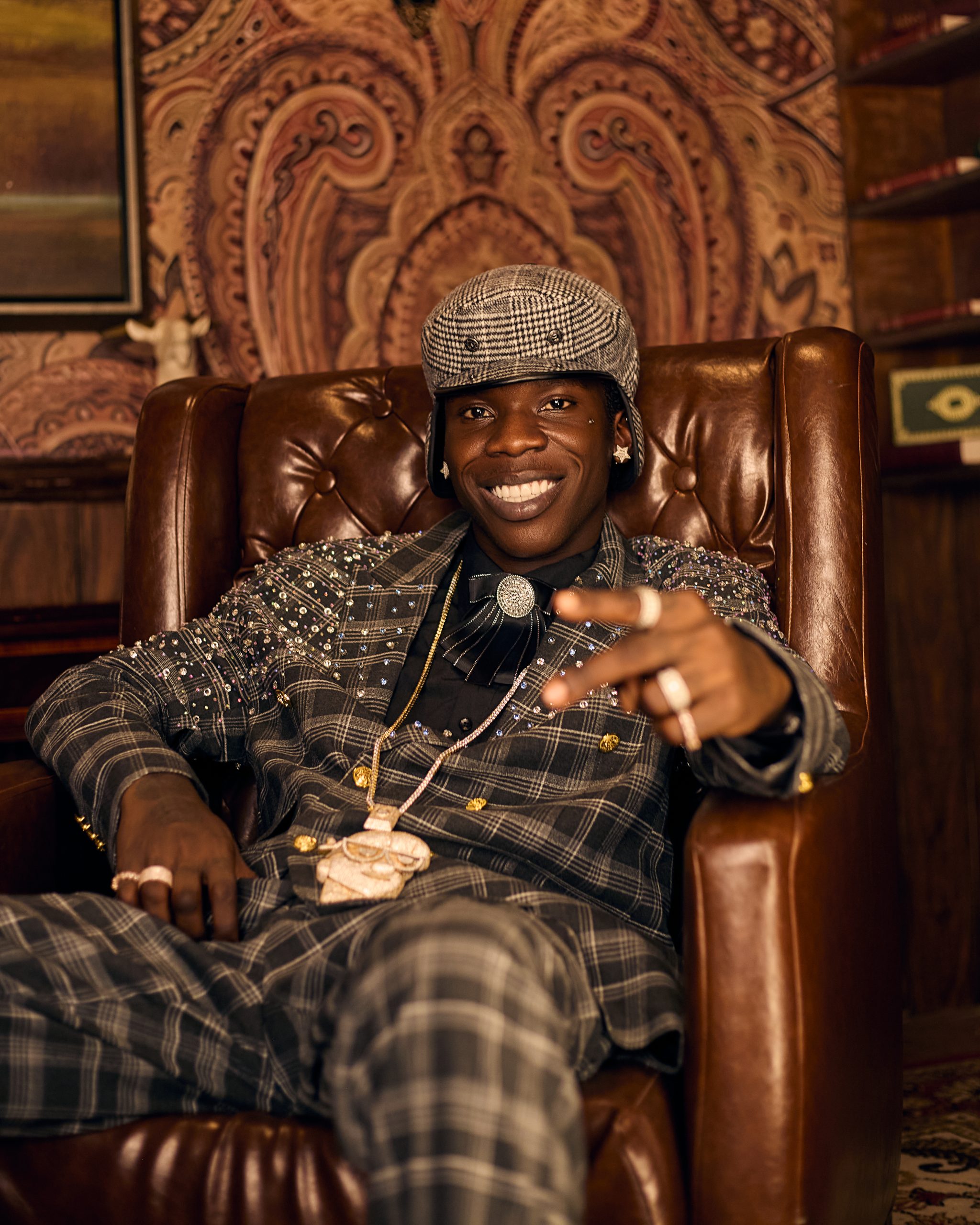
Where were you at mentally with creating Fuji Moto?
When I was creating Fuji Moto, my mind was calm but very alert. I was hungry for growth and clarity. I wanted to tell my truth without noise. The project came from a place of balance between the streets and my spirit, and I was focused on speaking directly to my people.
What was your earliest experience with Fuji music? And what draws you to the genre today?
My earliest experience with Fuji music came from growing up around it at parties, on the streets, and in family gatherings. Fuji always spoke about real life, joy, struggle, and prayer. That honesty is what still draws me to the genre today because it feels like home.
The project title Fuji Moto suggests a meeting point between Anime and Fuji cultures. What idea or feeling were you ultimately trying to capture with that title?
Fuji Moto is me expressing my love for Anime and Japanese culture in my own way. I wanted to create something that connects different worlds but still feels like me.
There is something on the project for everyone because I explored different sounds and worked with producers from different places. It is about bringing those influences together through my own lens. I wanted it to feel like a journey where different cultures meet and still feel natural together.
There’s this high octane energy, and that soulful Mara energy on songs like Shaolin, and Mario Kart. How come those singles ended up with so much adrenaline and energy ?
The energy came from movement and momentum. I was just ready to go at that time, and the music matched my mindset. I did not try to control the adrenaline. I let the beat lead and followed the feeling.
Love stories surround your discography. In Fuji Moto, are they your true love stories?
Love has always been part of my music, and the stories on Fuji Moto are real experiences from my life. Some of them are soft, and some come from pain.
Apart from Fuji Moto getting its title from Japan, what are your other attractions to Japanese culture?
Fuji Moto is actually the name of an anime character but aside from being a huge anime fan, I am also drawn to Japanese culture for its discipline and focus. I respect their culture, craft, and attention to detail. As per naming the album Fuji Moto, it was all of this plus my love for cars. Fast cars.
Your music often carries a strong spiritual undertone. How much of your creative process is guided by spirituality?
Spirituality is everything in my process. Some people even call me Orisa because I listen deeply and stay connected to my roots. No matter the sound I try, I always carry my story, my language, and my people with me. It gives me direction and purpose. I am not just making music, I am speaking from a spiritual place. I pray before I record and I listen for guidance. At this point, it is not even something I think about, it is just who I am, and you can hear it in my lyrics.
You worked with the likes of NLE CHOPPA, TRIPPIE REDD and FRENCH MONTANA on Fuji Moto. Why did you pick those exact people, any history behind each of them?
No history, just mutual acknowledgement of greatness. Each of them brought something different that felt right for Fuji Moto. The collaborations came from mutual respect, not force.
What was the most spontaneous record on Fuji Moto?
That has to be Shaolin and Happy. Recorded them on the same day.
When you’re recording, are you consciously trying to preserve the spirit of Fuji music, or does it come naturally?
Blending Fuji with street pop comes naturally to me because it is how I grew up. I do not have to force it or think too hard about preserving Fuji. It lives in me already. When I record, it just comes out the way I feel it.
How intentional are you about protecting your sonic identity in an industry that requires artists to jump on trends?
I do not really think about protecting my sound. Music is meant to grow and it is nice to see people connect with what you do and even try to sound like you. But at the same time, I want my voice to be clear. I want people to recognize me immediately when they hear me. I stay true to where I come from while pushing myself to get better every day.
I am very aware of my sound and I protect it by staying true to myself. I do not follow trends because that can take you away from who you are. I focus on what feels real to me, and that is what keeps my identity strong and easy to recognize.
So far, from your Godsent debut to the Fuji Moto era, what do you think has changed the most about you?
What has changed the most is how I understand responsibility. In the beginning, I was just trying to survive and make it out. Now I know people are watching me and looking up to me. Young boys from places like Bariga and Ajegunle see me and believe it is possible. That comes with pressure. Fame is not enough if you do not have wisdom. I have learned to slow down, think more, stay grateful, and protect my peace.
Music made me known, but life is shaping who I am becoming.
What other musical ambitions do you have now post-Fuji Moto?
Right now, I just want people to wait and see what is coming. I want to take this sound to places it has never reached and perform it on stages all over the world. I want people who have never heard this genre in this way before to feel it deeply. I also want to work with artists who challenge me and push me to grow. Beyond the music, I am focused on building something that lasts. I want to leave a legacy that will always be respected.
When you’re not making music, what are you typically up to?
When I am not making music, I rest a lot. I spend time thinking and putting ideas together in my head. Sometimes I watch anime or listen to sounds that are not considered conventional. It helps me stay inspired in a different way. I also play a lot in my own space.
Tell us some of the artists you’re looking forward to collaborating with?
I already checked one off my list- and that’s Omah Lay. We collaborated on My Healer. For the others honestly, at this point, it’s more of collaborating than looking forward to. But right now, a collaboration with Playboi Carti or Beyoncé would hit!
Finally, what’s next for Seyi Vibez?
I always let the sound announce my next move. Staying unpredictable and letting the music speak first. I like to move in silence and surprise my people when the time feels right. The focus is constant creativity, steady work, always giving something fresh, and leaving impressions without explaining too mu