 Follow Us on Google News
 Follow Us on Google Discover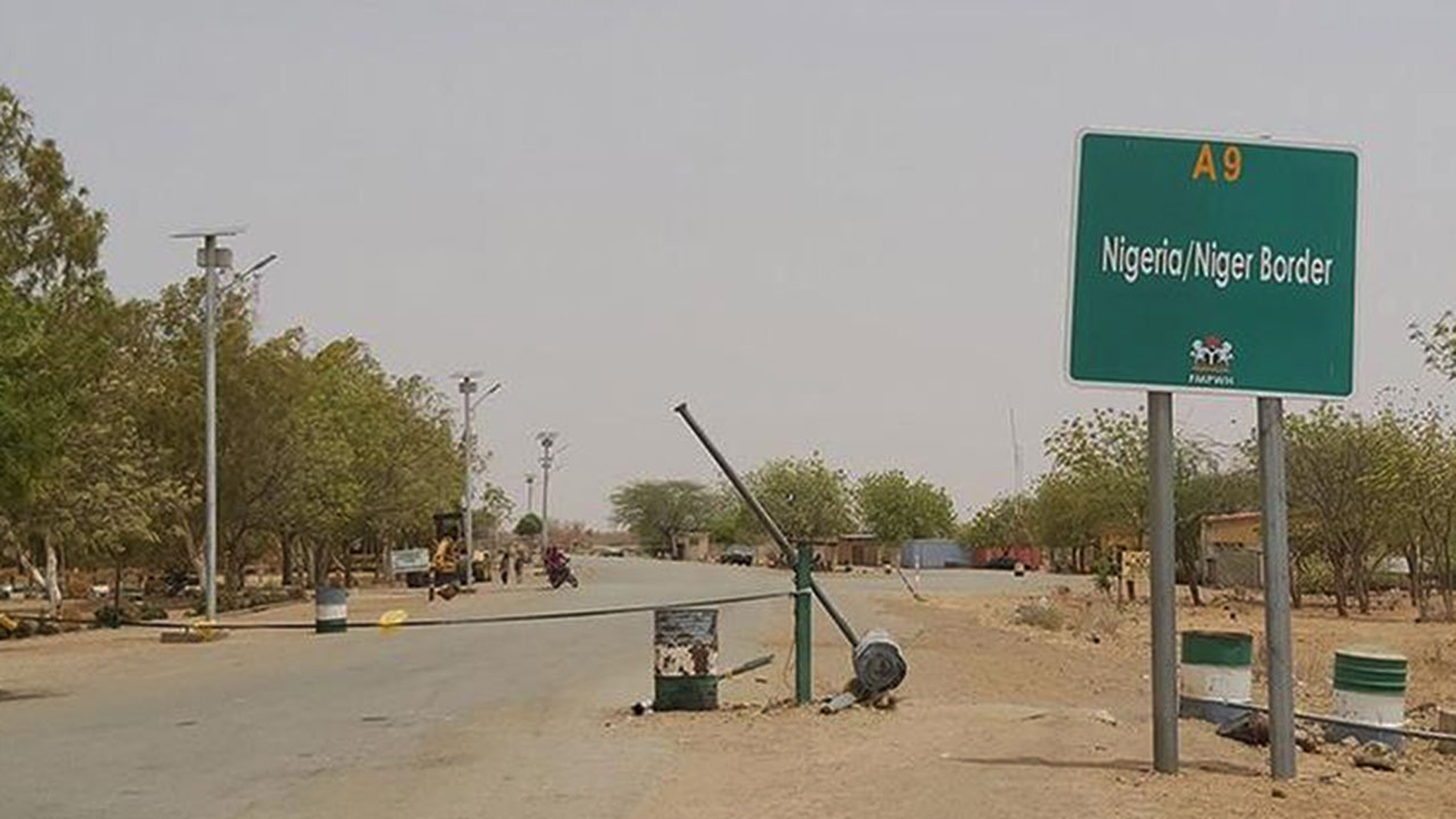
The Federal Government’s latest nationwide crackdown on irregular migrants sounds impressive in a press release. Still, for a nation bleeding from the wounds of insecurity, it smells like another exercise in bureaucratic theatre. While the Ministry of Interior pats itself on the back for tracking down expired visas in city centres, the real invaders are trekking across the country’s porous borders with impunity, carrying more than just irregular status; they are carrying the seeds of national collapse.
Any government worth its salt must control its borders. That is not a policy; it is the bare minimum for survival. But to be blunt: checking the papers of a few expatriates in Lagos or Abuja is a distraction while our northern and southern frontiers remain sieves.
Indeed, the Federal Government said it introduced a new AI-driven tracking system that monitors all travellers entering the country over the past decade. Minister of Interior, Dr Olubunmi Tunji-Ojo, revealed this at the 2026 Sectoral Performance Review Retreat of the ministry, themed: ‘Accountable Leadership, Measurable Impact, Reviewing Commitment’, in Abuja.
The minister said, “We now possess the data to identify and locate those who have overstayed their visas. With our Integrated Operations Centre and Network Operations Centre, we can access information on everyone who has entered the country in the last 10 years.” Tunji-Ojo described the Nigeria Immigration Service (NIS) as transitioning into “an internal security enabler and a protector and the guardian of our border space.”
While the ministry’s efforts are in tandem with its core responsibility, the Minister of Interior needs to stop staring at spreadsheets and start looking at the maps. Nigeria is being overrun, and that is being done by perpetrators trooping in without visas or any documentation whatsoever.
There is terrorism by proxy! The country is not just dealing with migrants; it is dealing with an influx of bandits and terrorists who treat its borders like a suggestion. They enter in droves, displace local populations, and turn indigenous forests into killing fields. To treat this as a mere “immigration issue” is an insult to the victims of banditry and to the generality of Nigerians who daily face the grave threat of violent invasion from the marauders.

Any sincere government efforts to check the uncontrolled influx of foreigners into this country are welcome. Undocumented migrants destabilise the polity and even commit crimes freely without attracting consequences. As Minister of Interior, Dr Tunji-Ojo should be very worried that foreigners from all over Africa are strolling seamlessly into the country, taking over menial and not so menial jobs from Nigerians, often at cut-throat competitions thus sending millions into the overcrowded unemployment bracket; they hold regular meetings at very short notice, conducting the proceedings in a language known and understood by them only; and they have been known to mobilise in thousands within minutes with a unanimity of purpose to accomplish an agreed mission, including lynching citizens summarily over unproven accusations of blasphemy.
The presence of these foreigners has, over the years, steadily eroded the peace and tranquillity ordinarily associated with local communities, in addition to raising suspicions that fuel insecurity. Many of these foreign elements are believed to possess Nigerian identification numbers with which they operate Point of Sale (POS) transactions, with a huge possibility of conniving with kidnappers of persons for ransom. If these do not concern the Minister of Interior, then his job needs to be redefined.
Regularly checking the influx of immigrants is an international best practice for political, economic, and social reasons. The minister should, however, be more worried about foreigners, who come in droves into the country through porous borders, and overrun the local populace, committing banditry and terrorism.
Many of these hoodlums also displace local jobbers like okada, keke riders and other menial jobs. Daily, local livelihoods are being snatched by undocumented foreigners, who operate in a shadow economy, paying no taxes and owing no allegiance to the Nigerian state. Indeed, while the elite discuss globalisation, the Nigerian commoner is being strangled by undocumented foreigners.
These are Nigeria’s main headaches. The Minister of Interior should address this even as he monitors the few visitors with expired visas and irregular status.
For too long, the Economic Community of West African States (ECOWAS) Protocol on Free Movement has been used as a convenient excuse for state paralysis. A visa-free regime is not and should not be a licence for anarchy. Regional integration does not mean Nigerians must surrender their right to know who is crossing their threshold.
If the government cannot distinguish between a West African brother seeking trade and a foreign mercenary seeking blood, then the Ministry of Interior is failing its primary mandate. Presently, the government’s inertia on this matter of grave importance amounts to sacrificing Nigerian lives on the altar of diplomatic “best practices”, while the country’s neighbours do little to stem the tide of criminality flowing into the country.
Nigeria is currently the “sick man” of the region, and its porous borders are the open sores. A crackdown that focuses on the low-hanging fruit of expired permits, while ignoring the armed caravans crossing the borders, is virtually useless, and at best a delusion.
For emphasis, the security situation in Nigeria remains complex, with multiple threats comprising jihadist terrorism, banditry, kidnapping and separatist violence. As of early 2026, there has been a notable surge in violence, particularly as bandit groups in the Northwest increasingly align with jihadist organisations like ISWAP and the newly emerged Lakurawa group.
The beginning of 2026 has been particularly violent, with significant massacres recorded in the first three months. Between January 1 and February 10, 2026, alone, an estimated 1,258 people were killed in various forms of violence.
In February, over 160 people were killed in a single week in Kwara State, including an attack on the town of Woro that left over 100 dead and 176 kidnapped.
Nigeria recorded the largest increase in terrorism deaths globally in 2025. Fatalities from terrorism alone rose by 46 per cent, reaching approximately 750 deaths (up from 513 in 2024), according to the Global Terrorism Index. In the 18 months between early 2023 and mid-2025, more than 10,200 civilians were killed across northern Nigeria.
The humanitarian crisis from these attacks continues to deepen as rural communities are abandoned due to frequent raids. As of late 2025/early 2026, there are approximately 3.4 million internally displaced persons (IDPs) in Nigeria. The breakdown shows Northeast: Approximately 2.2 million (primarily due to Boko Haram/ISWAP). Northwest and North-Central: Over 1.1 million (primarily due to banditry and kidnapping). Kidnapping for ransom has become a primary funding source for these groups and others. In 2024 alone, over 2,450 individuals were reported kidnapped, a number that continued to trend upward through 2025. While the conflict was once localised to the Northeast, it has now metastasised across the northern half of the country and is pushing South.
It is time for Tunji-Ojo, to move past the optics. The ministry needs a coordinated approach with other security agencies. If this government is serious about “renewed hope,” it must first prove it can protect the Nigerian soil. Anything less is just moving deck chairs on a sinking ship. Seal the gaps, register the shadows, or stop pretending Nigeria has a border at all.

