 Follow Us on Google News
 Follow Us on Google Discover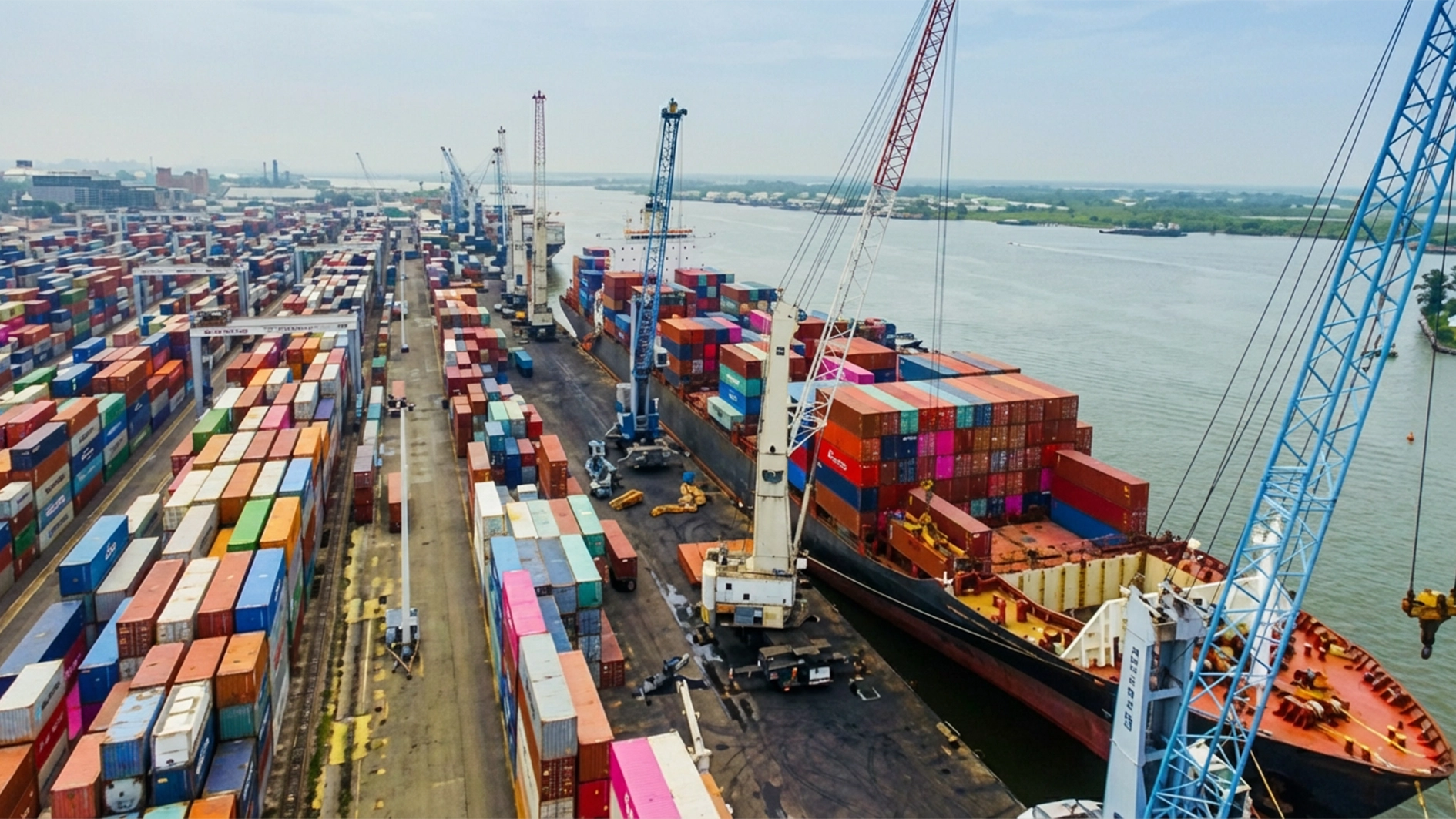
Stakeholders have warned that the proliferation of seaports and indiscriminate investment in deep seaport projects across Nigeria risk becoming economically unviable due to the absence of guaranteed cargo traffic.
Speaking at the maiden International Deep Seaport Investment Forum (IDSIF) organised by Maritime Media Limited in Lagos, former Managing Director, Nigerian Ports Authority (NPA), Bello Gwandu, warned that investment in port projects driven by political or sentimental considerations could lead to huge financial losses.
Gwandu criticised what he described as a disconnect between infrastructure expansion and actual trade flows, stressing that cargo availability, not political ambition, should determine port locations.
He highlighted structural issues in port financing and governance, stressing that the dynamics of cargo ownership and movement have shifted significantly from government-controlled to a private-sector-driven market, where traders, manufacturers, and logistics operators determine cargo flows based on efficiency and cost considerations.
“It does not make sense that everyone wants to build a deep seaport where there is no cargo. The era when the government dictated cargo destinationS is over. Today, it is the customers and the private sector that determine where cargo goes. Public funds must be invested efficiently,” he said.
He argued that building ports in locations without existing cargo bases or clear logistics access to customers undermines their sustainability.
Gwandu recalled past incentives introduced to attract vessels to less patronised ports, including tariff discounts of up to 20 per cent, but said such measures failed to reverse the fundamental challenge of low cargo volumes.
He stressed that Nigeria must prioritise the development of export-oriented industries, including agriculture and manufacturing, to generate sustainable cargo volumes.
Gwandu also called for greater specialisation among ports, warning that multiple facilities offering identical services in different locations would only lead to inefficiencies and underutilisation.
Instead, he urged policymakers to identify regional economic strengths and align port functions accordingly, ensuring that each facility serves a distinct purpose within the national logistics network.
He further highlighted the need to redirect cargo flows to underserved regions where shorter transport routes could improve efficiency, noting that a significant portion of cargo currently handled in Lagos is ultimately destined for the eastern and northern parts of the country.
Gwandu, however, advocated for a more deliberate, data-driven approach to maritime infrastructure development, anchored on cargo generation strategies, market realities and long-term economic viability.
Also, a former chairman of the Board of Trustees of the Nigerian Ports Authority (NPA), Bode George, called for the development of coastal ports across the country, stressing that the current dependence on Lagos ports poses risks to long-term economic growth.
George cautioned that concentrating maritime infrastructure in a single axis undermines national development.
The elder statesman further linked Nigeria’s maritime strategy to global developments, citing the strategic vulnerabilities posed by narrow shipping routes, such as the Strait of Hormuz, where geopolitical tensions continue to threaten international shipping and energy supply chains.
The former NPA boss maintained that coastal port development should be seen as a unifying national project, capable of delivering widespread economic benefits beyond regional interests.
George urged the Ministry of Marine and Blue Economy to treat the coastal port initiative as a national mandate.

