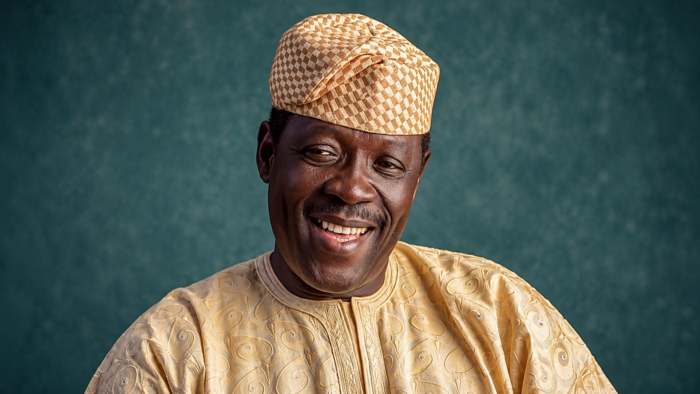
In July 2016, when Oba Semiudeen Orimadegun Kasali ascended the throne as the Adeboruwa of Igbogbo Kingdom, his elevation was not merely a transition from palace lineage to the crown. It was, by his own account, a call to service, one that pulled him from a structured career in law and public administration into the complex demands of traditional leadership.
Ten years on, as the monarch prepares to mark a decade on the throne, that sense of service appears to be shaping the direction of his anniversary activities, placing education at the centre of celebration.

Igbogbo, a historic community in the Ikorodu axis of Lagos State, is set to host a week-long series of events beginning July 19 and culminating on July 25, 2026, the exact date the monarch ascended the throne.
At the core of the anniversary is a deliberate focus on youth development, particularly through education.
That focus became evident on Tuesday, April 7, when the palace, through the Oba Kasali Royal Foundation, organised a free Computer-Based Test training for 500 Senior Secondary School students across six public schools in the community. The initiative, themed 10 Years of Royal Excellence with Knowledge, served as a prelude to the main anniversary package.
The training took place at the HOMAT CBT Centre in Igbogbo, drawing students from Zumratul Islamiyah Grammar School, Community Secondary School, Bayeku, Lagos State Model Girls College, Agunfoye, Reri Secondary School, Oreta, Oreyo Grammar School, and Civil Service Model College.
The session was a structured introduction to the digital format that now defines one of the most critical examinations in Nigeria’s education system—the Unified Tertiary Matriculation Examination (UTME).
Before his ascension, Oba Kasali’s professional path was firmly rooted in education and law. He obtained a Bachelor of Laws degree from the University of Ibadan in 1997 and later earned a Master’s degree in Law from Obafemi Awolowo University, Ile-Ife. His early career included work at the law firm of Pinheiro & Oguntade, followed by service in the Lagos State Ministry of Justice, where he rose to the position of Chief State Counsel.
Rather than limiting his role to cultural preservation, the monarch appears to be engaging with contemporary challenges, particularly those affecting young people in his domain. Education, in this context, becomes both a tool and a statement.
Addressing the students at the CBT training, the monarch emphasised the importance of preparation and discipline in a rapidly changing examination environment.
“I want to appeal to every one of you that you have this rare opportunity that is put in place to make sure you excel. Make sure you make use of it,” he said.
His message reflected an awareness of the pressures surrounding computer-based examinations, where familiarity with digital systems can be as important as academic knowledge.
“Today we are in a digital world; any slight mistake, you have to wait till next year. This is why you should take what you learnt here seriously, so you can have a good score,” he added.
The monarch also encouraged the students to broaden their academic outlook, advising them to explore course requirements beyond their immediate interests.
“By next year, we want to celebrate your matriculation. Regardless of what you want to study, ensure that you go online and look for the brochure, read all subjects, and don’t limit yourself to only the course you registered. Make sure everything you learn here today, you apply it,” he said.
His remarks reflect the high stakes associated with tertiary admission in Nigeria. For many students, performance in the UTME determines not only access to higher education but also the timeline of their academic journey.
Speaking at the event, the Tutor General of the Permanent Secretary of Education District II, Omotayo Sanni, described the programme as aligned with the broader education and youth development goals of the Lagos State Government.
According to him, the initiative supports ongoing efforts to improve students’ readiness for modern examinations while complementing government investments in education.
“What he is doing is part of youth development by giving them CBT online training towards the JAMB exam. He is preparing our children, our students, to excel well in the exam,” he said.
Sanni, however, went further, emphasising that such efforts should not be left to the government alone.
“The government cannot do it alone,” he said. “It is a clarion call for well-meaning Nigerians, especially the elite, to join the Lagos State government in educating these students.”
While governments are expected to provide infrastructure and policy direction, community leaders, private organisations, and individuals also play a role in bridging gaps within the system. The CBT training in Igbogbo, in this sense, becomes an example of how non-state actors can intervene.
At the HOMAT CBT Centre, the immediate concern was not long-term policy but determination for excellent performance. Students engaged with practice questions, navigated computer interfaces, and received guidance on managing time and avoiding common errors.
As Igbogbo moves closer to the official anniversary celebration in July, the CBT training offers an early glimpse into how the milestone is being defined as a reflection on the past decade, and as an opportunity to shape what comes next.
Beyond the students seated at computer terminals, the event featured political figures, education officials, and community stakeholders, each reinforcing, in different ways, the idea that education is no longer just a social good, but a shared responsibility and, increasingly, a measure of leadership.
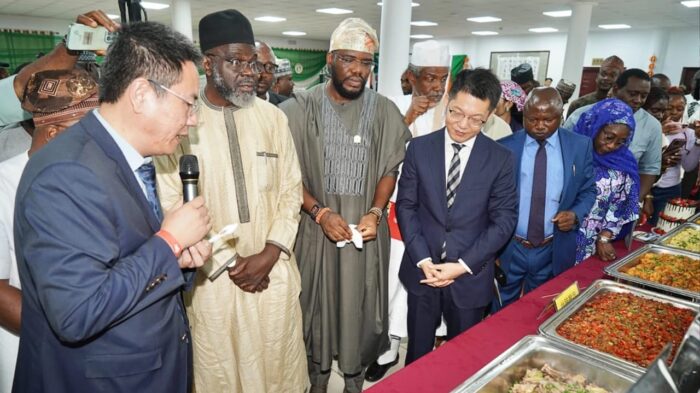
Among those present was former Head of Service, Adesegun Olusola Ogunlewe, who also chairs the 10th coronation anniversary planning committee. In his welcome address, he described the initiative as both symbolic and practical, linking it directly to the monarch’s decade-long reign.
“In the history of Igbogbo Kingdom, this is special because God has blessed us with a royal father who has a heart for sound education,” he said.
His remarks hinted at something deliberate; the use of the anniversary not just as a celebration, but as a platform to reinforce a particular narrative about leadership.
“It is not only about merry-making, but it is utilised as a platform for promoting academic excellence among our zero-income secondary school students,” he added.
Ogunlewe also described the programme as part of a broader investment in human capital.
“Through this free-care CBT mock examination training, sponsored by Oba Kasali Royal Foundation, we are increasing our commitment to human capacity development, as well as promoting academic excellence among our scholars,” he said.
His comments positioned the initiative within a larger development framework, one that extends beyond immediate exam preparation to long-term outcomes.
Through his remarks, the Chairman of Igbogbo Local Council Development Area, Ahmed Olamilekan Aroyehun, a shift from commendation to motivation, and then to incentive became apparent.
“This is very challenging because it determines where we are going,” he said, acknowledging the broader stakes of education within the community.
Addressing the students, he said, “Any child who is afraid to fall will never walk. If you want to walk, there must be an attempt.”
The statement was simple, but it captured a key psychological barrier: fear of falling, which often shapes how students approach high-stake examinations like the UTME.
However, Aroyehun did not stop at encouragement. He introduced a layer of competition by attaching rewards to performance.
“Anyone who scores 300 and above, there is a special grant for that student,” he announced.
Beyond that, he promised logistical support for students who perform well, particularly in navigating the admission process.
“If you perform well in your JAMB, your admission process will be supported with all the logistics,” he said.
He also hinted at targeted support for students pursuing professional courses such as medicine, law, and engineering, fields that are often associated with higher entry requirements and greater financial demands.
On the surface, these promises suggest a structured support system. But they also introduce pressure.
In a system where opportunities are already limited, tying rewards to high scores raises the stakes even further. For some students, this may serve as motivation. For others, it could deepen the anxiety that already surrounds the examination process.
Back to the CBT centre, the immediate experience for the students was more practical than political.
They worked through timed questions, adjusted to the pace of digital testing, and received guidance on strategies to manage both time and accuracy. For those unfamiliar with computer-based exams, even basic navigation, using a mouse, selecting answers, and submitting responses required attention. What the training provides is a starting point and exposure.
In the past, the role of traditional rulers was largely confined to cultural and ceremonial functions. Today, that role is expanding, often overlapping with areas traditionally associated with government: education, youth development, and social welfare. Oba Kasali’s approach fits into this evolving model.
By aligning his anniversary with educational initiatives, he is not only addressing an immediate need but also redefining expectations of what traditional leadership can look like.
What is visible, however, is the immediate impact, the gathering of students, the engagement with digital tools, the promises made by leaders, and the expectations created in the process.
As the 10th anniversary celebration beckons, the CBT training stands as both a symbol and a test.
A symbol of what has been achieved in 10 years, and a test of what can be sustained beyond the celebration.
What stood out most from the CBT training was the underlying attempt to link leadership with measurable outcomes in education.
For some of the participating 500 students, the training was their first structured exposure to a full CBT simulation. While some moved confidently through the interface.
Six schools were represented at the event, including Zumratul Islamiyah Grammar School, Community Secondary School, Bayeku, Lagos State Model Girls College, Agunfoye, Reri Secondary School, Oreta, Oreyo Grammar School, and Civil Service Model College.
Together, they form part of a broader education system still grappling with infrastructure limitations, teacher shortages in some areas, and uneven access to digital tools.
Within that context, the intervention by the palace stands out, not necessarily because it solves these problems, but because it highlights them.
It is also why the message from the education authorities carried a bigger implication.
Omotayo Sanni emphasised that initiatives like this should be replicated beyond Igbogbo, suggesting that collaboration between government, community leaders, and private actors is essential.
The Chairman of Igbogbo Local Council Development Area, Ahmed Olamilekan Aroyehun, reinforced that optimism with assurances of continued support for students who perform well academically.
His promise of grants for students who score 300 and above in JAMB introduced a performance-based incentive structure that ties academic success directly to tangible rewards.
Against that backdrop, the monarch’s closing remarks brought the focus back to responsibility and preparation.
Oba Semiudeen Orimadegun Kasali urged the students to treat the opportunity as a serious investment in their future.
“By next year, we want to celebrate your matriculation,” he said, expressing hope that the training would translate into tangible success in admission outcomes.
He also advised students to widen their academic perspective, encouraging them to study course requirements carefully and avoid limiting their choices based on assumptions rather than information.
That advice touches on another recurring issue in tertiary admissions, which is a lack of guidance. Many students select courses without a full understanding of requirements, leading to mismatch between ambition and eligibility.
In that sense, the CBT training went beyond technical preparation. It also served as a moment of academic orientation.
The week-long anniversary programme scheduled for July 19 to 25 is expected to feature cultural displays, community engagement activities, and further developmental programmes.
According to the organisers, it will mark not just a celebration of a decade on the throne, but a reflection on progress made within the kingdom.
The students who participated in the CBT training have encountered the system they will soon face in a more controlled environment. They have seen where they struggle, where they adapt, and where they need improvement.
As Igbogbo moves closer to its 10th coronation anniversary celebration, the CBT training stands as a marker of intent.