 Follow Us on Google News
 Follow Us on Google Discover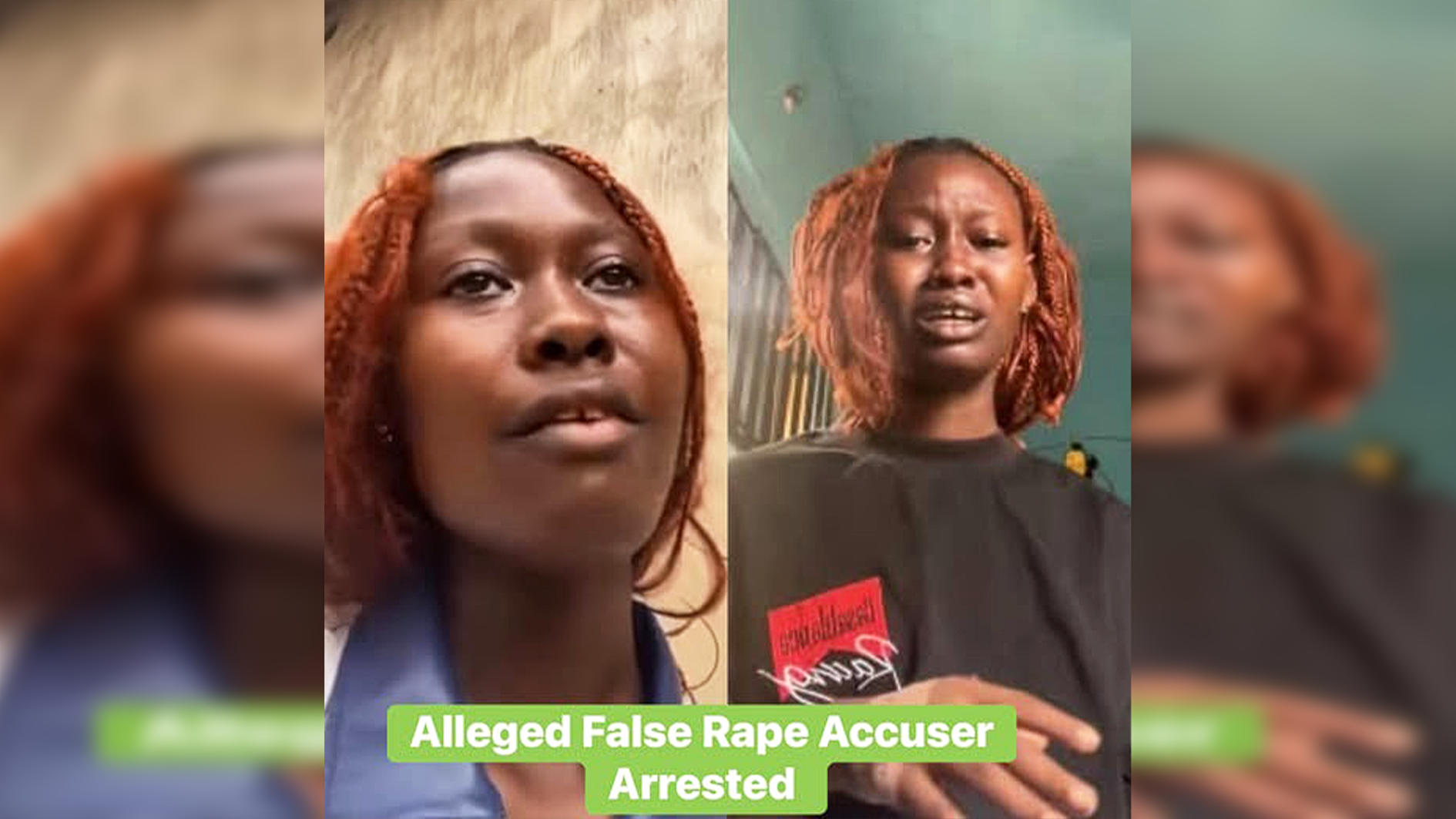
False sexual or rape allegations can have devastating consequences for the accused, including reputational damage, loss of employment and emotional trauma. In Nigeria, current legislation focuses heavily on protecting victims of sexual violence but does not explicitly punish false claims. This imbalance raises critical questions about fairness, accountability and the social consequences of false accusations. GBENGA SALAU, in this report, examines the implications of this legal gap and discusses possible measures to ensure justice for those falsely accused while the interest of genuine victims is also protected.
For four years, Mr. Adewale Bakare, a teacher battled a false rape allegation through the court, including spending a month in Kirikiri Maximum Security Prison, before he was declared not guilty. While this was on, he was lucky that the school he teaches did not sack him.
He was nonetheless told not to teach until the matter was brought to a logical conclusion. As a result, he was placed on half salary. Also, during his travail, his wife almost lost her seven months old pregnancy. Yet, there was no tangible penalty for his accuser.
No wonder the day he was declared not guilty by the court, Adewale said: “I can’t believe anyone should go through this. I was humiliated and tormented for an accusation I know nothing about. I have lost a lot, but I give thanks to God for bringing the truth to the limelight.”
Speaking with The Guardian during the week, Bakare stated that it was a very painful experience that “I do not even wish my enemy. It was like I was watching a home video when the matter started, thinking that it was just a flash, but it later jolted me that this was real life when reporting daily at the police station and going to court, became part of the process. But through it all, it was during our low moment as a family.”
Adewale disclosed that he was shocked when the policeman who knocked on his apartment door said he was under arrest. “I wondered what I had done. My wife who was battling high blood pressure was also in the house and she got really agitated that I had to be pleading with her to calm down considering she was pregnant.

“I was really concerned about her because my wife had lost our last pregnancy after we had put in a lot of months and efforts to see that she conceived after many years she gave birth to our first child.
“From our house, I was not taken to the nearby police station, which is the Sabo Police Station but Ilupeju Police Station. It was at the police station I was given the petition against me for sexual defilement. After reading it, my mind went riot and was lost. After writing my statement, I was put in the cell. But my mind was with my wife that she would not lose the pregnancy. This is also because she had been on bed rest for about two weeks at the Federal Medical Centre, Ebute Metta before she was allowed to come home only for me to be arrested days after in her presence.
“So, after much effort by concerned family members, colleagues and friends, I was granted bail around 12:00am that day though the accuser did not want me to be bailed.”
Adewale said he was told to be reporting daily to Illupeju Police Station till the Police finish their investigation.
“It was during the travail that I got to know that the man has accused so many people including some wrongly.”
The allegation involved claims of defilement occurring twice in his office. But Adewale revealed that at Illupeju Police station, the girl confessed that nothing like that happened and that she does not know where my office is.
“What was inside the allegation was that, I defiled her two times in my office, in February and March of the same year. Also, that I threatened her that if she talked, I will kill her. She was in JSS 1 and she should be eight or nine years old. When the girl sees the father, she would say one thing, but a different thing when the father is not there. The video of the girl’s confession was showed to us including the father.
“I usually do not allow JSS 1 into my office, aside, it is on the staircase where people pass every time. And he said I did it during break time where people are always around. And how do I defile a nine-year-old and she would not scream and nobody will hear and she would walk back to the class with no signs.”
Adewale said that if not for one of the parents in his school who facilitated the engagement of a trusted and experienced lawyer, may be his case would not have turned out the way it did.
“This is because where would I have got resources to hire a good and trusted lawyer.”
According to him, the parent became concerned after she did not see him in school.
Adewale stated that despite the recorded denial, the case proceeded to court based on a formal petition, with the confession reportedly set aside. During this period, the wife’s condition improved enough for surgery, leading to the premature delivery of the baby, who was placed in an incubator.
Their older child had to be temporarily placed under someone else’s care, adding to the strain on the family.
Two days after her baby was put in the incubator, he was summoned by the police, taken to court, and remanded at the Kirikiri Maximum Security Prison for about a month while investigations were still ongoing.
During this time, he was unable to see his wife or newborn child. The baby remained in the incubator for a month and was discharged three days before his release from Kirikiri Maximum Security Prison. The entire experience resulted in significant emotional and psychological hardship, including depression.
While Bakare went through an agonising experience during the four years, and may not recover from the negative episode if not debriefed properly, his accuser did not receive any penalty for making him go through that process.
Stakeholders who reacted to the issue argued that because many know that when they make false rape allegations they can easily get sympathy, aside nothing will happen to them even if discovered not to be true is why some persons are quick to push out rape claims.
They buttressed their argument with two recent false rape incidents. A TikTok user, Abigail Nsuka, known as Mirabel, posted a tearful video alleging she had been raped and mutilated in her apartment in the early hours of Sunday, February 15.
In subsequent posts, she claimed she was being threatened and intimidated to remain silent, sharing worrying screenshots to back it up.
Similarly, a female student at Obafemi Awolowo University, Adewale Adeola Adeife, publicly accused Ojuko Adefesobi, known as David, on X, for rape. The allegation circulated widely within campus networks and online communities. As often happens in digital spaces, reactions formed quickly. Opinions were drawn.
Adeola accused Adefesobi owing to their different opinions regarding Mirabel’s case, and while Adeola was quick to tag Adefesobi as a rapist.
According to Adefesobi, she also circulated his contact in group chats in a bad light just to garner attention. Soon after, she issued a public apology video stating that the claim was false and it was a spur of the moment action.
Also, in 2025, a Lagos High Court issued an arrest order for Rahmat Omolara Animashaun after police investigations and medical examinations found no evidence that her estranged husband sexually abused their two children.
The Directorate of Public Prosecutions advised charges including perjury, false accusation, false statements to public officers, and attempting to pervert the course of justice.
The follow-up medical exams in Abuja showed both children had no signs of sexual abuse.
Experts argued that while Nigeria has laws that can address false allegations in general, there is no specific offence for false sexual violence claims. They emphasised that the Violence Against Persons Prohibition (VAPP) Act is primarily designed to protect victims, rather than to punish individuals who make false accusations.
An international development expert, Adeola Awogbemi, noted that sexual violence is real, widespread, and deeply underreported in Nigeria. “At the same time, where an allegation is shown to have been deliberately fabricated, that too is a serious abuse of rights and process. Justice must protect genuine survivors, but it must also protect individuals from malicious accusation, reputational destruction, and public mob judgment. That balance is what a rights-based system demands.”
She maintained that where there is clear proof that an allegation was knowingly false and made with malicious intent, there should be legal consequences.
“In the Nigerian context, this can already fall under several areas of law, including making false statements to public officers, conspiracy to bring a false accusation, perjury where false evidence is given under oath, criminal defamation, and in digital cases, cyberstalking or the knowing transmission of false messages online.”
She, however, stated that consequences must be tied to proof of deliberate fabrication, not simply the fact that an allegation was not proved in court.
“That distinction is very important. A failed prosecution is not the same thing as a malicious lie. Many sexual violence cases collapse because of weak investigation, poor evidence gathering, stigma, intimidation, or delay. In my view, the threshold for punishing a false accuser should remain high and should require evidence of bad faith and intentional deception. Otherwise, we risk punishing vulnerability instead of wrongdoing.
“The VAPP framework itself is built around stronger protection for victims and survivors of violence, which is why accountability for false allegations must never be used casually or as a shortcut against complainants.”
On how the justice system can impose consequences without discouraging genuine victims, Awogbemi said: “This is where caution and clarity matter most. We must be very careful not to create a climate where survivors are afraid to report because they fear that losing a case or facing contradictory evidence will expose them to prosecution. In Nigeria, she noted that, survivors already deal with stigma, victim blaming, family pressure, police insensitivity, and in many cases pressure to remain silent. “Any response to false allegations must therefore be tightly defined and carefully applied.”
She further said: “The justice system should draw a firm line between three things. First, a report made in good faith that cannot be proved. Second, a report that is inconsistent or weak because of trauma, poor documentation, or intimidation. Third, a report that is shown by credible evidence to have been knowingly fabricated for a malicious purpose. Only the third category should attract criminal sanctions. This requires trained investigators, trauma informed interviewing, digital evidence handling, and prosecutorial guidelines that prevent abuse of the law. We should strengthen truth finding, not weaponise punishment. That is how you preserve both survivor confidence and due process.”
On the broader social consequences when false allegations are not punished, Awogbemi argued that the consequences are serious and they are not limited to the accused person alone. “First, false allegations that go unaddressed can destroy lives. In the Nigerian context, once a person is named publicly, particularly online, the reputational damage can be immediate and lasting. Employment, family relationships, education, mental health, and personal safety can all be affected, even where the allegation is later withdrawn or disproved. Nigeria’s laws on criminal defamation and cyberstalking recognise that false imputations and harmful digital conduct can cause real injury.
“Second, when malicious allegations are seen to go without consequence, public confidence in the justice system weakens. People begin to feel that truth does not matter and that social media has replaced investigation. Third, and this is critical, it also harms real survivors. Every publicised false claim becomes ammunition for those who already dismiss women and girls, or survivors generally, when they speak about sexual violence. In that sense, false allegations do not only injure the accused. They also corrode solidarity, trust, and support for genuine victims. As someone who has worked on women’s rights and accountability issues, I see this as a major social cost. It deepens cynicism in a country where many survivors already struggle to be believed.”
On the reforms or safeguards that should be implemented, Awogbemi suggested having a stronger investigative capacity in sexual violence cases. “Police, university panels, and other relevant institutions need training in evidence preservation, trauma informed interviewing, and digital case management. Better investigation helps both genuine survivors and wrongly accused persons.
“Second, there should be clear prosecutorial guidance on false allegations. The law should make it plain that only deliberate and malicious fabrication attracts sanctions. Mere inability to prove a case should not. Third, the country needs stronger safeguards against digital vigilantism. Where individuals circulate names, photos, phone numbers, or accusations online in ways that amount to harassment, intimidation, or reputational warfare, existing cybercrime and privacy related provisions should be enforced more consistently.
“Fourth, universities and workplaces should have standard protocols for handling sexual misconduct allegations. These protocols should protect complainants from retaliation, protect respondents from trial by rumor, and ensure that internal processes do not become platforms for social media escalation,” Awogbemi said.
Similarly, Executive Director, Springwell Development Initiative, Feyikemi Omoniyi, noted that from a human rights and legal standpoint, if it is proven beyond reasonable doubt that an allegation was intentionally false and malicious, the individual may face criminal liability with consequences of fines, imprisonment or both. She added that if treated under civil liability, the accused person can also pursue defamation claims. “So, deliberate false allegations are not just
“wrong”, they can amount to rights violations against the accused.
Speaking on whether Nigeria’s legal framework adequately punish false accusers, Omoniyi said, partly yes, but with significant gaps. She noted that Nigeria already has laws that can address false allegations but no specific offence for false sexual violence allegations.
“The VAPP Act focuses (rightly) on protecting victims, not penalizing false claims. Even when laws exist, prosecutions for false allegations are rare.”
She also observed that it is difficult to prove intentional falsity vs misunderstanding aside authorities are cautious about prosecuting false claims so as not to discourage reporting. “So while the law can punish false accusers, it is not consistently or clearly applied.”
Omoniyi nonetheless stated that there is need to balance accountability with protection for real survivors.
She added if handled poorly, punishing false allegations can silence real victims, reinforce stigma and reduce reporting rates.
“A balanced approach should include high evidentiary threshold. Only punish where there is clear proof of malicious intent not just “insufficient evidence” or acquittal as not proven should not be seen as false allegation.”
She further stated that the law should explicitly protect individuals who report in good faith, even if the case fails.
Omoniyi also said that when deliberate false allegations go unchecked, several risks emerge such erosion of public trust as people begin to question the credibility of accusations
“From a policy and advocacy standpoint, especially aligned with Sexual and gender Based Violence (SGBV) focused work, a balanced reform agenda would include: Clear legal distinction: false vs unproven. Codify that only knowingly false and malicious allegations are punishable. Protect all good faith complainants. Punish intentional harm, not failed evidence.”

