GDN SIDEBAR
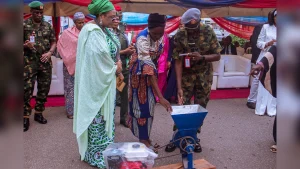
For ex-servicemen, the transition into civilian life can be challenging after years of active service that provided institutional support, stable income, and healthcare coverage.
It was to address this gap that the Nigerian Legion was established 62 years ago, with a clear mandate to provide welfare support and facilitate the reintegration of retired military personnel into civilian life. For Retired MWO Comfort Victory Bassey, retirement came with both pride and uncertainty. However, joining the Nigerian Legion in 2024 eased her transition and provided a renewed sense of community by reconnecting her with fellow veterans who share similar experiences.
“The Legion offered guidance on accessing entitlements and benefits and served as an advocacy platform for our welfare. To date, it continues to provide essential support through welfare checks, intervention in times of need, and platforms for engagement that help veterans remain active and valued members of society,” she said.
Established in 1964 as a statutory body for ex-servicemen, the Nigerian Legion has evolved into a nationwide organisation with structures across all states of the federation. Its core mandate remains the welfare, reintegration, and dignity of retired military personnel, as well as support for widows and families of fallen heroes. For 62 years, the Legion has continued to serve as an advocacy platform and support system for veterans like Bassey, helping them access entitlements and remain engaged in society.
A Vision for Better Welfare
Under the leadership of National Chairman Grace Morenike Henry, the Nigerian Legion says its vision is to restore dignity, respect, and pride to veterans while improving living conditions for them and their families. She said her administration is focused on improving welfare systems, restoring public respect for veterans, and ensuring that widows and children of fallen heroes are not neglected.

According to her, the current leadership has prioritised three key areas: healthcare, housing, and welfare support for widows. She disclosed that plans are underway for a “Veterans Estate Project” aimed at providing affordable housing for retired personnel.
On healthcare, she said the Legion is collaborating with Defence Health Maintenance Limited (DHML) and other partners to improve access to medical services for veterans.
On welfare, she noted that empowerment programmes have already been implemented for widows of fallen soldiers.
“I have held about two to three programmes for widows, which is in the public domain,” she said.
Widows’ Empowerment and Support
The Legion has also intensified support for military widows through cash and material assistance programmes.
Henry said she personally supported widows with palliatives during festive periods and rolled out targeted empowerment initiatives.
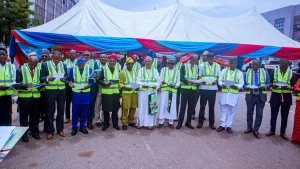
“In November/December 2025, I shared palliatives to some widows to assist them for Christmas and New Year,” she said.
She added that about 40 widows have benefited from empowerment schemes, with 20 receiving grinding machines and 20 receiving tailoring machines, alongside food items and cash support.
As part of the 62nd anniversary activities, she said plans are underway to extend additional support to 62 widows and veterans.
Agriculture and Reintegration Plans
On agricultural initiatives, Henry said the programme is still being developed. She explained that efforts are ongoing to recover lands belonging to the Legion across states for future cooperative farming projects involving veterans.
On healthcare delivery, she said the organisation is deepening partnerships with DHML and other medical organisations to support ageing veterans with long-term care.
“There are also other medical NGOs that have approached the Nigerian Legion, and we are presently considering how to partner with them,” she said.
Repositioning Veterans for National Development
The Legion is also exploring ways to reposition veterans as contributors to national security and economic development.
Henry noted that retired military personnel remain a large and organised group across Nigeria and could support community security and national stability if properly engaged.
“The Ministry of Defence has set up a committee on this, and I will not want to say anything further on that,” she said.
Funding Challenges
Despite progress, funding remains the organisation’s biggest challenge.
Henry said the Legion still depends heavily on the annual Armed Forces Remembrance Day Emblem Appeal Fund, which she described as insufficient.
“The most challenging obstacle for the Nigerian Legion is finance,” she said.
She also called for timely release of pledged donations and stronger government budgetary support, as well as financial autonomy for the organisation.
“There should be a deliberate policy on funding the Nigerian Legion,” she added.
Changing Perceptions
Henry said perceptions of the Legion as an organisation for ageing and inactive personnel are gradually changing, with increased awareness and participation from younger, educated retirees.
“In the past, the Legion was seen as an organisation of old and redundant people,” she said. “But now there is a lot of awareness, and senior officers are recognising it as a hub for all retired military personnel.”
Call for National Recognition
She called for the establishment of a dedicated Ministry of Veterans Affairs to better coordinate welfare programmes for retired military personnel.
“The nation that forgets those who sacrificed for her will not move forward,” she said.
As the Nigerian Legion marks 62 years, its leadership says it is entering a new phase focused on welfare reform, partnerships, and national relevance.
“Better things and a brighter future are coming,” Henry said.
For veterans like Bassey, the Legion remains a reminder that their service is not forgotten.
“That means though we are retired, we still matter and can still contribute to national development,” she said.