 Follow Us on Google News


 Follow Us on Google Discover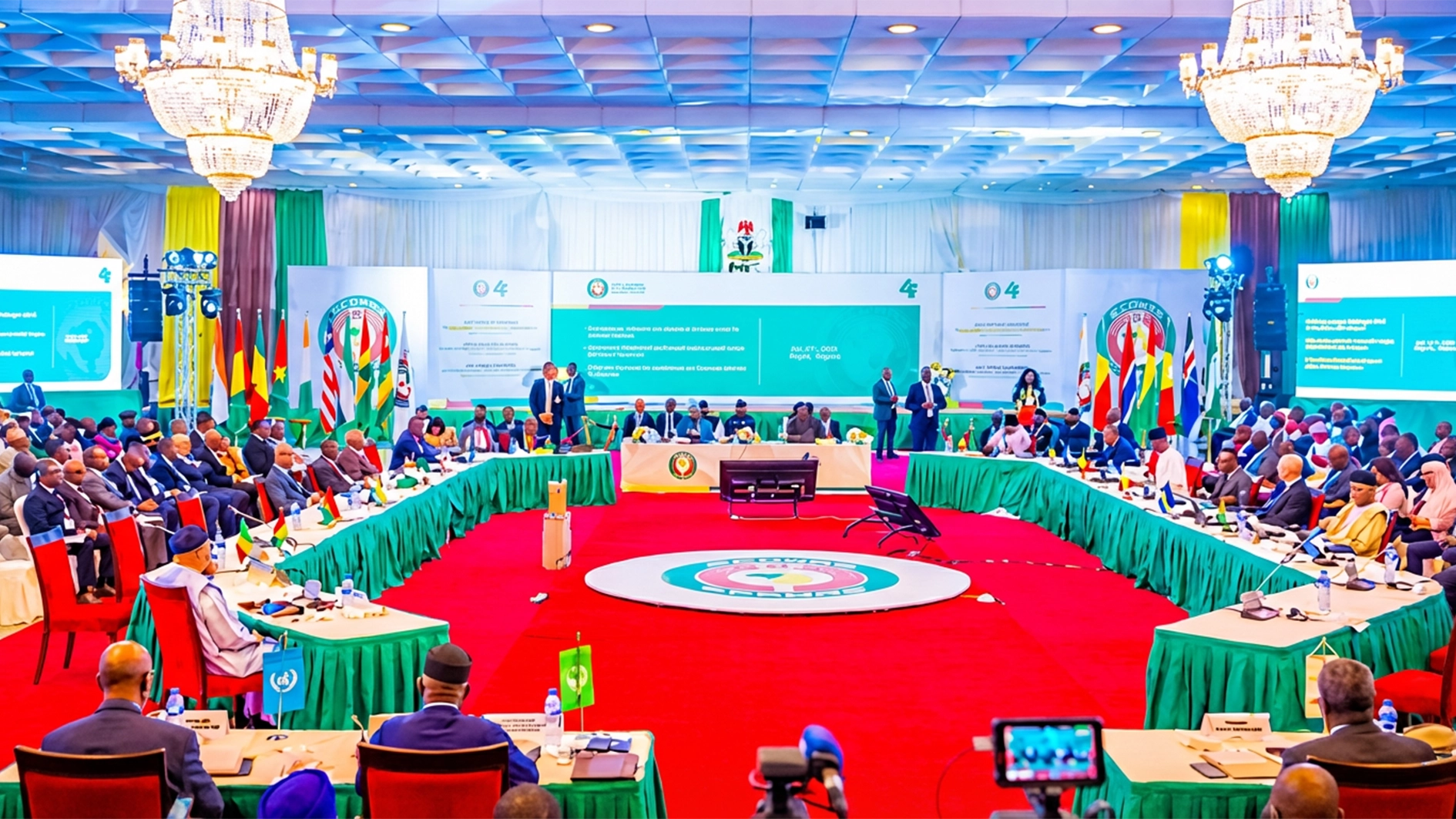
Poor compliance with the Court of Justice of the Economic Community of West African States (ECOWAS) will be on the front burner as the community convenes its Second Meeting of Competent National Authorities (CNAs) in Cotonou, Republic of Benin, today.
The meeting is part of efforts to strengthen the enforcement of the court’s judgments across member states.
The three-day meeting, themed: ‘From Commitment to Framework: Operationalising a Collaborative Architecture for the Enforcement of ECOWAS Court Judgments’, will bring together designated Competent National Authorities from member states, representatives of the ECOWAS Commission and Parliament, legal experts and senior court officials.
According to the court, the meeting is aimed at deepening cooperation among stakeholders and developing practical mechanisms to improve compliance with judgments of the regional court.
The meeting builds on the outcomes of the inaugural gathering of Competent National Authorities held in Lagos in June 2025, where participants adopted recommendations to improve compliance with court decisions, strengthen institutional capacity and promote collaboration among national enforcement authorities.
A major highlight of the meeting will be the presentation and adoption of a Collaborative Framework for the Enforcement of ECOWAS Court judgments.

The framework, developed following consultations with member states and national authorities, is expected to provide a structured mechanism for coordinated enforcement actions by defining institutional responsibilities, communication channels, accountability measures and monitoring processes.
Participants are also expected to review progress since the inaugural meeting and to assess the annual enforcement reports submitted by member states.
The meeting will further examine challenges affecting compliance with court judgments, particularly in human rights cases, and identify practical solutions to improve enforcement.
The court said the meeting would also formalise a structured platform for cooperation among Competent National Authorities to facilitate peer learning, information sharing and mutual accountability among national enforcement bodies.
IN another development, ECOWAS, yesterday, said the sub-region’s inadequate electricity supply sharply contrasted with its vast natural resources, vowing to ensure reliable and sustainable energy.
ECOWAS’ Acting Head, Conventional Energy, Koumoin Arbaduis, made this known at ECOWAS Parliament’s Delocalised Joint Committee Meeting on Energy and Mines; Infrastructure; Agriculture, Environment and Natural Resources, in Dakar, Senegal.
The five-day event, which began on Monday, is themed, “Harnessing Renewable Energy for Rural Electrification and Empowerment of Rural Economies in the ECOWAS Region: The Role of ECOWAS Parliament.”
Speaking in a presentation on “ECOWAS Regional Energy Policies and Key Energy Statistics,” Arbaduis said West Africa continued to grapple with inadequate electricity supply, low access rates and high transmission costs.
This, he noted, was notwithstanding the sub-region’s possession of the world’s most abundant energy resources, including crude oil, natural gas, biomass, uranium, coal, and an estimated 25,000 megawatts of hydroelectric potential.

