 Follow Us on Google News


 Follow Us on Google Discover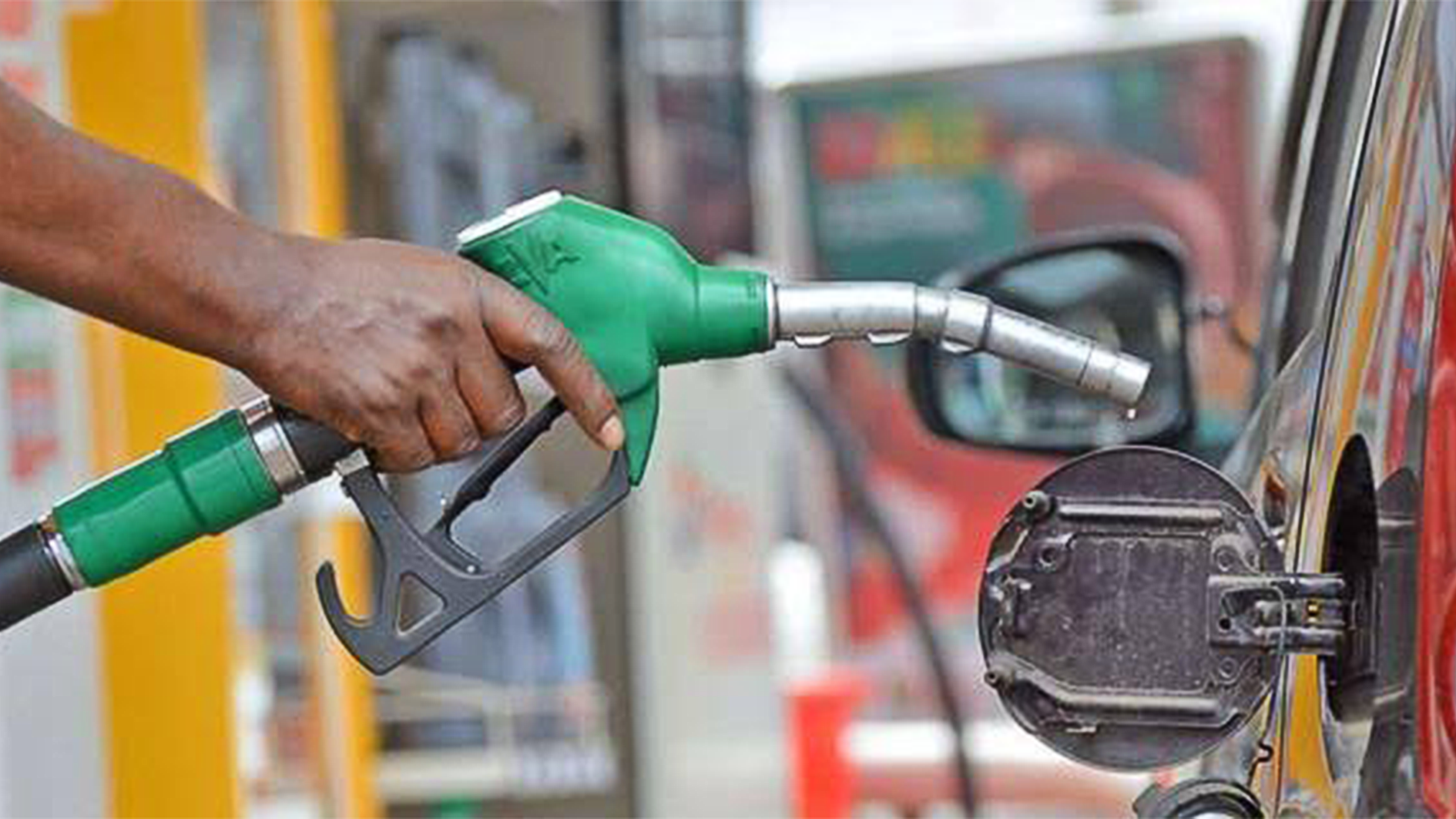
Global crude oil prices extended their decline yesterday, with Brent Crude falling by 5.24 per cent to $78.82 per barrel, but retail petrol prices in Abuja remained largely unchanged at around N1,350 per litre.
Meanwhile, Nigeria’s downstream petroleum market received a major boost on Monday as Dangote Petroleum Refinery slashed the ex-depot price of Premium Motor Spirit (PMS), popularly known as petrol, by N75 per litre, raising hopes of fresh reductions in pump prices and easing pressure on consumers grappling with high energy costs.
United States (U.S.) President Donald Trump insists the Strait of Hormuz will open “toll-free” under the US’s deal with Iran to end the war
Checks across major filling stations in the Federal Capital Territory (FCT) showed that most outlets continued to dispense PMS at N1,350 per litre, while a few sold as high as N1,370, despite recent reductions at the depot level.
The sustained high pump prices came even after Dangote Petroleum Refinery announced the N75 per litre cut in its gantry price.
Some marketers yesterday told The Guardiana quick adjustment in the pump price would force the operators to record losses, adding that stock in the market might need to be exhausted despite the fact that operators are quicker to adjust prices if the situation were an upward review.

The global oil market has been under renewed pressure amid expectations of increased supply from the Middle East. Under the emerging U.S.-Iran agreement, Tehran is expected to resume oil exports immediately, with sanctions relief extending to shipping, banking and insurance services required to move crude to international markets.
Iran, which holds some of the world’s largest oil reserves, had seen its output constrained by sanctions and disruptions caused by conflict. Analysts say the return of its barrels to the market could significantly boost global supply and weigh further on prices.
In addition, Qatar is preparing to gradually restore its Liquefied Natural Gas (LNG) output following earlier disruptions caused by regional hostilities. State-owned QatarEnergy has indicated it could recover up to 50 per cent of its production within a month of safe navigation through the Strait of Hormuz, rising to about 80 per cent within two months.
The easing supply concerns have already altered market dynamics, with key Middle East crude benchmarks such as Dubai and Murban shifting into contango, signalling reduced fears of immediate supply shortages.
Despite these global developments, domestic fuel prices in Nigeria have remained sticky, reflecting structural inefficiencies and lagged price transmission.
SPEAKING at the G7 Summit in France yesterday, the U.S. President also said Iran will “never have a nuclear weapon” and criticised Israel over Lebanon.
Trump’s comments, among his most outspoken yet, show the extent of his angry spat with Israeli PM Benjamin Netanyahu, The Guardian gathered.
Pakistan, a key mediator, announced on Sunday that the U.S. and Iran had reached an agreement, but its contents were yet to be shared.
On Monday, the Trump administration’s officials said the deal had already been signed electronically by both sides, with a formal ceremony due to take place in Geneva, Switzerland, later this week.
EXECUTIVE Director of the International Energy Agency (IEA), Fatih Birol, said yesterday that “unconditionally” opening the Strait of Hormuz to Gulf tanker traffic was essential to ending the shock from soaring oil and gas prices to economies worldwide.
“The single most important solution to this problem is the full and unconditional opening up of the state of Hormuz to shipping,” Birol told a press conference.
Iran had effectively halted tanker traffic through the Strait of Hormuz to retaliate against U.S. and Israeli strikes in late February, choking off oil and gas traffic and sending crude prices skyrocketing.
The IEA has coordinated the release of hundreds of millions of barrels of oil from emergency stocks by its 32 member countries, and said in May that around 164 million barrels had already been drawn.
DANGOTE announced a reduction in its gantry price from N1,250 per litre to N1,175 per litre, effective from midnight on June 16, 2026, citing the recent de-escalation of geopolitical tensions in the Middle East and the resulting decline in global crude oil prices.
The latest price adjustment, one of the most significant reductions recorded in recent months, is expected to trigger renewed competition among fuel marketers and private depot owners, with industry stakeholders anticipating a downward review of retail pump prices across the country.
In a circular issued to customers and fuel marketers on Monday, Dangote Refinery attributed the decision to changing dynamics in the international energy market.
“Following the de-escalation of tensions in the Middle East, which impacted energy prices, we wish to inform you that we have reviewed our premium motor spirit gantry/coastal price,” the circular stated.
According to the notice, the refinery reduced its gantry price by N75 per litre from N1,250 to N1,175 per litre, while its coastal loading price was cut by N100,575 per metric tonne, dropping from N1,595,790 per metric tonne to N1,495,215 per metric tonne.
The company said the revised prices would take effect immediately.
“Kindly note that all outstanding unloaded gantry volumes will be re-priced at the new rate effective 12am, June 16, 2026.
“We sincerely appreciate your continued patronage and assure you of our unwavering commitment to reliable product supply and excellent service delivery,” the circular noted.

