 Follow Us on Google News
 Follow Us on Google Discover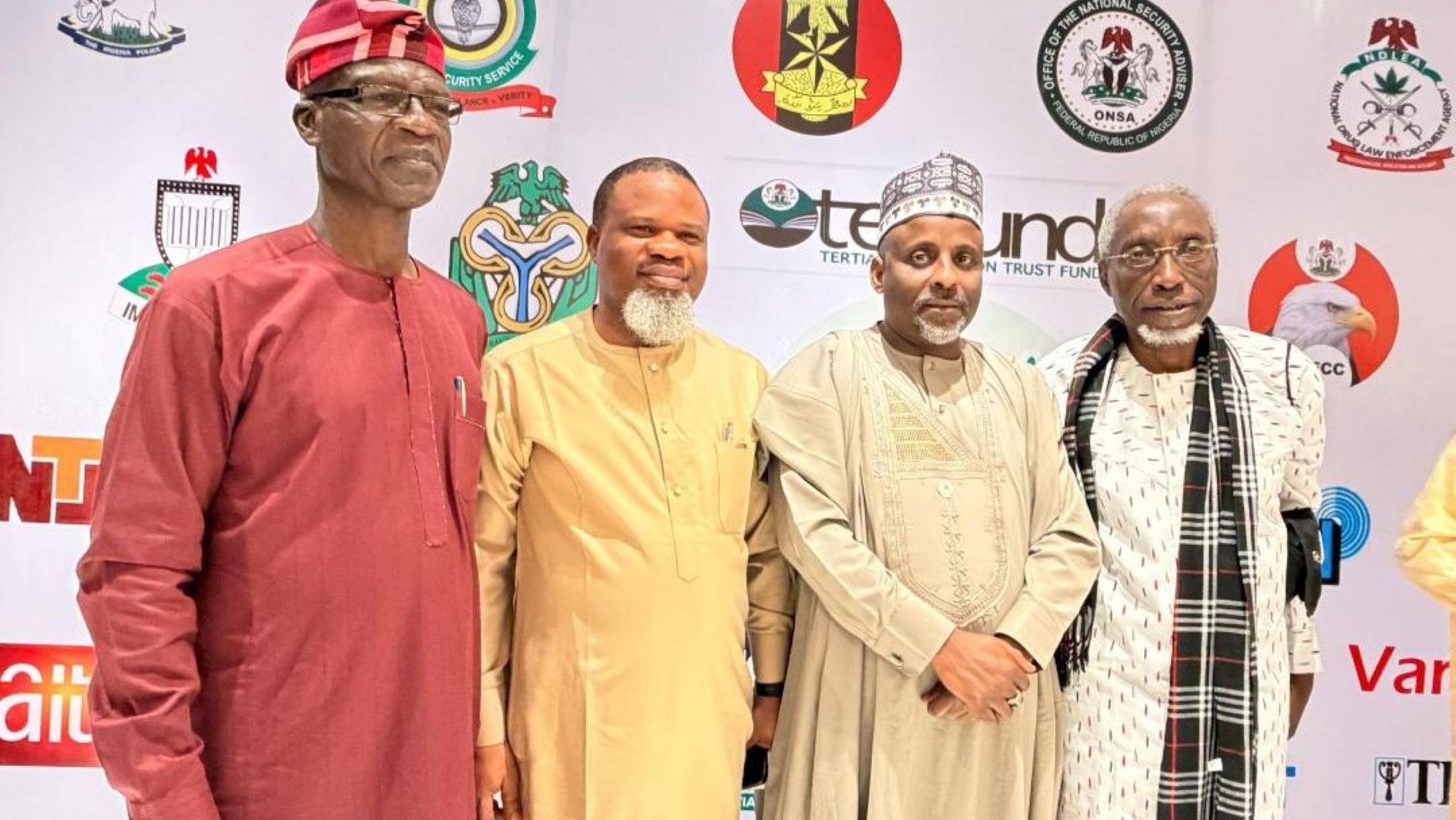
As part of efforts aimed at addressing the continued security challenges facing the country, members of the Nigeria Union of Journalists (NUJ) have identified proactive communication and ethical reinforcement as some of the ways to bridge gaps.
They spoke at a national security summit organised by NUJ in collaboration with the Department of State Service (DSS) in Abuja recently.
In a communique issued shortly after the event and signed by NUJ National President Alhassan Yahya Abdullahi, the participants observed many tensions between media and security institutions arise from weak communication channels and lack of structured engagement.
Themed: ‘Media and security agencies as partners in nation building,’ they identified media as critical in shaping public discourse, countering misinformation, and promoting accountability.
Saying sustainable security requires a whole-of-society approach integrating security operations, strategic communication, socio-economic development, and inclusive governance, Abdullahi noted press freedom and national security are mutually reinforcing and must be balanced within legal and ethical frameworks.
To him, dialogue-based mechanisms such as ombudsman systems, self-regulation, and judicial processes are preferable to coercive responses in resolving disputes.

Chairman of the event and Minister of Information and National Orientation, Mohammed Idris, noted there are complementary roles between media and security agencies in nation-building.
Advocating strengthened trust, professionalism, and strategic communication between both institutions, he further reaffirmed the government’s commitment to intelligence-driven operations, inter-agency collaboration, technological innovation, military modernisation, and community-based approaches to insecurity.
In his keynote address, Executive Director of Development Specs Academy, Prof. Okey Ikechukwu, described the media as a “force multiplier” in security operations.
Speaking on the topic, ‘The media as an impact multiplier in military operations and national development,’ he emphasised that modern security management requires public understanding and cooperation as central pillars of operational success and legitimacy.
The don, however, said communication gaps often create space for harmful narratives, making strategic communication essential to contemporary security operations.
On his part, President of the International Press Institute (IPI) Nigeria, Musikilu Mojeed, explored relationships between press freedom and national security. He stated that both are mutually reinforcing pillars of democracy and that tensions between them should be addressed through dialogue, professional accountability, and due process rather than coercion or intimidation.
On her part, President of the Nigeria Association of Women Journalists (NAWOJ), Aisha Ibrahim, called for greater inclusion of women in security governance and decision-making structures at all levels.
One of the major highlights of the was the investiture of the DSS Director-General, Adeola Oluwatosin Ajayi.
To Abdullahi, the recognition was not merely for the office he occupies, but for the leadership, foresight, and commitment he has demonstrated in strengthening the relationship between the media and security institutions in the country.
Under his leadership, the NUJ boss stated, “the DSS has continued to promote constructive interaction with media stakeholders, recognising that responsible journalism and effective security management are complementary pillars of national stability. His support for initiatives that encourage dialogue rather than suspicion, and partnership rather than confrontation, has contributed significantly to creating a more conducive atmosphere for cooperation in the national interest.”
The following recommendations were made in the communique, Institutionalised dialogue: Structured mechanisms for regular engagement between media organisations and security agencies should be established; Proactive communication: security agencies should adopt transparent, timely, and coordinated communication strategies to counter misinformation and build public confidence; Ethical reinforcement: media organisations should strengthen fact-checking systems and uphold high ethical standards, particularly in security-related reporting; Dispute resolution: Conflicts should be addressed through legal and professional frameworks that uphold press freedom and due process.
Other recommendations are, Capacity building: Regular joint training programmes should be instituted for journalists, editors, and security communication officers; Social investment: Government should increase investment in education, youth empowerment, and social protection programmes to address root causes of insecurity; Gender inclusion: Women should be systematically integrated into security governance and peacebuilding structures; Community engagement: Community-based security systems and early warning mechanisms should be formalised to strengthen intelligence gathering; Anti-drug efforts: Stakeholders, including the National Drug Law Enforcement Agency (NDLEA), religious bodies, and educational institutions, should intensify campaigns against drug abuse and illicit trafficking; Strengthening state-owned media: State governments are urged to increase funding and institutional support for state-owned media organisations to improve efficiency and professionalism, while maintaining strict adherence to ethical standards and editorial independence; Enhanced security funding: The federal government is encouraged to increase budgetary allocation to the Armed Forces, the Nigeria Police Force, intelligence services, and other security agencies to strengthen operational capacity through the deployment of modern technology, intelligence systems, and enhanced logistics support.
The summit brought together different stakeholders, including media executives, journalists, heads of security and intelligence agencies, government officials, policymakers, academics, civil society organisations, representatives of women’s groups, and development partners.

