 Follow Us on Google News


 Follow Us on Google Discover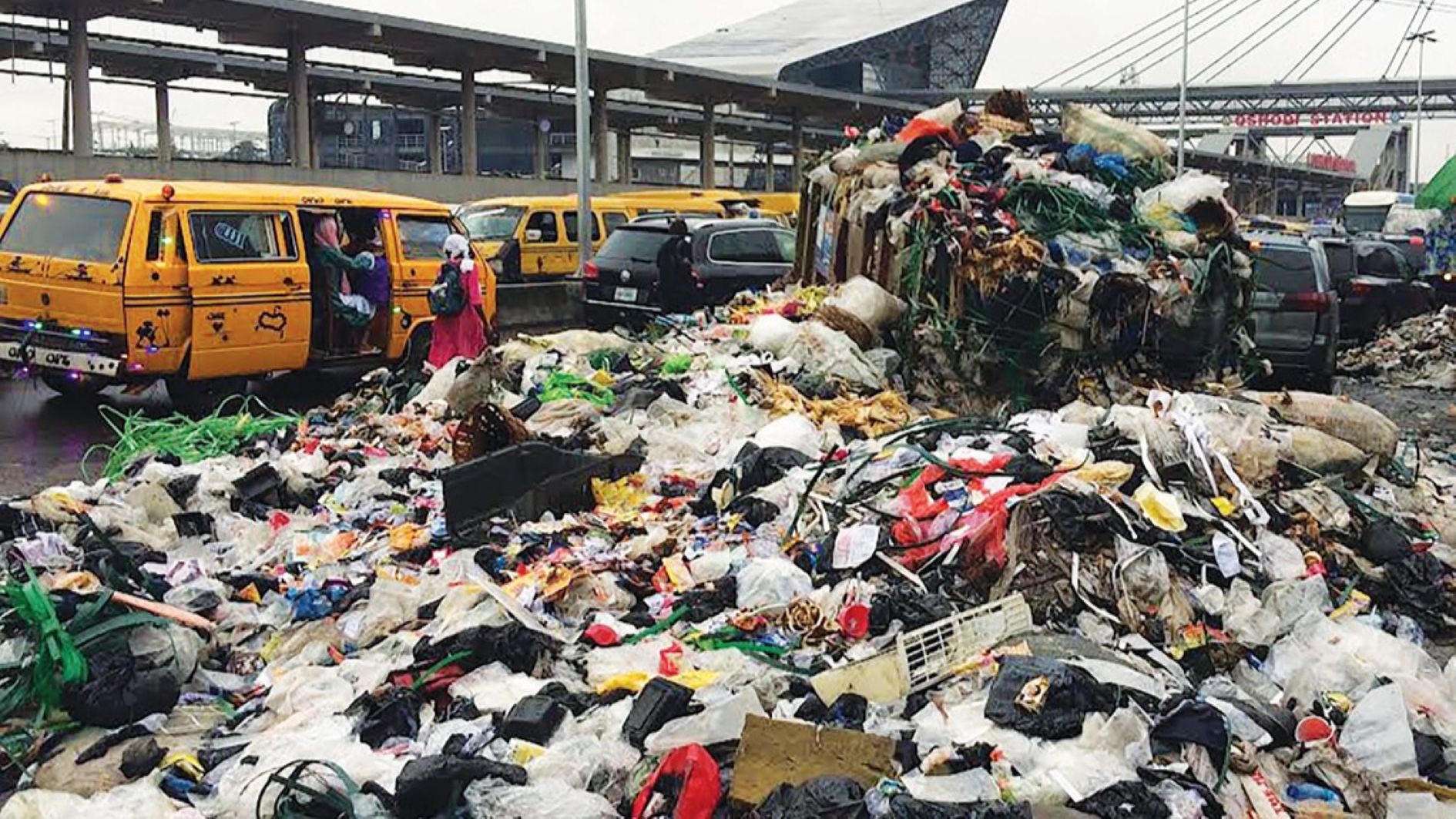
The resurgence of refuse heaps on Lagos roads and communities has exposed deep structural flaws in the state’s waste management system. Recent floods that paralysed large parts of the city indicate that a lot must be done to overcome the menace, even as the government has unveiled fresh interventions, including a special environmental enforcement unit and the procurement of additional waste evacuation trucks. But will these measures be enough? BERTRAM
NWANNEKANMA examines the causes of the crisis, its implications and reforms required to restore environmental sanity in the state.
For decades, Lagos was regarded as one of Africa’s cleanest and best-managed cities, supported by a structured waste management system built around government oversight and Private Sector Participants (PSPs).
Today, however, that reputation is increasingly under threat as major highways, inner-city roads and residential neighbourhoods have become overflowing refuse dumps.
In many areas, waste remains uncollected for months, forcing residents to keep refuse within their homes while awaiting evacuation.
Beyond the unsightly appearance, the situation has become a major environmental, economic and public health concern, even as incessant torrential rainfall has submerged roads, homes and businesses, further exposing the fragility of the waste management system.
In response to growing public outrage, the Lagos State Government announced plans to deploy an additional 150 compactor trucks; establish a special environmental enforcement unit, and strengthen recycling initiatives.

However, interviews with waste management experts, former and serving officials of the Lagos Waste Management Authority (LAWMA), sustainability advocates and PSP operators indicate that the crisis runs much deeper than indiscriminate dumping by residents.
Their verdict is largely unanimous: Lagos is facing a systemic breakdown driven by inadequate disposal infrastructure, operational bottlenecks, weak implementation, policy inconsistency and insufficient support for waste operators.
Where the system is breaking down
CONTRARY to public perception, many PSP operators insist they are willing to work but are constrained by an increasingly dysfunctional disposal system.
One operator, who requested anonymity, said the biggest challenge is no longer collecting waste but disposing of it.
“Our trucks were purchased to collect waste, not to remain idle. The real problem is access to disposal facilities,” he said, emphasising: “Waste is something you cannot stop. The moment you dispose of one, another is generated. That is why collection must be regular and consistent.”
Being an operator notwithstanding, he, ironically, admitted that he now patronises informal waste collectors because PSP services have become unreliable in his own neighbourhood.
“I cannot continue to keep waste in my house; nobody can. I now patronise local collectors because PSP services no longer reach my area regularly.”
His experience mirrors that of millions of Lagos residents who increasingly depend on informal waste collectors, many of whom dump refuse indiscriminately, worsening environmental pollution.
Operators say they often spend between three and four days waiting to discharge a single truck because landfill facilities are overstretched. During this period, trucks cannot return to their routes, creating a backlog that quickly overwhelms scheduled collections.
As the dumpsite crisis festers, industry stakeholders unanimously identify inadequate disposal infrastructure as the weakest link in Lagos’ waste management chain.
With major dumpsites in Badagry, Ikorodu and Igando continuing to operate below capacity or facing accessibility challenges, much of the burden has shifted to the Olusosun landfill.
The consequence is long queues that leave waste trucks stranded for several days before they can discharge their loads.
“We can spend three or four days waiting to dump the content of one truck. During that period, we cannot return to our routes because the truck is full,” the operator explained.
Besides the acquisition of new trucks for refuse collection, which experts insist alone cannot solve the problem unless disposal capacity is expanded and transfer loading stations rehabilitated, operational bottlenecks have also crippled routine waste collection.
Under normal circumstances, PSP operators divide communities into weekly collection routes. Today, however, trucks often reach full capacity after servicing only a fraction of their assigned areas. After this, the trucks join long queues at dumpsites.
“From January till now, I have not completed a single weekly collection schedule. By the time a truck returns from the dumpsite, another week’s waste has already accumulated,” another operator lamented.
Contrary to public assumptions, operators insist that diesel cost, though high, is not the principal obstacle.
“Diesel is expensive, but that alone cannot stop us from working. If collection charges are reviewed, operators can continue providing services.”
According to them, fuel costs can be managed through tariff adjustments, but no pricing model can compensate for the lack of accessible disposal facilities.
Flooding as proof of poor waste management
THE recent flooding that crippled parts of Lagos illustrates the close relationship between waste management and climate resilience.
As refuse blocks drainage channels and waterways, stormwater that should flow freely pours into roads, homes and commercial areas. The result is severe flooding, damaged infrastructure, prolonged traffic congestion and significant economic losses.
Businesses lose productive hours, roads deteriorate more rapidly, and the government spends enormous sums clearing blocked drains after every heavy rainfall.
Public health experts also warn that stagnant floodwaters contaminated by decomposing refuse increase the risks of cholera, typhoid, malaria and other waterborne diseases.
The floods, therefore, serve as a reminder that waste management is central to public health, urban planning and climate adaptation.
Enforcement without service delivery?
THE Lagos State Government has intensified enforcement against indiscriminate waste disposal through a newly created environmental enforcement unit.
While many residents welcome stricter environmental laws, stakeholders argue that enforcement alone cannot resolve the crisis.
Law-abiding residents who are the worst hit question the fairness of prosecuting residents when collection services remain inconsistent.
“If waste has not been collected for months, where exactly should residents keep it?” Afolayan Samuel asked.
Another resident, Adedimeji Kereem, added: “It is because residents are not dragging the state government to court over this refuse crisis that the government is behaving irrationally. How are residents supposed to feel when their compounds and neighbourhoods are overtaken by refuse? The government needs to resolve this issue real quick.
Perhaps the most striking observation from genuine stakeholders is that Lagos does not require an entirely new waste management strategy.
Former LAWMA Managing Director, Oladimeji Oresanya and Ibrahim Adejuwon Odumboni, argue that the state had already developed an effective framework years ago.
According to them, the challenge is the failure to sustain policies that previously delivered results.
Waste management, they explain, is fundamentally about ensuring the seamless movement of refuse from households to treatment, recycling or final disposal facilities. Whenever refuse accumulates on streets, one or more components of that chain – collection, transportation or disposal – have broken down.
Their assessment suggests that the present crisis is less a failure of technology than one of governance, coordination and implementation.
An environmentalist, Emmanuel Akinsanyo, places responsibility on leadership, criticising the reintroduction of environmental sanitation exercises without corresponding improvements in waste evacuation.
According to him, such exercises merely encourage residents to move refuse outside when disposal infrastructure remains overstretched.
He warned that continued accumulation of refuse poses serious public health risks, especially during the rainy season when blocked drainage channels and contaminated floodwaters heighten the likelihood of disease outbreaks.
However, one of the more revealing concerns raised by operators is their reluctance to speak publicly.
“Many operators are keeping quiet because they don’t want to be sanctioned. But everyone knows that the system is not working,” one operator disclosed.
According to stakeholders, this culture of silence contributes to policy failure because regulators receive limited feedback on operational realities until problems escalate into citywide crises.
They advocate stronger collaboration between the government and PSP operators to improve decision-making and restore public confidence.
Can foreign partnerships help?
SUCCESSIVE administrations have sought partnerships with foreign waste management firms to modernise the sector.
One such arrangement involved Ghanaian concessionaire, Messrs Zoomlion, which was awarded the concession for the 21-hectare Olusosun dumpsite. Investigations suggest the company’s success in Ghana was aided by a different payment structure.
The state is also reportedly contending with about N700 million in monthly obligations arising from the botched Visionscape agreement, highlighting the financial implications of poorly structured contracts.
While welcoming technical collaboration, experts insist that external investors cannot compensate for weak domestic policies.
Odumboni said: “Any agreement will only be as effective as the government’s own policy. If the policy framework is weak, external partnerships alone cannot solve the problem.”
His remarks reinforce the argument that sustainable waste management depends primarily on institutional capacity, policy consistency and effective implementation rather than imported expertise.
Co-founder of Sustainable Africa Solutions Ltd., Ridwan Mudashiru, advocates a decentralised waste management system in which local governments take greater responsibility for primary waste collection, street sweeping and grassroots enforcement, while LAWMA concentrates on regulation, landfill management and statewide coordination.
He also recommends mandatory waste segregation at source, expanded recycling infrastructure, composting initiatives, stronger public education campaigns and greater investment in modern collection equipment.
His recommendations align with global best practices that increasingly view waste not as rubbish but as a valuable resource capable of generating employment, renewable energy and industrial raw materials.
Also, the Lagos State Government acknowledges the operational challenges and insists corrective measures are underway.
LAWMA Managing Directors, Dr Muyiwa Gbadegesin, said the agency is implementing immediate, medium, and long-term reforms, including the rehabilitation of Transfer Loading Stations, the deployment of 100 Compressed Natural Gas-powered compactor trucks, additional waste-evacuation vehicles, and expanded recycling infrastructure.
Similarly, the Commissioner for the Environment and Water Resources, Tokunbo Wahab, said the state is transitioning from the traditional linear “collect-and-dump” model to a circular economy where waste is converted into energy, fertiliser and industrial materials.
Projects involving waste-to-energy technology, compost production and expanded recycling are expected to reduce pressure on existing landfills while creating new economic opportunities.
The state is also exploring electric compactor trucks and smaller tricycle compactors to serve densely populated communities with narrow roads that are inaccessible to conventional trucks.
Beyond infrastructure, experts identify leadership and policy continuity as the decisive factors.
Over the years, several waste management initiatives have been introduced only to be modified or abandoned following changes in administration.
Such inconsistency has weakened investor confidence, disrupted operational planning and slowed sectoral reforms.
Stakeholders argue that restoring efficiency requires long-term planning insulated from political transitions and supported by transparent engagement among regulators, PSP operators and residents.

