 Follow Us on Google News
 Follow Us on Google Discover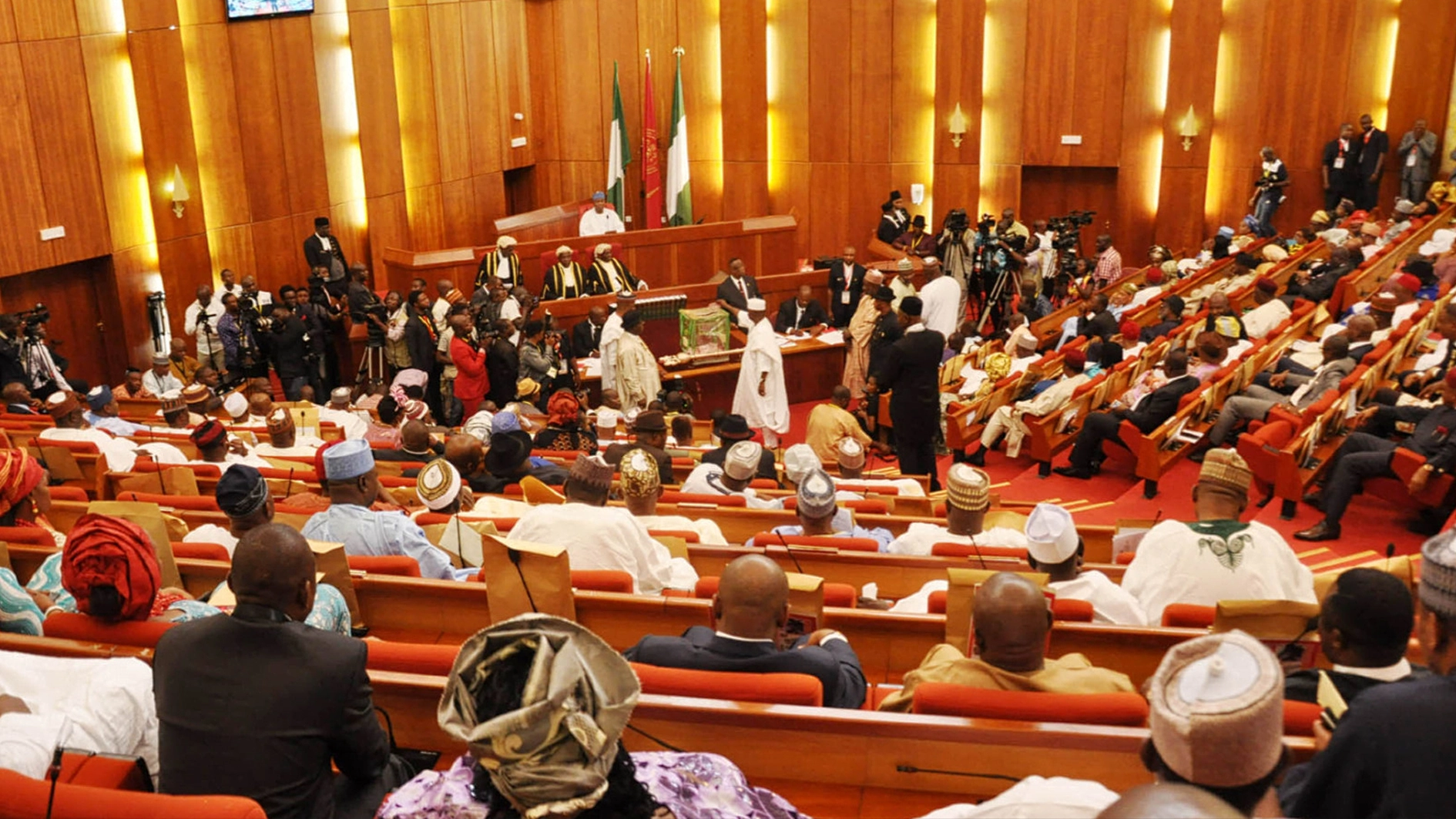
Oyefusi, Aborisade make case for regulatory framework before implementation
Senate, yesterday, defended the passage of the Constitution of the Federal Republic of Nigeria (Alteration) (State Police) Bill, 2026, noting that the legislative initiative “is purely a child of necessity and not of political expediency as well as a product of national consensus and not of cynicism.”

But former senatorial candidate for Lagos East, Abiodun Oyefusi, has urged President Bola Tinubu to ensure that a comprehensive legal and regulatory framework is put in place before the establishment of state police.
Also, human rights lawyer, Niyi Aborisade, called for a thorough scrutiny of the proposed legal framework for the establishment of state police, maintaining that the benefits of decentralised policing outweigh the potential risks.
The red chamber also noted that the proposal to create state police was of urgent public importance and could not, and should not, take a back seat to anyone’s political aspirations in light of the stark realities facing the country.
Leader of the Senate, Opeyemi Bamidele, made the remarks in a statement released by his Directorate of Media and Public Affairs yesterday, highlighting that the process of accommodating state police in the country’s governance structure did not start recently.
Despite some dissenting views, Bamidele said observations had shown that Nigerians largely welcome the passage of the bill with a conviction that it would significantly de-escalate the country’s security conditions at the sub-national level.
He explained that the state police proposal was part of the memoranda submitted to the Senate Adhoc Committee on the Review of the 1999 Constitution, adding that the memorandum underwent a rigorous process and multi-tiered consultations across the federation due to its sensitive nature.
During the process, Bamidele observed that the National Assembly broadly consulted the Executive, the Nigerian Governors Forum (NGF), the Conference of Speakers of the State Legislatures of Nigeria, and the police top brass, among others.
In July 2025, according to him, the National Assembly conducted public hearings in all geopolitical zones, and the participants overwhelmingly approved it.
“At each level of our consultation, nearly all stakeholders embraced the state police bill in the light of stark realities we are facing today,” he disclosed.
Bamidele explained the contributions of the police to the process of enacting the constitution alteration bill, which, according to him, were among the highly vital recommendations that could help the National Assembly develop accountability and oversight mechanisms to prevent the abuse of state police by some political actors.
The Senate leader added that the resolve of the Nigeria Police “to support the bill obviously highlights its strategic national significance to deal with insecurity at local and state levels.”
Beyond police input, Bamidele further explained that the bill was subjected to intense debate in the Senate and the House of Representatives.
He said: “Though the APC is the majority, there are members of opposition parties that exercised their discretion in favour of the bill, mainly in the national interest and not on a parochial basis. In the Senate, for instance, 84 out of 109 members voted clause by clause in support of the bill. This accounted for 77.06 per cent approval at the Senate alone.”
In an open letter to the President, Oyefusi argued that while decentralising policing could strengthen security and improve responses to local crimes, introducing state police without adequate safeguards could expose the country to political abuse, human rights violations and institutional conflicts.
She noted that Nigeria’s worsening security challenges, including terrorism, banditry, kidnapping, communal clashes, armed robbery and separatist agitations, fuelled calls for state policing due to the perceived overstretching of the Nigeria Police Force (NPF).
According to her, decentralisation alone will not automatically translate into improved security, unless it is backed by strong legal structures, accountability mechanisms and institutional safeguards.
Oyefusi warned that one of the greatest risks associated with state policing is the possibility that political actors will use it to intimidate opponents, suppress dissent, or influence elections.
She therefore called for a regulatory framework that would guarantee the operational independence of state police, while ensuring accountability to democratic institutions and the rule of law.
She equally highlighted the need for sustainable funding models, financial accountability measures and regular audits to ensure state police formations remain adequately equipped and professionally managed.
Aborisade, who spoke with The Guardian, acknowledged concerns that some state governors could abuse the outfit for political purposes, but argued that such fears should not derail the initiative.
The governorship aspirant in Oyo State said recent calls for the implementation of state police have generated mixed reactions, noting that suggestions to defer its establishment until after the next general elections are understandable.
“I don’t think those raising concerns are opposed to state police. The position that its implementation should be delayed until after the elections is reasonable, considering that some over-ambitious governors may attempt to use state police as an instrument of oppression against political opponents or perceived enemies,” he said.
Despite the concerns, Aborisade maintained that the advantages of state policing far outweigh its disadvantages.
He, however, stressed the need for adequate legal safeguards to prevent abuse of the proposed security architecture.

