 Follow Us on Google News
 Follow Us on Google Discover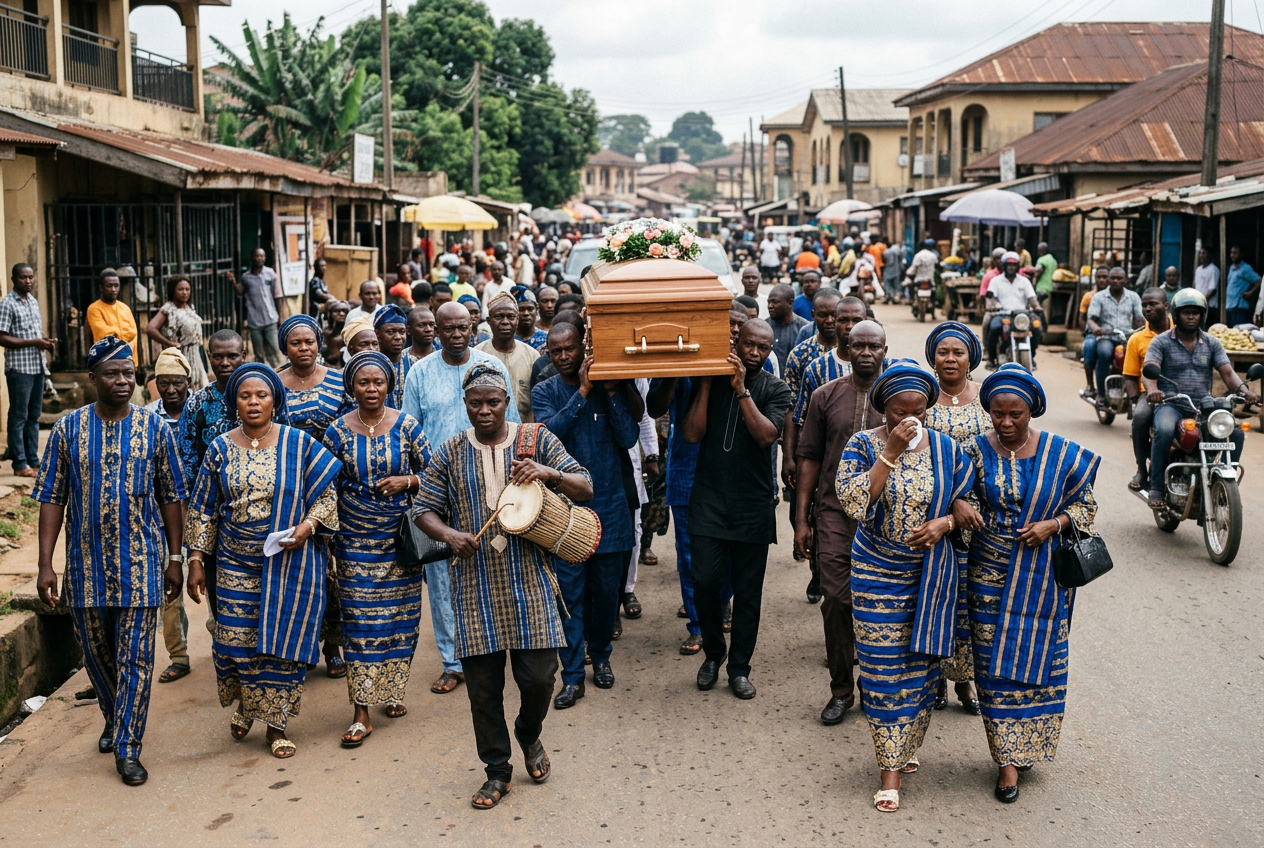
Hello there, and welcome to what has become one of the most moving pieces I have ever sat down to write. This article is the conclusion of months of careful research and years of attending, observing, and quietly learning from funerals across Nigeria, from candlelit wakes in Enugu to dawn burials in Kano. If you have ever wondered what is the tradition when someone dies in Nigeria, the honest answer is that it depends enormously on where you stand, who has passed, and which faith and ethnic group shaped their life. Death here is rarely a quiet, private affair. It is a community event, a spiritual passage, and very often a celebration.
Let me take you through it gently, the way an old family friend might over a cup of zobo.

I still remember the first Igbo burial I attended as a young man. I expected solemn silence. Instead I found drumming, dancing, gunshots cracking into the night sky, and an elderly woman laughing through her tears as she told stories about her late husband. It rearranged everything I thought I understood about grief.
What Nigerians Do When Someone Dies: The First Steps
When a death occurs, the response is immediate and deeply communal. Word spreads fast, often before any official has been told. Neighbours arrive within the hour, food appears as if by magic, and the compound fills with people who simply sit with the bereaved.
There is a practical side too, and Nigeria does have a legal framework around death. Registration is compulsory under the Births, Deaths Etc (Compulsory) Registration Act of 1992, and the National Population Commission handles civil registration of these vital events. In practice, death registration rates remain low (hovering around ten per cent nationally), which tells you a great deal about how much families lean on tradition rather than paperwork.
Here is roughly how the first days unfold, although the order shifts from family to family:
- The announcement. Close relatives are informed first, often in person, and for prominent elders the news may be held quietly until senior family members can gather.
- Gathering the kindred. The umunna (extended family) and in-laws assemble to begin planning, because no Nigerian funeral is decided by one person alone.
- Care of the body. The deceased is either prepared for quick burial or moved to a mortuary while arrangements and finances come together.
- Registering the death. Families increasingly complete a death notification with the National Population Commission, which is free and requires the informant’s National Identification Number.
- Setting the date. A burial day is fixed, almost always a weekend, to allow relatives to travel home from across Nigeria and abroad.
That fourth step matters more than people realise. If a loved one has died overseas and the family wants them brought home, a burial transit permit from a Nigerian mission abroad is required, along with certified death certificates and embalming letters.
Money, sadly, enters the conversation early. Far too early, some would say.
So, What Is the Tradition When Someone Dies in Nigeria?
Here is the heart of it. The tradition when someone dies in Nigeria is to honour the deceased through a communal, often multi-stage process that combines burial, mourning, and celebration, with the specific rites shaped by the person’s ethnic group, religion, age, and social standing. Among the Igbo, death is understood not as an ending but as a transition into the ancestral realm, where the departed watches over the living and may one day reincarnate within the family. The Yoruba treat the passing of an elder who lived a long, full life as a cause for genuine celebration, while the Hausa-Fulani, who are predominantly Muslim, follow Islamic rites that call for swift, simple burial.
Across all these groups, a few threads run constant: the family comes together, the community shows up in force, food and drink are shared generously, and the deceased is given a send-off befitting their place in society. The closely related customs you will encounter include the wake-keep (an all-night vigil of songs and tributes), the laying of the body, the funeral service itself, the burial or interment, the reception, and for many Igbo families a later second burial known as ikwa ozu.
It is rather like a relay race of rituals, each one passing the baton to the next, until the deceased is finally and properly settled in the world beyond.
Funeral Customs and Mourning Periods Across Nigeria’s Major Ethnic Groups
To make the regional differences clearer, here is a comparison of how the three largest ethnic groups approach death, mourning, and cost.
| Ethnic Group | Typical Burial Timing | Mourning Period | Typical Cost Range | Distinctive Rite |
|---|---|---|---|---|
| Igbo | Weeks to months (mortuary storage common) | One month up to one year | ₦2 million to ₦20 million | Ikwa ozu (second burial) with masquerades and gun salutes |
| Yoruba | Days to weeks for most; longer for royals | Around 40 days, often longer for spouses | ₦1.5 million to ₦15 million | Celebration of life for elders, royal Oba rites |
| Hausa-Fulani | Within 24 hours per Islamic law | Iddah of four months and ten days for widows | ₦300,000 to ₦3 million | Quranic recitation and simple shrouded burial |
What this table shows plainly is that timing and cost vary enormously, with Igbo funerals tending to be the most delayed and the most expensive, while Hausa-Fulani Muslim burials are the quickest and most restrained. These are general patterns, of course, and individual families always adapt them to their own faith, finances, and circumstances.
The 13 Days Rituals After Death and What Nigeria Does Instead
Now, you may have searched for the 13 days rituals after death, and I want to be straight with you here. The thirteen-day mourning sequence is not a Nigerian tradition at all. It belongs primarily to Hindu custom, where the period culminates in a ceremony often called the terahvin, marking the soul’s journey onward.
So why mention it? Because plenty of Nigerians in the diaspora marry across cultures, and the question comes up genuinely.
The Nigerian equivalents work on different rhythms entirely. An Igbo family might observe an intense mourning of around one month, sometimes formally lifting it with a ceremony, before the longer road to the second burial. There is no fixed thirteen-day rite in any of Nigeria’s major traditions, and anyone telling you otherwise has likely blended customs from elsewhere.
The 40 Day Rule After Someone Dies and Nigerian Mourning Periods
The 40 day rule after someone dies is a more interesting case, because Nigeria does brush up against it. The forty-day commemoration is rooted in Eastern Orthodox Christianity and in some Islamic and North African traditions, where the fortieth day marks a key memorial of the departed.
Among Nigerian Muslims, you will indeed find prayers and gatherings held on or around the fortieth day after death, alongside the more formally prescribed periods. The most important Islamic mourning observance in Nigeria is the iddah, the waiting period a widow observes, which lasts four months and ten days, during which remarriage is forbidden and certain customs of modesty are kept.
Christian and traditional Nigerian families, by contrast, more commonly mark anniversaries at one month, three months, six months, and especially one year. The one-year memorial, often a joyful gathering with dancing and a shared feast, is the moment many communities consider the mourning truly complete. So while the forty-day idea exists at the edges of Nigerian practice, it is not the universal rule that some assume.
How Long After Someone Dies Is the Funeral in Nigeria?
This is where Nigeria surprises a lot of outsiders. In much of the world a funeral follows death within a week. Here, it can take far, far longer.
For Muslim Hausa-Fulani families, burial is swift, usually within twenty-four hours, in keeping with Islamic teaching. But for many Christian and traditional southern families, particularly the Igbo, weeks or even months can pass between death and burial. The body rests in a mortuary while the family raises funds and coordinates a gathering worthy of the deceased.
This delay has become contentious. Some Nigerian commentators have asked, quite pointedly, why families keep dead bodies for so long, noting cases where corpses lingered in mortuaries for years and the costs of so-called befitting burials climbed into the millions. Several state governments have responded with laws. Anambra State, for instance, legislated that a corpse should not stay in a mortuary beyond two months and that burial ceremonies should last a single day.
The pressure to give a grand send-off is enormous. Families sew matching aso ebi outfits, hire musicians, slaughter cows, and feed entire villages, all to honour the dead and, let us be candid, to signal the family’s standing.
The expense is not trivial. A modest funeral might run to a few hundred thousand naira, while an elaborate Igbo second burial for a titled man can comfortably exceed twenty million.
There is real cultural depth beneath the spectacle, though. The Guardian has documented how traditional burial rites across African societies carry meaning in every gesture, from the shaving of a widow’s head to the gun salutes fired for a departed elder. And among royalty the stakes climb higher still: the recent controversy over the Awujale of Ijebuland’s funeral rites showed just how fiercely communities defend the traditional protocols owed to a departed king.
A Note on Styling and Dress
If you are attending a Nigerian funeral, a few practical notes will serve you well. Mourning colours have shifted over the years, with the old custom of black increasingly giving way to white, which many now see as a symbol of peace and transition. For celebration-of-life funerals honouring an elder, families often choose specific aso ebi colours, and it is courteous to ask the family in advance so you can match. Dress modestly, arrive prepared to give a financial contribution towards costs, and never underestimate how long the day will run.
Final Thoughts on the Tradition When Someone Dies in Nigeria
If there is one thing I hope you take from all this, it is that death in Nigeria is treated as a profound passage rather than a full stop. The tradition when someone dies in Nigeria weaves together grief and celebration, faith and culture, the individual and the entire community, in a way that can feel overwhelming to an outsider but deeply comforting to those inside it.
My practical advice, whether you are planning a funeral or simply paying your respects, is this. Lean on your family elders, who hold the knowledge of what your specific community expects. Register the death properly so the legal side is settled. Be honest about your budget rather than bankrupting yourself for appearances. And remember that the warmth of the people who gather matters far more than the size of the canopy.
Grief shared is grief softened. That, more than any single ritual, is the real Nigerian tradition.
Related Articles
To explore more of Nigeria’s rich cultural fabric, you may enjoy my companion pieces on the traditions of birth in Nigeria, which completes the circle of life and death, and on the biggest culture in Nigeria, which gives wider context to the ethnic traditions shaping these rites.
Key Takeaways
- Nigerian death traditions vary by ethnic group and faith, blending burial, mourning, and celebration into a deeply communal event.
- Burial timing ranges from within twenty-four hours for Muslim families to weeks or months for Igbo families saving for an elaborate send-off.
- Register the death with the National Population Commission, lean on family elders for guidance, and set a realistic budget before planning.
Frequently Asked Questions About the Tradition When Someone Dies in Nigeria
What is the tradition when someone dies in Nigeria?
The tradition is to honour the deceased through a communal process of burial, mourning, and celebration, shaped by the person’s ethnic group, religion, age, and status. Practices range from swift Islamic burials in the north to elaborate Igbo second burials in the south-east.
What do Nigerians do first when someone dies?
Relatives and neighbours gather almost immediately to support the bereaved family while the extended family begins planning. The body is then prepared for burial or moved to a mortuary while a date is set and finances are arranged.
What are the 13 days rituals after death?
The thirteen-day mourning ritual is a Hindu tradition, not a Nigerian one, and culminates in a ceremony marking the soul’s onward journey. Nigerian mourning instead follows its own rhythms, such as the Igbo one-month observance or longer periods leading to a second burial.
What is the 40 day rule after someone dies?
The forty-day commemoration comes from Eastern Orthodox Christian and some Islamic traditions, marking a memorial on the fortieth day after death. Some Nigerian Muslims hold prayers around this time, though the formally prescribed iddah for widows lasts four months and ten days.
How long after someone dies is the funeral in Nigeria?
For Muslim Hausa-Fulani families, burial usually happens within twenty-four hours, following Islamic teaching. For many Christian and traditional Igbo families, however, weeks or even months may pass while the family raises funds and coordinates the ceremony.
What is a second burial in Nigeria?
A second burial, called ikwa ozu among the Igbo, is an elaborate celebration held after the initial interment to formally honour the deceased and complete the mourning process. It can take place weeks, months, or even years later, depending on the family’s financial readiness.
How much does a Nigerian funeral cost?
Costs vary widely, from a few hundred thousand naira for a modest burial to well over twenty million naira for an elaborate Igbo second burial. The expense covers food, matching aso ebi outfits, entertainment, livestock, and hosting large numbers of guests.
Why do Nigerian families keep bodies in the mortuary for so long?
Families often delay burial to raise the substantial funds needed for a befitting ceremony and to allow relatives to travel home. Some states, such as Anambra, have passed laws limiting mortuary storage to around two months to curb the practice.
What do Nigerian widows do during mourning?
Customs vary, but in some Igbo communities widows traditionally wear special mourning clothes and may shave their heads as a sign of grief. Muslim widows observe the iddah, a waiting period of four months and ten days during which remarriage is prohibited.
What colour do Nigerians wear to funerals?
The older custom of wearing black is increasingly being replaced by white, which symbolises peace and transition for many families. For celebration-of-life funerals, families often select specific aso ebi colours, so it is best to ask in advance.
Do you have to register a death in Nigeria?
Yes, death registration is compulsory under the Births, Deaths Etc (Compulsory) Registration Act of 1992 and is handled free of charge by the National Population Commission. In practice, national registration rates remain low, so many families rely on traditional processes instead.
Can a Nigerian who dies abroad be buried back home?
Yes, but the family must obtain a burial transit permit from a Nigerian embassy or high commission, along with certified death certificates and an embalming letter. The remains are then repatriated, often for a full traditional burial in the deceased’s ancestral hometown.

