 Follow Us on Google News
 Follow Us on Google Discover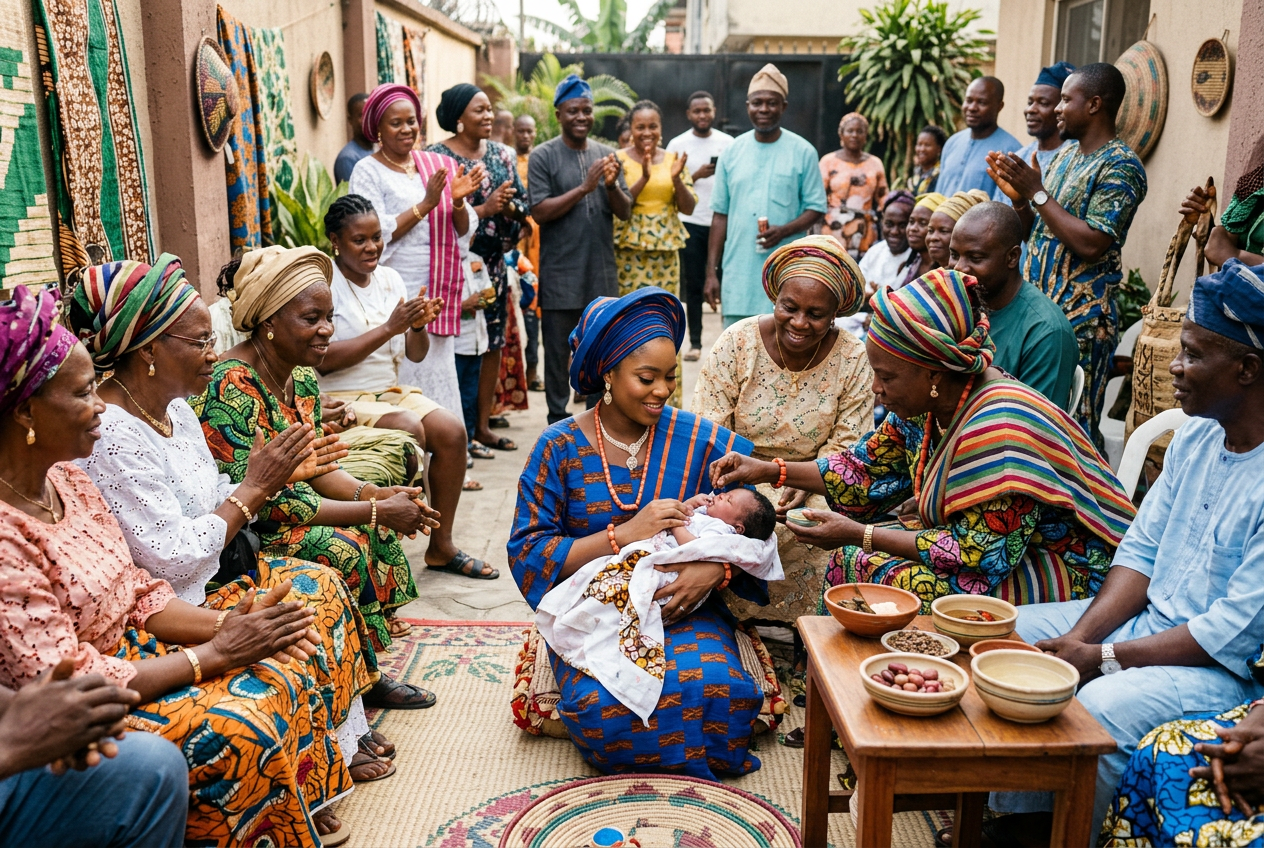
Welcome, and thank you so much for being here. This is a topic that sits very close to my heart. I have spent months researching the rich tapestry of birth customs across Nigeria’s many ethnic groups, attending naming ceremonies in Lagos and Ibadan, speaking with Igbo grandmothers in Anambra, and consulting cultural custodians in the north who carry oral traditions stretching back centuries. Add to that several years of writing about Nigerian culture for a broad readership, and I can honestly say that this article is the most thorough piece I have ever produced on the subject.
The traditions of birth in Nigeria are not simply rituals. They are living declarations of community, spirituality, and identity. A Nigerian child does not just arrive into a family; they arrive into a whole world of meaning, purpose, and expectation. From the moment a pregnancy is announced to the days following delivery, every act is layered with intention.
Let me take you through all of it.
What Are the First Things to Buy When Expecting a Baby in Nigeria?
Long before the baby arrives, Nigerian families begin preparing. And preparation here is rarely a solo endeavour. The moment word gets out that a new child is coming, aunties descend, WhatsApp family groups light up, and suddenly everyone has a list of what needs to be bought.
I remember my cousin Adaeze in Enugu announcing her pregnancy at a Sunday gathering. By the following week, her mother-in-law had already sourced wrappers for the omugwo period, her own mother had started stocking medicinal herbs, and three church members had already volunteered to cook for the early weeks. That is simply how it works.
In practical terms, what does a Nigerian expectant family actually need to purchase or prepare? The list differs somewhat by ethnic group and family means, but there are broad categories that cut across the country.

Practical items for the baby include newborn clothing (often in neutral colours, especially for the first child), wrapping cloths (locally called “wrapper” or swaddling fabric), nappies or locally sourced cotton cloths, a baby bathing basin, and baby-specific toiletries like black soap, olive oil or shea butter, and mild baby powder. Many Nigerian mothers swear by traditional sponging with black soap from the first bath, believing it protects the baby’s skin and complexion.
For the mother, the focus is heavily on postpartum recovery. Hot water, herbs, and rest are prioritised. Many mothers in Yoruba, Igbo, and Delta communities prepare for the postpartum bath ritual, which uses herbal preparations (often including bitter leaf, scent leaf, and other local botanicals) to help the uterus contract and restore the mother’s strength. You can read a detailed breakdown of how the Igbo handle this in this excellent piece on omugwo by a Guardian Nigeria contributor, which covers postpartum care customs with real depth.
Beyond personal items, there are social preparations. Food must be planned and stocked. Drinks for the naming ceremony must be considered well in advance. Depending on the family’s resources and social standing, ceremony costs can range from as little as N150,000 for a modest gathering to well over N2,000,000 for a large, well-attended celebration in Lagos or Abuja.
One piece of practical advice I give every expectant Nigerian family: do not wait until the last month to organise. Start preparing at least three months before the due date, particularly if you are planning a sizeable naming ceremony. The planning always takes longer than you expect.
How Many Days After Birth Is the Naming Ceremony in Nigeria?
This is one of the most frequently asked questions about birth traditions in Nigeria, and the answer depends almost entirely on which ethnic group you are asking about.
Among the Yoruba people, the naming ceremony (known as Isomoloruko or Itesiwaju) traditionally takes place on the eighth day after birth. This timing is deeply rooted in Yoruba cosmology. The first seven days are regarded as the period when the child’s spirit is still partly in the spirit world and has not yet fully committed to life on earth. The eighth day marks the baby’s decision to stay.
The Igbo hold their naming ceremony, Igu Afa, on the eighth day as well. The paternal grandparents typically officiate the ceremony, which begins with ancestral recognition and divination. As one Guardian Nigeria article on Igbo naming rites explains, wine libations are poured in deference to ancestors and to formally notify them of the child’s name. This ancestral connection is non-negotiable in traditional Igbo practice.
The Hausa-Fulani community, who largely practise Islam, follow the Islamic Sunnah of naming a child on the seventh day after birth. This ceremony, known as Zauren Suna or the Suna, involves Islamic prayers, the sacrifice of a ram or goat (the Aqiqah), and the formal shaving of the baby’s head. The naming itself is typically done by an Islamic scholar or the family head.
Among Efik and Ibibio communities in Cross River and Akwa Ibom, the naming period varies but often falls within the first week to ten days, combining Christian prayer with traditional family rites.
A useful rule of thumb: if the family is Muslim, the seventh day is the standard. If the family is of Yoruba or Igbo background following traditional or Christian customs, the eighth day is most common. Diaspora families sometimes adjust the timing slightly to accommodate travel schedules, though traditionalists will tell you this bending of the rules is frowned upon.
The National Population Commission in Nigeria strongly encourages all families to register their newborns promptly after birth, ideally within the naming ceremony period, as birth registration provides each child with the legal identity they need to access education, healthcare, and government services. It is a step that intertwines beautifully with naming tradition.
What Are the Traditions of Birth in Nigerian Culture Across Ethnic Groups?
Here is where the real richness of our country comes into view.
Nigeria has over 250 ethnic groups. Each one has its own relationship with the arrival of a new child. Generalisations are useful but limited. Let me take you through the major groups and what makes each birth tradition distinctive.
Yoruba birth traditions are steeped in Orisha worship, Ifa consultation, and a deep belief in the spiritual nature of the child. Babies born with the umbilical cord around the neck are called Aja and are believed to have special spiritual abilities. Twins (ibeji) receive their own spiritual framework and are treated with particular reverence across Yoruba communities. The moment a Yoruba woman goes into labour, prayers begin in earnest.
Igbo birth traditions emphasise the continuity of lineage. A child born to the Igbo is seen as an extension of the ancestors, and the naming ceremony reflects this. Names are often chosen to reflect the family’s circumstances at the time of the birth, a long-standing practice rooted in deep meaning. The concept of chi (personal spirit) means that every Igbo child is believed to arrive with a divine guardian.
Hausa-Fulani traditions blend Islamic practice with deep cultural custom. The father whispers the adhan (call to prayer) into the baby’s right ear and the iqamah into the left ear, often within moments of birth. This ensures that the first words the child hears are sacred. The Aqiqah sacrifice on the seventh day is not merely symbolic; it is an act of gratitude to Allah and a practical way of feeding the community that gathers to celebrate.
Ijaw communities in the Niger Delta hold ceremonies that honour the river deities, particularly in areas where Owuamapu (water spirits) are part of the spiritual landscape. New mothers are often kept close to water for ritual baths, and the baby’s first outing may be accompanied by an offering to the river.
Efik and Ibibio communities combine Christian prayer services with traditional cleansing rites. The family might hold a brief church blessing followed by a family gathering where elders formally welcome the child.
What unites all of these traditions is the communal element. No Nigerian ethnic group treats birth as a private affair. It belongs to everyone.
The National Primary Health Care Development Agency (NPHCDA) works across all these communities, supporting maternal and newborn health through its network of primary healthcare centres. The NPHCDA’s maternal and newborn health programmes aim to ensure that every Nigerian child, regardless of which ethnic tradition surrounds their arrival, receives skilled medical care alongside cultural celebration.
Comparing Birth Traditions Across Nigeria’s Major Ethnic Groups
Below is a summary of how key elements of birth tradition differ across Nigeria’s main ethnic communities. The data reflects traditional practice as widely observed today, with the understanding that urban families may adapt these customs.
| Ethnic Group | Naming Day | Ceremony Name | Key Ritual Element | Spiritual Belief | Postpartum Custom |
|---|---|---|---|---|---|
| Yoruba | Day 8 | Isomoloruko / Itesiwaju | Honey, kola nut, salt tasting | Child linked to Orisha; Ifa consulted | Ojojo omo: mother cared for by family |
| Igbo | Day 8 | Igu Afa | Ancestral libations, divination | Child carries chi (divine spirit) | Omugwo: grandmother provides full care |
| Hausa-Fulani | Day 7 | Zauren Suna / Suna | Aqiqah sacrifice, head shaving | Islamic Sunnah; adhan whispered at birth | Wife’s mother or co-wife provides care |
| Ijaw | Varies (7-10 days) | Varies by community | River deity offerings | Water spirits honoured | Extended family care, river bathing rites |
| Efik / Ibibio | Within first 10 days | Church blessing + family gathering | Prayers, palm wine, kola | Christian and ancestral blend | Community feeding of the new mother |
| Tiv | Day 7-8 | Family ceremony | Goat slaughter, communal meals | Ancestor recognition | Mother’s relatives provide full support |
As the table shows, while the specific day, ceremony name, and ritual differ substantially across groups, the presence of a sacrifice or communal offering, the formal announcement of the child’s name, and the communal care of the new mother are near-universal features. Nigeria’s diversity is extraordinary, but its unity in celebrating new life is equally remarkable.
What Are the Traditions of Baby in Yoruba Culture?
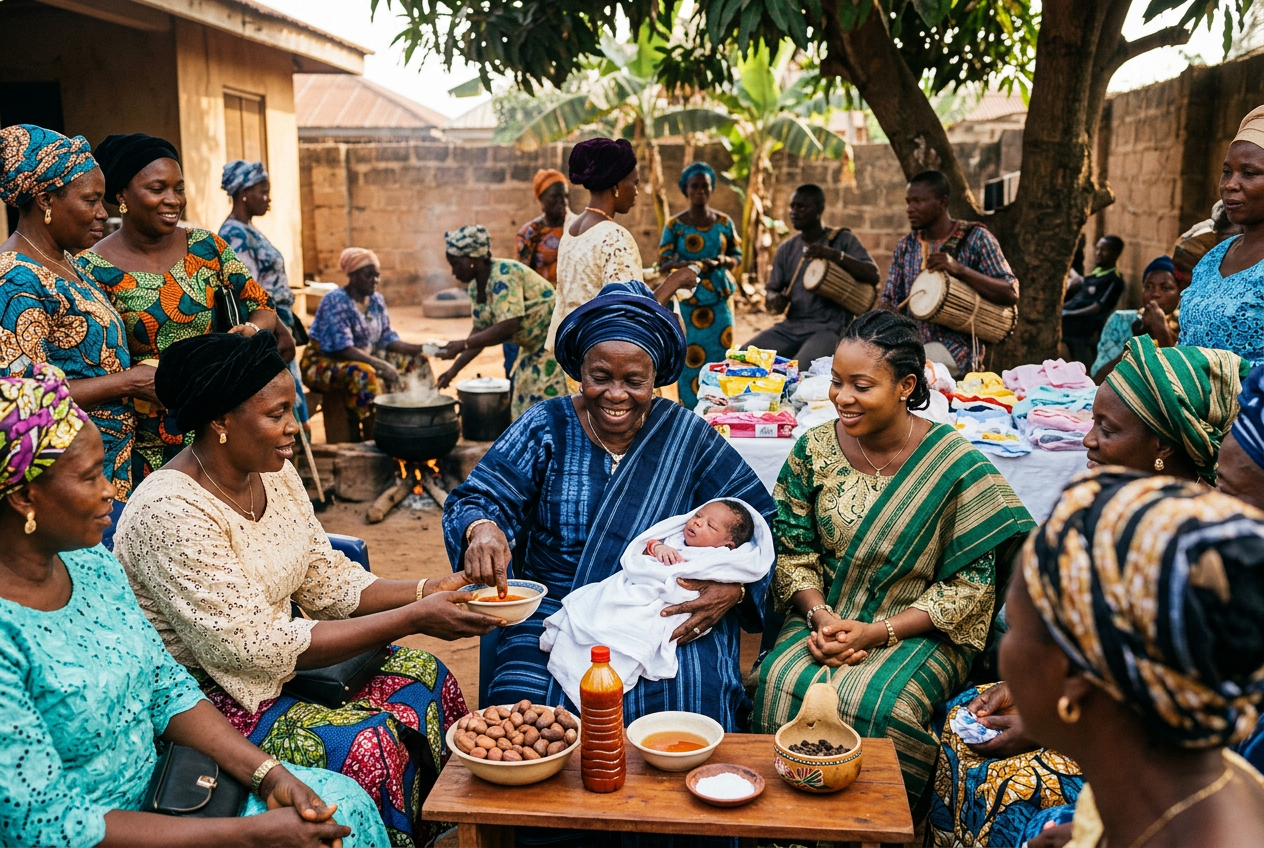
The Yoruba have arguably the most elaborate and spiritually detailed birth culture in West Africa. I have attended Yoruba naming ceremonies in Ogbomosho, Ibadan, and Lagos, and each one has reminded me that what looks like a party from the outside is, at its core, a deeply spiritual transaction between the living and the unseen.
Let me walk you through the full Yoruba birth tradition, step by step.
How to Navigate a Traditional Yoruba Birth: A Seven-Step Guide
- Acknowledge the pregnancy spiritually. In traditional Yoruba culture, a pregnancy is reported not just to the family but to Olodumare (God) and the relevant Orisha through prayers and offerings. A visit to the babalawo (Ifa divination priest) is common, especially for first pregnancies, to understand the child’s spiritual destiny and ensure safe passage.
- Observe pregnancy taboos. Pregnant Yoruba women avoid certain foods, places, and activities considered spiritually or physically dangerous. Eating snail is believed in some communities to make the baby slow. Witnessing funerals or entering spaces of mourning is discouraged. These taboos are maintained seriously, particularly by older generations.
- Prepare the home for the new arrival. Seven days before the expected birth, some traditional families begin prayers and spiritual cleansing of the home. Protective charms (called oogun) may be placed in specific corners of the house, particularly in areas where the mother will recover.
- Mark the first seven days with rest and ritual. After delivery, the mother enters a period of recovery guided closely by her own mother or mother-in-law. This postpartum period in Yoruba culture is called Ojojo omo, a time when the new mother is fed nourishing soups (like egusi and ofe onugbu), given herbal baths, and kept from strenuous activity. Visitors are typically not welcomed in large numbers during these first days.
- Prepare the naming ceremony items. On the morning of the eighth day, the family assembles specific ritual items: honey (for a sweet life), bitter kola (for longevity), kola nut (for prosperity and spiritual connection), salt (for flavour in life), water (for purity), obi abata (round kola), orogbo (bitter kola), obi (kola nut), and sometimes ataare (alligator pepper). Each item is prayed over and tasted by the baby under guidance from the eldest present.
- Perform the naming ceremony itself. Elders lead prayers in Yoruba, invoking divine protection and ancestral blessing. The baby is lifted toward the heavens symbolically. The names are announced one by one, each with its own prayer. Guests shout “Ase!” (so be it) in affirmation. Music, food, and celebration follow, sometimes lasting the entire day.
- Register the birth officially. Following traditional ceremony, responsible Yoruba families ensure the child’s birth is registered with the Nigerian authorities. This practical step, encouraged by the National Population Commission, connects the spiritual act of naming with the legal act of recognition, ensuring the child can access all the rights due to them as a Nigerian citizen.
One thing I always notice at Yoruba naming ceremonies: it is the names themselves that carry the emotional weight of the day. When the eldest uncle reads out “Oluwadarasimi” (God has made this good for me), or “Babatunde” (father returns), there is never a dry eye. The names are not decorative. They are declarations.
What Are the Rituals After a Baby Is Born? The Full Picture of Nigerian Birth Traditions
So what exactly happens in the days immediately following a birth across Nigeria?
The first ritual, almost universally, is the whispered prayer. Whether a Muslim father whispering the adhan, a Yoruba grandmother invoking Olodumare, or a Pentecostal family laying hands in prayer, the baby’s first moments are sanctified through spoken words. There is something deeply beautiful in the idea that every Nigerian child’s first experience is one of being prayed over.
The second major set of rituals revolves around the postpartum period. This is the aspect of Nigerian birth culture that I find most misunderstood by people outside the country. Nigerian communities do not leave new mothers to figure it out alone. The concept of the “village” raising a child does not start when the child can walk; it starts the moment the child arrives.
The Igbo call their postpartum custom omugwo. The new mother’s own mother (or sometimes the husband’s mother) comes to stay for four to twelve weeks, taking over all cooking, cleaning, baby bathing, and household duties so that the new mother can focus entirely on recovery and breastfeeding. As Guardian Nigeria has reported on traditional birth attendants and Nigeria’s approach to postpartum care, the communal support systems around birth remain one of the most enduring aspects of Nigerian culture, even as healthcare systems evolve.
The Yoruba equivalent is Ojojo omo, the Akwa Ibom community calls it Umaan, and every major ethnic group has a version of this supported postpartum period. The specific name changes; the principle of communal care does not.
Then comes the naming ceremony. This is simultaneously the most visible and the most significant ritual after birth. It is worth understanding what happens inside it, beyond the music and the jollof rice.
At its core, the naming ceremony answers one essential question: Who is this child, and what do we wish for them? Every name given at this ceremony is a prayer. Every ritual item tasted is a blessing. The gathering of family from near and far is a declaration that this child belongs to a community that will show up for them.
The Federal Ministry of Health’s Child Survival Action Plan emphasises that the postpartum period, the first 28 days of a child’s life, is the most medically critical window for newborn survival. Ensuring every Nigerian child receives skilled healthcare in the early postnatal period is a national priority, making it important that cultural birth traditions and modern healthcare work together rather than in competition.
After the naming ceremony, ongoing rituals include:
- Regular herbal baths for the baby using preparations believed to strengthen the skin and ward off spiritual attacks
- The formal introduction of the baby to specific family members who could not attend the naming ceremony, each introduction accompanied by a small prayer or blessing
- In Yoruba families, a visit to the family’s babalawo within the first few months to receive the baby’s spiritual “reading” and understand what the child’s Ori (personal destiny) calls for
- The baby’s first outing, which in many communities is treated as a significant event requiring the mother to be dressed in full traditional attire
- Immunisation visits, which modern Nigerian parents increasingly combine with thanksgiving services, treating the completion of vaccinations as another milestone worth celebrating
Finding Your Way Through Nigerian Birth Traditions as a New Parent
Whether you are expecting your first child, preparing to support a family member, or simply trying to understand this aspect of Nigerian culture more deeply, the good news is this: you do not need to be a cultural expert to do things well. You need respect, community, and a willingness to ask your elders.
Talk to the mothers who came before you. Ask your grandmother what was done when your mother was born. Visit the family head. Consult your spiritual leader, whether that is a babalawo, imam, pastor, or traditional chief. These conversations are not just practically useful; they are themselves part of the tradition, the passing down of knowledge that keeps the customs alive.
The most important thing I have learnt from years of writing about Nigerian birth culture is this: these traditions exist to serve the child and the mother. They are not burdens. They are love made visible.
Related Articles
If you found this piece valuable, I think you will enjoy these two articles from my archive as well. My look at how many children the average Nigerian has gives important context for understanding why birth traditions remain such a central part of Nigerian family life, and what the modern Nigerian family actually looks like today. And if the ceremonial side of family milestones interests you, my exploration of Nigerian marriage customs covers how these same communities approach the wedding with equal cultural seriousness, weaving together ritual, community, and deep meaning.
Conclusion: What the Traditions of Birth in Nigeria Tell Us About Who We Are
The traditions of birth in Nigeria are, at their deepest level, a statement of values. They say: every life is sacred. Every child is a community project. Every name carries the weight of a prayer.
Across all 250-plus ethnic groups, despite the differences in specific ceremony, timing, ritual items, and spiritual framework, the underlying philosophy is consistent. A baby is not a private matter. Birth is not just biology. The arrival of a new Nigerian is an event that concerns the living, the departed, and those yet to come.
If you are a new or expectant parent in Nigeria, here are three actionable steps to take right now:
- Start conversations with your family elders about the specific birth traditions of your ethnic group. Write them down. Even if you cannot observe every element perfectly, the effort to preserve the knowledge matters enormously.
- Blend cultural tradition with modern healthcare. Register your baby’s birth with the National Population Commission, complete your child’s immunisation schedule through the NPHCDA, and do not treat cultural and medical care as alternatives to each other.
- Plan your naming ceremony with intention, not just logistics. The food and the music will sort themselves out. Focus on the names you choose, the prayers you prepare, and the elders you invite to speak. Those are the elements your child will carry forward.
Key Takeaways
- Nigerian birth traditions vary by ethnic group but share a universal commitment to communal welcome, spiritual naming, and supported postpartum care for the mother and newborn.
- The naming ceremony typically takes place on the seventh day (Hausa-Fulani/Islamic tradition) or the eighth day (Yoruba and Igbo traditions), and serves as a formal declaration of the child’s identity, prayers, and community belonging.
- Modern Nigerian parents are encouraged to integrate official birth registration and childhood immunisation into their cultural celebrations, treating both as complementary acts of care for the child’s future.
Frequently Asked Questions About the Traditions of Birth in Nigeria
What are the traditions of birth in Nigeria?
Nigerian birth traditions are a rich set of cultural, spiritual, and communal practices that surround the arrival of a new child, varying by ethnic group but universally emphasising the importance of naming, community welcome, and supported postpartum recovery. They include postpartum seclusion periods for the mother, herbal bathing rituals for the newborn, and formal naming ceremonies where each name given is both a prayer and a declaration of identity.
When is the naming ceremony typically held in Nigeria?
In Yoruba and Igbo traditions, the naming ceremony is held on the eighth day after birth, while Hausa-Fulani families following Islamic Sunnah hold theirs on the seventh day. Some communities, particularly diaspora families, may adjust slightly for logistical reasons, though traditionalists consider the specified day spiritually significant.
What happens at a Yoruba naming ceremony?
A Yoruba naming ceremony involves elders leading prayers, ritual items including honey, kola nut, salt, bitter kola, and water being tasted by the baby as symbolic blessings, and the formal announcement of the child’s names with a prayer accompanying each one. The gathering celebrates with traditional music, food, and drink, often lasting the whole day.
What is omugwo in Nigerian birth culture?
Omugwo is the Igbo tradition of postpartum care where the new mother’s own mother or mother-in-law comes to stay for several weeks after birth, taking over all household duties so the new mother can rest and recover. It is a profound expression of communal support, ensuring the new mother is well fed, rested, and emotionally supported during the most vulnerable phase of her postpartum recovery.
What does the Hausa-Fulani Aqiqah involve?
The Aqiqah is the Islamic sacrifice of a ram or goat performed on the seventh day after a child’s birth, with the meat distributed among family, neighbours, and the less fortunate as an act of gratitude to Allah. The ceremony also includes the formal announcement of the child’s name, the shaving of the baby’s head, and the weighing of the shaved hair to determine a corresponding charitable donation in silver.
What ritual items are used in Yoruba birth ceremonies?
Yoruba naming ceremonies use honey (for a sweet life), kola nut (for prosperity and spiritual connection), bitter kola (for longevity), salt (for flavour and purpose in life), water (for purity), alligator pepper (for strength and resilience), and sometimes palm oil or gin depending on family tradition. Each item is prayed over before being symbolically placed on the baby’s tongue or lips.
Is birth registration connected to traditional naming ceremonies in Nigeria?
Official birth registration with the National Population Commission is strongly encouraged alongside traditional naming ceremonies, as it provides every Nigerian child with the legal identity needed to access education, healthcare, and government services. Many families now treat the registration process as a complementary step to the traditional naming, rather than a separate bureaucratic obligation.
What is the spiritual significance of the Yoruba naming ceremony timing?
In Yoruba cosmology, the first seven days after birth are considered a threshold period during which the child’s spirit is still partly in the spirit realm and has not yet fully committed to earthly life. The eighth day represents the child’s declaration to stay, making it the appropriate moment for the community to formally welcome them with prayers and names.
How do Nigerian birth traditions differ between Christianity and Islam?
Muslim Nigerian families follow the Islamic Sunnah of naming on the seventh day, performing the Aqiqah sacrifice and whispering the adhan into the baby’s ear at birth. Christian Nigerian families often combine the traditional ethnic ceremony with a church thanksgiving service, either on the naming day or at a separate Sunday service weeks later, blending faith and culture in a distinctly Nigerian way.
What is the role of elders in Nigerian birth ceremonies?
Elders hold the highest ceremonial authority at Nigerian naming ceremonies across all ethnic groups, typically leading prayers, announcing names, presiding over ritual blessings, and speaking words of wisdom over the child. Their presence is not optional in traditional practice; it is what gives the ceremony its legitimacy, connecting the new child to the ancestral lineage they are joining.
What does a Nigerian baby naming ceremony cost?
The cost varies enormously by family resources, location, and social expectations, ranging from roughly N150,000 for a modest home gathering to N2,000,000 or more for a large ceremony in Lagos or Abuja with professional catering, live music, and elaborate decorations. Many families accept contributions from extended relatives, easing the financial burden while strengthening the communal nature of the occasion.
How are Nigerian birth traditions adapting to modern life?
Urban Nigerian families often compress ceremony timelines, combine traditional rituals with church services, and use social media to include diaspora relatives who cannot attend in person, while still maintaining the essential spiritual and communal elements of their ethnic tradition. The core of the tradition, the naming, the prayers, the communal welcome, remains intact even as the outer form evolves to meet the realities of contemporary Nigerian life.

