 Follow Us on Google News
 Follow Us on Google Discover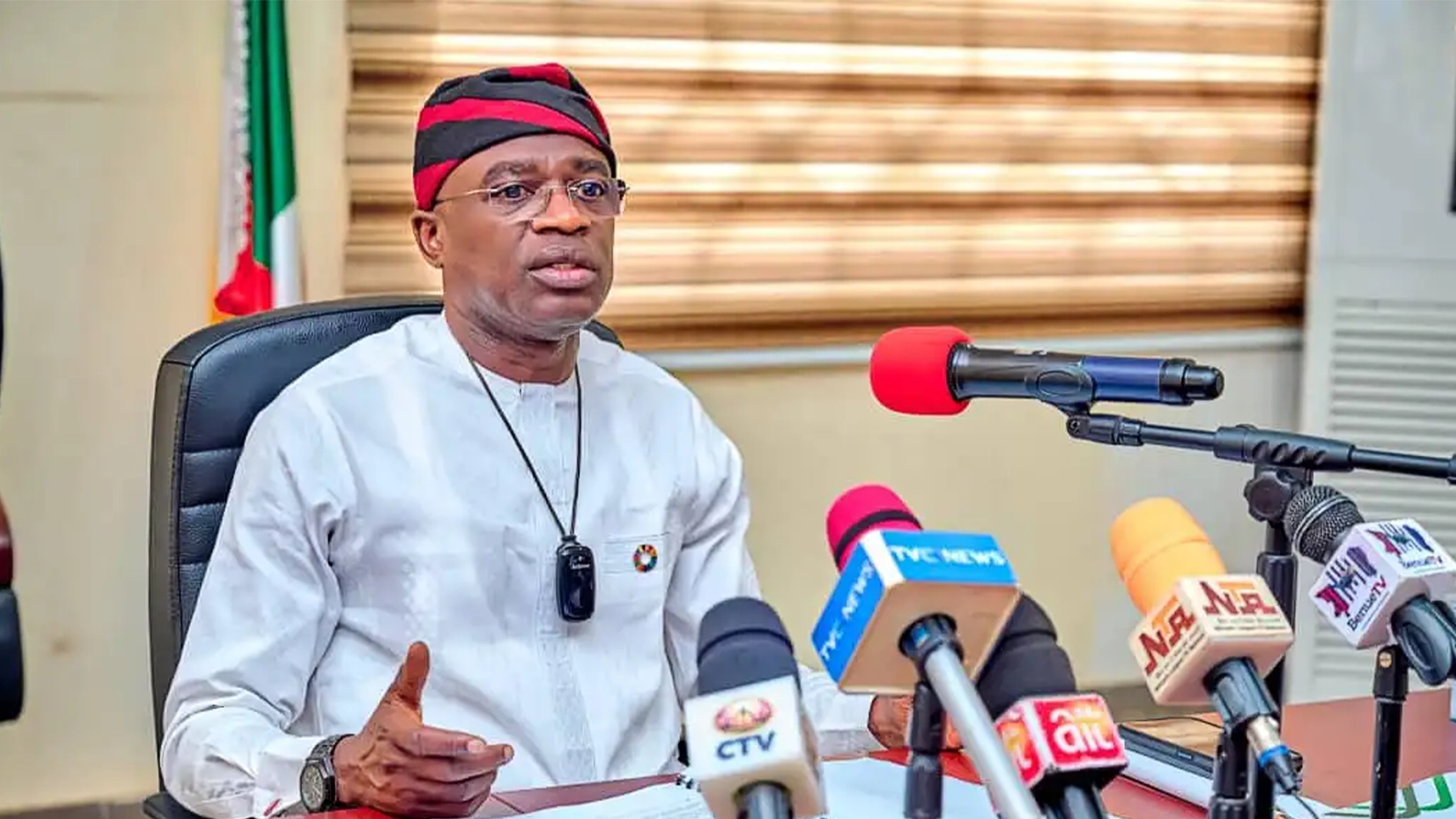
***Backs state police, pledges prudent use of ‘every kobo accruing’ as security, agriculture improve
****Insists local government autonomy is working
Benue State Governor, Rev. Fr. Hyacinth Alia, on Wednesday mounted a robust defence of President Bola Tinubu’s economic reforms, declaring that the policies have strengthened the state’s finances, improved security, revived infrastructure and agriculture, and transformed Benue into what he described as Nigeria’s emerging medical tourism hub.
Speaking during an interactive session with State House Correspondents at the Presidential Villa, Abuja, Governor Alia said the increased fiscal space created by the Federal Government’s reforms had enabled his administration to invest heavily in roads, healthcare, education, agriculture and security while meeting inherited financial obligations.
He assured residents that every additional resource accruing to the state would continue to be managed prudently and transparently.
“My people should be fully assured that every additional resource accruing to the state will continue to be utilised responsibly and transparently, as we are doing,” the governor said.

According to him, prudent management of public resources has restored confidence in government, with salaries and pensions now being paid regularly after years of arrears inherited by his administration.
Governor Alia recalled that when he assumed office, workers and pensioners were owed several months’ salaries and pensions, while some local government workers had outstanding entitlements dating back as much as seven years.
He said the combination of improved federal allocations and stronger internally generated revenue had enabled the state to clear much of the backlog while sustaining prompt payment of workers’ entitlements.
The governor said the administration had embarked on an aggressive infrastructure renewal programme, rehabilitating more than 550 kilometres of roads while constructing over 420 kilometres of new roads across the state. He added that schools and other public facilities were also being rebuilt in the 23 local government areas.
On healthcare, Alia said the rehabilitation and upgrading of primary and secondary health facilities had significantly improved service delivery, attracting patients from neighbouring states and the Federal Capital Territory.
“We have become a medical tourism power. If our state were not safe, people would not be coming. The most vulnerable people are the sick, and if they can travel to Benue for treatment, it tells you that security has improved,” he said.
The governor attributed the development to a deliberate strengthening of the state’s security architecture through the Benue Civil Protection Guards, the Joint Task Force code-named Anyam Nyor, community vigilantes and technology-driven intelligence gathering.
“I can sit where I am and monitor what is happening in different frontline areas of the state. We have put several mechanisms in place, but I will not disclose all our strategies because they are part of our security architecture,” he added.
Alia said the improved security situation had enabled thousands of internally displaced persons (IDPs) to return gradually to their communities and resume farming.
Rather than depend indefinitely on humanitarian assistance, he said the state established cooperative farms for displaced women, supplied tractors, seedlings and other farm inputs, while allowing beneficiaries to own the harvest.
“They only ask us one question at harvest: ‘Does the state want to buy?’ That tells you they are producing enough. We repeated the programme this year because it worked.”
He explained that security personnel initially escorted the farmers to their fields until confidence returned, after which they resumed farming independently. Security agencies were also allocated farmland in vulnerable communities to strengthen confidence and maintain a permanent security presence.
On agriculture, the governor said Benue had consistently subsidised fertiliser over the past three years, with government paying half the cost while farmers paid the balance.
According to him, the Federal Government recently supplied more than 600 truckloads of fertiliser to the state, in addition to over 6,000 metric tonnes secured through strategic partnerships.
“The state government pays 50 per cent while farmers pay the balance. That is why food production has increased, and we will continue with the programme because it is working.”
He said the administration was also accelerating agricultural mechanisation through the deployment of tractors, farmer cooperatives and Young Farmers Clubs, under which young people receive free land preparation, seedlings and production support.
“We are moving from subsistence farming to commercial agriculture. Every local government has access to tractors, and we are expanding the programme because the results have been encouraging.”
Alia also disclosed that the state had cleared over N1 billion in salary arrears and resolved longstanding litigations that stalled the revival of Taraku Mills, paving the way for new investors to take over the facility.
“We have cleared the encumbrances. The company taking over is now ready to come in fully. We expect it to generate direct and indirect jobs and significantly boost the state’s economy.”
The governor reiterated his support for the establishment of state police, arguing that community-based policing would improve intelligence gathering because personnel recruited from their local communities understand the terrain and can identify criminal elements more effectively.
“When people police their own communities, they know who belongs there and who does not. Intelligence becomes much easier to gather.”
While acknowledging concerns over possible abuse, he maintained that effective legislation, oversight and accountability mechanisms would address such fears.
“We should not abandon state policing because of fear. Every advanced society operates some form of local policing. The answer is regulation, accountability and monitoring.”
Alia insisted that Tinubu’s reforms had provided states with the financial capacity to execute development projects.
“If the reforms were not working, I would be the first person to say so. The roads we are building, the hospitals, schools and agricultural investments are possible because the economic reforms are working and Benue is benefiting.”
The governor also dismissed claims that local government and judicial autonomy were being undermined in the state, insisting Benue remained fully compliant with constitutional provisions.
“Our local government autonomy is sacrosanct. The judiciary also enjoys full autonomy. These are verifiable facts.”
He said local government councils now independently execute development projects while the state government concentrates on supervision and accountability.
“It has reduced my burden significantly. My responsibility now is to supervise, inspect projects and ensure accountability. Once local governments receive their allocations, they execute their priorities and account for how the resources are utilised.”
Inviting journalists to independently verify his administration’s claims, Alia said Benue remained open to public scrutiny.
“If anyone thinks the roads and infrastructure we have built are artificial intelligence, they should come to Benue and see for themselves. Our doors are open. Visit the state, verify what we are saying and then hold us accountable.”
He maintained that Benue was on a clear path of growth and development, expressing confidence that the gains recorded under the current administration would continue to deepen.
“The reforms initiated by President Tinubu have altered the development trajectory of Benue. We are among the biggest beneficiaries because they have created opportunities for greater investment in infrastructure, agriculture, healthcare, education, security and human capital development.”

