 Follow Us on Google News
 Follow Us on Google Discover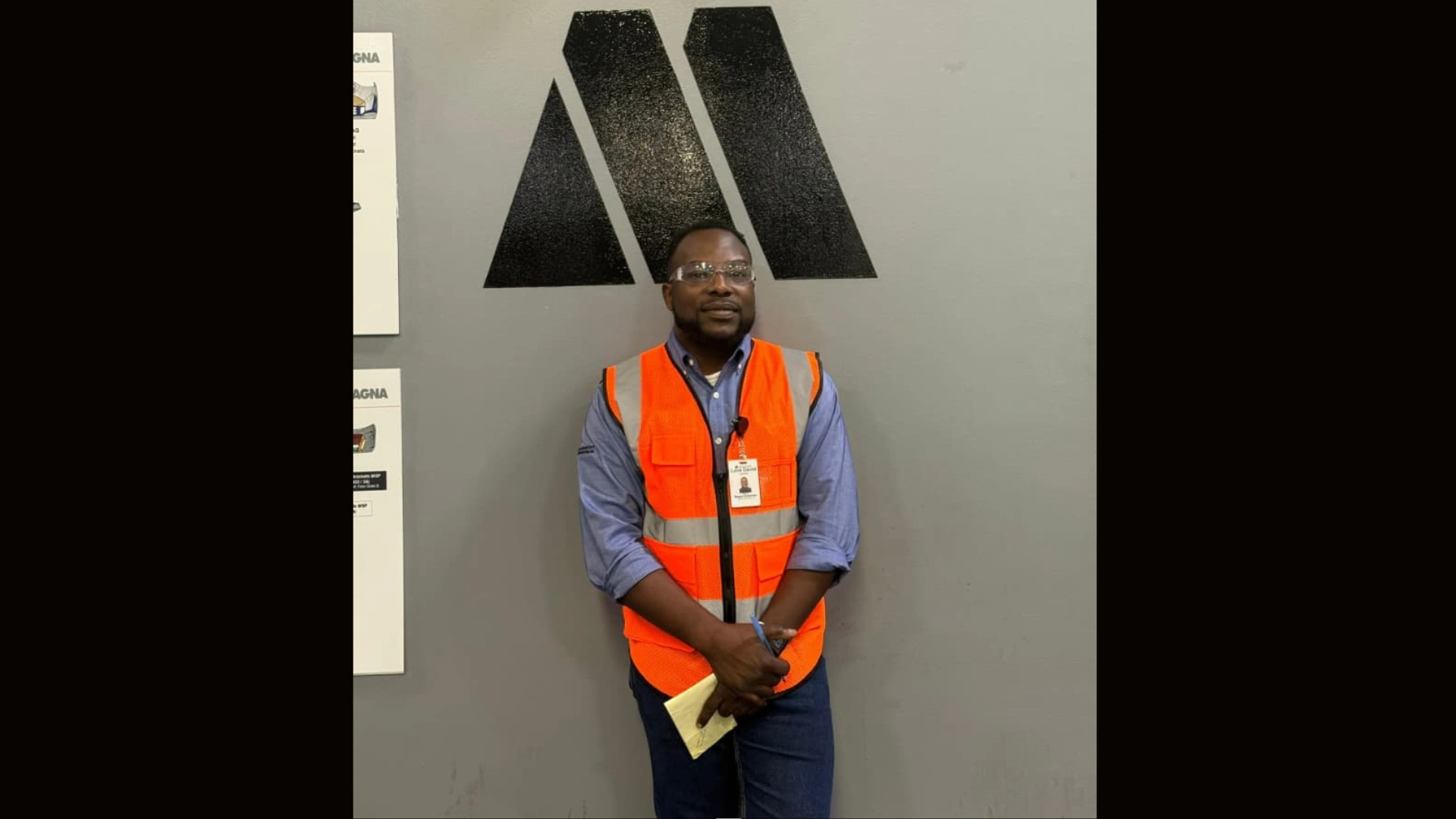
As manufacturers worldwide seek to improve efficiency, reduce waste and strengthen quality control, industrial engineer Love David Adewale believes the next major breakthrough will come from combining artificial intelligence with advanced quality management systems.
Adewale, whose work spans machine learning, statistical quality control and industrial process engineering, argues that manufacturers have accepted preventable defect rates and production losses for far too long.
“The industry has accepted defect losses as inevitable for too long,” he said. “They are not inevitable. They are a design failure, and design failures can be corrected.”
Adewale earned a Master of Science in Industrial Engineering from Southern Illinois University Edwardsville, where his research focused on applying machine learning algorithms to data imputation in motion capture systems. The work involved analysing incomplete, noisy and time-dependent datasets to improve data reliability, expertise he believes has direct applications in modern manufacturing quality inspection.
His academic training covered regression modelling, ensemble learning, time-series analysis and statistical validation techniques used to develop reliable predictive systems for industrial environments.
He is also a member of several professional organisations, including the American Society for Quality (ASQ), the Institute of Industrial and Systems Engineers (IISE), the Automotive Industry Action Group (AIAG) and SAE International.

According to Adewale, traditional quality management systems remain largely reactive, identifying defects only after products have already been manufactured. He believes advances in artificial intelligence now make it possible to shift towards predictive quality management capable of identifying potential failures before they occur.
His practical experience includes work on the Assa North–Ohaji South Gas Pipeline Project while at Radiatt International, where he applied Six Sigma DMAIC and DMADV methodologies across a multinational contractor environment.
According to the project team, the initiative achieved an 82 per cent reduction in defective materials across the section of the supply chain under his supervision.
Engineering Manager Engr. Bunmi Balogun described the achievement as significant within a safety-critical infrastructure project.
“An 82 per cent reduction in defective materials in a safety-critical energy infrastructure project is a result that most quality professionals, even after decades of experience, never achieve,” he said.
Adewale believes artificial intelligence offers an opportunity to overcome many of the limitations associated with conventional inspection methods.
While human visual inspection remains valuable, he noted that fatigue, inconsistency and production speed can affect detection accuracy. Existing automated inspection systems, although more consistent, often require substantial investment and operate independently from broader production data systems.
He advocates combining deep-learning models with multispectral imaging and integrated production data to enable real-time quality decisions directly on manufacturing lines.
According to him, artificial intelligence should complement rather than replace experienced operators.
“The question is not whether AI will transform manufacturing quality inspection. It will,” Adewale said. “The question is whether the industry will drive that transformation or be driven by it.”
He also believes the industry requires more accessible quality technologies that can serve manufacturers beyond large multinational companies.
Rather than relying on expensive proprietary inspection systems, Adewale advocates integrated quality platforms that combine advanced sensing technologies, AI-based defect classification, enterprise-wide data integration and human expertise at a cost that is practical for manufacturers operating in emerging and developing economies.
Among his ongoing innovations is an augmented reality quality assurance platform designed to improve defect detection while reducing implementation costs.
According to Adewale, quality management should not be viewed as a challenge affecting only advanced manufacturing economies.
“Quality failure is not a problem for wealthy manufacturers alone,” he said. “It is a global problem. The solution must be equally global in its reach and equally realistic in its cost.”
As manufacturers continue investing in digital transformation, automation and artificial intelligence, Adewale believes the future of industrial quality will depend on systems capable of combining advanced analytics with practical engineering knowledge.
He argues that sustainable improvements will come not simply from adopting new technologies, but from designing intelligent quality systems that help organisations prevent defects before they occur, improve operational efficiency and strengthen product reliability across global manufacturing industries.

