 Follow Us on Google News
 Follow Us on Google Discover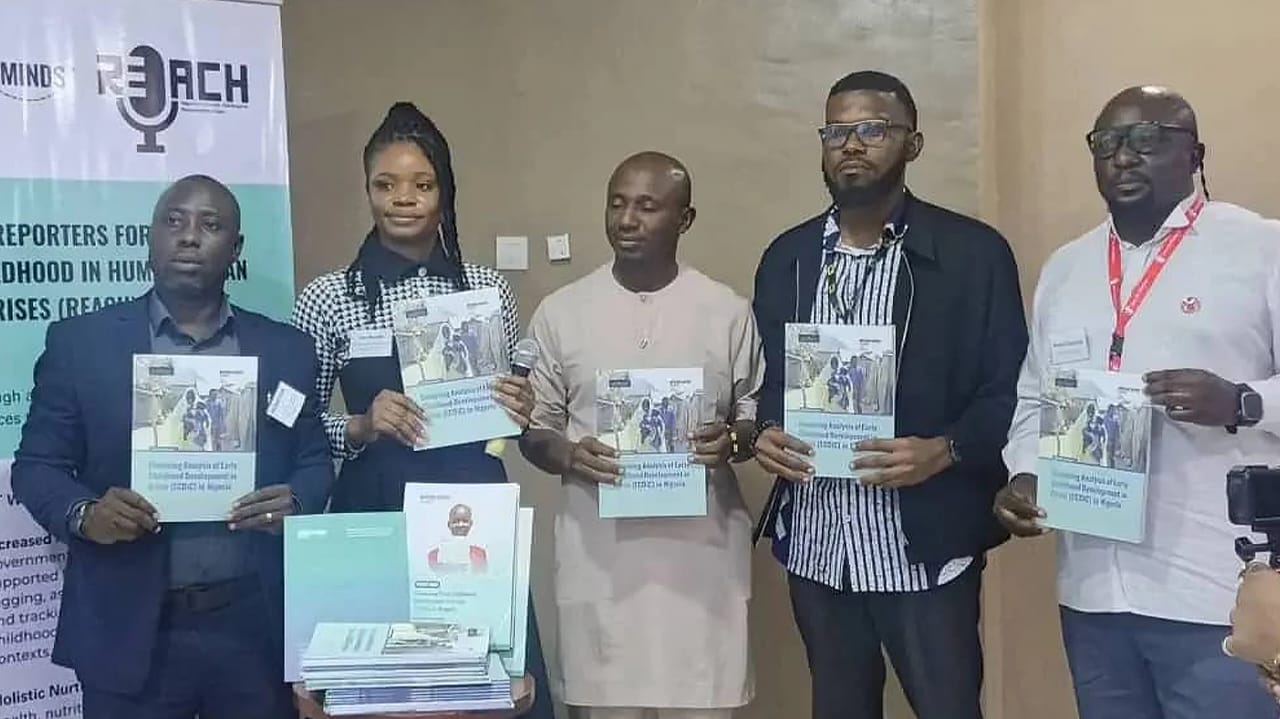
A new report has revealed that millions of Nigerian children affected by conflict, displacement, flooding and other humanitarian crises remain largely absent from national budget priorities, raising concerns about the country’s commitment to early childhood development and long-term human capital growth.
The report, titled “Financing Early Childhood Development in Crisis (ECDiC) in Nigeria: From Fiscal Invisibility to Child-Level Results,” found that despite increasing humanitarian needs across the country, there is no dedicated budget line for children living in crisis situations, making it difficult to track spending and ensure accountability.
The report was presented in Abuja during the unveiling of the Nigerian chapter of the Reporters for Early Childhood in Humanitarian Crisis (REACH) Network.
It was developed by the Moving Minds Alliance in partnership with Whole Child Advisors.
According to the findings, less than five per cent of Nigeria’s education budget is allocated to early childhood development or emergency learning programmes, while only about 1.5 per cent of the health budget supports services focused on young children.
Stakeholders at the event warned that the funding gap could have serious implications for Nigeria’s future workforce, economic productivity and social development.

Global Co-Chair of the REACH Network, Mojeed Alabi, said the growing prevalence of insurgency, banditry, flooding and climate-related disasters has made investment in young children more urgent than ever.
“As you look across Nigeria, whether it is Boko Haram, banditry, flooding or climate-related crises, no part of the country is exempt from one humanitarian challenge or another,” he said.
“Our concern is that children in these situations are not receiving the attention they deserve in budgeting, financing and policy implementation. The media has a critical responsibility to call the attention of government and other stakeholders to these gaps.”
Alabi noted that the newly inaugurated REACH Network would mobilise journalists to undertake sustained and evidence-based reporting aimed at influencing public policy and attracting greater investment in children affected by crises.
According to him, the initiative is part of a global movement, with similar networks already established in countries such as Uganda and India.
He added that professional journalism remains critical in ensuring that the realities faced by vulnerable children are reflected in policy conversations and government priorities.
Also speaking, Coordinator of the Nigeria Early Childhood Development in Crisis Coalition, Arome Agenyi, warned that failure to invest in children during their formative years could undermine Nigeria’s future economic prospects.
He explained that scientific evidence has consistently shown that the period between birth and five years is the most critical stage of brain development and lifelong learning.
His words: “If we fail to invest in children between the ages of zero and five, we are compromising a critical part of our national future.
“The Human Capital Index already shows that Nigeria faces serious development challenges. Failure to prioritise early childhood development will put our labour force in jeopardy, affect private sector productivity and ultimately weaken the country’s economy.”
Agenyi argued that many of Nigeria’s social and developmental challenges, including poor learning outcomes, conflict and corruption, can be linked to inadequate investment in children’s early years.
He lamented that early childhood development receives only a small share of public spending, noting that between 70 and 80 per cent of annual education budgets are devoted to salaries and overhead costs.
“Only about five per cent of the education budget supports early childhood development. That shows there is a huge financing gap,” he said.
He added that inadequate financing also affects healthcare, nutrition, social protection and other services that are essential to children’s development, particularly those living in crisis-affected communities.
Communications Manager of the Moving Minds Alliance, Lola Ayanda, said the organisation considers journalists strategic partners in driving reforms and accountability.
“In development work, the media is often treated simply as a public relations platform. We believe journalists are strategic partners who should drive conversations around policy reforms, financing and accountability,” she said.
Ayanda described the engagement as the beginning of a long-term collaboration aimed at strengthening media coverage of early childhood development and increasing public attention to the needs of children living through conflict, displacement, climate shocks and economic hardship.

