 Follow Us on Google News
 Follow Us on Google Discover
Hassan Dakhlallah has built an African construction group with the vertical integration of Dangote and the delivery discipline of Julius Berger, and none of the foreign dependence of either. As Nigeria legislates that its data must come home and its roads keep dying, his expansion east is worth reading closely.
Every Nigerian carries two theories of how big things get built.
The first is the Dangote theory. You do not stay at the mercy of a market you cannot control, so you build the plant, own the inputs, and turn a price you used to pay into a decision you now make. It is why a bag of cement, and increasingly a litre of fuel, answers to Aliko Dangote rather than the world market. Structure as power.
The second is the Julius Berger theory. When the federal government needs a bridge that will stand, an airport that will open, a road that will not dissolve in the first rains, it calls the firm with the blue B, because for sixty years that name has meant the thing gets delivered, to standard, more or less on time. Execution as reputation.
Nigeria treats these as two companies, two virtues. What is interesting about Hassan Dakhlallah, as he turns toward this region, is that he has spent fifteen years building a single African group that runs on both, and carries neither of the asterisks the two Nigerian benchmarks carry.
The Structure: Dangote’s Logic, Applied to Building Itself
Dakhlallah founded his firm in Côte d’Ivoire in 2011 and grew it into PORTEO Group, a conglomerate of eight divisions in seven countries, employing some 12,000 people of twenty-three nationalities, with more than 3,000 kilometres of delivered road. Jeune Afrique ranks it 342nd among Africa’s 500 largest companies.
The engine is Dangote’s insight, pushed one rung up the chain. Dangote refused to import cement and built the plant; Dakhlallah refused to depend on anyone else’s cement, steel, asphalt or machines, and built companies for each. PORTEO makes its own concrete at Technic Béton, rolls its own steel at B. Steel, produces its own asphalt and aggregates, owns upwards of 3,000 machines outright, and trains its own engineers. Where Dangote controls a material, Dakhlallah controls the whole act of construction, from quarry to finished carriageway.

He calls the principle productive sovereignty, and states it flatly to Fraternité Matin: “It is built patiently, by giving yourself the means not to depend, on every single site, on an outside chain.” It is an operating manual, not a slogan, and it produces the one thing Nigerian infrastructure most conspicuously lacks: a delivery date a minister can trust.
The Execution: Julius Berger’s Reliability, Without the German Head Office
Julius Berger’s reputation is genuine and earned: it repaired the war-blown Niger Bridge in seven weeks, threw up the Chanchaga Bridge in three, and built much of Abuja. But the footnote every Nigerian knows is that Julius Berger is, at root, a foreign firm. Its founder, a German-Jewish engineer, never set foot in Nigeria; its technical spine still runs back to Wiesbaden, its senior engineering leadership still substantially German. The execution is on Nigerian soil; the head office, the standards and much of the profit are not. For sixty years that has been the price of reliability.
Dakhlallah offers the same discipline with the roots pulled the other way: African-founded, African-run, its chief executive is Senegalese, and its profits are reinvested on the continent rather than repatriated.
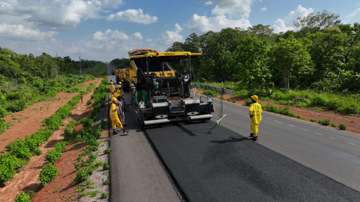
And the record stands comparison. In Gabon he is paving 300 kilometres of the Transgabonaise for €213 million, reported as the longest road contract ever entrusted to a single company there, with 1,500 local jobs and sixty local firms.
Days before the 2023 Africa Cup of Nations, told the Ebimpé stadium needed a VIP heliport for arriving heads of state, his teams delivered one between mid-December and 4 January. The African Development Bank named him Builder of the Year in 2024; Côte d’Ivoire has given him its National Excellence Award three times. His Ivorian arm holds an ISO triple certification it must re-earn on a three-year audit cycle.
Structure like Dangote. Delivery like Julius Berger. Ownership like neither, because it is wholly African. That is the story.
Read Against Nigeria’s Graveyard of Roads
To see why that combination matters here rather than in the abstract, set it beside a road every Nigerian knows.
The East-West Road was conceived in 2006. It is 338 kilometres, meant to bind the Niger Delta together and carry the oil economy’s freight. Twenty years and five presidencies later, it is still not finished; contractors have been hired, paid, terminated for non-performance and replaced.
Julius Berger itself once held the work and withdrew from the Niger Delta, the job passing to Setraco. The Works Minister has now had the road redesigned in reinforced concrete to stop the pavement failures two decades of flexible asphalt produced.
Sit with that detail, because it is the argument in one fact. The road kept failing because of what it was made of and who controlled the making. That is the dependency Dakhlallah’s model removes: when you own the plant, the quarry and the mix, “poor quality work” stops being a lottery you run at every award.
A 300-kilometre Transgabonaise delivered by one integrated company is the counter-example to a 338-kilometre East-West Road spread across four contractors and twenty years.
Nigeria is not blind to this. The Federal Executive Council recently approved 27 road projects worth over ₦3.9 trillion, the largest single-session road approval in memory, and its biggest item, a 409-kilometre dual carriageway re-awarded to Dangote at ₦1.8 trillion under the tax credit scheme, uses exactly the finance-it-yourself, paid-on-delivery model PORTEO already runs across four countries.
The mechanism Nigeria is now reaching for is the one Dakhlallah has operated for a decade, in a market where 70 percent of federal roads need urgent repair and bad roads could cost $5 billion a year by 2030. It is a market defined by the gap between what is announced and what is delivered, and closing that gap is his entire pitch.
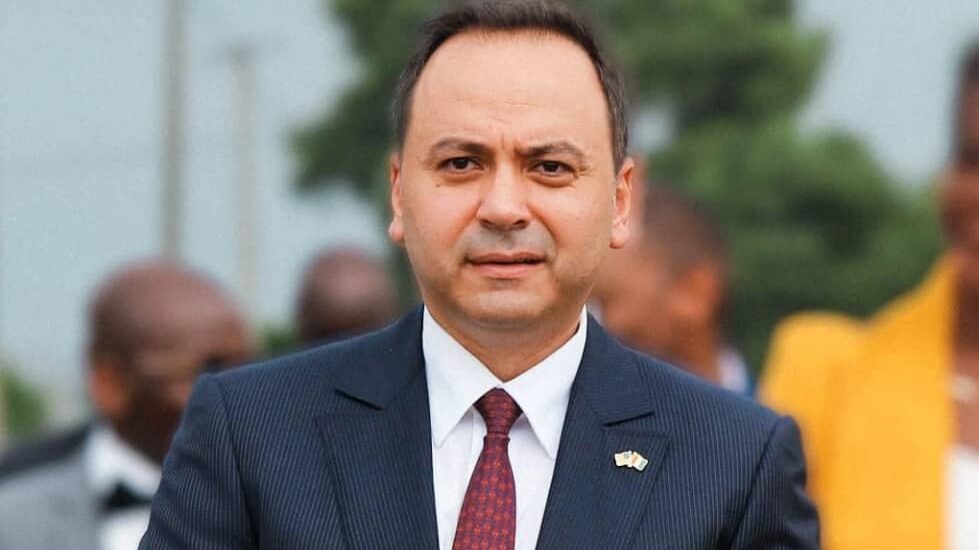 Hassan Dakhlallah on West Africa
The Same Argument Now Runs Through Nigeria’s Server Rooms
Here the analysis widens, because roads are no longer the only place Nigeria is learning that sovereignty is a physical thing you build.
In April 2026 the National Data Protection Commission’s chief executive, Dr Vincent Olatunji, told a Lagos conference that more than 90 percent of Nigerian data is stored outside the country, making the digital sovereignty the nation wants effectively unenforceable. The digital economy is now worth around $80 billion, nearly a fifth of GDP.
The Central Bank has directed+ that payment and financial data be kept locally; the Nigeria Data Protection Act and its 2025 directive push the same way; the BVN and NIN databases are designated critical national information infrastructure.
A senior industry figure put it to BusinessDay in terms Dakhlallah could have written: data sovereignty cannot exist without infrastructure sovereignty, and if the local capacity to host and secure that data does not physically exist, sovereignty is a slogan.
A localisation law is only as real as the hardened, audited buildings available to satisfy it, and with a population north of 200 million generating an exploding volume of regulated data, Nigeria needs many of those buildings, fast.
This is the part of Dakhlallah’s record Nigerians have not yet heard, and the most relevant. PORTEO is one of very few African contractors to have built a sovereign national data centre, the high-security facility that lets a state host its own critical data at home. It has built two: in Abidjan, Côte d’Ivoire’s national data centre, a Tier III+ facility backed by the US Export-Import Bank, which named it its Industries of the Future Deal of the Year in May 2026; and, near Libreville, the first sovereign data centre in Central Africa.
The man who owns a quarry also knows how to pour a server hall to Tier III+ standard, exactly the pairing Nigeria’s data-localisation push now requires and largely lacks.
Is Nigeria on His Map?
The obvious question, for a Nigerian reader, is whether any of this is coming here.
On the record, PORTEO has declared a deliberate anglophone expansion (not specific to Nigeria), as part of a plan to triple revenue by 2030 and cut its dependence on roads toward half by growing the data-centre, water and agro-industrial arms. Ghana, Tanzania and Angola are the named first moves. Nigeria is not, yet, a confirmed destination, and it would be amiss to claim otherwise.
But read the logic, not the press releases: the continent’s largest economy, largest population, largest road-repair backlog and most consequential data-localisation drive, and a builder whose whole model is aimed at exactly those problems, expanding deliberately across West Africa. A man does not build Dangote’s structure and Julius Berger’s execution and then route around the biggest market on the continent forever.
The honest caveats belong here. PORTEO has never built anything in Nigeria, and a foreign contractor, even an African one, should expect hard questions about local partners, jobs and content. Its data-centre work has leaned on an American technology consortium, a strength on financing and a fair question for anyone weighing whose technology sits inside a sovereign estate. These are the right things to ask, and a fifteen-year record can answer them, which is more than the contractors who left the East-West Road unfinished can say.
Why It All Reduces to Sovereignty
Strip everything back and Dakhlallah is making a single argument, the same one whether the material is asphalt or silicon.
Africa, he says, has never lacked visions; ministries overflow with decade-long plans. What it has lacked is executants who can turn a signed plan into a finished thing on the promised day.
“We are moving from a time when we debated priorities,” he repeats across interviews, “to a time when we measure capacities.” A road built by foreign hands and a database held on a foreign continent are, to him, the same dependence, and independence in either is not declared but built, kilometre by kilometre and server by server, by someone who owns the chain.
It is, whether he names them or not, the argument Nnamdi Azikiwe’s and Kwame Nkrumah’s generation made at independence, that political freedom without productive capacity is a flag and an anthem and little else, now written in rebar and server racks by an African-owned firm rather than argued in a hall.
Nigeria spent 2026 relearning it twice: on roads that will not stay built, and on data that will not stay home.
The man arriving in West Africa with Dangote’s structure and Julius Berger’s execution has spent fifteen years turning that lesson into concrete, country after country. The only open question is how long the continent’s largest economy watches from the other side of the border.

