 Follow Us on Google News
 Follow Us on Google Discover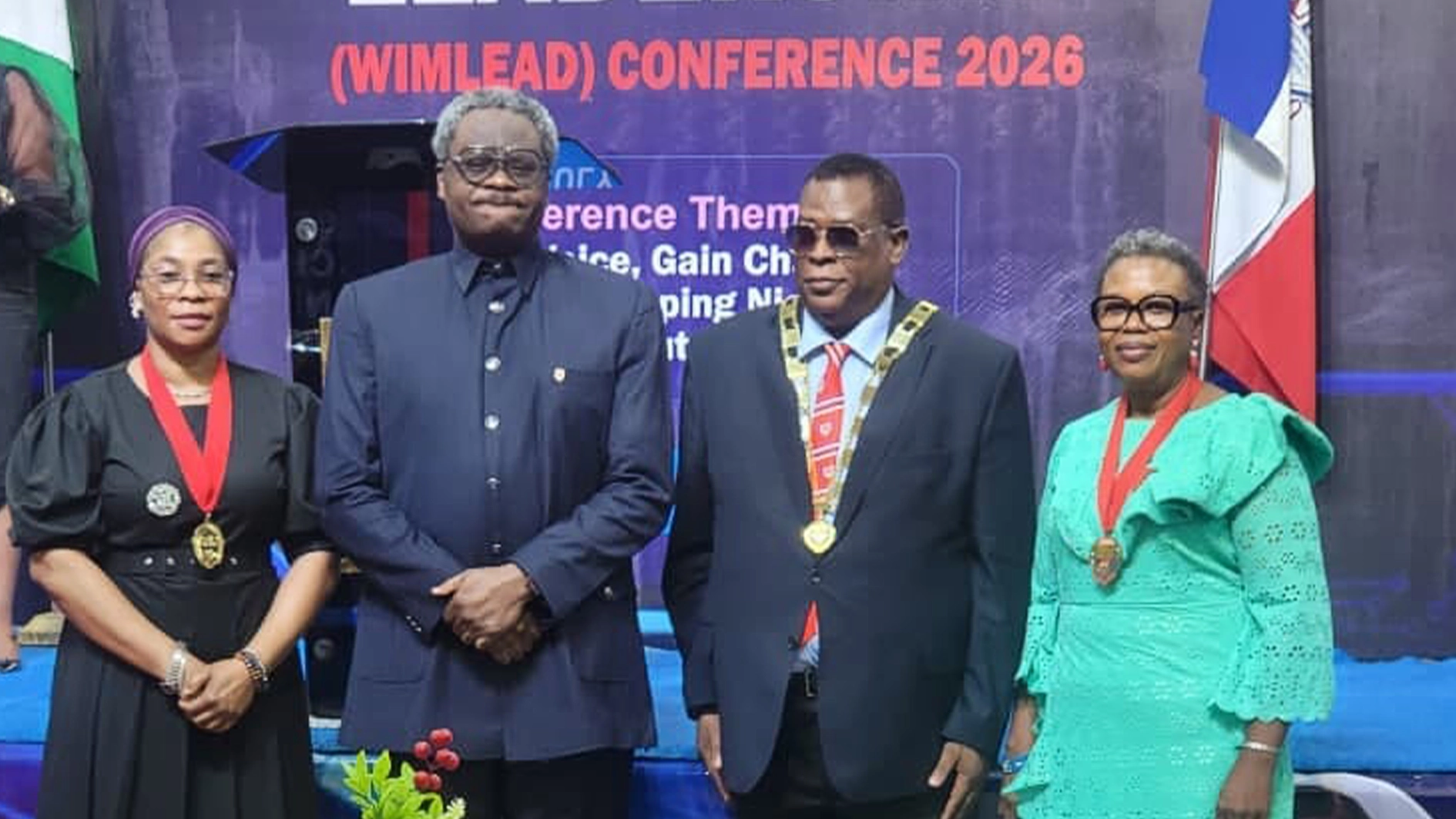
Nigeria’s ability to convert its rapidly growing population into sustained economic growth will depend on how quickly it removes barriers that prevent millions of citizens from accessing education, finance, technology, leadership, and productive employment, experts have said.
The warning comes as Nigeria prepares for a demographic boom that could see its population rise from about 240 million to nearly 440 million within the next 25 years, making inclusive economic participation increasingly critical.
The concerns were raised at the 2026 Women in Management and Leadership (WIMLEAD) Conference organised by the Nigerian Institute of Management (Chartered), where participants said unequal access to opportunities continues to prevent millions of Nigerians, particularly women and young people, from contributing meaningfully to national development.
Group Managing Director of Sahara Power Group, Dr Kola Adesina, speaking on ‘Building the Next Generation of Change Makers through Economic Inclusion’, said Nigeria’s greatest resource is its people rather than its natural endowments.
According to him, with nearly 70 per cent of the country’s population under 30, Nigeria has one of the world’s youngest populations. Still, its biggest challenge is not a shortage of talent but an unequal distribution of opportunities.
He said many capable Nigerians remain locked out of quality education, productive employment, finance, technology and markets needed to realise their potential and contribute meaningfully to economic growth.

Adesina stressed that economic inclusion is not about lowering standards but creating systems that allow capable individuals to succeed irrespective of gender, location or income.
“A growing population simply means the stakes are higher. Every decision we make about education, employment, entrepreneurship and leadership will affect not just millions today but hundreds of millions in the decades ahead,” he said.
He illustrated the challenge with the example of a promising entrepreneur whose business expansion was stalled by a lack of affordable financing, noting that every business unable to grow represents jobs that are never created and innovations that never reach the market.
The conference, with the theme ‘Give Voice, Gain Change: Women Shaping Nigeria’s Economic Future,’ also highlighted the economic costs of women’s underrepresentation in policymaking and leadership, despite their significant contributions to commerce, agriculture, manufacturing, and entrepreneurship.
Director, Customer Success (West Africa) at Equinox, Christiana Okenla, said Nigeria cannot maximise its economic potential. At the same time, half of its population remains underrepresented in institutions that make major policy decisions.
She noted that although women constitute about 48 per cent of the labour force and own roughly 40 per cent of micro, small and medium enterprises (MSMEs), they occupy fewer than four per cent of seats in the National Assembly.
According to her, exclusion reduces innovation, weakens policy outcomes and limits productivity, while greater inclusion would strengthen institutions, broaden the talent pool and enhance economic resilience.
She proposed a 4As framework centred on access, advocacy, accountability and amplification, arguing that increasing women’s participation in policymaking requires deliberate efforts to expand representation, influence public policy, monitor commitments and nurture future female leaders.
Supporting the call, Adesina said the economy cannot consistently perform at its optimum while a significant share of its entrepreneurial and professional talent continues to face structural barriers.
Other speakers identified digital technology as a major pathway to expanding economic opportunities, urging women to embrace digital skills, artificial intelligence, online commerce and digital branding to compete effectively in local and global markets.
Registrar and Chief Executive Officer of NIM, Dr Taiwo Olusesi, said Nigeria was making gradual progress in promoting women into leadership positions, citing ongoing discussions on the Reserved Seats Bill and increasing commitment by organisations to gender inclusion.
In a goodwill message delivered on behalf of the Chairman/Chief Executive Officer of the Nigerians in Diaspora Commission (NiDCOM), Abike Dabiri-Erewa, participants were urged to move beyond rhetoric by ensuring women have equal access to leadership opportunities and institutions that reward competence, innovation and excellence.
President and Chairman of the Council of the Nigerian Institute of Management (Chartered), Commodore Abimbola Ayuba (rtd), said that despite progress made over the years, discrimination and underrepresentation remain obstacles to women’s advancement, underscoring the need for policies that guarantee a level playing field.

