 Follow Us on Google News
 Follow Us on Google Discover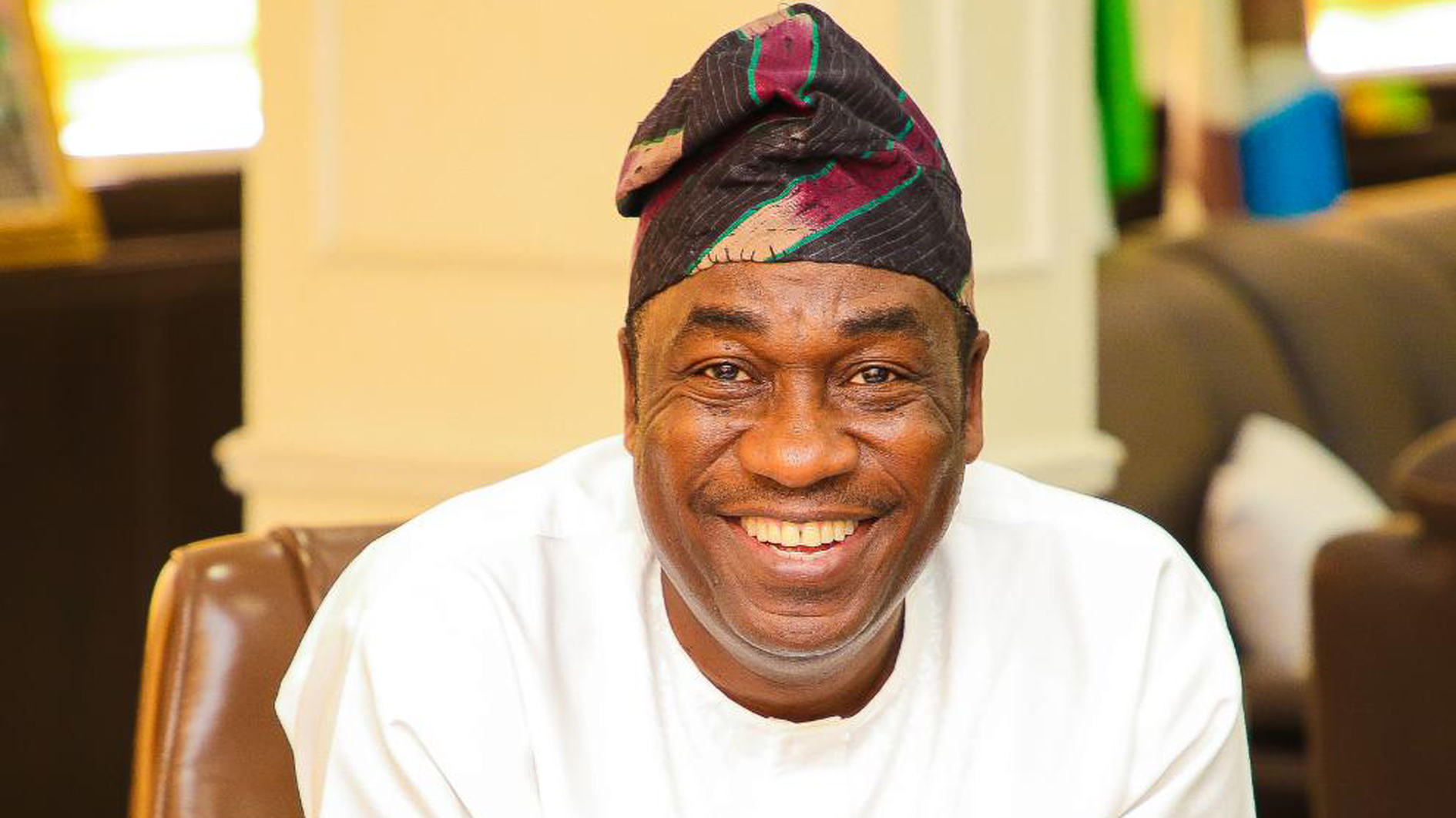
Deputy Governor of Lagos State and the All Progressives Congress (APC) governorship candidate, Dr. Obafemi Hamzat, spoke with journalists on his blueprint for tackling flooding, waste management, building collapse, housing and other development challenges if elected governor in 2027. He also explained why he believes President Bola Tinubu will secure a second term despite mounting opposition. SEYE OLUMIDE was there.
What type of governor should Lagosians expect in you, having served in various capacities as a commissioner, special adviser at the federal level and currently as deputy governor?
The governor is like the captain of a team. A state has many experts, but the governor’s responsibility is to provide leadership, align expertise with a clear vision and ensure effective delivery.
Every ministry implements projects and policies, but the real question is: how do they improve the lives of Lagosians? That is the bottom line. Whether we are building hospitals or clearing drainage channels, every policy must improve people’s quality of life. The governor’s duty is to ensure that every budgetary allocation and every project delivers tangible benefits to residents. That is why we are seeking the office.
What have been the achievements of the Babajide Sanwo-Olu/Obafemi Hamzat administration to require Lagosians to retain you in power after serving for eight years?
This administration has accomplished a great deal under the THEMES Plus agenda, which serves as our development framework. Government is a continuum, so no administration can complete everything. Our responsibility is to finish strong and provide a solid foundation for the next government.
Our work is guided by the Lagos master plan, which extends beyond this administration. We have delivered major projects, including the Blue and Red Rail Lines, although they are not yet complete. The immediate priority is extending the Blue Line to Okokomaiko and strengthening the connection between the Blue and Red Lines at the National Theatre. Future administrations can then extend the Red Line from Ikeja to the airport.
These are capital-intensive projects, but we are committed to completing ongoing projects and ensuring a smooth transition.

What manifestoes are you projecting to Lagosians to get their votes in the 2027 governorship election?
Our manifesto is comprehensive, running into about 537 pages, reflecting the scale of our vision for Lagos. We are now refining it through consultations with market women, transport workers, professionals and experts to identify the most urgent priorities and produce a realistic implementation plan with clear one-, two- and three-year targets, backed by detailed cost projections.
One of our key commitments is to ensure that 60 per cent of Lagosians have access to running water within the first two years by rehabilitating and expanding water infrastructure, including the Adiyan II-Ogba reticulation network. Every project will be prioritised based on its impact on people’s lives and the state’s financial capacity.
Our agenda covers education, healthcare, infrastructure and economic development, but the central theme is improving the quality of life through better organisation and decentralised governance. Lagos must become a city where services are predictable, efficient and people can live and work without unnecessary stress.
Security will be a major priority. We will strengthen the state’s existing security architecture with technology, while supporting the introduction of state police to improve community-based policing through local knowledge. We are prepared to invest whatever is necessary to make Lagos safer.
Beyond major infrastructure, our focus is on the everyday experience of residents. People should be able to move freely, walk safely at night under well-lit streets, and conduct their businesses without harassment. Laws will be enforced to create a more orderly environment, because every policy and project must ultimately improve the lives of Lagosians.
We have already condensed the manifesto from over 530 pages to shorter versions, but the guiding principle remains unchanged: to make Lagos easier, safer and better for everyone to live, work and thrive.
Flooding and waste management have posed serious challenges in Lagos over the years. How would you tackle them?
Lagos is naturally vulnerable to flooding because much of the state lies below sea level. The state has an extensive drainage network, but the system is interconnected. Once drainage channels are blocked or developments obstruct natural waterways, flooding becomes inevitable.
Physical planning is therefore critical. People must build within approved limits, and developments that obstruct drainage must be removed because they will eventually affect the wider environment. Our responsibility is to keep drainage channels and canals clear.
On waste management, our landfill sites are reaching capacity. The long-term solution is to convert waste into economic resources through recycling and waste-to-energy initiatives.
There is a waste-to-fertiliser factory at Odonguyan along Ikorodu Road. What has happened to it?
It is a Public-Private Partnership project. The private company encountered structural challenges and could not deliver the expected capacity.
There is a perception that Lagos State is rich, yet it still faces major infrastructure deficits. What is your plan?
Infrastructure must not only be built but also maintained. New hospitals, roads and public facilities all require continuous funding.
Lagos is doing relatively well financially, but our needs are enormous. We should compare ourselves with global cities of similar importance.
Our annual budget is about N4.4 trillion, roughly $3.2 billion, while New York City’s budget is close to $600 billion. The New York Police Department alone has a larger budget than Lagos.
So, while Lagos has made progress, we must continue expanding our economy to generate more revenue for infrastructure and public services.
There was once a clamour for special status for Lagos before Bola Tinubu became President. That agitation appears to have slowed down. What is your take?
It has not slowed down. Lagos remains the only sub-national government in the world carrying rail infrastructure on its own balance sheet.
Granting Lagos special status is an economic necessity, not just for the state but for Nigeria. We will continue to advocate for it while building national consensus.
The health sector is facing serious challenges because of the ‘Japa’ syndrome. How would you address it?
Having lived abroad myself, I understand why people leave. We cannot stop qualified professionals from seeking opportunities elsewhere. Instead, we must significantly increase the number we train.
That is why we are establishing a University of Medicine and Allied Sciences. At present, the Lagos College of Medicine graduates only about 300 doctors yearly. We must increase that figure substantially.
Countries such as India trained enough doctors to meet both domestic and international demand. Nigeria should adopt the same approach by producing more doctors, nurses, pharmacists and other healthcare professionals. Over time, many of them will return home with valuable experience.
Do you plan to introduce a housing scheme targeted at low-income residents?
We must develop sustainable housing for vulnerable citizens. Currently, the government subsidises housing by about 35 per cent, but the challenge is sustaining that model.
There is no low-cost cement, steel or sand. Construction costs remain high. The key is establishing a revolving housing fund and expanding access to mortgages.
Many Africans spend nearly two decades building houses gradually, often at the expense of their children’s education and healthcare. We must move towards affordable mortgage financing rather than relying solely on incremental self-building.
What is your plan to manage the drive for modernising Lagos while addressing the challenges of slums? Any attempt to relocate residents, such as in Makoko, often attracts criticism.
The Makoko situation is different. The concern was that people had extended structures into the high-tension corridor. We met with the residents several times and agreed that those structures would be removed by December 24, 2024, although that did not happen at the time.
More broadly, we cannot develop Lagos at the expense of the poor. A society progresses by lifting people out of poverty, not by displacing them without alternatives.
I remember when we were clearing Badia years ago. A United Nations official visited the area after complaints were made. She saw people living on a refuse dump with rental apartments advertised there. She was shocked. The government has a responsibility to provide people with safer and healthier living conditions because living in such environments ultimately affects public health.
Our goal is to improve living conditions while creating opportunities that lift people out of poverty.
Lagos continues to record incidents of building collapse. How should this be addressed?
There are two categories of building collapse. Older buildings may fail because of age, while new buildings collapse because standards are ignored.
Lagos has over 890,000 buildings, making constant inspection difficult. We therefore rely on community reports before carrying out structural integrity tests.
Our priority is to eliminate the collapse of new buildings. That is why we introduced the Certified Accreditors Programme (CAP). Registered professionals will supervise construction across designated zones to ensure compliance with approved standards.
There is a perception that you are very disciplined and may be too rigid. Should Lagosians expect to tighten their belts under an Obafemi Hamzat administration?
Every well-meaning Nigerian wants the country to succeed. No governor or president sets out to fail. What we need is greater organisation. If we build roads with pedestrian walkways, people should use them as intended. Development succeeds when everyone plays by the rules.
Is there any agreement that you will serve only one term if elected?
No. There is no such agreement.
If moving Lagos forward requires stepping on toes, including those of party leaders, would you do so?
Leadership requires building consensus. You cannot fight everyone and expect to succeed.
People have different opinions, and some may genuinely disagree with your approach. Rather than confront everyone, it is better to explain the reasons behind your decisions and convince people that they serve the greater good.
No leader is perfect, but once you are convinced a policy is in the best interest of the majority, you should pursue it while carrying as many people along as possible.
Talking about organisation, how would you tackle the menace of louts and touts, and clear blocked waterways without stepping on toes?
What distinguishes developed societies is respect for the rule of law and the effective use of technology. Organisation means everyone operates within established rules, while the rule of law ensures those rules are enforced fairly for the common good.
I remember when we reconstructed the Okota Road. The area would have remained flood-prone if we had not expanded the road and built extensive drainage. At one point, a building obstructed the project. Although we offered compensation, the owner went to court. The court determined the amount payable; we complied, demolished the structure and completed the project. Today, residents enjoy a better road and reduced flooding. Sometimes difficult decisions are necessary, but they must always serve the greater public interest.
How is the party handling the Justice Forum and Mandate Movement blocs amid concerns that one group could be sidelined if you become governor?
I have met with both groups. The Justice Forum is the parent body, established before 1999 when political activities were restricted under military rule. I have asked repeatedly: what is the philosophical difference between the two groups? There is none.
We should not allow non-existent differences to divide us. In established democracies, factions often exist because they hold different ideological positions. Here, there are no such differences. We belong to the same political family and share the same objectives. Rather than fight over perceived divisions, we should focus on strengthening the party. I believe everyone now understands that.
How can local governments become more effective and autonomous following the Supreme Court judgment on local government autonomy?
The ruling has little practical effect on Lagos because the state has never taken local government funds. Instead, we collaborate. For example, primary school teachers’ salaries are deducted as a first-line charge to ensure they are paid promptly. We also harmonise the collection of taxes and charges so residents receive a single bill instead of multiple demands from different tiers of government. This arrangement makes governance more efficient while allowing local governments to retain their resources.
What is your plan for the three Oshodi transport terminals? Many believe they have fallen below the standard set when they were built.
As Commissioner for Works, I was involved in designing those terminals with Prof. Olusanya of the University of Lagos. The objective was to create organised transport hubs and replicate them across Lagos. Rather than having hundreds of scattered bus loading points, passengers should depart from designated terminals where records are kept and operations are properly managed.
The terminals are still in use, but they require better organisation. We must also determine how best to separate intra-city transport from interstate services while developing similar transport hubs across other parts of Lagos.
What factors influenced the choice of your running mate?
Once I emerged as the candidate, we agreed that my running mate should be a Christian since I am a Muslim. There was also a strong consensus that, after eight years, it was time to nominate a woman. Many party leaders also wanted a younger person.
Regional balance was another consideration. I am from Lagos East, while the current governor is from Lagos Central, so we felt the deputy should come from Lagos West.
Taking all these factors into account, Damilola Sonayo-James emerged. She has served as the party’s Deputy Women Leader in Lagos and was formerly a supervisor in Badagry. We assessed her experience, competence and contributions before she was selected.
Deputy governors are often described as ‘spare tyres’ who function only at the discretion of their principals. Would you support constitutional roles for deputy governors?
You cannot legislate common sense or good behaviour. Even if the Constitution assigns more responsibilities, it cannot prevent conflicts. Deputy governors and governors are elected on a joint ticket and should work together.
In Lagos, deputy governors already oversee key ministries. I currently supervise the Ministries of Works and Science and Technology, and their memos pass through me before reaching the governor. So, I have never seen myself as a spare tyre.
If elected governor, I will not treat my deputy as one either. Leadership is about teamwork. There is too much work for one person, particularly in areas such as youth development, employment and economic empowerment. A governor should empower capable deputies, not sideline them. As the saying goes, ego is the enemy. When leaders put ego aside, governance becomes more effective.
Why should Nigerians re-elect President Bola Tinubu?
President Bola Tinubu has demonstrated resilience and consistency throughout his political career. He remained in his party, fought for its presidential ticket and has shown a willingness to confront difficult national challenges.
One of the toughest decisions of his administration was the removal of fuel subsidies, a policy successive governments avoided despite its long-term impact on the economy.
Leadership requires courage and the ability to take difficult decisions in the national interest. I believe the President has demonstrated those qualities and deserves another term to consolidate the reforms already underway.

