 Follow Us on Google News
 Follow Us on Google Discover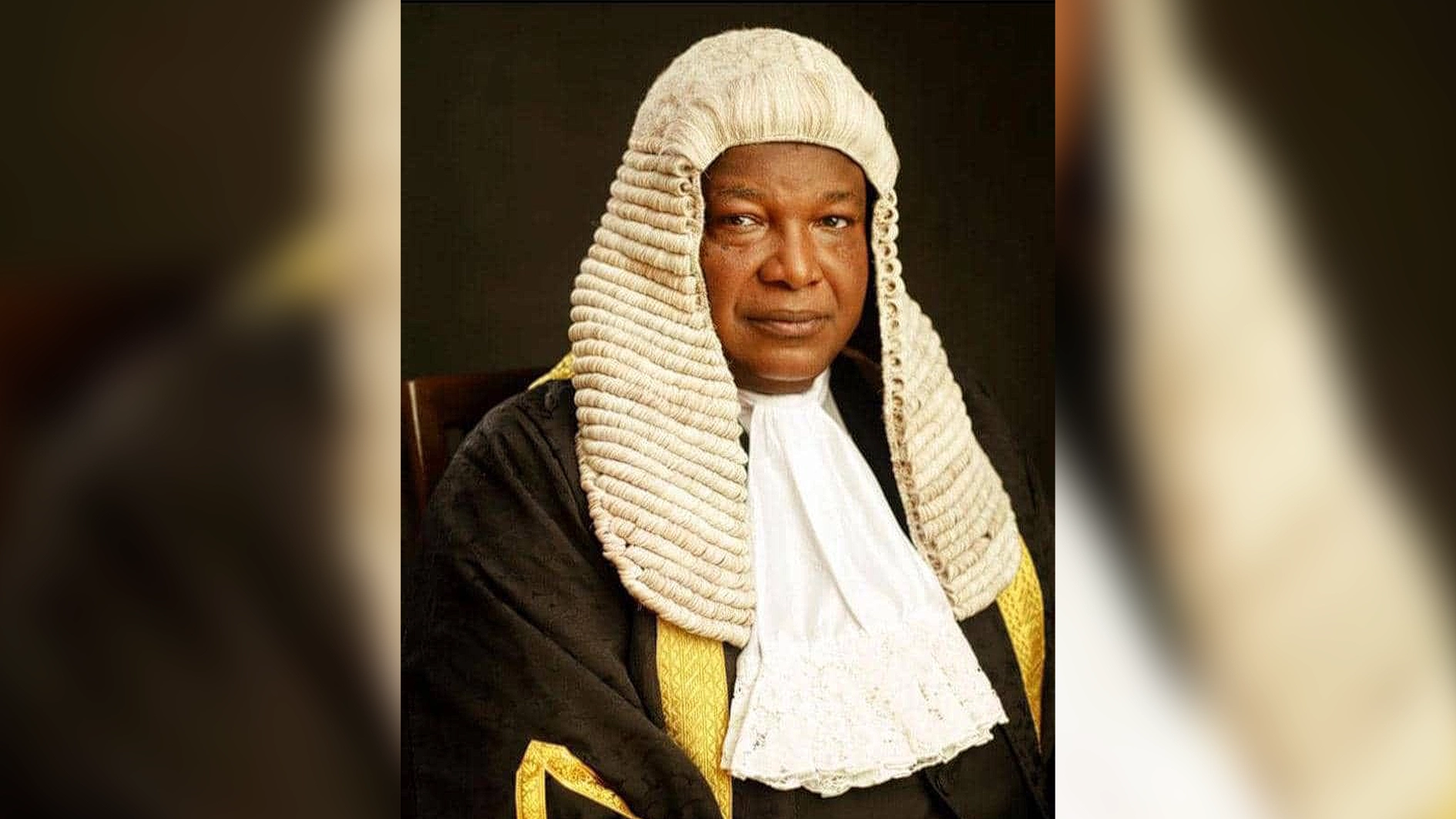
‘A Frightened Judiciary Protects No One’
Dr. Wahab Kunle Shittu (SAN) is the Principal at W. K. Shittu SAN & Co. (Evergreen Chambers). He was called to Bar in 1987 and was conferred with the rank of SAN on September 29, 2022. Highly cerebral, humane and principled, Shittu is a legal scholar and anti-corruption prosecutor who has been a Lead Counsel in many high-profile prosecutions for the Economic and Financial Crimes Commission (EFCC) and the Independent Corrupt Practices and Other Offences Commission (ICPC). He was Lead Prosecutor in the N5 billion fraud case against former governor of Gombe State, Senator Danjuma Goje, and represented former EFCC chairman, Ibrahim Magu, before the Justice Isa Ayo Salami Panel. Shittu has been a Private Counsel to the EFCC since its inception till date, and has also been serving as a Private Prosecutor to the Federal Government since 2017. In this exclusive interview with MOYOSORE SALAMI, he shares his thought on issues that border on the legal profession and the judiciary, submitting that in 2026 and beyond, the measure of the holders of the SAN rank “will not be the size of our briefs but the steadiness of our voices when obedience to law is tested.” He also charges the Senior Bar to properly mentor young lawyers, and to defend the judiciary and demand of it, in the same breath. Excerpts:
As a SAN, how do you think senior counsels like you should lead the adoption of legal tech while still preserving the ethics and gravitas of the Bar?
Let me begin with a confession of enthusiasm. Technology is the most important access-to-justice reform of our generation, and the Senior Bar must lead it, not endure it. A virtual hearing that saves a witness a perilous journey across the country, an e-filing portal that abolishes the tyranny of the registry queue, and a research tool that places the entire law library on a junior’s desk are not threats to the profession; they are the democratisation of it.
The pandemic settled the argument in practice; the various practice directions of our courts settled it in procedure, and the Supreme Court, when the constitutionality of remote hearings was agitated before it in 2020, signalled clearly enough that the Constitution is no enemy of the video link.
Justice delayed is justice denied, and technology is, at its best, the enemy of delay. Indeed, deployment of technology in Justice delivery is now the rule rather than the exception. But leadership means more than adoption; it means adoption with discipline and here the Senior Bar has three specific duties.
The first is the duty of verification. Artificial intelligence is a magnificent research assistant and a dangerous authority: it drafts fluently and, on occasion, invents confidently. Courts abroad have already sanctioned counsel who cited authorities that did not exist because a machine composed them.

The rule for our Bar must be simple and non-negotiable: technology may draft, but counsel must verify, and every authority cited to a Nigerian court must have been read by the human being whose name is on the process. That is not conservatism; it is the ancient duty of candour to the court, wearing modern dress.
The second is the duty of confidentiality. A client’s brief uploaded to an unsecured platform is a client’s confidence betrayed, and with the Nigeria Data Protection Act 2023 now in force, data discipline is a legal obligation and not merely an ethical one. Chambers must invest in secure systems as seriously as they invest in law reports.
The third is the duty of gravitas, which technology tests but does not abolish. The advocate who appears at a virtual hearing improperly robed, from an undignified setting or with the casualness the medium tempts, diminishes the court itself. My counsel to colleagues is that the courtroom is wherever the court sits, including on a screen; and everything we were taught about punctuality, preparation and courtesy applies with equal force there.
Senior counsel should lead by visible example: file electronically, appear virtually where the court directs, train our juniors in the tools, and hold the ethical line while doing so. The wig and the Wi-Fi are not adversaries. The gravitas of the Bar was never in our furniture; it is in our conduct.
There are growing concerns about disobedience of court orders, prolonged pre-trial detention and delays in election petition matters. What role should Senior Advocates play in restoring public confidence in the rule of law and the judiciary in 2026 and beyond?
The starting point is a truth our jurisprudence settled four decades ago. In Military Governor of Lagos State v Ojukwu (1986) 1 NWLR (Pt 18) 621, the Supreme Court proclaimed that the Nigerian Constitution is founded upon the rule of law, and that the essence of the rule of law is that the state itself must not take the law into its own hands. Section 287 of the Constitution commands all authorities and persons to give effect to the decisions of our courts.
A court order is therefore not an opinion to be weighed by the convenience of the party against whom it is made; it is the voice of the Constitution itself, and every act of disobedience, whether by a government or a citizen, is a small secession from the republic.
When orders admitting persons to bail are ignored, when detainees are held for years awaiting trial in defiance of Section 35, and when the electoral calendar strains the timelines that Section 285 was amended to impose, the casualty is not the individual litigant alone; it is public faith in the entire covenant.
What, then, is the role of the Senior Advocate? I suggest four disciplines: first, we must never lend the rank to lawlessness. The Senior Advocate who devises the clever justification for disobeying an order, who procures the abusive ex parte injunction or who deploys interlocutory ingenuity to make a five-year case of a five-month dispute, is not practising advocacy; he is renting out the prestige of the inner Bar to undermine the very system that conferred it. Our first service to public confidence is the integrity of our own briefs.
Secondly, we must litigate the abuses, and do so for those who cannot pay. Prolonged pre-trial detention persists partly because its victims are poor. The Administration of Criminal Justice Act 2015 gave us the instruments, from remand time limits to judicial oversight of detention facilities, and it falls to senior counsels to take up habeas corpus and fundamental rights briefs pro bono, so that the guarantees of Section 35 are not a wealth-tested privilege.
Thirdly, we must defend the judiciary and demand of it, in the same breath. When judges are intimidated, disobeyed or vilified for unpopular decisions, the Senior Bar must be their first shield, for a frightened judiciary protects no one.
But the shield must come with a mirror: we should support judicial accountability, transparent appointments, published performance data and swift, fair discipline of the few whose conduct stains the many. Confidence is not restored by pretending all is well; it is restored by demonstrating that the system corrects itself.
Fourthly, we must speak, institutionally and courageously, through the Nigerian Bar Association and the Body of Senior Advocates when the rule of law is threatened, whatever the political colour of the threat.
The Senior Advocate holds a public trust. In 2026 and beyond, the measure of our rank will not be the size of our briefs but the steadiness of our voice when obedience to law is tested. On that, history keeps an accurate ledger.
With Nigeria’s current economic climate, forex volatility and reforms in oil and gas and taxation, how are you advising corporate clients differently now compared to five years ago? What new areas of practice should young lawyers be positioning for in a new Nigeria?
The honest answer is that the entire grammar of commercial advice has changed. Five years ago, the typical corporate brief was transactional: incorporate, negotiate, document, close. Today, the first conversation with any serious client is about regulatory risk, currency exposure and dispute avoidance, because the legal environment has been remade beneath our feet. The Petroleum Industry Act 2021 rewrote the fiscal and governance architecture of oil and gas; the Electricity Act 2023, following the constitutional amendment, opened the power sector to state-level markets; the Companies and Allied Matters Act 2020 and the Business Facilitation Act 2023 modernised corporate life; the Arbitration and Mediation Act 2023 renewed our dispute-resolution framework; and the four tax reform Acts signed in 2025, which took effect in January of this year (2026), have given Nigeria its most consequential fiscal restructuring in a generation. A lawyer advising on yesterday’s statute book is a danger to his client.
Three shifts define my own counsel to clients. First, currency realism. With the liberalisation of the foreign exchange market and the volatility that has attended it, no significant contract should now be drafted without deliberate currency architecture: the currency of obligation, the mechanism of conversion, the allocation of exchange risk and the hedging arrangements must be negotiated as carefully as price itself. Much of the commercial litigation of the last few years is, at bottom, litigation about who bears the naira’s movement, and the careful draftsman spares his client that war.
Secondly, compliance as strategy. Between the Money Laundering (Prevention and Prohibition) Act 2022, the beneficial ownership disclosure regime, the Nigeria Data Protection Act 2023 and the disciplines that took Nigeria off the FATF grey list in October 2025, compliance has moved from the back office to the boardroom. I now advise clients that a compliance failure can destroy in a quarter what the business built in a decade, and that the cheapest litigation is the one your systems prevented.
Thirdly, tax foresight. The new tax regime rewards early restructuring and punishes improvisation. Every significant client should have completed a tax-impact review and those who have not are already late.
For young lawyers, my message is one of genuine optimism: the new Nigeria is minting new practice areas faster than the Bar is filling them. Position yourselves in energy and the energy transition, where the PIA, the Electricity Act and gas commercialisation will generate work for 20 years; in tax, where the 2025 reforms have created overnight demand for genuine specialists; in technology, data protection and fintech regulation, including the digital-asset framework the Investments and Securities Act 2025 has now recognised; in compliance, anti-money-laundering and investigations, where the post-FATF environment is exacting; in arbitration and mediation, which our new statute has repositioned; and in the creative economy and intellectual property, where Nigerian content has become a global export in search of lawyers who understand it. The economy is difficult, but difficulty is the raw material of legal work. The young lawyer who pairs deep specialisation with digital fluency will not chase briefs; the briefs will chase him.
The SAN rank is meant to represent the “inner bar.” Recently there have been debates about discipline, touting and conduct of some senior lawyers. How do you think the LPDC and Body of Benchers can strengthen the integrity of the SAN title without stifling advocacy?
I hold the view, and I have written extensively in this vein, that the rank of Senior Advocate of Nigeria is not a reward for longevity or a trophy for visibility; it is a public trust, conferred in the expectation of exemplary learning, exemplary integrity and exemplary service. When any holder of the rank descends to touting, to the procurement of conflicting ex parte orders, to disrespect for the courts or to sharp practices, the injury is not personal to him; it is institutional, because the public does not distinguish carefully between one Silk and the Silk. The debates you refer to are therefore healthy. A profession that has stopped interrogating its elite has started decaying.
On the machinery, permit me a clarification that matters. Three institutions share this space: the Legal Practitioners’ Privileges Committee, which confers the rank and may suspend or withdraw it; the Legal Practitioners’ Disciplinary Committee, which disciplines all Lawyers for infamous conducts under the Legal Practitioners Act; and the Body of Benchers, the custodian of admission to the Bar and, increasingly, of its mentoring conscience. Strengthening the integrity of the rank requires all three to work as one system. The Privileges Committee should continue the direction of its revised guidelines: transparent criteria, rigorous integrity screening that actively consults the courts before which candidates have practised, and, crucially, continuing jurisdiction after conferment so that the rank remains held on good behaviour rather than owned absolutely. The precedents in which the Committee has suspended or withdrawn the rank should be understood not as embarrassments but as proof that the system has a spine. The Disciplinary Committee, for its part, needs speed with due process: justice against lawyers, like justice for everyone else, loses its deterrent force when a complaint takes half a decade to resolve. Published outcomes, case-management timelines and adequate resourcing would transform its credibility.
The Body of Benchers holds the preventive brief, and I attach the greatest importance to it. Discipline prunes the tree; mentoring shapes it. The reconstitution of the Body’s Mentoring Committee and the growing institutional emphasis on structured pupillage reflect a truth every senior practitioner knows: ethics is caught before it is taught, in the daily example of the chambers in which a young lawyer is formed. I would go further and attach mentoring obligations to the rank itself, so that every Silk accounts annually for the juniors he has trained, the pro bono briefs he has carried and the standards he has modelled. And to the caution in your question: none of this stifles advocacy, because the line we police is between misconduct and courage. Fearless advocacy, the unpopular client, the audacious argument, the appeal that annoys the powerful, is the very purpose of the inner Bar and must be protected absolutely. It is not boldness we discipline; it is dishonesty. A Bar that keeps that distinction sharp can be both brave and clean, and it must be both, for an advocate’s only inexhaustible capital is his name.
From police reform and #EndSARS, to freedom of expression and the Cybercrimes Act, human rights cases dominate the headlines. In your view, what are the two or three most pressing constitutional questions the Supreme Court needs to decisively settle in the next two years?
Every generation presents the Supreme Court with a handful of questions on which the character of the republic turns. I would respectfully identify three. The first is the boundary of free expression in the digital age. Section 39 of the Constitution guarantees freedom of expression; Section 45 permits restriction only by law reasonably justifiable in a democratic society; and between those two provisions sits the Cybercrimes Act, whose cyberstalking provision, Section 24, became for a period the charge of choice against journalists, bloggers and critics. The ECOWAS Court held the original provision inconsistent with free expression obligations, and the National Assembly narrowed it by amendment in 2024, but the decisive domestic pronouncement is still awaited. Our apex court needs to lay down, with the clarity of a constitutional landmark, the test that separates the criminal threat from the caustic criticism so that no prosecutor, policeman or politician is left in doubt that annoyance of the powerful is not an offence known to Nigerian law. A democracy that criminalises irritation has begun to criminalise citizenship.
The second is personal liberty and the detention power. Section 35 of the Constitution fixes the timelines within which an arrested person must be charged or released, yet prolonged pre-trial detention remains our criminal justice system’s open wound, and the statute book now contains provisions in visible tension with the constitutional text, none more so than the 60-day ex parte detention permitted by Section 66 of the Terrorism (Prevention and Prohibition) Act 2022.
I hold no brief for terrorists; I spent my doctoral years on the legal regime for combating terrorism, and I yield to no one in my insistence that the state must be armed to defeat it. But it is precisely because the security statutes are so powerful that the Supreme Court must decisively delimit them. Until the apex court speaks, every detention cell in the country operates under a constitutional question mark, and both liberty and security are the poorer for the uncertainty.
The third is the justiciability of the social contract itself. Chapter II of the Constitution proclaims our fundamental objectives, education, health, security, welfare; and Section 6(6)(c) is conventionally read to place them beyond the courts. Yet the Supreme Court held in Fawehinmi v Abacha (2000) 6 NWLR (Pt 660) 228 that the African Charter, with its enforceable guarantees, is part of our domestic law, and a line of legislation on education, health and corrupt practices has given statutory flesh to Chapter II’s bones. The unresolved question is the extent to which these instruments, read together, make the citizen’s minimum welfare judicially enforceable. A decisive modern pronouncement, in the tradition of the Indian and South African courts, would tell every Nigerian government the least that the Constitution demands of it, and would tell every Nigerian citizen that the Constitution’s promises are not poetry. Those three questions – expression, liberty and the social minimum – are, in my respectful view, the docket on which the court’s next two years will be judged by history.
Many young lawyers cite poor mentorship, poor remuneration and “brain drain” as reasons for leaving practice. As a SAN, what practical steps are you taking to mentor the next generation and make litigation attractive again in Nigeria?
This question touches the cause closest to my heart, because everything I am at the Bar I owe to those who mentored me, and a profession that does not reproduce itself is dying, however prosperous its present looks. The complaints of our young colleagues are, in the main, legitimate. Too many are thrown into practice unformed, underpaid and unaccompanied, and we should not be astonished when they carry their talents to other jurisdictions or other industries.
My response has been to treat mentorship not as sentiment but as structure, and I can speak to concrete commitments. In my chambers, every young lawyer is placed under a deliberate pupillage: they sit in on client conferences; they draft and are corrected; they accompany seniors to court; and, as their competence matures, they are put on their feet before real courts in real matters, because an advocate is formed standing up, not sitting down. I hold to the old discipline that the junior who worked on the brief should taste the argument of it.
Beyond chambers, I teach. My classroom at the Faculty of Law, University of Lagos, is a mentoring platform for hundreds of future lawyers each year, and I have carried the same conviction into scholarship. I have devoted a substantial treatise to the character, craft and long career of the Nigerian advocate, precisely so that the accumulated learning of the senior Bar is written down for those we will never meet in person. I have also lent my voice and pen to the institutional reforms, the Body of Benchers’ mentoring initiative and the movement to make structured pupillage a formal requirement of entry into practice, because mentorship must ultimately be systematised if it is to outlive the goodwill of individuals. And on remuneration, I am direct with my colleagues at the senior Bar: a chambers that cannot pay a living wage should not hire, for the underpaid junior is an ethical accident waiting to happen, and the profession’s ongoing effort to prescribe enforceable minimum remuneration deserves every Silk’s support.
Can litigation be made attractive again?
Emphatically yes, and on three conditions. Pay must improve, and it will improve fastest in chambers that modernise, specialise and win premium work, which is why I urge young litigators to marry courtroom craft with the new practice areas I mentioned earlier. Progress must be visible: juniors stay where they can see their path to advocacy, to partnership, to the inner Bar, and chambers must publish that path and honour it. And purpose must be restored. We must remind the young lawyer that litigation is not a queue for adjournments but the vocation by which the citizen is defended against power, and that no emigration visa confers the dignity of standing in a Nigerian court room and bending injustice with an argument. As for the so-called brain drain, I take the long view: some will go, some will return with capital and networks, and our task is to build a Bar worth returning to. The future of this profession will be written by those we train today, and I intend, for as long as I have strength, to be found at that writing desk.

