 Follow Us on Google News
 Follow Us on Google Discover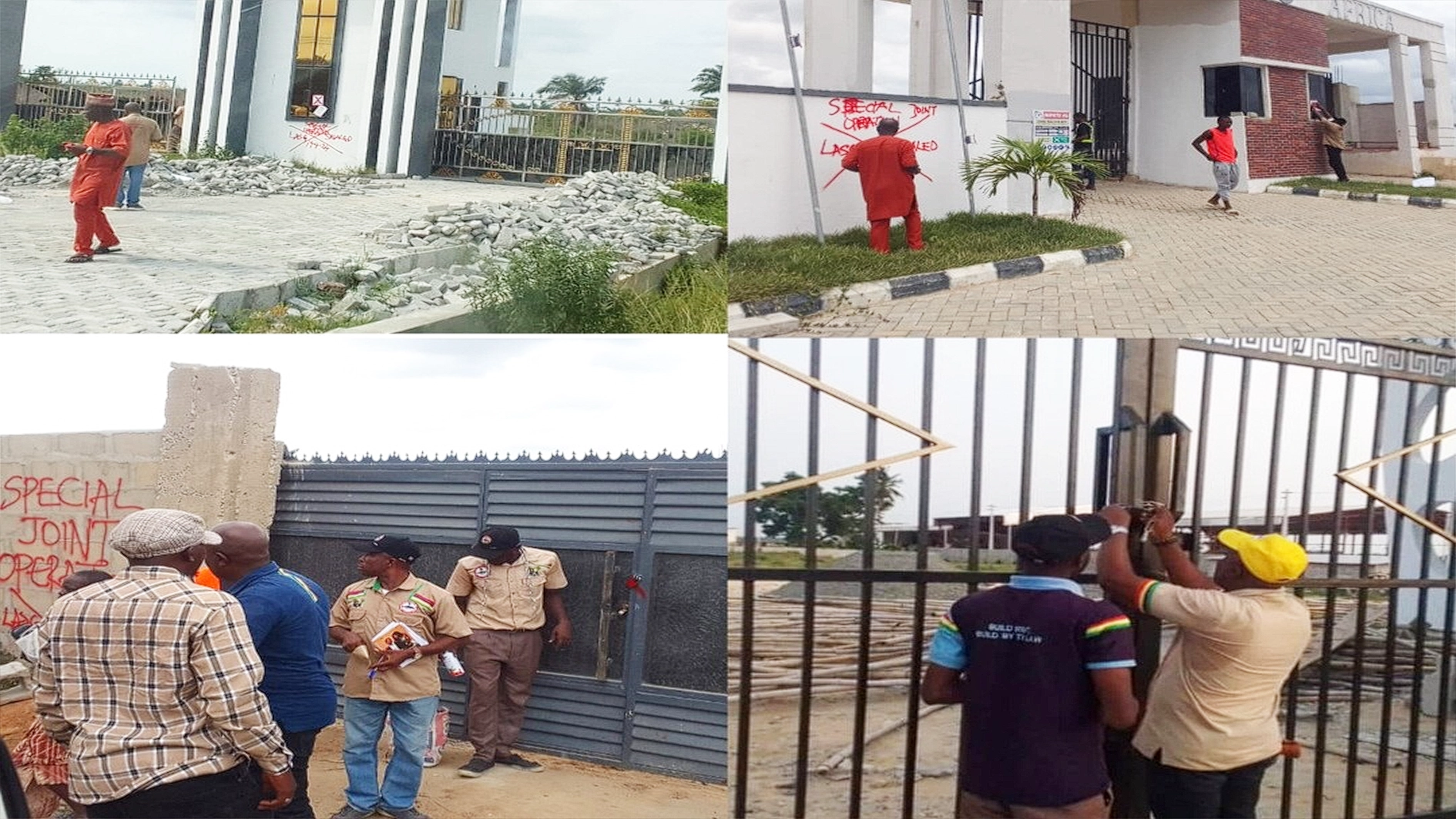
Faced with lengthy approval processes and bureaucratic delays, many developers and property owners have adopted a ‘build first, obtain approval later’ approach, a trend that experts warn is undermining orderly urban development and increasing the risk of building collapse, flooding and other disasters. They argued that the situation can be reversed through the adoption of digital technologies, streamlined approval processes, lower permit costs and incentives that encourage voluntary compliance, VICTOR GBONEGUN reports.
Growing disregard for physical planning regulations and rising planning permit infractions across Nigeria’s major cities are heightening safety risks in the housing sector, contributing to flooding, building collapses, loss of lives and significant economic losses.
In many states such as Lagos, Ogun, Oyo, Rivers, Anambra and Kano, as well as the federal capital territory, developers, contractors and property owners are increasingly breaking ground before securing statutory approvals. Common infractions include the unauthorised conversion of residential buildings into hotels, construction of three- to six-storey buildings without approval, estates built on drainage channels, and the widespread “build now, regularise later” culture.
Under the Nigerian Urban and Regional Planning Law, as adopted by various states, construction without a valid planning approval from the relevant physical planning authority is prohibited. The law prescribes sanctions ranging from stop-work orders and fines of up to N2 million in some states to prosecution, demolition of offending structures and payment of regularisation surcharges.
However, obtaining building permits in Nigeria remains a cumbersome and bureaucratic process, often delaying projects. Developers cite corruption, bureaucratic bottlenecks, inconsistent application of building standards, rising assessment charges, limited public access to master plans and frequent changes to planning alignments, such as those witnessed along the Lagos-Calabar Coastal Highway corridor, as major obstacles.
In some states, obtaining approval for even renovation work can take between five months and one year.

Such delays often increase project costs as developers grapple with fluctuations in construction material prices.
Experts noted that weak enforcement has also encouraged widespread non-compliance. In many cases, authorities fail to detect or halt illegal developments before projects are completed or disasters occur.
More than 200 building collapse incidents have been recorded nationwide since 2022, with experts documenting at least 47 structural failures across 14 states in 2024 alone. Lagos remains the epicentre, accounting for more than half of the incidents due to rapid urbanisation, weak enforcement and the use of substandard building materials.
Data released by the Lagos State Special Adviser on e-GIS and Urban Development show that 8,663 buildings were identified for structural infractions between 2024 and 2025. Last week, the Lagos State Physical Planning Permit Authority (LASPPPA) sealed more than 20 properties in the Ikeja Local Council over various planning violations.
The affected properties, including vacant plots, uncompleted buildings and structures with unauthorised extensions, were found to have contravened the Lagos State Physical Planning Law. Last year, the Lagos State government also published the names of 176 illegal estates operating without approved layout plans as part of efforts to curb fraudulent property developments and restore order in the built environment.
LASPPPA has repeatedly expressed concern over persistent violations of physical planning regulations. Monitoring and enforcement operations carried out in Oke-Odo, Abule-Egba, Iyana-Ipaja, Aboru and Meiran revealed that several property owners had broken government seals placed on buildings that had been earlier marked for planning infractions, despite failing to comply with the directives contained in contravention notices.
Findings further show that between 2018 and 2024, the Lagos State government demolished hundreds of completed and occupied buildings over planning permit violations and structural non-compliance.
Official records also indicate that Lagos recorded 27,233 planning permit infractions and building violations between May 2023 and April 2026. The alarming number prompted the state government to strengthen development control activities and introduce permit regularisation initiatives, including the Electronic Physical Planning Permit Processing System (e-PPPS).
The government had earlier introduced an amnesty programme that allowed property owners to regularise their building approvals without immediate penalties. However, many ignored the opportunity and continued with illegal developments that failed to meet structural, environmental and safety standards.
The Lagos State Ministry of Physical Planning and Urban Development has repeatedly urged residents to report illegal developments, stressing that early detection of planning contraventions would enable authorities to intervene promptly and sustain orderly urban development.
In Ogun State, authorities have served enforcement notices on more than 50 property owners over the past three years, warning developers to comply with planning regulations, including obtaining development permits before construction, securing stage-by-stage certification and obtaining certificates of fitness for occupation.
Similarly, numerous property owners in Abeokuta, Sango-Ota, Itori, Ibese, Kobape, Ilisan Remo, Ilara Road, Iperu Remo and Ogere have been cited for violating planning and building permit laws. Concerned by the rising number of unapproved developments, Ogun State governor, Dapo Abiodun, approved a 50 per cent waiver on penalty fees for property owners without the required building permits. The three-month amnesty programme ran from November 2025 to January 2026.
Also, to address widespread non-compliance, the Oyo State Government recently launched a 60-day Online Building Permit Amnesty (OYBPA) programme to regularise buildings constructed without official approval.
The initiative offers a 20 per cent discount on approval fees during the amnesty period, enabling affected property owners to obtain the necessary permits while helping the government improve urban planning, strengthen development control and enhance the safety of lives and property.
Since 2024, the Federal Capital Territory Administration has also intensified enforcement against structures built without statutory approval, declaring such developments illegal. Several buildings have been sealed, while others have been demolished. In June this year, a special task force established by the Kano State government sealed more than 14 buildings across the metropolis for violating building regulations.
Experts argued that while states such as Lagos, Ogun, Oyo and the Federal Capital Territory (FCT) have physical planning laws that require development permits, enforcement remains weak and is often perceived as being driven more by revenue generation than by the need to ensure orderly urban development.
They called for sustained public enlightenment on the importance of complying with planning regulations to reduce economic losses, prevent building collapses and safeguard lives and property. The experts urged governments to deploy technology to simplify the permit process and adopt transparent, standardised charges for planning approvals.
President of the Nigerian Institute of Town Planners (NITP), Dr Chime Ogbonna, said many building collapses were not necessarily caused by the use of poor-quality materials, but by inadequate supervision during construction.
According to him, physical planning authorities comprise town planners, civil engineers and environmental officers who monitor construction sites, ensure compliance with approved plans and certify buildings upon completion.
“These professionals inspect construction activities to determine whether they conform to approved plans. They are also responsible for signing building completion certificates. Experience has shown that when a project is not properly supervised, and anything goes wrong, the developer, property owner and contractor bear the consequences,” he said.
Ogbonna stressed that every building project in Nigeria must obtain approval from the relevant physical planning authority before construction begins. “Unfortunately, this is not always the reality. Some developers proceed without approvals, exposing themselves and the public to significant risks,” he added.
He attributed the rising cases of planning permit violations to both ignorance and deliberate attempts by some developers to circumvent the law. “A structure built without government approval remains an illegal development. If anything happens, the developer will be held liable under the law, particularly where negligence results in loss of lives.”
He warned against the growing practice of seeking post-construction approval after completing buildings, insisting that such actions undermine the objectives of physical planning laws. Regarding complaints about the cost and delays associated with obtaining permits, Ogbonna said the government should establish standardised charges and ensure they are applied uniformly.
“Delays may sometimes arise because developers fail to meet all the requirements. Property owners should engage registered consultant town planners to guide them through the approval process.”
An Abuja-based town planner, Dr Emmanuel Agbator, observed that planning permit infractions stem from both developers seeking to cut corners and officials who fail to enforce regulations effectively. He explained that obtaining planning approval ensures that critical assessments, including soil investigations and, where required, environmental impact assessments, are completed before construction commences.
“These requirements are part of quality assurance. Every corporate developer and individual property owner should comply because they help guarantee the structural integrity and safety of buildings,” he said.
Agbator commended Lagos State for digitising its planning approval process, noting that technology has significantly reduced bureaucratic bottlenecks. “The next step is to create greater public awareness so that more people understand the importance of obtaining planning approval. Other states experiencing rapid urban development should also embrace digital platforms to make approvals faster and more efficient.”
He, however, cautioned that governments should strike a balance between revenue generation and affordability. “Every government agency wants to generate revenue, but there must be a balance between the cost of approvals and ensuring that everyone can comply with the process.”
He also urged state governments to intensify site inspections and surveillance to curb illegal developments and reduce the incidence of building collapse.
A former President of the Association of Town Planning Consultants of Nigeria (ATOPCON), Mr Bisi Adedire, described planning permit violations as a widespread challenge, blaming arbitrary increases in assessment fees and institutional inefficiencies for discouraging compliance.
He noted that in some states, responsibilities for urban development and physical planning are split between separate agencies that often fail to work collaboratively. “The economy is under pressure, and many people try to circumvent the system. In some states, urban development and physical planning departments operate independently instead of working together, making the approval process unnecessarily difficult.”
Adedire also criticised the high cost of land administration, saying multiple taxes, levies and fees discourage investment. “The Land Use Act envisages access to land at reasonable cost, but the reality is different. Government land is often more expensive than privately owned land, while obtaining a Certificate of Occupancy involves numerous charges.”
He advised governments implementing electronic planning permit systems to invest in digital infrastructure, reliable internet connectivity and adequately trained personnel. According to him, electronic and manual processing should run concurrently until digital platforms become fully efficient.
“If the government creates an enabling environment for development, more people will comply with planning regulations. Applicants should not be subjected to endless requests for additional clearances after paying statutory fees because such delays can damage confidence in the system.”

