 Follow Us on Google News


 Follow Us on Google Discover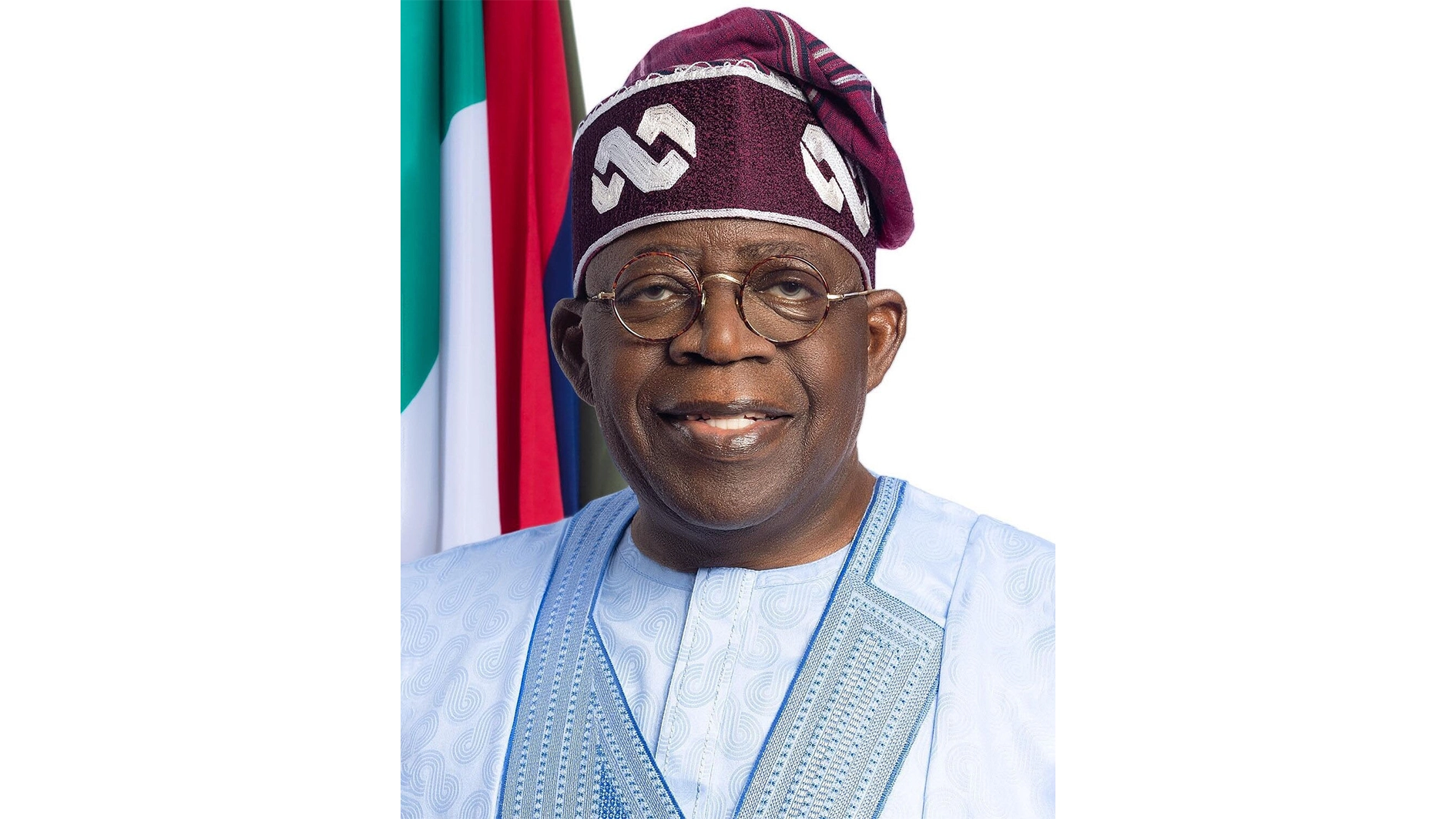
• Abbas, Barau, Sanwo-Olu, AbdulRazaq receive Tinubu at airport
• APC supporters give President colourful welcome at airport
• Jimoh Ibrahim defends ‘working leave’, says Tinubu did not breach Constitution
• Bode George warns opposition division gives APC greater political space
President Bola Tinubu yesterday returned to Nigeria to a colourful welcome from All Progressives Congress (APC) supporters, even as his month-long absence remained at the centre of a constitutional dispute and political contest ahead of the 2027 general elections.
Indeed, the President’s return signals an intensified campaign towards the January elections after weeks of subtle campaign activities due to the absence of the President.
The supporters, who began arriving at the Presidential Wing of the Airport in Lagos, at about 3:00 p.m., were dressed in APC-themed outfits and carried placards bearing messages of support for the President and his administration.
They sang and danced as they waited for Tinubu, turning the airport into a political gathering.
Some of the messages on the placards read: “Welcome Mr President,” “Thank You for State Police,” “Thank You for Your Bold Reforms,” and “Welcome Mr President, We Thank You for Renewed Hope Agenda.”

Entertainers stationed at the venue also kept the crowd animated, singing the praises of the President and expressing support for his administration.
The reception attracted governors from different states, senior APC figures and members of the City Boy Movement, who joined the supporters at the airport.
Security operatives were deployed in large numbers around the airport as authorities managed the movement of the President and his entourage.
Traffic was temporarily stopped for about 15 minutes as security personnel cleared the route for the presidential convoy.
Tinubu eventually departed the airport at about 6:35 p.m. alongside members of his entourage.
The President said he was healthy and ready to resume work after returning to Nigeria from his four-week stay in Europe.
Tinubu dismissed concerns about his health as rumours, saying such reports were often associated with politics.
Asked how he spent his time in Europe, the President said: “I enjoyed myself. Fantastic.”
Responding to questions about concerns raised by some Nigerians, including some of his well-wishers, over his health during his absence, Tinubu said: “Ready to kick, ready to walk. There’s nothing wrong.”
He added: “Rumour will always be emanating from politics, but the facts remain, I’m here. Healthy, sound, and ready to go.”
TINUBU returned to Nigeria after an extended working vacation in Europe, arriving at the Presidential Wing of the Murtala Muhammed International Airport, Lagos, ahead of activities marking the country’s 66th Independence anniversary.
His arrival, at about 6:20 p.m., was announced by his Special Assistant on Social Media, Dada Olusegun, in a post on his verified X handle.
“Landing. Welcome home Mr President!” Olusegun wrote.
He subsequently released a video showing the President being received at the airport by senior government officials and political leaders.
Among those at the airport were Speaker of the House of Representatives, Tajudeen Abbas; Deputy Senate President, Barau Jibrin; Lagos State Governor, Babajide Sanwo-Olu; and Kwara State Governor, AbdulRahman AbdulRazaq.
The President’s return ended his month-long stay in Europe, which began on August 30 when he departed Abuja for what the Presidency initially described as a three-week working vacation.
Tinubu spent the first phase of his stay in London before moving to Paris, France. The Presidency subsequently announced on September 21 that the President had extended his stay by a few days, stressing that he remained engaged with matters of state while abroad.
During his stay in Paris, Tinubu held a private dinner with French President Emmanuel Macron at the Élysée Palace, where the two leaders discussed bilateral relations and areas of cooperation between Nigeria and France.
The President also met French businessman Vincent Bolloré and senior executives of the Bolloré Group to discuss investment opportunities and the localisation of the group’s operations in Nigeria.
Tinubu also witnessed the signing of agreements between the Ogun State Government and global logistics firm, DP World, on the proposed Gateway Deep Seaport and Blue Marine Economic Zone in Ogun Waterside.
His return to Lagos comes ahead of Independence Day celebrations, with the President expected to participate in several official and cultural activities.
He is scheduled to attend the premiere of a production honouring the late Chief MKO Abiola, winner of the annulled June 12, 1993 presidential election, at the Wole Soyinka National Theatre, Iganmu, Lagos.
The Presidency had earlier indicated that Tinubu’s decision to return to Lagos ahead of the anniversary was partly to honour Abiola’s memory.
The President is also expected to hold meetings with political leaders and associates during his stay in Lagos.
Tinubu’s return leaves constitutional questions over extended vacation
PRESIDENT Tinubu’s return comes against the backdrop of growing political and constitutional controversy over the length of his stay abroad, his decision to extend the vacation beyond the original three-week schedule and the period during which Vice-President Kashim Shettima was also outside the country attending the 81st United Nations General Assembly in New York.
The African Democratic Congress and other opposition voices questioned whether the President had transmitted the written declaration contemplated under Section 145 of the 1999 Constitution when proceeding on vacation, while the African Action Congress on Monday instituted a suit at the Federal High Court in Abuja challenging Tinubu’s absence and the National Assembly’s handling of the matter.
Section 145(1) provides that whenever the President is proceeding on vacation or is otherwise unable to discharge the functions of his office, he shall transmit a written declaration to the President of the Senate and the Speaker of the House of Representatives.
The provision further states that, until a contrary declaration is transmitted, the Vice-President performs the functions of the President as Acting President.
Under Section 145(2), if the President fails to transmit the declaration within 21 days, the National Assembly may, by resolutions of both chambers, mandate the Vice-President to perform the functions of Acting President.
The controversy intensified after Shettima left Abuja on September 20 to lead Nigeria’s delegation to the UN General Assembly, creating a period when both the President and Vice-President were outside the country.
Opposition politicians and constitutional lawyers offered differing interpretations of the implications of the development.
While critics argued that the constitutional succession mechanism should have been activated, the Presidency maintained that Tinubu remained in contact with officials at home and continued to direct the affairs of government from abroad. It also defended his decision to delegate Shettima to represent him at the UNGA. The latest legal challenge has now placed the issue before the courts.
The AAC is asking the Federal High Court to determine whether Tinubu could proceed on vacation without first transmitting the required declaration and whether the National Assembly was obliged to act after the President’s absence exceeded 21 days. No hearing date had been fixed as of yesterday.
Tinubu did not breach constitution with working leave, says Jimoh Ibrahim
NIGERIA’S Ambassador and Permanent Representative to the United Nations, Jimoh Ibrahim, has defended President Bola Tinubu’s prolonged stay outside the country, arguing that the President did not breach the Constitution by embarking on what the Presidency described as a working leave.
Ibrahim, who spoke on Channels Television, said the President remained engaged in matters of national importance while abroad and, therefore, should not be regarded as having abandoned his constitutional responsibilities.
His comments came amid growing controversy over Tinubu’s absence from Nigeria and questions over whether the President was required to formally transmit a vacation notice to the National Assembly under Section 145 of the 1999 Constitution, as amended.
Ibrahim argued that the circumstances of Tinubu’s absence were different from an ordinary vacation because the President continued to work and attend to matters of national interest.
“The President hasn’t committed any offence. He said he was on working leave, and empirical evidence shows that he was attending to matters of national priority,” he said.
He cited the President’s engagements on economic and diplomatic matters, including discussions surrounding a proposed $7 billion business deal involving Ogun State and contacts with French President Emmanuel Macron, as evidence that Tinubu remained involved in official affairs.
Ibrahim also challenged the argument that a President must be physically present in Nigeria to discharge his responsibilities, saying modern communications technology makes it possible for heads of government to conduct official business from outside their countries.
He said Tinubu remained accessible to Nigerian officials during his absence and was consulted on matters arising from the country’s diplomatic engagements at the United Nations General Assembly (UNGA).
The ambassador’s interpretation, however, comes against the background of Section 145(1) of the Constitution, which provides that whenever the President proceeds on vacation or is otherwise unable to discharge the functions of his office, he shall transmit a written declaration to the President of the Senate and the Speaker of the House of Representatives. The provision also stipulates that the Vice-President performs the functions of President as Acting President until the President transmits a declaration to the contrary.
Ibrahim’s argument is that the President’s continued discharge of official responsibilities while abroad means the circumstances should not simply be treated as a conventional vacation.
The controversy has also focused on the role played by Vice-President Kashim Shettima during Tinubu’s absence, including his representation of the President at international engagements.
Ibrahim said the activities of Shettima and other Nigerian officials demonstrated that the country remained actively engaged internationally despite Tinubu’s absence from the UNGA.
He disclosed that Nigerian officials participated in about 30 meetings during the UNGA and continued negotiations into the early hours of the day.
“I know what diplomacy is. We had 30 meetings. We couldn’t sleep; at two or three o’clock, we were still negotiating for our great country, Nigeria,” he said.
According to him, Tinubu’s international contacts also helped Nigerian officials to gain access to influential figures and advance discussions when they encountered difficulties.
He said officials contacted the President by telephone during the engagements, adding that Tinubu’s “social capital network” helped facilitate some of the diplomatic contacts.
Ibrahim consequently rejected the impression that Tinubu’s absence from the UNGA amounted to Nigeria’s absence from the diplomatic arena.
He praised Shettima and Foreign Affairs Minister Yusuf Tuggar for representing Nigeria and sustaining the country’s bilateral and multilateral engagements.
The ambassador, however, acknowledged the importance of presidential participation in international diplomacy, particularly given Nigeria’s ambition to secure a permanent seat on the UN Security Council.
He said Nigeria’s aspiration would require sustained diplomatic engagement and the effective deployment of the country’s international relationships.
Ibrahim also stressed Nigeria’s longstanding contribution to UN peacekeeping and its wider responsibilities within the international system, arguing that the country must continue to build support for its interests.
He said the Security Council ambition should be backed by stronger diplomacy, greater contribution to peacekeeping operations and improved border security.
The ambassador further called for stronger international cooperation in tackling insecurity, particularly in the North-East and North-West, and proposed the establishment of a peace committee to examine the underlying causes of the country’s conflicts.
He said Nigeria’s diplomatic policy should ultimately be tied to concrete national interests, including security, economic opportunities and greater influence within the international system.
Tinubu’s return: Opposition disunity gives President free rein, says Bode George
FORMER Deputy National Chairman of the Peoples Democratic Party (PDP), Chief Olabode George, has said President Bola Tinubu would continue to enjoy considerable political room to operate if opposition parties remain divided and unable to present a coordinated alternative ahead of the 2027 elections.
George also urged leaders in the North to advise former Vice President Atiku Abubakar against seeking the presidency in 2027, arguing that the former PDP presidential candidate and other politicians had contributed to the crisis in the party through what he described as selfish political ambitions.
He questioned Atiku’s chances of emerging as President on the platform of the African Democratic Congress (ADC), insisting that opposition politicians must first resolve their differences and build a coherent political organisation capable of challenging the ruling All Progressives Congress (APC).
George spoke against the backdrop of Tinubu’s return to Nigeria after his recent stay in France, saying the development should prompt opposition parties to examine their level of preparedness for the 2027 general elections.
According to him, the President would be able to “do whatever he likes” politically if opposition parties failed to build a strong and coordinated alternative.
He said the challenge before the opposition was not merely the formation of coalitions or the movement of politicians from one party to another, but the establishment of disciplined political structures capable of competing effectively with the APC.
George expressed concern over the crisis within the PDP and the emerging opposition coalition around the ADC, questioning whether the new alignment could develop the organisational strength required to mount an effective challenge to the ruling party.
He also questioned the prospects of Atiku securing the presidency under the ADC platform, arguing that opposition leaders needed to settle their strategic differences and agree on a clear direction before the 2027 contest.
The PDP chieftain said persistent disagreements, personal ambitions and ethnic and religious considerations could undermine efforts by opposition parties to present a credible national alternative.
He stressed that Nigeria needed strong political parties with functioning internal structures and clear rules, rather than platforms dominated by individual interests.
George therefore urged opposition leaders to resolve their differences and focus on building a coherent political organisation ahead of 2027, warning that continued fragmentation would provide the ruling party with greater political space.
His comments came as political parties intensified preparations for the 2027 elections, while opposition figures continued efforts to forge a common platform against the APC.

