 Follow Us on Google News
 Follow Us on Google Discover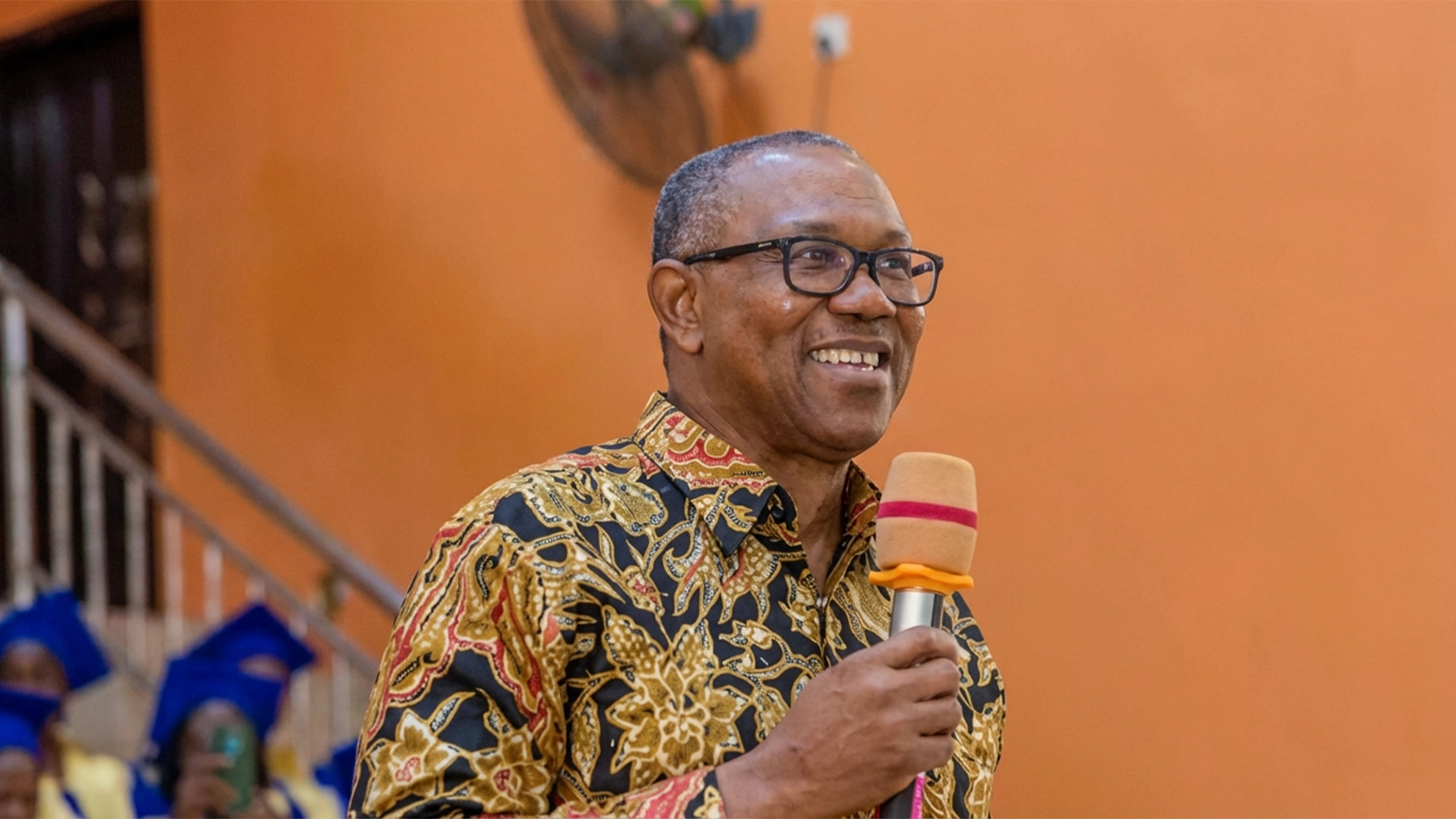
****2027 NDC candidate also promises to scrap First Lady’s office
****says the person elected is Peter Obi, not Mr. and Mrs. Obi
****says leaders must fast when Nigerians fast
****Ex-Anambra governor vows to dismantle waste, fight corruption
Presidential candidate of the New Democratic Congress (NDC), Peter Obi, has promised to embark on a sweeping overhaul of Nigeria’s expensive political bureaucracy if elected president in 2027, declaring that the office of the First Lady, excessive presidential privileges and wasteful government spending will have no place under his administration.
Obi made the declaration during an interview on Channels Television’s Politics Today with Seun Okinbaloye, where he presented his proposed presidency as one built around austerity, personal sacrifice and aggressive reduction of the cost of governance.
The former Anambra State governor said Nigerians had endured too much economic hardship for government officials to continue enjoying privileges that could be sacrificed to fund education, healthcare and other essential services.
He declared that his administration would begin cutting government expenditure from its first day in office.
“Painful reforms must come this way. You ask the people to fast, you fast with them. You can’t ask them to fast when you’re feasting,” Obi said.
The former governor said the same principle should guide decisions on government purchases, including presidential aircraft and other expensive facilities.
According to him, the country cannot justify spending hundreds of billions of naira on official luxuries when millions of Nigerians lack access to quality healthcare and education.
Obi cited the cost of government aircraft and argued that a fraction of such expenditure could provide critical infrastructure, including cancer treatment centres and primary healthcare facilities.
“We must shut down this waste and deal with the issues that will protect our people and serve our people properly,” he said
Obi was particularly blunt about the controversial structure around the office of the First Lady, insisting that it would not receive a separate government bureaucracy under his presidency.
He argued that the Nigerian Constitution provides for the election of a president, not a presidential couple.
“The person seeking votes today is Peter Obi, not Mr and Mrs Obi,” he said.
Although he acknowledged that his wife would naturally be First Lady, Obi said there would be no separate government machinery attached to the position.
“There’s nothing called Office of the First Lady anywhere in the world,” he said, arguing that maintaining such structures amounts to unnecessary expenditure.
Obi also questioned the justification for continually expanding Nigeria’s presidential fleet, saying the government should make maximum use of available aircraft rather than routinely acquire new ones.
He said official travel could also be organised in ways that reduce pressure on public finances, including making greater use of commercial airlines where appropriate.The NDC candidate maintained that Nigeria’s financial resources should be directed towards development rather than prestige.
His position, he said, was informed by his experience as governor of Anambra State, where he claimed to have reduced government expenditure and rejected some costly government arrangements.
Obi specifically cited his refusal to maintain expensive government liaison facilities in Abuja and Lagos.
He challenged Nigerians to identify any American state government that maintains a similar arrangement in Washington.
“We need to start being realistic,” he said
Obi’s proposed austerity programme, however, goes beyond cutting government structures.
He said political leaders must personally demonstrate the sacrifices they demand from citizens, arguing that the credibility of economic reforms depends on the behaviour of those imposing them.
“If you tell people to sacrifice, you sacrifice with them. You must be the leader of what you’re preaching,” he said.
Obi warned against a situation where government removes subsidies or introduces painful economic reforms while simultaneously purchasing luxury assets for political office holders.
He said such contradictions destroy public confidence and make it harder for citizens to accept necessary reforms.
The interview also descended into a heated exchange over Obi’s foreign assets and his declarations to the Code of Conduct Bureau.
The former governor rejected allegations that his overseas assets amounted to evidence of corruption, insisting that he had accumulated some of them before becoming governor.
Obi said he had lived and worked in the United Kingdom and had saved money for what he described as family investments.
He maintained that his assets were declared and could be investigated by the appropriate authorities.
The presidential hopeful challenged critics to produce evidence of missing public funds rather than merely questioning the existence of his private wealth.
He also defended investments made through family-related businesses, insisting that legitimate savings and investments should not automatically be interpreted as a conflict of interest.
Obi said corruption would receive an aggressive response under his administration, but stressed that his own lifestyle would be the first test of his anti-corruption credentials.
“I will fight corruption brutally and I will show it. I will live it,” he said.
He argued that a leader who preaches sacrifice while enjoying extravagant privileges cannot credibly ask citizens to accept painful reforms.
On opposition cooperation ahead of the 2027 presidential election, Obi said he was prepared to work with other political leaders, including former Vice-President Atiku Abubakar and former Kano State governor Rabiu Kwankwaso.
But he said his most important political alliance would be with Nigerian youths.
“My biggest group I need to work with is the youths of Nigeria,” he declared.
Obi urged young Nigerians to take the 2027 election seriously, arguing that the country’s political choices would determine whether the next generation inherits a stronger or weaker Nigeria.
Obi also gave his clearest indication yet that his 2027 presidential bid could be his final attempt at the presidency.
Asked whether he would continue seeking the office beyond 2027, he said the decision would depend partly on the outcome of the election but acknowledged that younger Nigerians should eventually take over.
He noted that he would be approaching his late 60s by the end of a possible first term.
“I believe that the younger ones should be allowed,” he said.
Asked what his first day in office would look like if he won the presidency, Obi said it would be a day of deep reflection.
But when pressed on his first concrete action, he returned to the issue that dominated the interview: reducing the cost of government.
“From day one, cutting the cost,” he said.
For Obi, the 2027 contest is therefore not merely about who occupies Aso Rock.
It is also shaping up as a referendum on how much Nigerians are prepared to spend maintaining the political establishment — and whether those seeking power are willing to surrender some of the privileges that come with it.
His proposed formula is blunt: cut the presidential fleet, eliminate unnecessary political offices, slash government overheads and make political leaders share the sacrifices they demand from Nigerians.

