 Follow Us on Google News
 Follow Us on Google Discover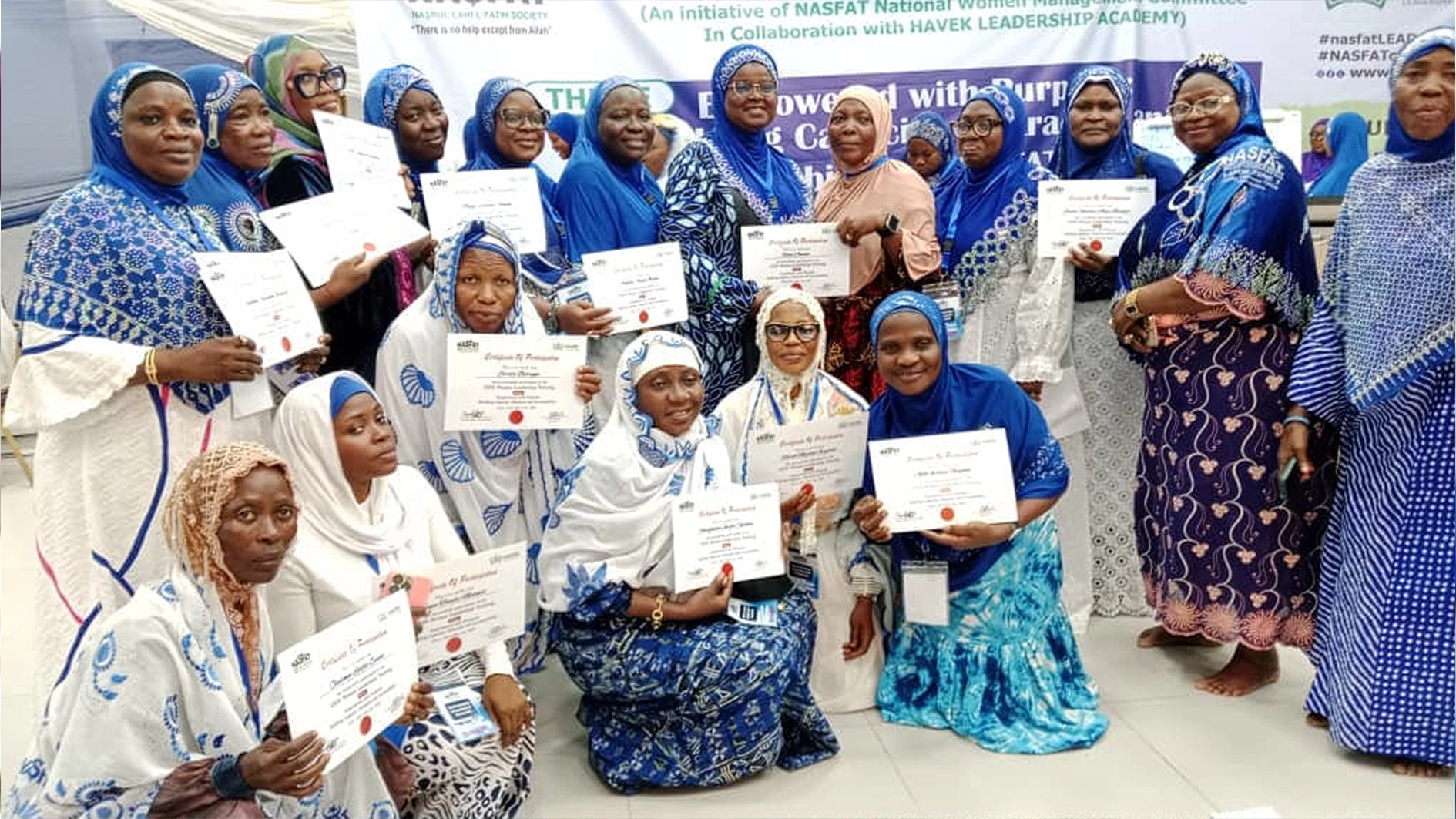
NASFAT National Women Affairs Secretary, Alhaja Ganiyat Omowunmi Babalola, has led over 460 women leaders across Nigeria and the diaspora in a comprehensive three-day national leadership workshop, urging Muslim women to embrace continuous learning, self-improvement and service-oriented leadership to drive meaningful community transformation.
Delivering her welcome address at the NASFAT National Women Management Committee (NWMC) 3-Day Women Leadership Training, held from July 23 to 26, 2026, Alhaja Babalola expressed delight at the massive physical and virtual turnout. Originally anticipating 100 physical participants, the arrival of nearly 200 attendees in person underscored a powerful drive among NASFAT women to upskill and develop professionally.
“Your presence shows that you see leadership as a responsibility that requires continuous learning and self-improvement,” Babalola told the gathering. “Leadership is service, showing respect and consideration to others and leading by example. As leaders, we must embody excellence in everything we do.”
The intensive capacity-building programme reached a total of 463 women leaders and stakeholders participating both in person and virtually from NASFAT branches across Nigeria and several international chapters.
She mentioned that the workshop will delivered comprehensive training designed for modern governance and personal development, covering financial responsibility, digital literacy, artificial intelligence, entrepreneurship, accountability and personal conduct.
Babalola urged participants to build enduring legacies through character, competence and compassion across their respective communities.

Reinforcing the spiritual essence of the initiative, the Chief Missioner of the Nasrul-Lahi-l-Fatih Society (NASFAT), Imam Abdul-Azeez Morufu Onike, delivered a keynote lecture titled “Empowered with Purpose (Niyyah & Tazkiyah): The Foundation of Transformational Muslim Women Leadership.”
Imam Onike called on participants to view leadership as an act of worship rooted in sincere intention (niyyah) and self-purification (tazkiyah), rather than a pursuit of status or authority.
“Leadership is not the ability to command people; it is the ability to positively influence people toward a shared purpose while remaining accountable to Allah,” Imam Onike stated. “Before leadership comes purpose; before purpose comes niyyah; and before sustainable leadership comes tazkiyah.”
He urged participants to draw inspiration from historic icons such as Khadijah (RA), Aishah (RA), Umm Salamah (RA), and Ash-Shifā’ bint ʿAbdullāh (RA), as well as distinguished NASFAT elders including Mama S. T. Agbalajobi, Alhaja Mulikat Bello, and Alhaja Hafsat Bello. Presenting his “Five Ps of Transformational Muslim Women Leadership”Purpose, Purity, Professionalism, People and Posterity. He particularly challenged participants to become active creators of beneficial online content rather than passive consumers in the era of Artificial Intelligence.
“A title may make you a chairperson; only character makes you a leader,” Onike added. “A position may give you authority; only purpose gives you influence.”

