 Follow Us on Google News
 Follow Us on Google Discover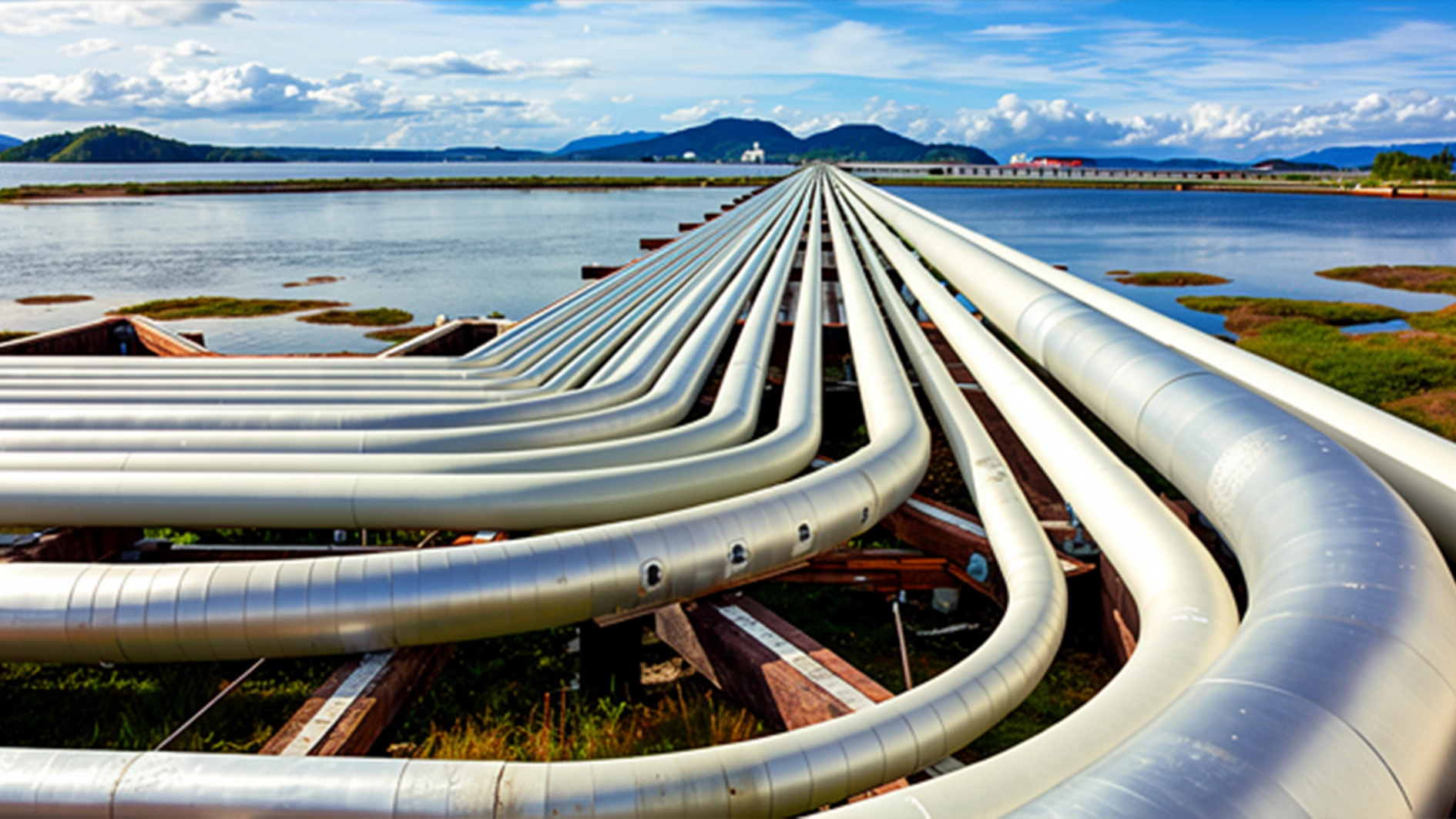
By Dan D. Kunle
Dear President Tinubu, I recognise your administration’s commitment to positioning Nigeria as a regional energy leader. The proposed Morocco-Nigeria Gas Pipeline Project, now renamed the African Atlantic Gas Pipeline, reflects that ambition.
However, ambition cannot substitute for economic and commercial realities. It is those realities, and the urgent need to protect Nigeria’s national interest, that compel me to write this third open letter to Your Excellency.
Once again, Nigeria has signed an impressive international agreement. Once again, there were visits, handshakes, speeches, official photographs and promises of prosperity stretching far into the future.
This time, the subject is the proposed African Atlantic Gas Pipeline, previously known as the Morocco–Nigeria Gas Pipeline.
The plan is to construct a pipeline of almost 7,000 kilometers, linking the Niger Delta and Gulf of Guinea to Morocco through several countries along the Atlantic coastline of West Africa.

From Morocco, the promoters hope that Nigerian and West African gas may eventually find its way into European markets.
The project is now estimated to cost about $27 billion.
Recent agreements have moved it forward politically, but a project company, investors and a final investment decision are still required before construction can become a commercial reality.
It is the kind of project that sounds magnificent in a conference hall. It carries all the language politicians enjoy: African integration, regional development, industrialisation, energy security and international cooperation.
But when the ceremony is over and the microphones are removed, Nigeria must sit down and ask a much harder question:
Does this project make economic sense for Nigeria, or have we merely signed another Memorandum of “Misunderstanding”?
Where will the gas come from?
We must first recalibrate this entire African Atlantic Gas Pipeline proposition. The first question remains: Where will the gas come from?
Government officials regularly tell Nigerians that the country has more than 200 trillion cubic feet of proven natural gas reserves. That sounds reassuring, but gas reserves underground are not the same as gas developed, processed and available for commercial use.
Gas does not jump by itself from a reservoir into a power station or industrial plant.
The fields must be developed, wells must be drilled, gas-gathering facilities must be constructed, processing plants and compressor stations must be installed, connecting pipelines must be built, producers must be paid, customers must be identified and long-term contracts must be signed.
Nigeria has large gas reserves, but the country continues to experience serious constraints in developing and delivering sufficient gas to its own economy. Our electricity sector still suffers from inadequate and unreliable gas supply.
Power stations are frequently unable to operate at their installed capacity. Industries complain about unreliable energy, while major gas-based projects have suffered years of delay.
Fertiliser, petrochemical, steel, aluminium, methanol, glass and manufacturing industries all require reliable and affordable gas and electricity.
We have not yet properly supplied ourselves, yet we are already discussing how to move enormous quantities of gas through numerous countries to Morocco and possibly Europe. Something is wrong with that order of priority.
Before Nigeria makes further international promises, the Minister responsible for petroleum and gas and the management of NNPC Limited must tell Nigerians how much gas the country requires for its power stations and industries over the next 30 years.
They must state how much gas has already been contracted, identify the fields from which the proposed export gas will be produced, disclose the relevant Gas Sales and Purchase Agreements, explain who will finance upstream gas development and identify the customers that have made credible commitments to buy the gas.
Without these answers, the proposed pipeline is not yet an investment. It is a political ambition.
The unfinished gas arithmetic
Nigeria should have learned this lesson from the Ajaokuta–Kaduna–Kano Gas Pipeline.
When the AKK project was originally presented to the Nigerian public, contractor financing involving Chinese institutions was expected to play a significant role. Later, the financial burden appeared to move increasingly towards NNPC Limited.
The 614-kilometre pipeline was approved at an estimated cost of $2.8 billion. After years of delay, NNPC announced in December 2025 that it had completed the welding of the main line, including the River Niger crossing, while connections and supporting infrastructure remained necessary for full operation.
Nigerians must know how that cost was determined, how much has been spent, what work remains outstanding and what the final cost will be.
But an even more important question remains unanswered:
What gas will enter the AKK pipeline, in what volume, from which fields and under what commercial arrangements when the entire system is completed?
Who are the committed end users? What will they pay for the gas? Are the upstream fields, processing plants, spur lines and industrial facilities ready to operate when the pipeline becomes available?
A pipeline does not create gas. It only transports gas.
If the fields, processing facilities, connecting infrastructure and paying customers are not ready, Nigeria may complete an expensive pipeline only to discover that there is insufficient commercial gas or demand to operate it efficiently.
That is not development. That is another stranded national asset.
The same uncertainty surrounds several other projects. Nigeria has discussed Brass LNG for years. The Olokola LNG project has remained largely unrealised. There are plans to send gas to Equatorial Guinea, existing LNG commitments, domestic power requirements and industries waiting for gas.
There is also the AKK corridor, where power stations and industrial projects are expected to emerge from Ajaokuta through Abuja, Kaduna and Kano.
All these projects will compete for gas.
Yet no one has publicly presented Nigerians with a consolidated national gas balance showing what is developed and available, what has already been committed, what is required for domestic power and industry, and what genuinely remains for new long-term exports.
This is the central problem.
Nigeria is making pipeline promises before completing its gas arithmetic at home.
From three countries to numerous treaties
There is another matter that Your Excellency must carefully consider.
The Trans-Saharan Gas Pipeline was conceived to carry Nigerian gas through Niger and Algeria, from where it could connect with existing infrastructure serving European markets. It principally required Nigeria to negotiate and maintain treaty relationships with two transit countries: Niger and Algeria.
The African Atlantic Gas Pipeline introduces a far more complicated proposition.
The pipeline is expected to pass through or connect Benin, Togo, Ghana, Côte d’Ivoire, Liberia, Sierra Leone, Guinea, Guinea-Bissau, The Gambia, Senegal and Mauritania before reaching Morocco.
That sounds like regional unity, but pipelines are not built with regional unity alone. They are built with valid treaties and money.
Each participating country has its own constitution, laws, regulators, tax system, political calendar, security concerns, domestic priorities and financial limitations.
Nigeria will therefore have to navigate multiple treaty obligations, ownership arrangements, regulatory systems, transportation agreements, taxation regimes, environmental approvals, financing structures and political transitions.
Each country creates another dependency.
A pipeline of almost 7,000 kilometers is only as strong as its weakest treaty, weakest jurisdiction and weakest financial participant.
Several of the countries along the proposed route face serious financial constraints. Some are seeking investors to develop their own oil and gas resources, while others struggle to fund basic infrastructure and annual capital budgets.
We must therefore understand each country’s ownership structure, funding capacity and domestic legal obligations before assuming that this project can proceed smoothly.
How will the participating countries finance their portions of a project costing about $27 billion? Will each government contribute equity? Will their national oil companies borrow? Will international lenders demand sovereign guarantees? Will Nigeria be expected to carry a disproportionate financial burden because the gas is expected to originate principally from Nigerian territory?
To be continued tomorrow.
Kunle wrote from Abuja.

