 Follow Us on Google News
 Follow Us on Google Discover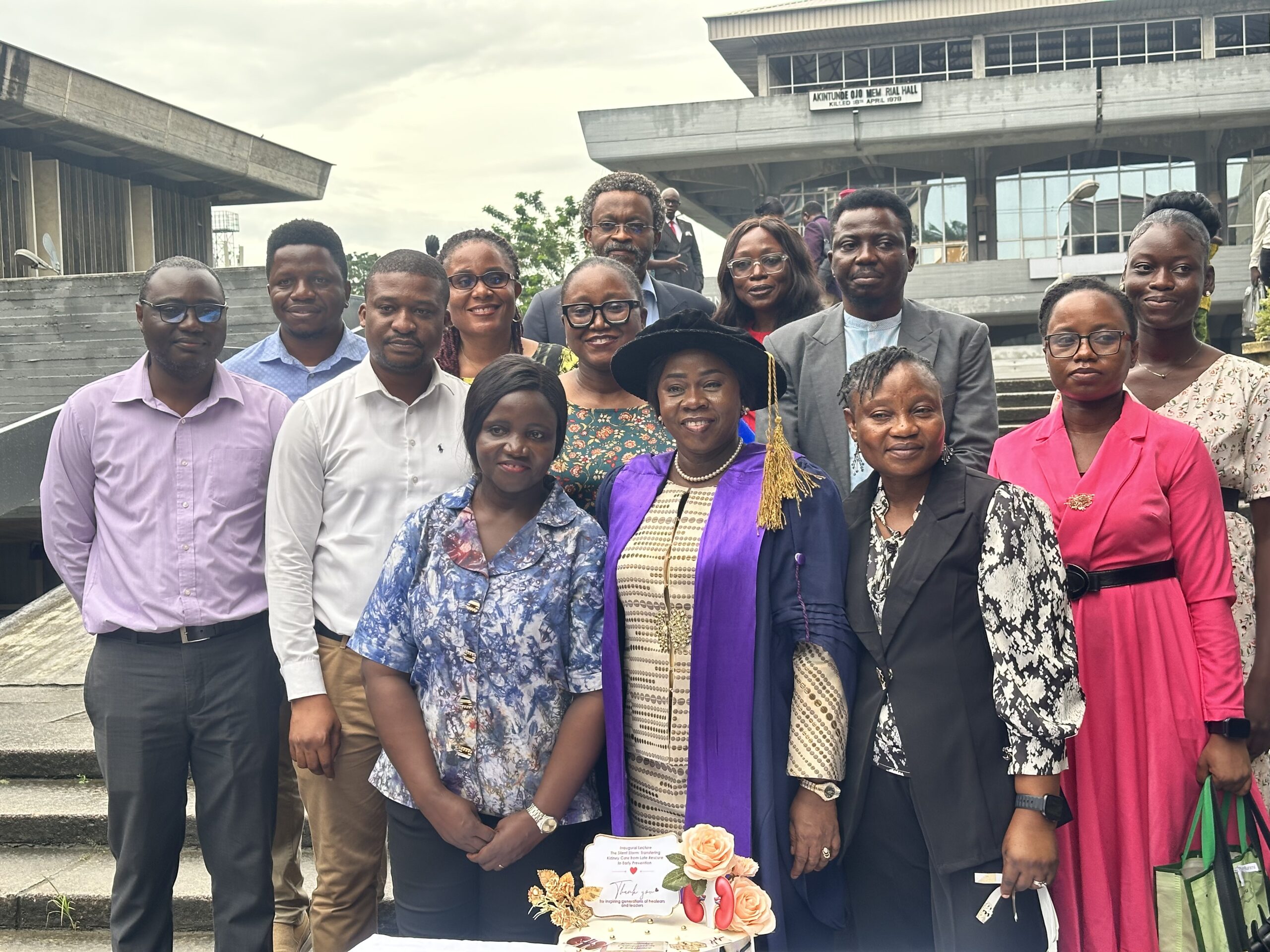
Nigeria needs to move away from treating kidney disease only at its advanced stages and focus more on preventing the condition, a consultant nephrologist, Prof. Christiana Oluwatoyin Amira, has said.
prof. Amira and the attendees of the 467th inaugural lectureAmira made the call while delivering the University of Lagos’ 467th inaugural lecture and the 21st inaugural lecture for the 2025/2026 academic session, titled The Silent Storm: Transforming Kidney Care from Late Rescue to Early Prevention.
She said the lecture was aimed at drawing attention to the growing burden of kidney disease, the cost of treatment and the need for Nigerians to pay greater attention to the risk factors associated with the condition.
According to her, kidney disease is preventable in many cases if its risk factors are identified and treated early.
“We need to begin to look upstream at the risk factors and tackle the risk factors effectively,” she said.
Amira, a professor of medicine and consultant nephrologist at Lagos University Teaching Hospital, said preventing kidney disease would reduce the number of patients who eventually develop end-stage kidney disease and require dialysis.

She, however, noted that awareness of kidney disease was still developing in Nigeria, making continued public education important.
The nephrologist said she began community screening programmes more than 20 years ago, but identified follow-up treatment as one of the major challenges facing such interventions.
She said the problem was worsened by Nigeria’s reliance on out-of-pocket healthcare payments, particularly as the cost of essential medications continues to rise.
Amira identified hypertension and diabetes as major risk factors for kidney disease, noting that many Nigerians either do not know they have hypertension or do not have the condition properly controlled.
She said about 35% of adults have hypertension, adding that poorly controlled blood pressure can damage the kidneys over time.
She also raised concerns about the use of agbo, saying some of its constituents could be harmful to the kidneys. She added that the lack of standardised doses and sufficient scientific evidence on many herbal preparations made their use risky.
Beyond medical factors, Amira said poverty and low levels of education also contribute to the burden of kidney disease, particularly when people cannot afford medications or access appropriate healthcare.
She called on the government to make essential medicines more affordable by subsidising them, reducing import duties and encouraging local production.
According to her, expanding health insurance coverage would also help Nigerians access treatment without bearing the full cost themselves.
She urged the government to strengthen primary healthcare centres, describing them as the first line of defence against chronic kidney disease.
She said basic equipment such as functional blood pressure monitors, urine dipsticks and glucometers should be available at primary healthcare centres to enable routine screening.
“It’s all about prevention of kidney disease,” she said.
Amira also called for a stronger referral system to ensure that patients identified at primary healthcare centres can be transferred to appropriate hospitals for further care.
She said discussions were already ongoing with the Federal Ministry of Health on developing a protocol for kidney disease screening.
For her, the priority should not just be to build more dialysis centres or expand transplant programmes, but to reduce the number of Nigerians who get to the stage where such interventions become necessary.

