 Follow Us on Google News
 Follow Us on Google Discover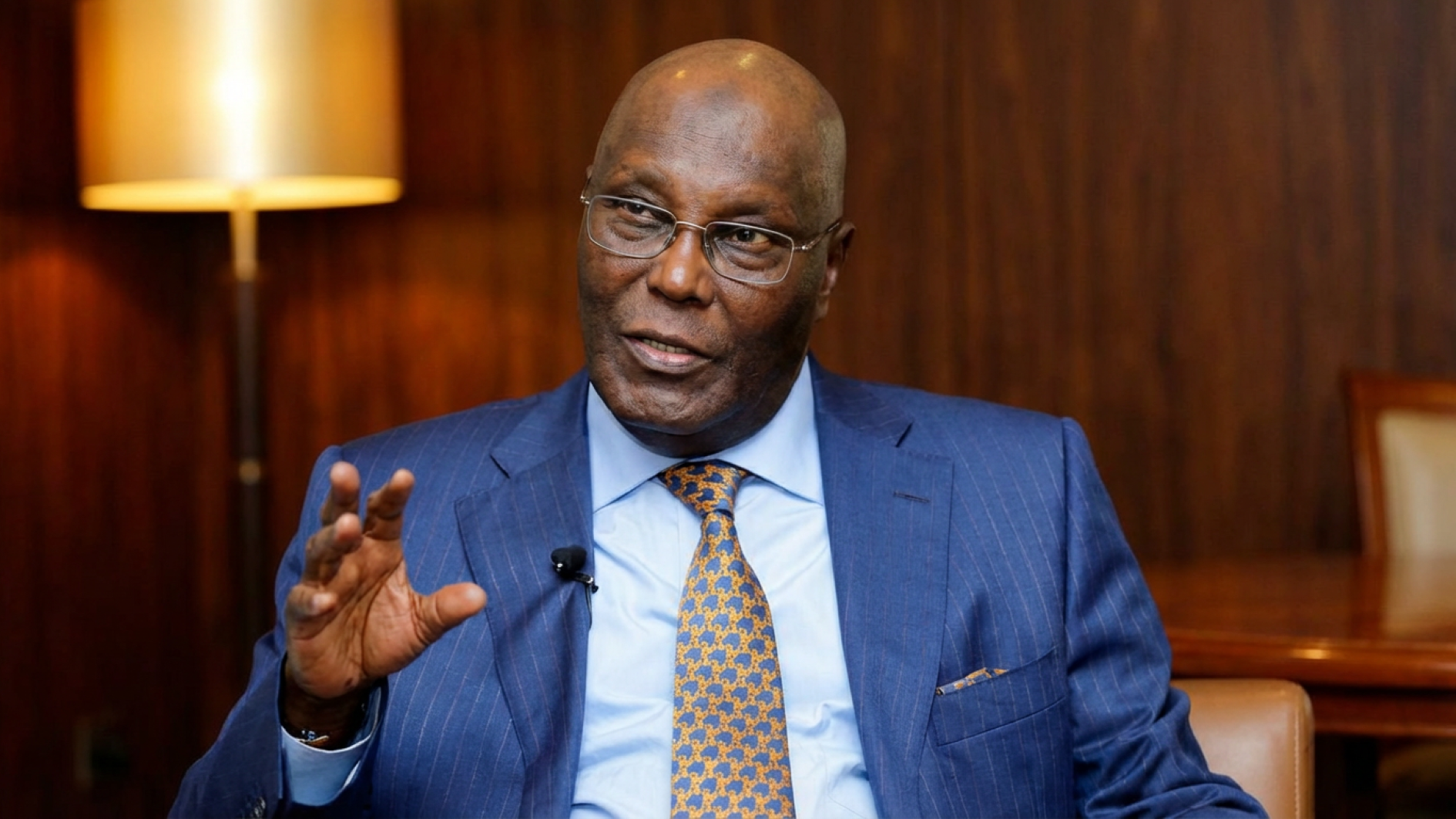
• Rights group raises fresh concerns over budget priorities, accountability
Former vice president and presidential candidate of the African Democratic Congress (ADC), Atiku Abubakar, has accused President Bola Tinubu’s administration of losing control of Nigeria’s public finances following a report that the Federal Government borrowed far above the limit approved by the National Assembly in the 2024 fiscal year.
Atiku said the latest figures, which showed that the Federal Government exceeded its approved borrowing ceiling by N4.79 trillion, pushing total fresh borrowing to N12.62 trillion, underscored what he described as a pattern of fiscal recklessness, opacity and waste under the current administration.
In a statement issued yesterday by his Senior Special Assistant on Public Communication, Phrank Shaibu, the former vice president said Nigerians were assured that the removal of fuel subsidy, increased taxation and other economic reforms would reduce borrowing and stabilise the country’s finances, but argued that the opposite had occurred.
According to him, the latest borrowing figures demonstrate that the government’s economic policies have failed to achieve their stated objectives.
“Nigerians were promised that the painful removal of fuel subsidy, repeated tax hikes and other harsh economic measures would reduce borrowing and restore fiscal stability. Instead, the country is witnessing the exact opposite: endless borrowing, ballooning debt and unprecedented waste,” the statement read in part.
Citing figures from the Budget Office, Atiku noted that the Federal Government borrowed 61.2 per cent above the amount authorised by the National Assembly. He also questioned the source of an additional N3.19 trillion reportedly obtained as “budget support,” despite there being no provision for such borrowing in the approved appropriation.
He described the development as part of a broader pattern of financial mismanagement.
“This is not an isolated incident. It fits into a disturbing pattern that has become the defining signature of the Tinubu administration: duplication, opacity and reckless fiscal management,” he stated.
The ADC chieftain further accused the administration of operating duplicated budgets, concealing huge expenditures under the Service Wide Vote, creating what he described as “fake agencies,” and approving extravagant spending on luxury vehicles while critical sectors remained underfunded.
Questioning the impact of the borrowings, Atiku argued that there was little evidence that the funds had translated into improvements in education, healthcare, security or infrastructure.
“The tragedy is that Nigerians are being forced to service debts whose benefits they cannot see,” he said.
He also pointed to reports that higher international crude oil prices had generated an estimated N7.98 trillion oil revenue windfall for the Federal Government, arguing that increased earnings should ordinarily have reduced the country’s dependence on borrowing.
“A government earning windfalls while borrowing recklessly is not suffering from lack of revenue; it is suffering from lack of discipline,” Atiku declared.
MEANWHILE, the Resource Centre for Human Rights and Civic Education (CHRICED) has called for greater fiscal discipline, transparency and stronger democratic institutions, raising concerns over budget priorities, constitutional reforms and accountability in public administration.
Speaking at a state-of-the-nation briefing in Abuja, CHRICED Executive Director, Ibrahim Zikirullahi, questioned the allocation of public funds to projects he said were unrelated to the mandates of some government agencies, arguing that education, healthcare and social protection should receive greater attention.
He cited allocations for road projects under the National Commission for Almajiri and Out-of-School Children Education, saying such expenditures should focus on addressing the growing challenge of out-of-school children.
According to him, failure to prioritise education and social interventions could worsen insecurity by leaving vulnerable children exposed to criminal recruitment.
Zikirullahi also expressed concern over Nigeria’s rising public debt and repeated budget extensions, questioning the increase in borrowing despite government claims of improved revenue generation.

